The equestrian industry generates over $122 billion each year in the U.S. alone. Yet, most horse lovers never figure out how to turn their passion into profit. Maybe you're eyeing that empty barn on your property, or perhaps you're thinking about launching a brand and looking for reliable equestrian suppliers to bring your vision to life.
The real question isn't if you can make money in this industry. It's which opportunity fits your resources. Whether you want to run a stable or start a brand partnering with equestrian outfit manufacturers, the strategy is everything.
I analyzed profit margins, startup costs, and growth potential across dozens of models. Here are the top 8 most profitable equestrian businesses thriving right now, including opportunities in private label equestrian clothing and facility management.
Equestrian Product Manufacturing and E-commerce
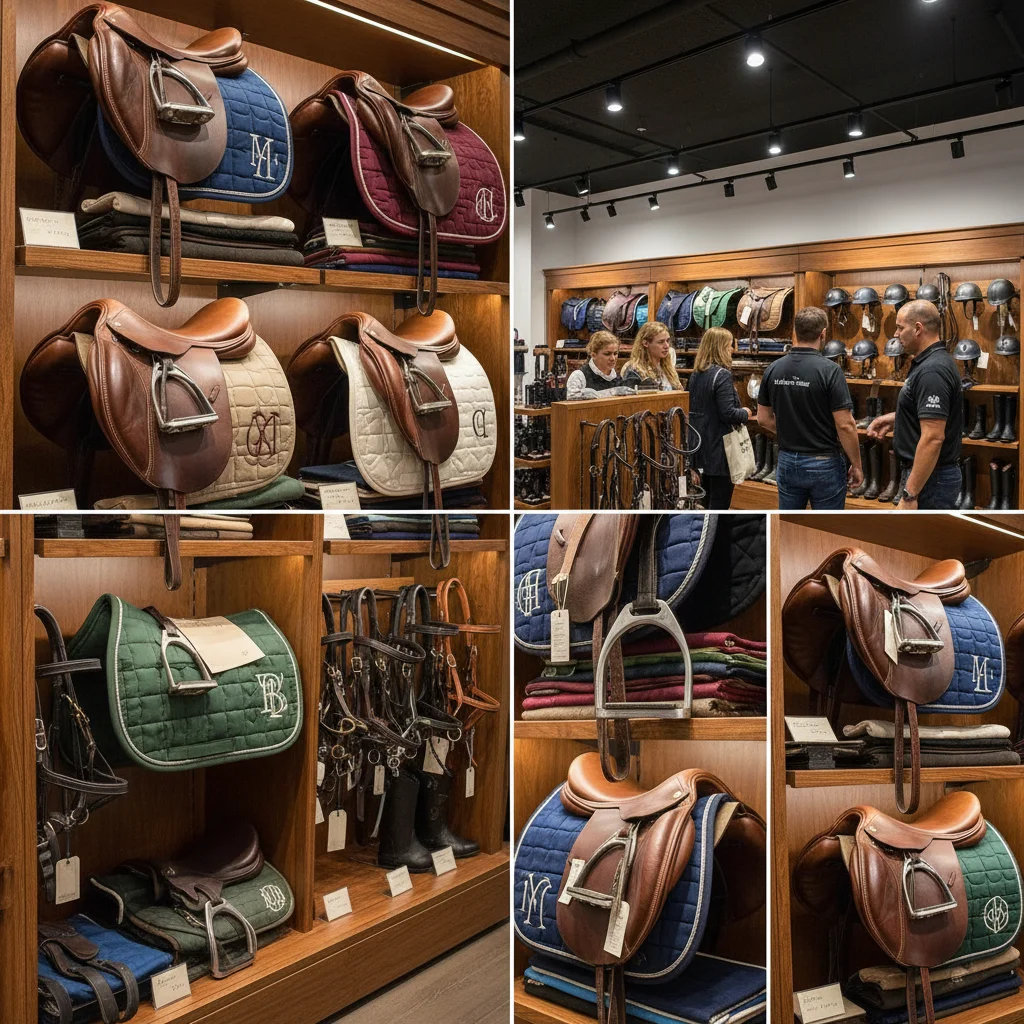
The global horse saddles and tack market hit $3.59 billion recently, but the real growth engine is in direct-to-consumer sales. Riders are increasingly comfortable buying premium gear online. This shift has opened the door for entrepreneurs to launch their own brands without needing a physical storefront.
The path to profitability here involves leveraging OEM/ODM services. You don't need to sew the breeches yourself. Instead, you find a specialized equestrian clothing manufacturer who can produce to your specifications. This allows you to create private label equestrian clothing—your own brand of breeches, show shirts, or technical outerwear—at a fraction of the retail cost.
For those targeting the luxury market, focusing on high-end custom equestrian clothing is a smart move. Riders are willing to pay a premium for perfect fit and unique designs. By working with top-tier equestrian manufacturers, you can offer bespoke services that mass-market brands can't compete with.
If you prefer a volume model, you might explore the wholesale equestrian clothing route. You can import popular styles from an equestrian clothing factory and distribute them to local tack shops and smaller boutiques. Whether you choose custom equestrian apparel or mass distribution, the key is solid supply chain management.
Finding the right equestrian outfit manufacturers is the most critical step. You need partners who understand the nuances of the sport—fabric stretch, durability, and style. Once you have a reliable equestrian clothing manufacturer backing you, your scalability is limited only by your marketing.
Horse Boarding and Stable Services
Boarding fees create steady cash flow all year. While recreation services make up $32 billion of the industry, the brutal reality is that 60% of boarding facilities lose money on every horse each month. Why? Most owners charge too little and underestimate operational costs.
To succeed, you must move beyond basic care. Smart operators stack revenue streams. Instead of just offering a stall, they create packages that include training and lessons. A typical facility needs $775,000 in capital investment, but with the right structure—upselling clients to full board and training—you can reach breakeven within 9 months.
Start small with partial board offerings. As you build trust, introduce higher-margin services. Additionally, managing a facility puts you in a prime position to retail essential goods. Many stable owners eventually expand by connecting with equestrian suppliers to sell feed, bedding, and even basic gear directly to their boarders, capturing more of that client spend.
Riding Lessons and Equestrian Training Programs
Teaching others to ride often brings in better margins than boarding because overhead costs stay lower. The global riding market hit $12 billion in 2025 and is projected to reach $20 billion by 2033. The secret to scaling isn't just more horses; it's layering your revenue pyramid.
While independent instructors charge $50-75 per private lesson, the real money lies in structured programs. Elite competitive coaching commands premium rates of $800-1,500 per month.
You can also integrate technology, using video analysis or even AI-driven training tools to increase the value of every session.
There is also a significant branding opportunity here. Many successful training barns create their own team merchandise. By working with custom equestrian apparel providers, you can produce branded jackets and shirts for your students. Ordering wholesale equestrian clothing and adding your logo not only creates a profit stream but also builds team spirit and markets your business at every show.
Horse Breeding and Foal Sales Business

Breeding requires capital, patience, and deep knowledge of genetics. However, the returns can be massive. In the 2025 Kentucky breeding sales, the average price was $149,096 per horse, with top foals selling for millions. The market is contracting in volume—making high-quality stock more valuable than ever.
Whether you focus on Thoroughbreds, Sport Horses with European bloodlines, or Quarter Horses, the key is studying auction data. You need to understand which bloodlines command top dollar. While gestation and training take time, producing one exceptional foal can pay for years of operation costs.
For breeders, presentation is everything during sales prep. Showcasing your team in professional uniforms sourced from high-quality equestrian clothing manufacturers signals professionalism to potential buyers. In this high-stakes game, perception often influences price.
Farrier Services and Hoof Care
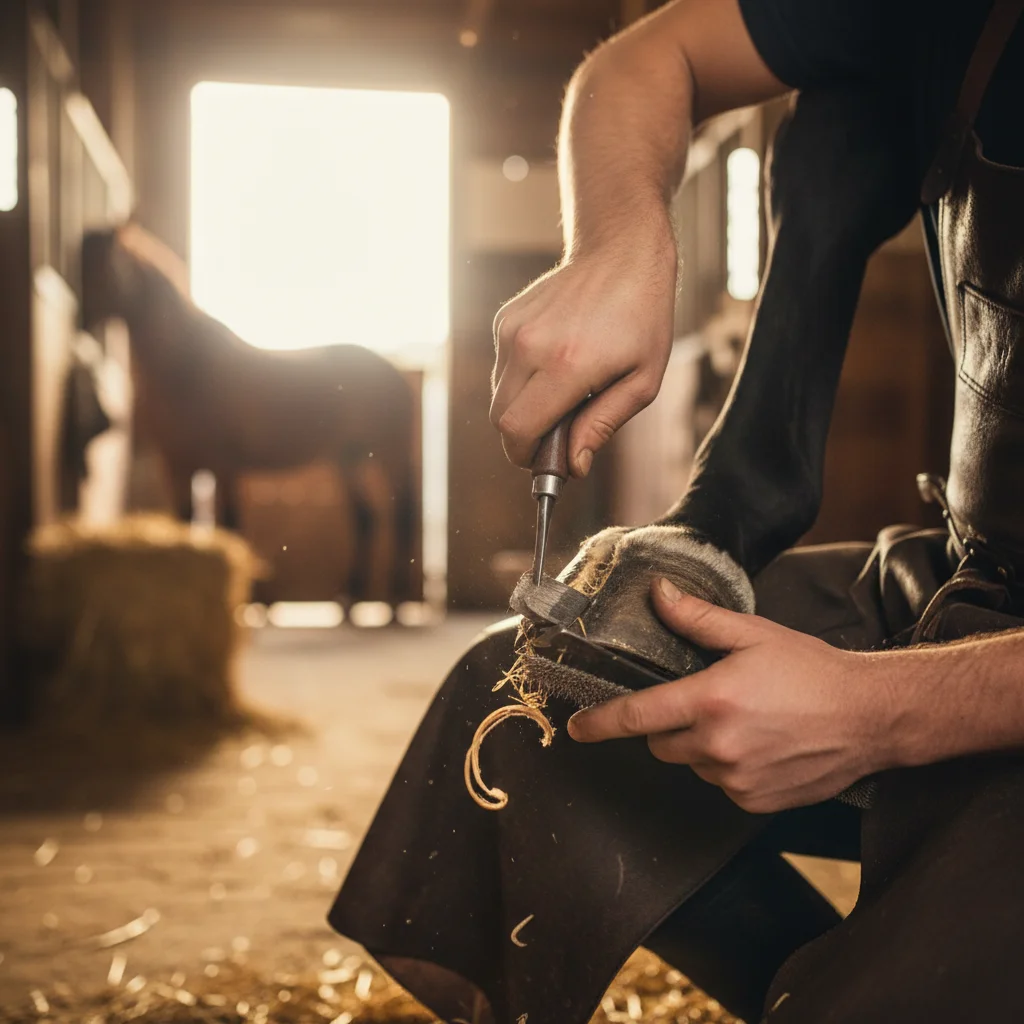
This is the business of repeat clients. Every horse needs a farrier every six to eight weeks, creating a recurring revenue loop that most entrepreneurs dream of. The farrier products market is hitting $1.8 billion by 2033, and there is a shortage of skilled professionals.
The smartest farriers don't just trim hooves; they act as consultants. 71% of farriers recommend equine products to owners. By recommending specific hoof pads or therapeutic shoes, you increase your ticket size. Specialized work, like corrective shoeing, commands $150-300 per visit. If you master the craft and keep your route tight (minimizing travel time), this low-overhead model generates six figures with zero inventory risk.
Horse Sales Brokerage and Auction Management
If you have an eye for talent and strong connections, brokerage offers high returns without the daily grind of stable management. Brokers typically earn a 10-15% commission on every sale. With the average auction price hitting $89,479 in 2024, closing just one deal a month can result in a substantial income.
Your role is finding undervalued horses and positioning them for the right buyers. Presentation is critical here. When showing a horse, the rider's appearance matters as much as the horse's grooming. Many brokers invest in high-end custom equestrian clothing to ensure their riders look the part, enhancing the perceived value of the sale horse.
Top-tier auctions like Keeneland are moving hundreds of millions of dollars. As a broker, you are selling certainty and expertise. If you can navigate these waters, the demand for quality horses worldwide ensures your skills remain in high demand.
Equine Healthcare Technology

The equine healthcare market is projected to reach $5.93 billion by 2032. This sector is exploding as owners look for preventative solutions. Wearable sensors, AI-powered gait analysis, and telemedicine are changing how we care for horses.
The opportunity here isn't necessarily inventing the tech, but implementing it. You can partner with major companies to become a local distributor or service provider. Offering monitoring systems as a service—where you install the tech and interpret the data for barn owners—creates a recurring subscription model. As telemedicine grows by over 30%, being the bridge between technology and traditional horse owners is a lucrative niche.
Show Management and Event Services
Running horse shows is a logistics heavy business, but volume drives profit. While facility expenses are high, the sheer number of entries in hunter/jumper and dressage shows creates massive revenue potential. A single regional championship can cost $150,000+ to run, but accurate budgeting and entry volume make it profitable.
An overlooked revenue stream in show management is merchandise. Competitors love branded gear. By partnering with an equestrian clothing factory, show managers can produce exclusive event apparel. Offering custom equestrian outfit options for champions or selling branded vests and jackets in the show office can significantly boost margins.
Furthermore, event organizers often require bulk orders for staff and volunteers. Sourcing wholesale equestrian clothing ensures your team looks professional without breaking the budget. Smart managers stack these revenue sources—entries, stabling, sponsorships, and retail—to maximize the weekend's return.
Strategic Execution and Financial Reality
Numbers don't lie. When we look at the data, horse training delivers the strongest Year 1 profitability ratio (48.49%), while boarding offers a steadier, albeit slower, typically 22.8% net margin path.
But regardless of the model you choose, execution determines success.
If you are bootstrapping (under $50k), focus on service-heavy models like lessons or brokerage. Your priority is speed to revenue. If you have capital ($50k-$500k), you can invest in infrastructure or product inventory. This is where launching a brand with private label equestrian clothing becomes viable, as you have the budget for minimum order quantities required by equestrian suppliers.
For those operating at scale (Over $500k), the game is about systems and efficiency. You might be managing a massive facility while simultaneously running an e-commerce division that sells custom equestrian clothing globally. At this level, you aren't just a horse person; you are a logistics expert.
Successful operators track metrics relentlessly. They monitor Customer Acquisition Cost (CAC) and Lifetime Value (LTV). They understand that client retention is cheaper than acquisition. Whether you are retaining a boarding client or a customer who buys your custom equestrian outfit collections every season, the principle is the same: deliver quality, and they will stay.
Conclusion
The equestrian industry offers massive opportunities for those ready to treat it like a serious business. You might be drawn to the cash flow of boarding, the excitement of breeding, or the scalability of creating a brand with equestrian outfit manufacturers. The $122 billion market has room for you, but only if you choose a model that fits your resources.
If you choose the product route, remember that your supply chain is your backbone. Partnering with the right equestrian manufacturers allows you to deliver quality that builds a reputation. Whether you are utilizing OEM/ODM services to build a tech-clothing line or sourcing custom equestrian apparel for your training program, professional sourcing is key.
Ready to start? Look for an experienced equestrian clothing factory if you're going into retail, or refine your business plan if you're opening a stable. The horses are ready, and the market is waiting. Transform your know-how into a business that feeds both your bank account and your soul.