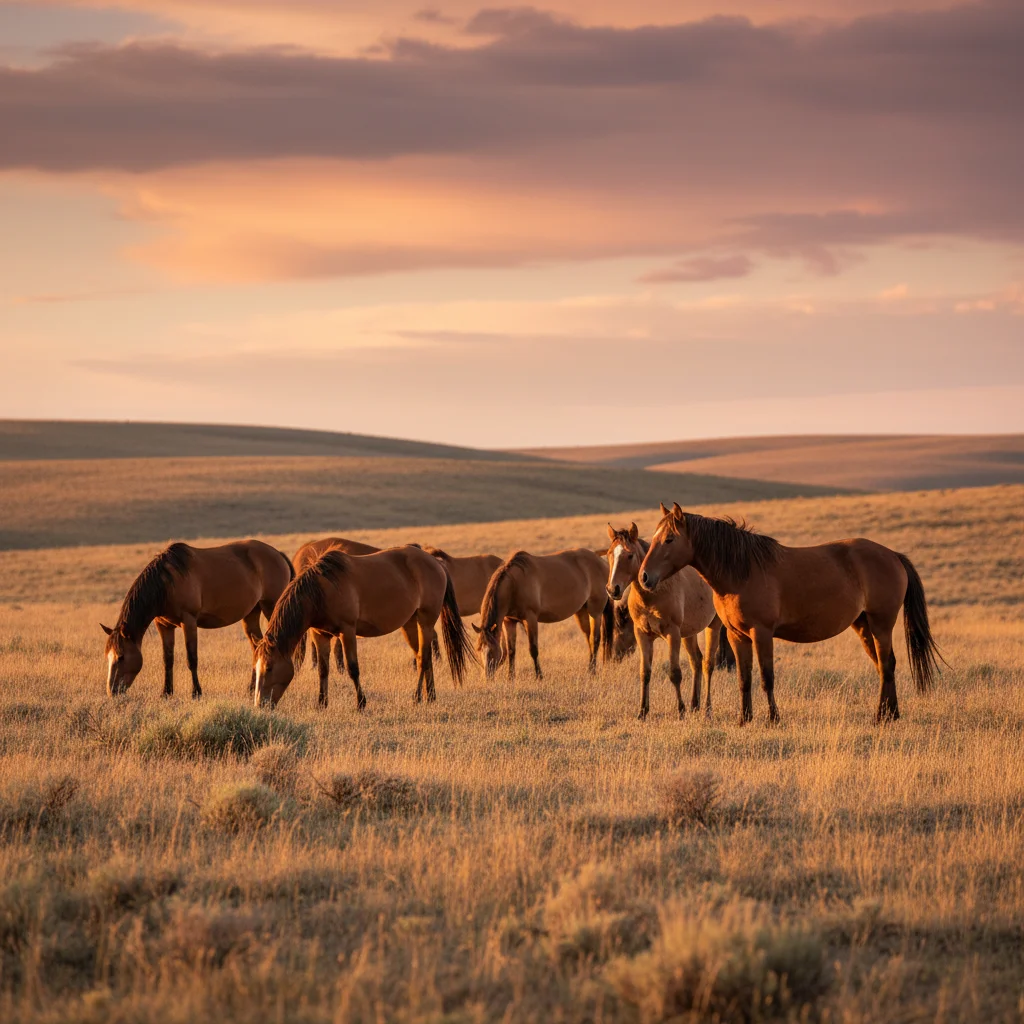
Choosing a horse isn't like picking out a saddle or a pair of boots. Get it wrong, and you're not just out a few hundred dollars. You're locked into years of mismatched expectations, frustration, and a relationship that neither of you enjoys.
The truth is, horse breed characteristics matter far more than most new owners realize before they commit. You might be dreaming of a spirited Arabian galloping through open fields — but your lifestyle calls for a steady, calm Quarter Horse who'll wait without fuss while you learn the ropes.
This guide closes that gap. You'll get honest breed comparisons, a lifestyle-matching quiz, and clear guidance on horse temperament differences that will shape your life together every single day. Because the right horse doesn't just fit your budget or your barn. It fits you.
And just like choosing the right horse, working with the right equestrian clothing manufacturer or sourcing gear from reliable equestrian suppliers plays a key role in your overall riding experience — comfort, safety, and long-term value all depend on it.
What This Guide Covers
Here's how this guide is built — and why that structure matters for you.
Finding the right horse breed isn't a single question. It touches your experience level, your riding goals, your weekly schedule, and your budget. Those are four very different factors. So this guide works through each one the way a good trainer would — straight, honest, and focused on your real life. No generic top-ten lists.
Here's what you'll find inside:
Horse breed personality traits compared side by side — temperament, energy, trainability
Size and maintenance cost breakdowns by breed, so nothing blindsides you later
Scenario-based recommendations — trail riding, family use, beginner ownership
A lifestyle-matching quiz to cut through the noise fast
Every section builds toward one outcome: a clearer, more confident answer to the question you came here with.
And as you refine your riding journey, you may also start considering custom equestrian clothing — gear tailored not just to your discipline, but to your personal style and daily needs in the saddle.
Are You Ready for Horse Ownership? Key Questions to Ask First
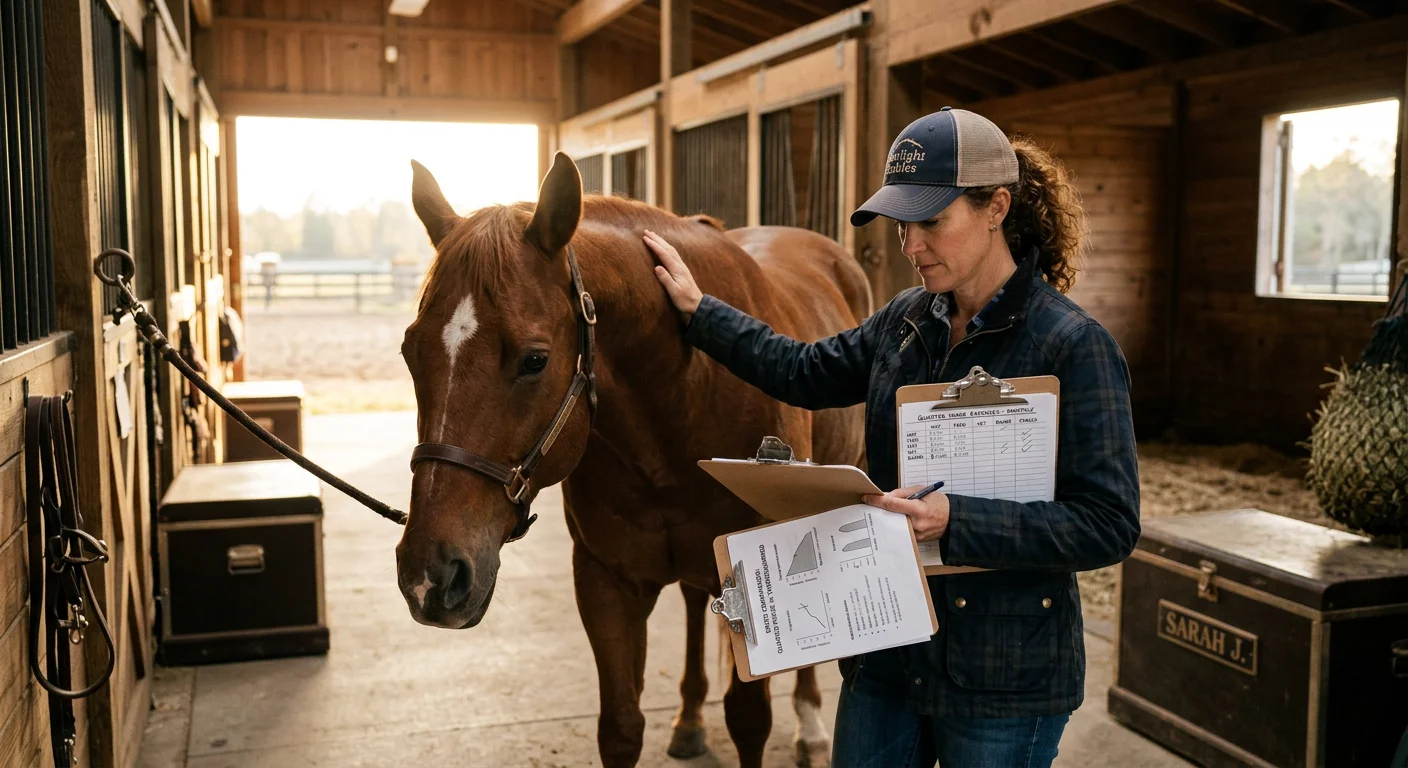
Most people underestimate what horse ownership costs — not in a vague "it's expensive" way, but in cold, specific numbers that hit hard once you see them laid out.
Here's the reality: annual horse ownership runs between $8,000 and $26,000, depending on how you use your horse. That's before unexpected vet bills, tack, or trailer fees. Take a moment to sit with that number before you fall in love with a breed.
Ask yourself these questions — and be straight with yourself:
Do I have the time? Horses need care every single day — feeding, turnout, grooming — no matter how you feel. There are no days off.
Do I have the budget? A recreational horse averages $11,800 per year. Competitive ownership pushes past $26,000. Over 25 years, that's $412,000+ for a recreational horse — and $924,000+ for a competitive one.
Do I have the space and support? Full-care boarding averages $400–$700/month. Keeping a horse at home runs around $8,600/year in baseline costs.
Do I have realistic experience expectations? A horse that works well for a seasoned rider can be flat-out dangerous for a beginner.
None of these questions are here to scare you off. They exist to protect you — and the horse. The breeds covered in this guide are useful to you in direct proportion to the foundation you build before you ever step into a stirrup.
Understanding Horse Blood Types: Cold, Warm, and Hot — What They Mean for You
Every horse comes with a classification. It tells you more about personality than color, size, or breed name ever could. That classification is blood type — and it's the first thing serious horse people look at when matching a horse to a rider.
Let's clear up the obvious confusion first: this has nothing to do with actual blood temperature. All horses are warm-blooded mammals. "Hot," "warm," and "cold" describe temperament, breeding history, and physical conformation — not biology.
Here's what each type means for you:
Hot-blooded horses — Arabians, Thoroughbreds, Akhal-Tekes — were bred for speed and stamina across deserts and racetracks. They are sharp, reactive, and highly intelligent. That combination feels electric in the hands of an experienced rider. In the hands of a beginner, it's a real safety risk.
Cold-blooded horses — Percherons, Shires, Clydesdales — come from draft horse lines built for cold northern climates. Heavy-boned, thick-coated, and steady through and through. These are the horses that wait. They are the horses that forgive. For beginners and families, they are usually the smartest starting point.
Warmbloods — Hanoverians, Dutch Warmbloods, Trakehners — sit between those two worlds. Calmer than hotbloods, more athletic than coldbloods. That balance is exactly why they own Olympic disciplines like Dressage and show jumping.
Blood Type | Temperament | Best For | Example Breeds |
|---|---|---|---|
Hot-blooded | Spirited, reactive, high-energy | Racing, endurance | Arabian, Thoroughbred |
Warmblood | Adaptable, athletic, even-tempered | Dressage, jumping, eventing | Hanoverian, KWPN, Trakehner |
Cold-blooded | Docile, steady, powerful | Trail riding, farm work, beginners | Shire, Clydesdale, Percheron |
One rule worth keeping before you go further: match your experience to the energy level, not the dream. The hotblood who looks stunning in photos will push every limit you have. The coldblood who looks plain in a field might turn out to be the most reliable partner you've ever had.
And just as understanding temperament shapes your riding experience, working with trusted equestrian suppliers ensures you have safe, durable gear that supports both horse and rider from day one.
Best Horse Breeds for Beginners: Calm, Forgiving, and Easy to Handle
Some horses teach you. Others test you. As a beginner, you want the first kind — a horse that handles your mistakes without drama and gives you room to grow.
Four breeds keep rising to the top of that list. Not because they're flashy, but because they're right.
American Quarter Horse — The Gold Standard for New Owners
First-time owners keep coming back to the same answer: Quarter Horse. This breed stands 14–16 hands and weighs between 950 and 1,200 pounds. It's built for the real world — trail riding, ranch work, 4-H, casual weekend rides. Its temperament rating sits at a flat ★★★★★ for a reason. Riders call them "loyal and gentle," time and again. The smooth three-beat lope is easy on your body and your confidence, which matters a lot early on.
For riders getting serious, many also begin exploring custom equestrian clothing — not for style alone, but for better fit, comfort, and performance during long hours in the saddle.
Haflinger — Smaller Frame, Enormous Heart
The Haflinger stands 13.2–15 hands and weighs under 1,100 pounds. That smaller size removes one of the biggest beginner obstacles: physical intimidation. A smaller horse is easier to mount and easier to manage on the ground. There's far less to feel overwhelmed by, especially if something goes wrong. Haflingers are patient with beginner mistakes. You get steady gaits, low maintenance needs, and a sweet, calm personality that makes them a top pick for families.
Morgan Horse — The One That Meets You Halfway
The Morgan is the breed that seems to want to get it right alongside you. Forgiving, quick to learn, and naturally drawn to people — Morgans earn a rare ★★★★★ in both temperament and trainability. They stand 14–15.2 hands and live well past 25 years. So this isn't just a starter horse. It can be a lifelong one.
As riders progress with adaptable breeds like Morgans, many turn to private label equestrian clothing to build a more personalized riding identity while maintaining professional-level functionality.
Welsh Pony & Cob — Built for Young and Small Riders
Children and smaller adults need a horse scaled to fit — and that's exactly what the Welsh Pony and Cob series delivers. Section A and B ponies run 11.2–13.2 hands. The larger Welsh Cob pushes up to 14.2+. These breeds are surefooted and willing. They work across disciplines from trail to jumping. Best of all, they build rider confidence without needing advanced horsemanship skills in return.
Quick Comparison: Beginner Ratings at a Glance
Breed | Temperament | Trainability | Maintenance | Height (hh) |
|---|---|---|---|---|
Quarter Horse | ★★★★★ | ★★★★☆ | ★★★★☆ | 14–16 |
Haflinger | ★★★★★ | ★★★★☆ | ★★★★☆ | 13.2–15 |
Morgan | ★★★★★ | ★★★★★ | ★★★★☆ | 14–15.2 |
Welsh Pony/Cob | ★★★★☆ | ★★★★☆ | ★★★★☆ | 11.2–14.2+ |
A few more breeds worth a look: the Paint Horse is calm and kid-friendly, standing 14.2–16 hh. The Tennessee Walking Horse has incredibly smooth gaits and earns ★★★★★ for riding comfort. The Icelandic Horse runs small at 13–14 hands, but it's tough, trail-ready, and carries the smoothest four-beat tölt you'll ever sit.
The right beginner horse doesn't make you look good. It makes you ride good — and that distinction is everything.
Best Horse Breeds for Families and Kids: Safe, Gentle, and Versatile
A family horse carries more than a rider. It carries trust — a child's first trust. That trust is fragile. Break it once, and it's hard to get back.
That changes everything about how you choose.
The breeds below aren't just gentle in calm settings. They're gentle under pressure — around noise, sudden movement, small hands, and the chaos that follows kids everywhere. That's what separates a truly safe family horse from one that only looks the part.
Shetland Pony — First Horse for the Youngest Riders
At no taller than 11.2 hands, the Shetland fits children aged 2–10 well. The small size takes away the physical fear that makes young riders hesitant. Don't let that compact frame fool you — Shetlands are tough and long-lived, with lifespans up to 30 years. They're smart, calm, and handle busy, noisy settings without much fuss.
Your child will outgrow the saddle eventually. No problem. Shetlands shift into driving work, so they stay useful long after the riding stage ends. That's a solid return on your first horse purchase.
Welsh Pony (Section C/D) — The Bridge Horse
Children grow. The Welsh Pony (Section C/D, up to 13.2 hands) keeps up with them. At 10, your child can work through jumping basics on this breed. At 14, that same rider can move into harder disciplines — trails, carriage driving, hunter/jumper — on the same horse.
Its kind, calm temperament stays consistent through all of that. Families don't have to scramble for a replacement horse every time their child hits a new skill level. That kind of long-term match is rare and worth paying attention to.
Haflinger — Built for Family Chaos
The Haflinger's stocky, compact build (800–1,100 lbs, 13.2–15 hands) can throw you off. It looks like a pure workhorse. It is — but it also delivers a smooth, forgiving trot and a sharp awareness of what's happening around it.
Loud birthday parties near the paddock? Younger siblings running past the fence? Unpredictable weekends full of noise and movement? Haflingers take it all in stride. They earn a solid ★★★★★ for temperament, plus high marks for trainability. That combo makes them one of the most dependable multi-rider breeds for family life.
Morgan & Paint — For Families with Multiple Riders
Got riders at different skill levels in the house? The Morgan and Paint Horse are two of the strongest options you'll find.
The Morgan (14.1–15.1 hands) is a people-first breed by nature — calm, alert without being jumpy, and quick to adjust to a new rider in the saddle. It holds up well over time, so you won't need to replace it as your child's skills grow. That protects your investment for the long run.
The Paint Horse earns a rare ★★★★★ in both temperament and trainability. It handles Western and English riding with equal ease. Paint Horses make up 6.8% of all U.S. horses — and that popularity comes from one thing: consistent, proven reliability across generations of family riders.
Family Breed Comparison at a Glance
Breed | Height (hh) | Temperament | Trainability | Best Age Range |
|---|---|---|---|---|
Shetland Pony | ≤11.2 | ★★★★☆ | ★★★★☆ | Ages 2–10 |
Welsh Pony C/D | ≤13.2 | ★★★★★ | ★★★★☆ | Ages 8–14+ |
Haflinger | 13.2–15 | ★★★★★ | ★★★★☆ | Kids & small adults |
Morgan | 14.1–15.1 | ★★★★★ | ★★★★★ | Youth 8–16 |
Paint Horse | 14–15 | ★★★★★ | ★★★★★ | Beginners & families |
The right family horse doesn't demand perfection from the people around it. It offers steadiness instead. Confidence grows from that steadiness — slowly, over time, the way it should.
Best Horse Breeds for Trail Riding and Pleasure Riding
Trail riding demands something specific from a horse — not flash, not showmanship, but reliability across unknown ground. The horse that earns your trust at mile three is worth more than the one that looked perfect at the sale barn.
Four breeds prove themselves out on the trail, time after time:
American Quarter Horse is the anchor of American trail riding. There are 2.1 million registered in the U.S., making up 42.1% of all domestic horses. That number tells you something. Quarter Horses are surefooted and trainable. They're also brave on unfamiliar terrain — not nervous, not dramatic. They handle 25–50 mile endurance rides without missing a beat.
American Paint Horse brings the same calm strength to the trail. The athletic balance is real. Long stretches feel manageable, not exhausting. This makes the Paint a strong pick for beginners who want endurance without the anxiety that comes with a hot-tempered horse.
Morgan Horse earns deep respect in mountain terrain. Rocky Mountain riders rely on them for good reason. Morgans adapt to rough conditions, push through hard footing, and don't quit when the trail gets tough.
Tennessee Walking Horse solves one very specific problem. That smooth four-beat running walk absorbs miles in a way that protects your body over long distances. Your joints feel the difference by the end of the day. This breed is ideal for riders where comfort over distance is a priority.
Breed | Endurance Range | Best Terrain | Temperament |
|---|---|---|---|
Quarter Horse | 25–50 miles | Varied | ★★★★★ |
Paint Horse | Moderate–long | Flat to rolling | ★★★★★ |
Morgan | Long | Mountain/rough | ★★★★★ |
Tennessee Walker | Long | All terrain | ★★★★★ |
Want something wilder and built tougher? Mustangs carry centuries of self-selected endurance in their bloodlines — surefooted by nature, not by training. And for the most demanding terrain out there, experienced riders tend to say the same thing: nothing stops a gaited mule.
The trail doesn't care how your horse looks leaving the paddock. It cares what your horse does when the path narrows and the footing disappears.
Best Horse Breeds for Competition and Advanced Riding
At the top levels of the sport, the gap between a good horse and the right horse comes down to tenths of a point. Sometimes even less.
Competition asks for something trail riding never does: precision under pressure, day after day, in front of judges who catch every mistake. The breeds that win here weren't chosen for being calm or easy to handle. They were built to perform.
Warmbloods dominate the Olympic disciplines — dressage, show jumping, eventing. The reason is straightforward: Thoroughbred crosses in their bloodlines deliver the right mix of agility, power, and trainability.
Hanoverian — a top choice for elite dressage, backed by strong fitness and stamina
Oldenburg — carries Thoroughbred, Trakehner, and Hanoverian lines; a breed with deep dressage roots
Holsteiner — known for good temperament, fluid movement, and trainability at all competitive levels
Belgian Warmblood — climbing fast in show jumping; works best for advanced riders with a firm, confident hand
Thoroughbreds lead the speed disciplines. The numbers say it all: Flightline scored 140 (2022), Equinox hit 135 (2023). That level of performance has a price — these horses are high-strung, intense, and harsh on riders who lack experience.
The Andalusian (15.2–16.2 hands) brings real athletic power to dressage. Its high energy isn't easy to manage. You need experience and confidence in the saddle. This breed does not accept unclear signals from its rider.
One rule that holds true here: advanced horses need advanced riders. These breeds will find every weak spot in your horsemanship — and fast.
Best Draft Horse Breeds for Farm Work and Heavy Pulling
Draft horses don't ask for your admiration. They ask for a job — and then they do it without complaint, day after day, in mud and heat and the kind of silence that working land produces.
Your goals run toward farm work, logging, or heavy hauling? Breed selection isn't about temperament ratings or smooth gaits. It's about pulling power, stamina, and what a horse costs to keep relative to what it gives you.
The Main Players
Belgian (15.2–17 hands, 1,900–2,200 lbs) has held the title of America's most popular draft breed since 1937. Loggers reach for Belgians first when heavy loads need to come out of the woods. They often eat less than a Thoroughbred — despite outweighing one by a thousand pounds. That's a hard combination to beat.
Percheron (15.2–17 hands, up to 2,100 lbs) once made up two-thirds of all U.S. registered draft horses in 1930. That dominance came from real utility. Heat tolerance, hard-pulling stamina, and a level of refinement you wouldn't expect from a horse built this heavy.
Clydesdale (16–18 hands) fits hauling and haying better than plowing. It's nimble, fast-paced, and picks up training quickly. But those signature feathered legs need serious upkeep. Feather-legged breeds face a higher risk of scratches and chronic progressive lymphedema (CPL). Clean-legged breeds like the Suffolk Punch and American Cream Draft avoid those problems altogether.
The Suffolk Punch is the one draft breed developed for farm use and nothing else. It runs on less feed than most drafters and outlasts them in long work sessions. Fewer than 200 are registered each year — rare enough that finding one takes effort, but worth it.
The American Cream Draft fits small farms and first-time drivers well. Calm, docile, and easy to work with — it handles stump pulling, plowing, and log hauling with equal willingness.
Match the Breed to the Work
Breed | Best Task | Conservation Status |
|---|---|---|
Belgian | Logging, heavy pulling | Watch (<5,000/year) |
Percheron | General farm, endurance | Watch (<5,000/year) |
Clydesdale | Hauling, haying | Minor (<1,000/year) |
Suffolk Punch | Plowing, long work periods | Rare (<200/year) |
American Cream Draft | Small farms, novice drivers | Critical |
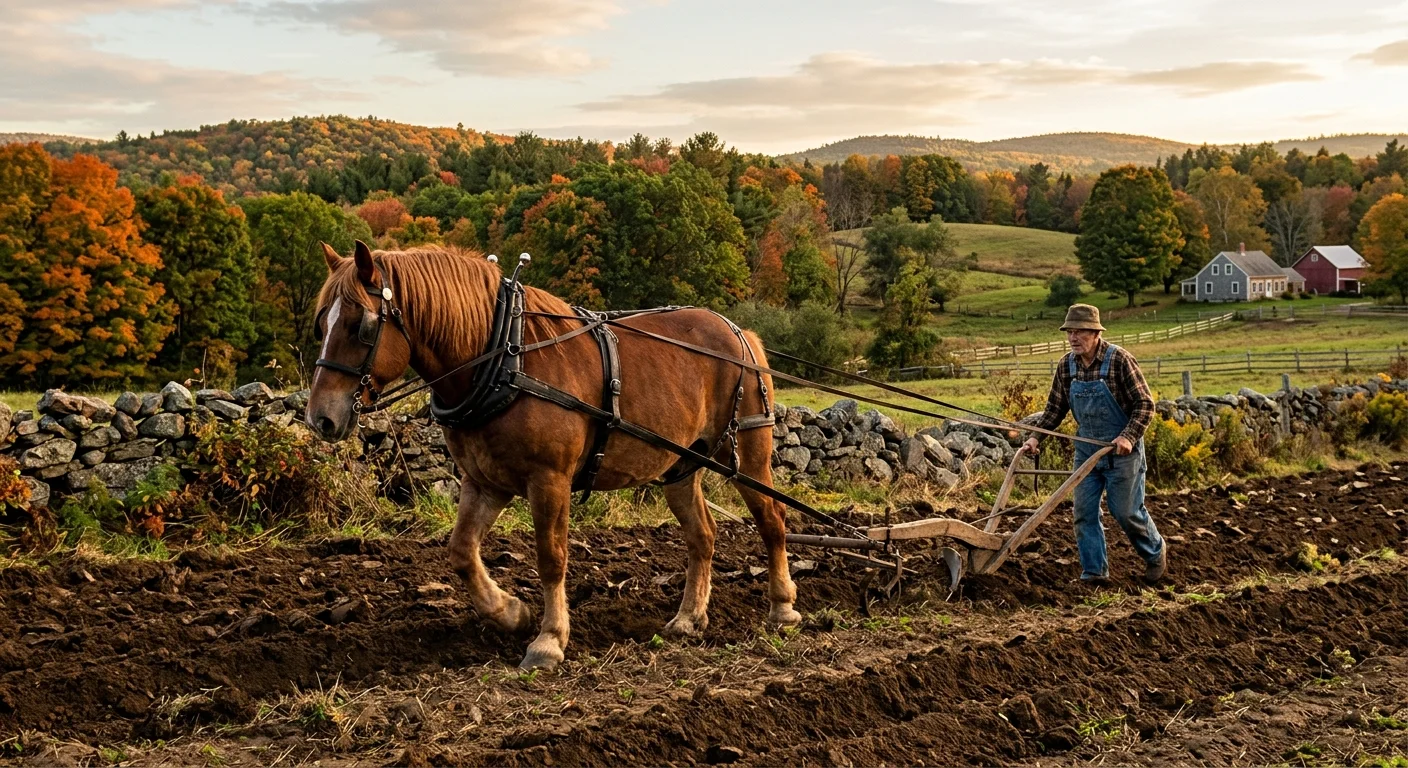
Experienced farmers tend to come back to one point: working horses belong on small farms. Large-acreage operations don't leave enough time to prepare and put away a draft team each day. Farming New England plots rather than Midwest spreads? The numbers shift in the draft horse's favor. Smaller fields, tighter turns, and varied terrain are where these horses earn their keep.
Horse Breed Comparison Chart: Size, Temperament, Experience Level & Best Use
All the details from the previous sections come down to one question: which horse fits your life? The table below breaks it down — breed by breed, covering size, temperament, experience requirement, and best use.
Breed | Height (hh) | Temperament | Experience Level | Best Use | Maintenance |
|---|---|---|---|---|---|
Shetland Pony | ≤10.2 | Intelligent, good-natured | Beginner (kids) | Riding, driving | Low |
Haflinger | 13.2–15 | Agile, calm, strong | Beginner–Intermediate | Dressage, driving, endurance | Low |
Welsh Pony/Cob | 13.2+ | Spirited yet gentle | Beginner (kids/adults) | Jumping, pleasure, driving | Low |
Norwegian Fjord | 13.2–15 | Hardy, versatile | Beginner–Intermediate | Riding, endurance | Low |
Connemara | 12.2–14.2 | Willing, intelligent | Beginner–Intermediate | Eventing, jumping | Low |
Belgian Draft | 16–17 | Calm, willing | Novice–Intermediate | Draft work, carriages | Moderate |
Percheron | 16–17 | Easygoing, steady | Intermediate | Farm work, carriage driving | Moderate |
Shire | 16.2–18 | Good-natured | Novice–Intermediate | Heavy pulling, show | High |
Hanoverian | 15.3–17.2 | Willing, focused | Intermediate–Advanced | Dressage, show jumping | Moderate |
Dutch Warmblood | 15.2–17 | Calm, athletic | Intermediate–Advanced | Dressage, eventing | Moderate |
Three clear patterns stand out across these breeds.
Ponies under 14.2 hands have easygoing temperaments and low maintenance needs. They're the natural starting point for new riders, especially kids.
Draft breeds from 16 hands up are calm and manageable, even for novice handlers. That said, their size means you'll need more space and a bigger feed budget.
Warmbloods belong in intermediate-to-advanced hands. Their athletic ability rewards riders with strong, clear communication — and exposes those without it.
Use this chart as your shortlist. Then let your lifestyle, not just the numbers, make the final call.
The Horse Breed Quiz: Answer 5 Questions to Find Your Perfect Match
Five questions. That's it. Answer them, and you'll get a shortlist of breeds that fit your life.
The idea is simple but effective. This quiz filters 600+ horse breeds down to your top 3 matches. It uses five key factors — experience, goals, time, location, and budget.
Answer straight. The quiz works best when you're honest with yourself.
Q1. What's your riding experience?
Beginner / Intermediate / Advanced
Q2. What's your primary riding goal?
Trail & pleasure / Competition & sport / Farm & work
Q3. How many hours per week can you commit?
Under 5 hours / 5–15 hours / More than 15 hours
Q4. Where do you live?
Ranch or rural / Suburban / Urban
Q5. What's your realistic budget?
Under $5,000 / $5,000–$15,000 / Over $15,000
What Your Answers Tell You
Your Profile | Top Match | Why It Works |
|---|---|---|
Beginner + Trail + <5h + Suburban + <$5K | Appaloosa | Hardy, low-maintenance, forgiving |
Beginner + Trail + <5h + Ranch + <$5K | Quarter Horse | Docile, surefooted, trail-proven |
Intermediate + Competition + 5–15h + Rural + $5–15K | Thoroughbred | Athletic, responsive, competition-ready |
Advanced + Sport + >15h + Ranch + >$15K | Warmblood | Built for jumping and eventing precision |
Beginner + Farm work + Rural + <$5K | Percheron or Belgian | Calm giants that pull hard and cost less to feed than you'd expect |
Your results show three breeds in priority order — not just one. Real life doesn't fit a single box, so you get options that match your full picture.
Common Horse-Lifestyle Mismatch Mistakes (And How to Avoid Them)
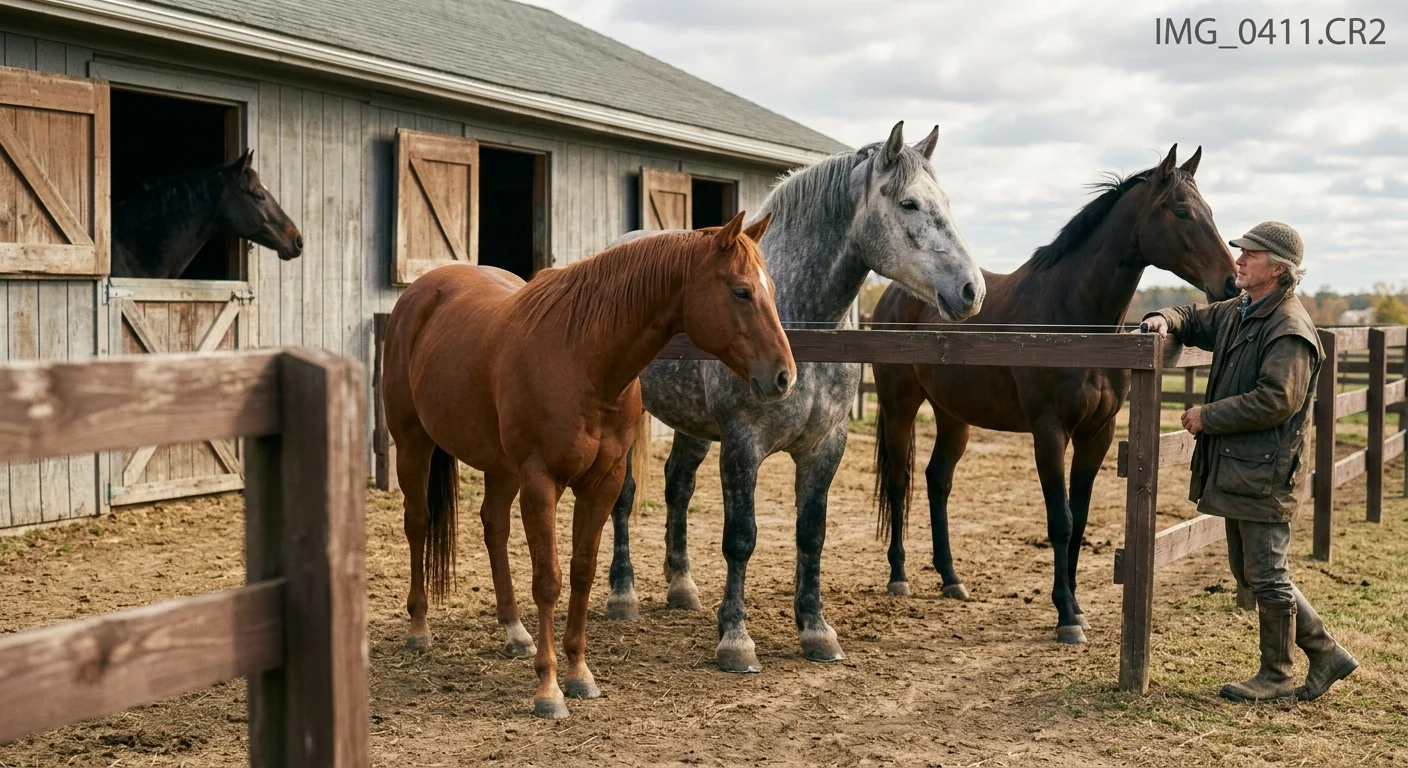
Between 10% and 20% of domesticated horses develop stereotypies — weaving, cribbing, stall-walking. These behaviors are rare in the wild. That number says a lot about mismatched ownership.
The most common mistake is placing a high-energy breed into a low-demand life.
Thoroughbreds are the clearest example. A study on 743 Chilean racehorses found 11% showing stereotypies. The cause came down to confinement, minimal turnout (averaging just 86 minutes per day), and zero social contact. Over 90% of racehorses also carry gastric ulcers — a physical burden that makes behavioral problems worse. Put that horse into a casual suburban setup, and you're not just mismatching temperament. You're setting the animal up for chronic stress.
The physical costs are real and specific. Weaving strains neck muscles at odd angles and speeds up shoe wear. Stall-walking cuts literal trenches into stable floors. It also risks muscle breakdown from repetitive spinal movement.
Four corrections that work:
Increase forage to more than 54% of the diet, fed two to three times a day
Provide a minimum of two to four hours of turnout each day
Allow visual or physical contact with other horses — solid-wall isolation makes everything worse
Match breed energy to your real schedule each week, not the ideal version of it
Draft breeds in muddy paddocks face a different version of the same problem. Movement-based stereotypies speed up hoof and ligament damage on wet ground. For heavy breeds, regular farrier checks and dry footing are not optional — they're basic maintenance.
The quiz results from the previous section point you toward the right breed. This section exists to protect that match once you've made it.
What to Do After Choosing Your Horse Breed: Next Steps for New Owners
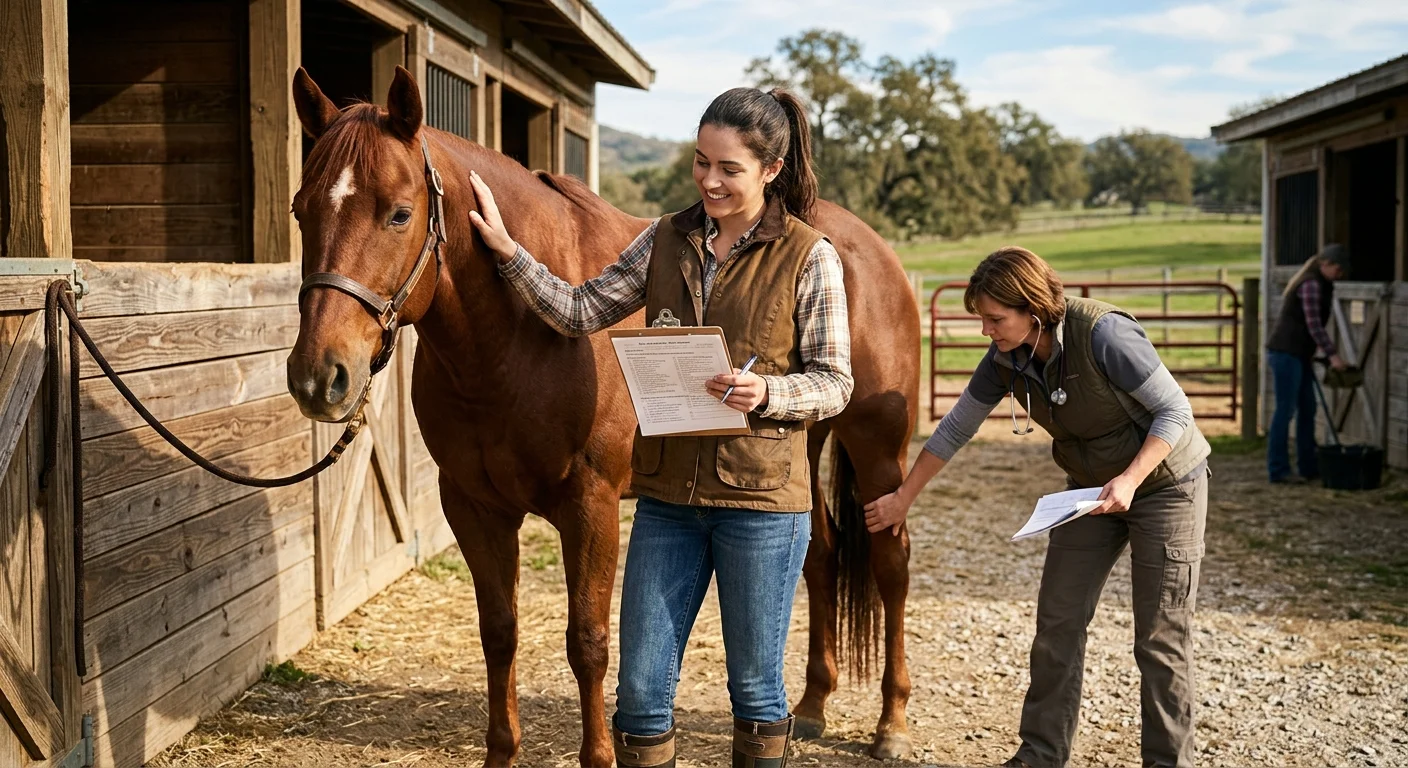
The breed decision is made. Now the real work begins — and it follows a specific order.
Run through these steps before you hand over any money:
Set your full budget — purchase price plus first-year running costs ($3,000–$10,000 per year)
Find vetted sellers — equestrian contacts, breed organizations, and local shows are far more reliable than unverified social media listings
Ask the hard questions — age, training history, behavioral issues, health records
Bring a trainer to the visit — watch how the horse handles, grooms, and moves through all gaits
Book a Pre-Purchase Exam (PPE) — a vet will catch hidden issues you won't spot on your own. That's 20–30% of horses with problems like lameness, cribbing, or heart irregularities
Don't skip the PPE. Ever.
Once the horse is yours, your first three months shape everything that comes after. Budget $500–$2,000 for essential gear — halter, grooming kit, a saddle and bridle that fit your horse correctly. Schedule farrier visits every 4–6 weeks. Book 1–2 riding lessons per week with a certified instructor ($50–$100/hour). Plan for 8–12 hours of turnout each day — horses need that time outside to stay sound and settled.
The horse you chose on paper becomes the horse you truly know — out here, in the work.
Video Guide
Conclusion
Choosing the right horse isn't about finding the most popular breed — it's about finding your breed. It should match your experience, your schedule, your budget, and your personality. The best horse for you is the one you can build a real partnership with. A Quarter Horse's steady calm might suit you. Or maybe the bold energy of an Arabian is what clicks.
Horse ownership is one of the most rewarding commitments you'll ever make — but the match has to be right. Understanding horse breed characteristics and how they fit your lifestyle matters a lot. Get clear on this before you ever step foot on a property to view a horse.
So take the quiz. Revisit the comparison chart. Ask the hard questions.
Then go find the horse that feels like it was waiting for you all along.
Because the right horse doesn't just fit your life — it changes it.