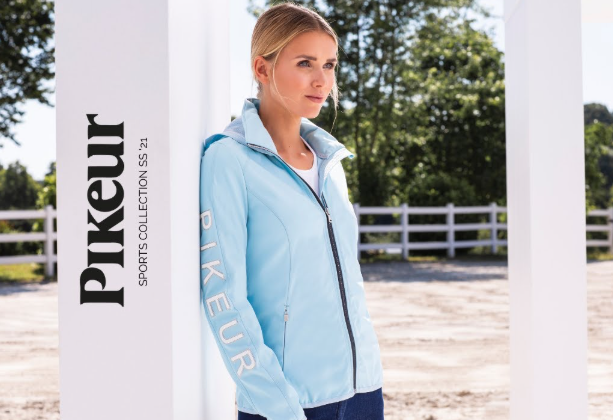
Premium equestrian wear costs more than mainstream brands. You need to know where it comes from. Is that price tag worth it?
Pikeur is a German riding apparel brand. Olympic champions wear it. So do weekend riders. The brand has built its reputation on something rare in today's fast-fashion world: genuine European craftsmanship. Unlike many modern equestrian clothing manufacturers that outsource production to cut costs, Pikeur maintains complete manufacturing transparency.
Here's what makes Pikeur different. Competitors often market themselves as premium equestrian suppliers while slapping "European design" labels on products made elsewhere. Pikeur? Every single piece bearing their label is manufactured in Germany. The brand has maintained its production facilities there since 1960, setting a standard that few equestrian outfit manufacturers can match today.
You might be trying to authenticate a second-hand purchase, or maybe you're justifying the investment to yourself. Perhaps you want to understand what separates Pikeur from the growing sea of high-end custom equestrian clothing options. The brand's manufacturing story shows why serious riders consider these breeches worth every euro.
Pikeur's Manufacturing: The Werther Facility

Werther, Westfalen, located 10 kilometers from Bielefeld, holds Pikeur's main production facility. This isn't just an office; it is a fully operational equestrian clothing factory where raw fabric transforms into medal-winning gear.
The story starts small. In 1957, Haefner & Co. ran a shop in Uchte. By 1964, they launched industrial manufacturing under the PIKEUR name. Their focus was creating materials that moved with riders. The Brinkmann family took over in 1990. They renamed it Pikeur Reitmoden Brinkmann GmbH & Co. KG and moved headquarters to Herford. But crucially, they kept production German, resisting the trend among equestrian manufacturers to move operations offshore.
Step into Pikeur's Werther facility today, and you'll see European craftsmanship at scale. The 2018 logistics center in Esch (still Werther) covers 8,000 square meters across two stories. It's built to expand more. This facility ships 100,000 packages and hanging garments each year. That's over 2 million individual items. Peak days? 1,200 packages leave the warehouse. This level of output requires a sophisticated supply chain that rivals any global equestrian clothing manufacturer.
The Brinkmann family still runs everything. Second and third generations now manage production, personnel, and quality control. This brand doesn't outsource to chase margins like typical equestrian suppliers. Every stitch happens in Germany. The legal entity keeps its entire production chain local and accountable.
Heritage and Partnership: 60+ Years of Craftsmanship

Most fashion brands chase trends. Pikeur chases perfection. Since 1957, they have evolved from a small shop into Germany's first true maker of equestrian fashion. This distinction matters because they defined the category of custom equestrian outfit production before it was an industry standard.
Fast forward to 1990. The Brinkmann family acquires the company. This isn't a corporate takeover; it's personal. Friedrich Wilhelm Brinkmann and his sons kept everything in-house. Today, Markus and Julius represent the third generation. It is a family business in the truest sense, distinguishing them from conglomerate-owned equestrian clothing manufacturers.
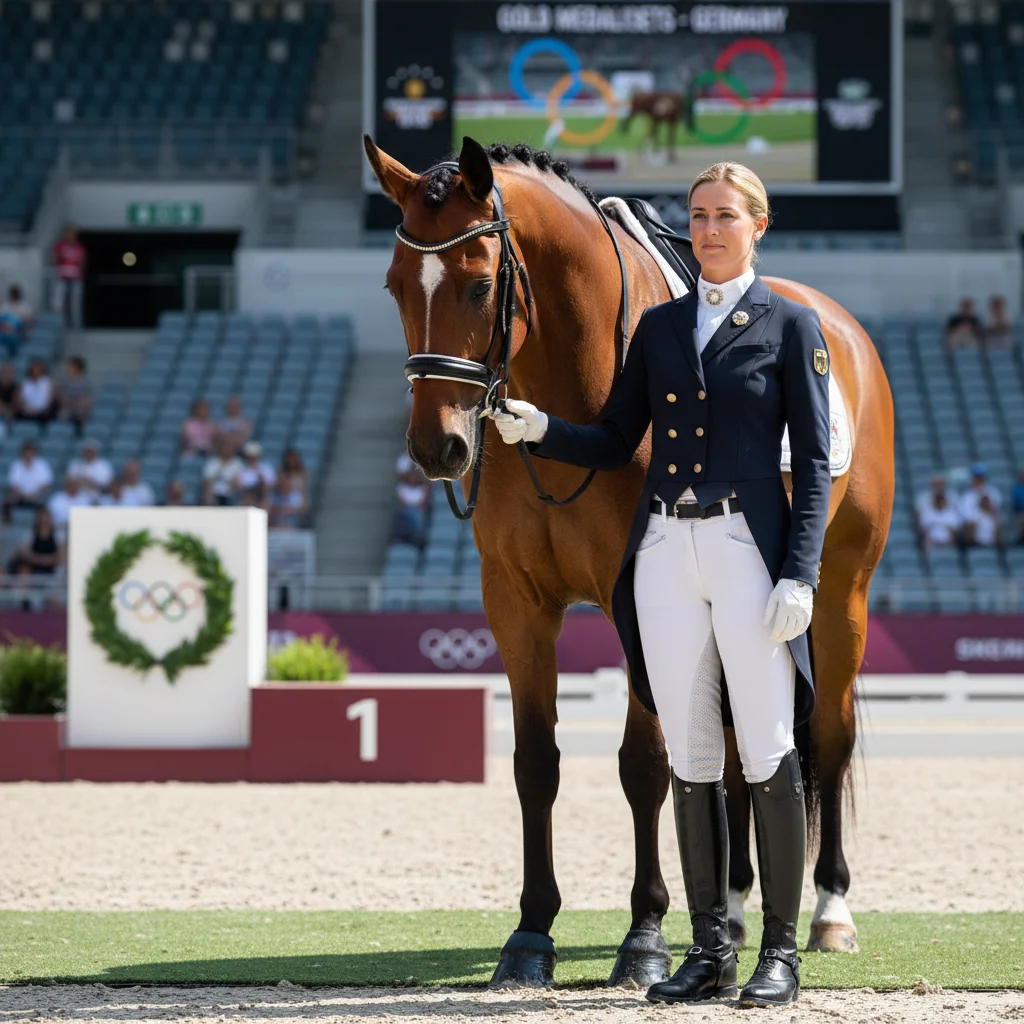
Pikeur has outfitted German national equestrian teams since 1972. They created full DOKR uniforms for all seven disciplines at the 2006 World Equestrian Games. Olympic medals have been won in their gear, including the 1988 Seoul team gold won by Wolfgang Brinkmann himself. When the owners of equestrian outfit manufacturers compete in their own gear at the Olympics, that is not just marketing—it is conviction.
December 2024 brought news of another four-year extension through 2029. This means for over 50 years, DOKR has trusted one brand for their custom equestrian apparel. You are buying 65 years of precision, tested where seconds and millimeters determine medals.
Real "Made in Germany" Quality
The "Made in Germany" label isn't decoration. It is a promise backed by technologies that many equestrian manufacturers try to copy but fail to replicate.
German textile production follows strict labor laws and environmental standards. Pikeur keeps production at their Werther and Uchte facilities because precision matters. Their computer-controlled cutting systems slice fabric to exact tolerances that a standard equestrian clothing factory might miss. Every seam gets double-stitched. The flat-lock finish technique was developed in-house to create seams that won't chafe during eight-hour training days.
The fabric specs tell the real story. Pikeur's moisture-wicking materials perform 30% better than standard polyester blends found in generic wholesale equestrian clothing. Their 4-way stretch fabrics and Sensil Heat technology are lab-tested. The polyurethane dot coating on Grip breeches is applied to high-contact zones where you need slip resistance most.
Other brands might use OEM/ODM services to glue stiff patches onto breeches. Pikeur engineers elastic grip that moves as you post, sit, or jump. Riders like Olympic show jumper Willem Greve call it "the best worldwide." Linda Erbe notes her gear retains quality after years of use. This is the difference between mass-market private label equestrian clothing and true German engineering.
Elite Status: Official Outfitter Since 1972
Fifty-two years. That's how long Pikeur has dressed Germany's best riders. The partnership with DOKR (German Equestrian Olympic Committee) isn't just a sponsorship; it is the longest-running collaboration in equestrian sport history.
The 2006 World Equestrian Games in Aachen showed the real scale. Pikeur outfitted the entire German national team. Every rider, every official. Show jumpers need different fits than dressage riders; driving competitors want specific mobility features. Supplying this level of custom equestrian clothing requires serious logistical capability.
By 2017, the operation had grown massive, providing outfits for 525 people—a total of 5,271 individual items. This wasn't off-the-rack gear; it was specialized custom equestrian apparel designed for world championships. Olympic committees don't commit to five-decade partnerships without reason. They need reliability that generic equestrian suppliers cannot guarantee.
Identifying Authentic Pikeur Products
The counterfeit market doesn't care about your riding career. Fake breeches flood online marketplaces, often imitating the look of high-end custom equestrian clothing but failing in performance. Pikeur relies on distinct manufacturing quality, but you need to know what to look for.
Start with the label. Genuine Pikeur labels sit flat against the fabric with tight, even stitching. Fakes often use loose stitching and uneven fonts. Care labels include instructions in multiple languages, with German appearing first. The fabric composition on the tag must match the garment reality—fakes often list conflicting percentages.
Feel the fabric. Pikeur's bi-elastic materials have a distinct, substantial hand-feel. Simple copies found in cheap wholesale equestrian clothing batches feel slippery or sticky. Check the construction: Pikeur's flat-lock seams lie flat with no bulk. Mismatched thread colors or plastic zippers where YKK metal should be are immediate red flags.
The best protection is buying from an authorized dealer. Prices below 60% of retail are suspicious; authentic custom equestrian outfit pieces hold their value.
Product Range and Global Distribution
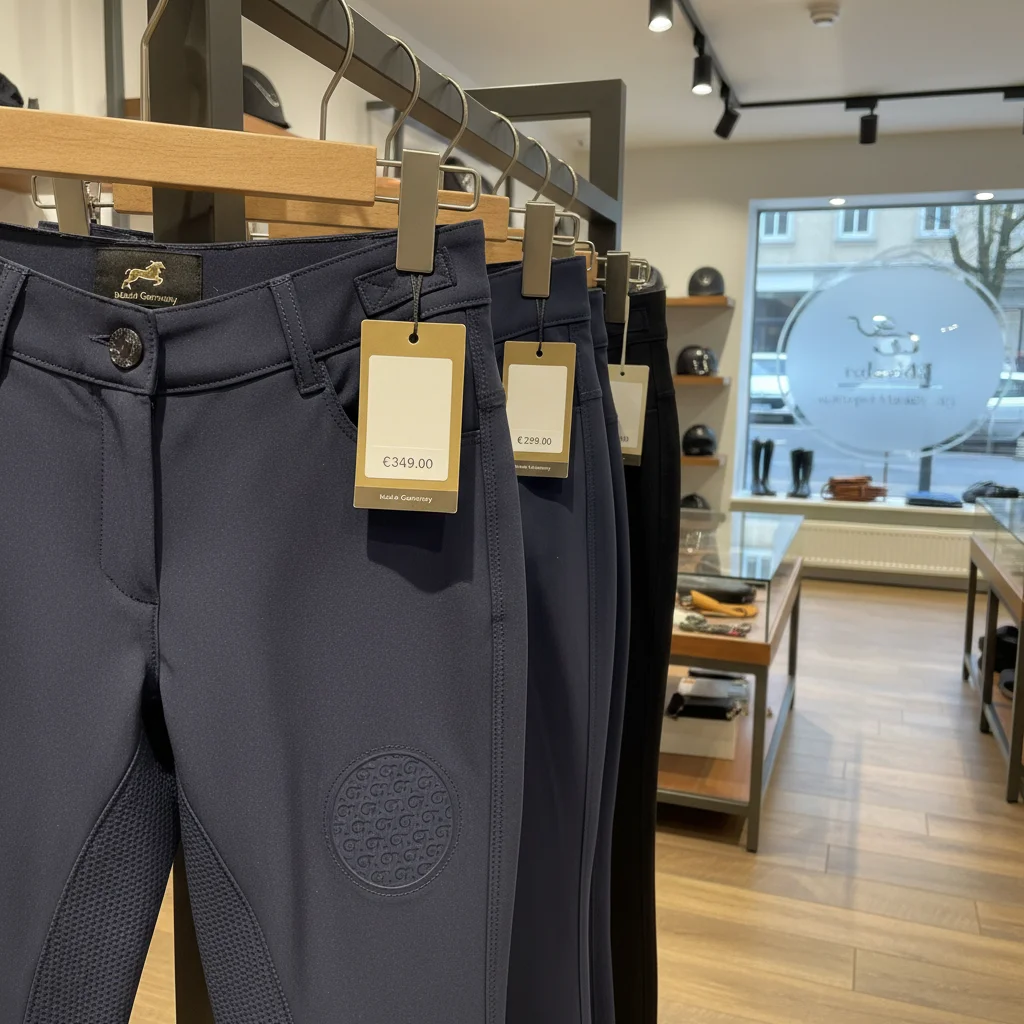
Pikeur makes more than just breeches at their Werther facility. Their catalog showcases the capabilities of a top-tier equestrian clothing manufacturer. The breech collection includes McCrown styles and Grip models with flexible polyurethane patches. Sizes range from children's 68 up to adult 59, offering a custom equestrian clothing feel for every body type.
The range extends to competition jackets (Turniersakkos), tailcoats (Fräcke), and the ABUS PIKEUR riding helmets, creating a complete custom equestrian outfit system. Seasonal lines like Athleisure and Selection bring fashion to the stable, while the Basic Collection offers core pieces. With over 60 different color shades, from "night sky" to "brocade brown," they function like a specialized design house.

Getting these products to you involves a massive network. Germany, the world's fourth-largest horse exporter, has established logistics channels that Pikeur utilizes. Whether shipping to the 271 million euros US market or within Europe, they use the same networks that move high-value sport horses. Your local dealer stocks Pikeur through distribution centers that handle wholesale equestrian clothing logistics efficiently, ensuring the 8,000-square-meter center in Esch can reach stables globally.
Pikeur vs. The Global Industry Landscape
European riding wear splits into clear camps. Pikeur and its sister brand Eskadron hold Germany's flag. Others, like Euro-Star, operate out of the Netherlands, while Italian artisans focus on handmade boots. However, the manufacturing numbers tell a story of two different business models.
Pikeur produces premium breeches at €45-80 per unit in their Werther facility. German seamstresses earn €25-35 per hour, supporting local families and retaining skills. In contrast, many brands now utilize OEM/ODM services in Asia, where production costs drop to €18-35 per unit and labor costs are significantly lower. Brands using these private label equestrian clothing strategies can cut lead times to 6-10 weeks, whereas Pikeur's European quality cycle runs 10-16 weeks.
78% of European riding wear brands now consider Asian suppliers. The math is tempting: one brand cut production costs by half and saw sales jump. But Pikeur refuses to switch to these OEM/ODM services. They keep every stitch in Germany despite rising costs. They are betting that riders value the consistency of a German equestrian clothing factory over the lower price points of outsourced goods.
While specialized equestrian manufacturers like DeNiro and Parlanti focus on custom leather work, and mass-market brands target wholesale equestrian clothing for schools, Pikeur occupies the performance peak. Their 60-year relationship with local mills ensures fabric quality that private label equestrian clothing simply cannot match. It is about wash resistance, grip durability, and sizing consistency that professionals rely on.
Conclusion
Buy Pikeur, and you get six decades of German craftsmanship in every seam. This isn't just riding clothes; it is the result of a dedicated equestrian clothing manufacturer refusing to compromise. Pikeur makes their gear at a modern facility in Germany, sticking to strict standards that generic equestrian suppliers often bypass.
The "Made in Germany" label means more than location. It is a promise of precise engineering and ethical production. When you invest in high-end custom equestrian clothing from Pikeur, you are getting fabrics and stitching tested by Olympians. Whether you need a single pair of breeches or a complete custom equestrian outfit for competition, the quality remains consistent.
From the Werther factory floor to the global stage, Pikeur stands apart from other equestrian outfit manufacturers. Check the seams, feel the fabric, and verify the authenticity. You're holding proof of why true manufacturing heritage matters. Browse authentic collections at authorized retailers or contact us at Run Equestrian for personalized sizing help. Your perfect fit in German-engineered custom equestrian apparel is waiting.