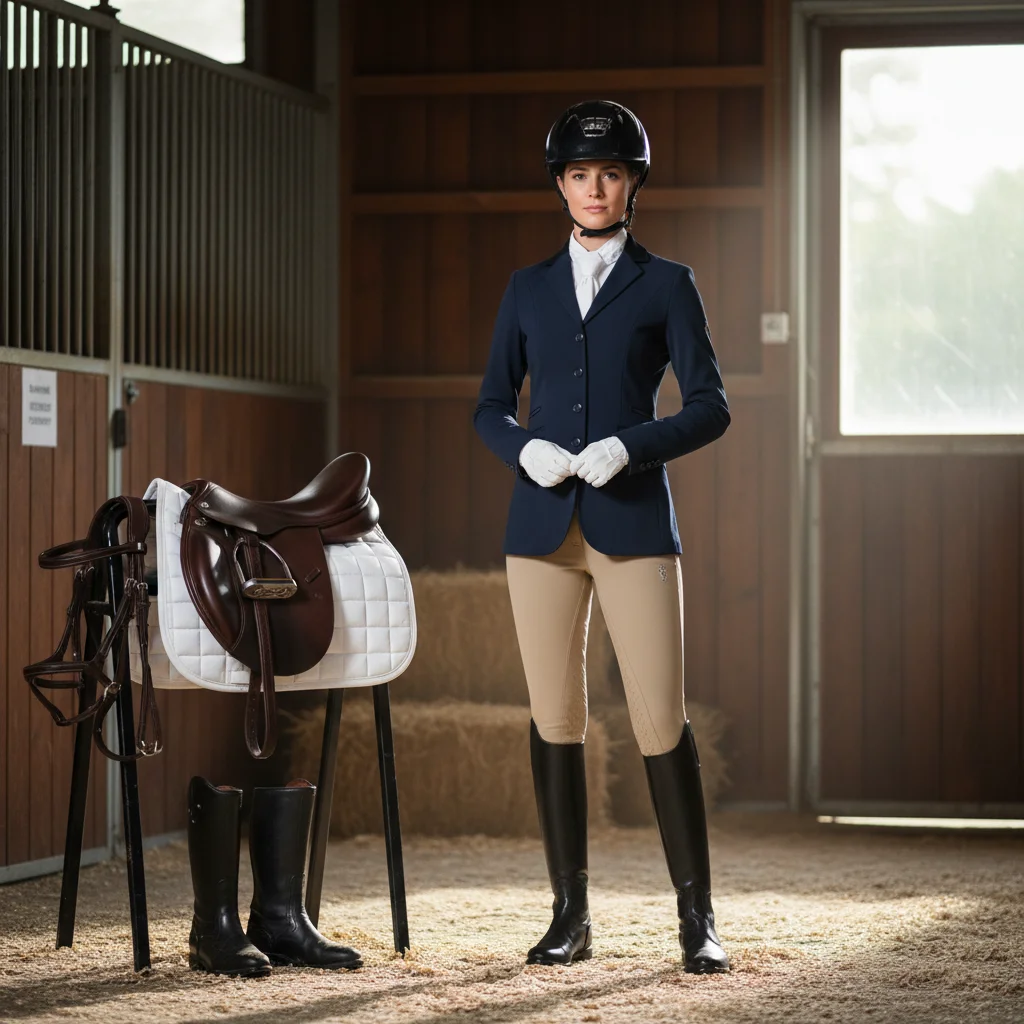
You found the perfect show jacket. But on competition morning, standing in front of the mirror, something still feels off. The colors clash. The proportions look awkward, and you can't figure out why.
Here's what most riders miss: dressing well in the saddle isn't about spending more. It's about knowing the rules—and knowing where your gear comes from.
Whether you are sourcing from top equestrian clothing manufacturers or curating a personal capsule wardrobe, the strategy remains the same. The 3-3-3 rule for equestrian outfits is the quiet secret behind those polished riders who always look put-together. From schooling on a Tuesday to stepping into the hunter ring, this system ensures you get it right every time.
This guide breaks down the methodology used by professional stylists and leading equestrian outfit manufacturers to create versatile, functional riding wardrobes.
What Is The 3-3-3 Rule?
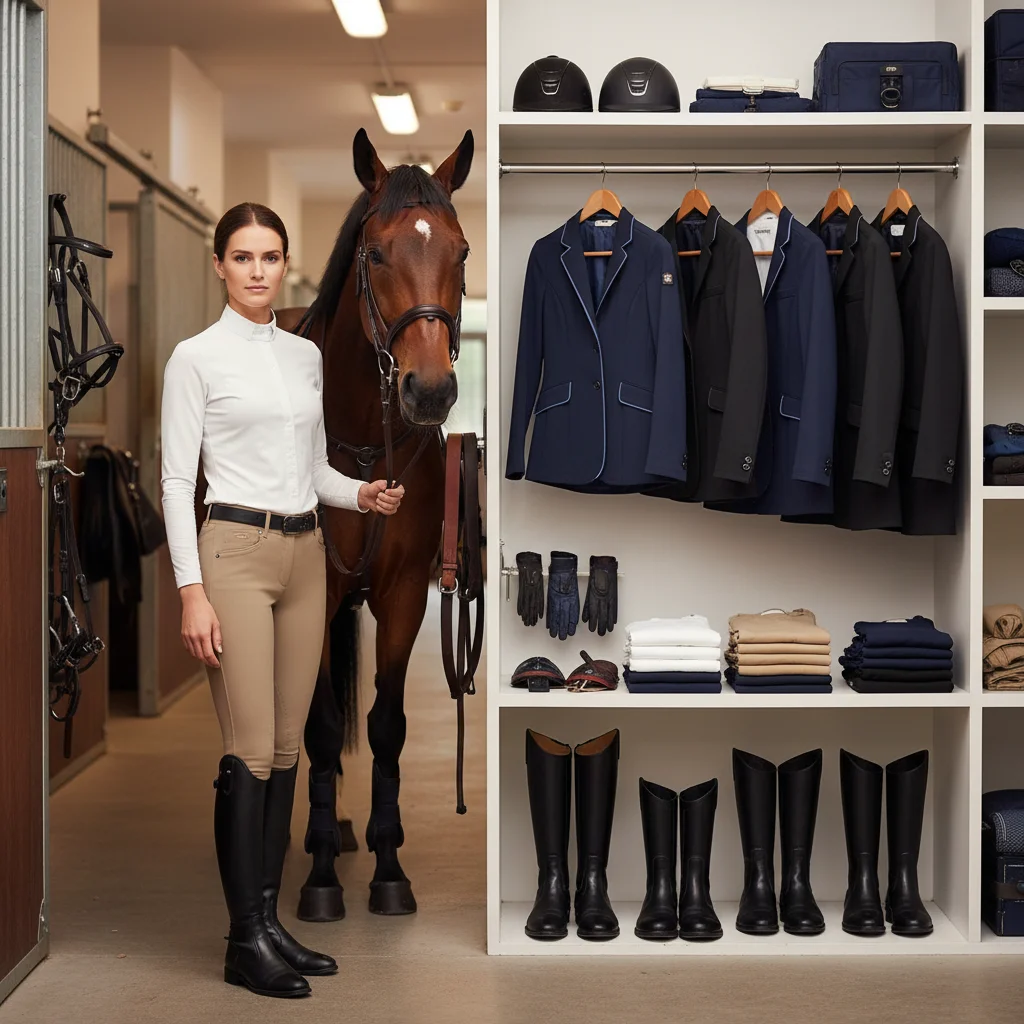
The rule is simpler than it sounds—and more powerful than most riders expect. At its core, the 3-3-3 rule is a minimalist wardrobe formula: 3 tops, 3 bottoms, and 3 pairs of footwear. Nine pieces total.
Here creates the magic: those nine items give you up to 27 interchangeable outfit combinations.
For equestrian dressing, it works like this:
| Tops | Bottoms | Footwear |
|---|---|---|
| White show shirt | Tan breeches | Black field boots |
| Navy polo | Black breeches | Brown paddock boots |
| Hunter green button-up | Gray schooling tights | Half chaps + paddock boots |
Fashion minimalists—and savvy equestrian manufacturers—figured this out decades ago: you don't need more clothes; you need smarter clothes. The framework forces you to be intentional. Every piece must earn its spot by working across color, silhouette, and fabric weight.
Think about what riders face daily: competition dress codes, neutral palettes, weather layering, and safety standards. These aren't obstacles; they are the exact conditions where a structured approach works best. By selecting high-quality pieces, perhaps from a specialized equestrian clothing manufacturer known for durability, you ensure your nine items survive the rigors of barn life.
The 3 Tops: Building Your Upper Half
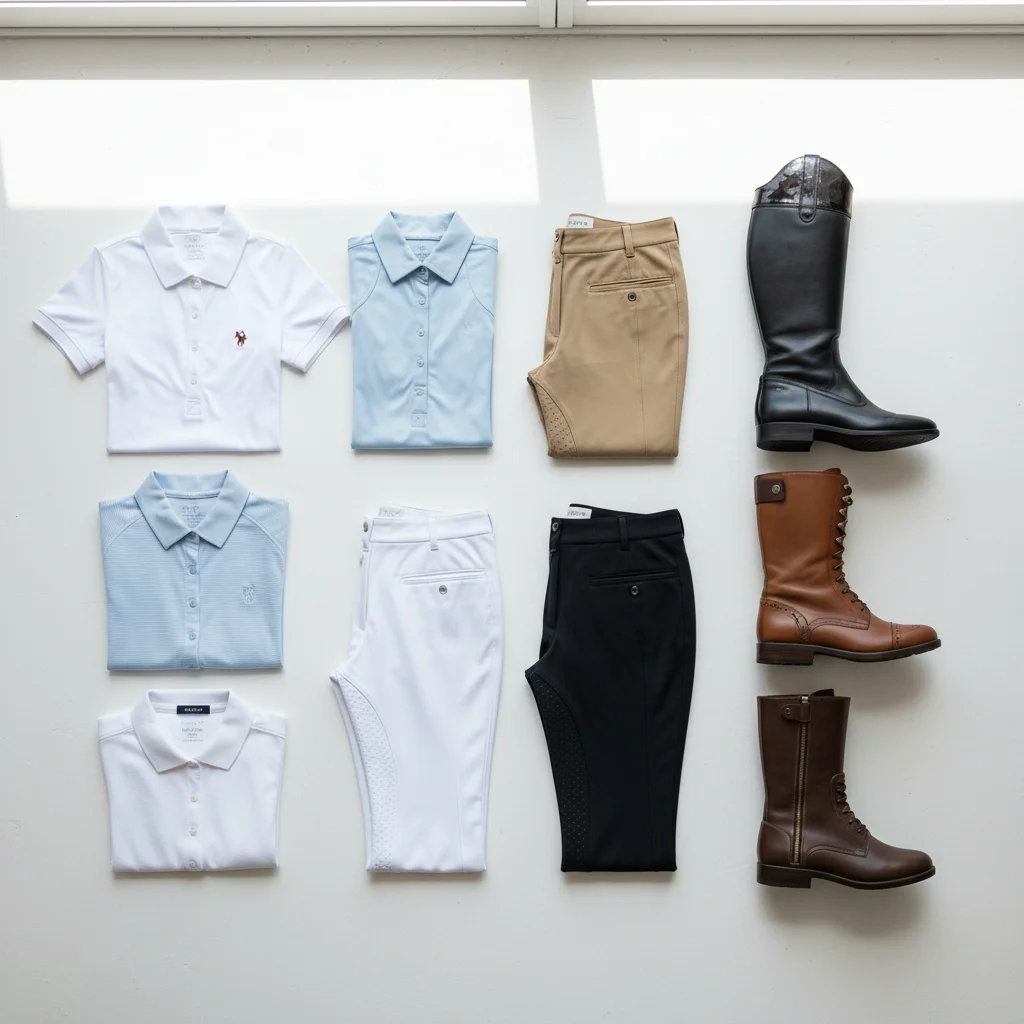
Three shirts. That's all it takes to cover every occasion—from a formal dressage test to a grey Tuesday morning in the schooling ring. When exploring custom equestrian clothing options, focus on these three essentials.
The White Dress Shirt is non-negotiable. For USDF dressage tests—Levels 1 through 4—a crisp, long-sleeved, collared white shirt is the baseline. It tucks clean and pairs with a stock tie or choker. Under a dark show coat, the result is immediate: the white collar creates a vertical line that makes the torso look longer.
The Navy Ratcatcher is your versatile mover. In Hunter/Jumper classes or cross-country warm-ups, this shirt handles it all. The ratcatcher collar sits flat beneath a hunt coat without drawing attention. Many equestrian suppliers now offer technical fabrics in navy that wick moisture while maintaining a traditional look. It bridges the gap between training and showing perfectly.
The Grey Long-Sleeve serves as the quietest, most useful piece. Medium grey fills the space between schooling days and cooler-weather show phases. It layers well under tweed or a dark wool coat without getting lost. A key detail to look for when ordering custom equestrian apparel is the cuff structure; you want sleeves that can be rolled without losing shape.
The 3 Bottoms: Function Meets Form
Breeches do the heavy lifting. They absorb saddle friction and must look sharp under arena lights. Whether you buy off-the-rack or source via wholesale equestrian clothing channels for a team, stick to these three pillars.
White Breeches (The Competition Standard): White is what the show pen expects. No patterns, no color-blocking. It tells the judges you know the rules. High-quality custom equestrian outfit providers ensure these are opaque enough to hide everything while remaining breathable.
Tan Breeches (The Workhorse): Tan carries the training load. Look for a 90% polyamide/10% elastane blend.
This fabric build, standard in a top-tier equestrian clothing factory, handles friction better than cotton and hides the inevitable training wear. While navy hides dirt, tan moves more smoothly between training sessions and casual barn afternoons.
Black Trousers/Tights (The Informal Anchor): For barn work and informal riding, black covers up small flaws. Full-seat options are preferred by dressage riders for stability, while knee-patch styles suit the hunter ring. When dealing with private label equestrian clothing brands, check the grip technology; silicone patterns should provide stick without destroying your saddle leather.
The 3 Boots: Anchoring the Look
Boots tell the story before you pick up the reins. In the 3-3-3 framework, footwear maps to specific settings.
Black Tall Dress Boots: Height matters (18–19 inches). These belong in the upper ring—formal hunter, equitation, and dressage. Pair them with scarlet or dark coats. No other boot carries this level of authority.
Brown Field Boots: The conservative middle ground. Perfect for junior and amateur sections or non-formal competition. They pair beautifully with navy, green, or brown coats.
Paddock Boots + Half Chaps: The daily driver. Always pair them with color-matched half chaps. Smart riders—and equestrian manufacturers designing for them—know that a seamless look between boot and chap lengthens the leg line.
Real-World Combinations & Discipline Logic
Theory is clean; the barn is messy. Here is how you mix these nine pieces effectively. Every piece should sit within a neutral base—white, cream, black, and navy—so any top pairs with any bottom.
Discipline Nuances:
Common Mistakes & Sourcing Quality
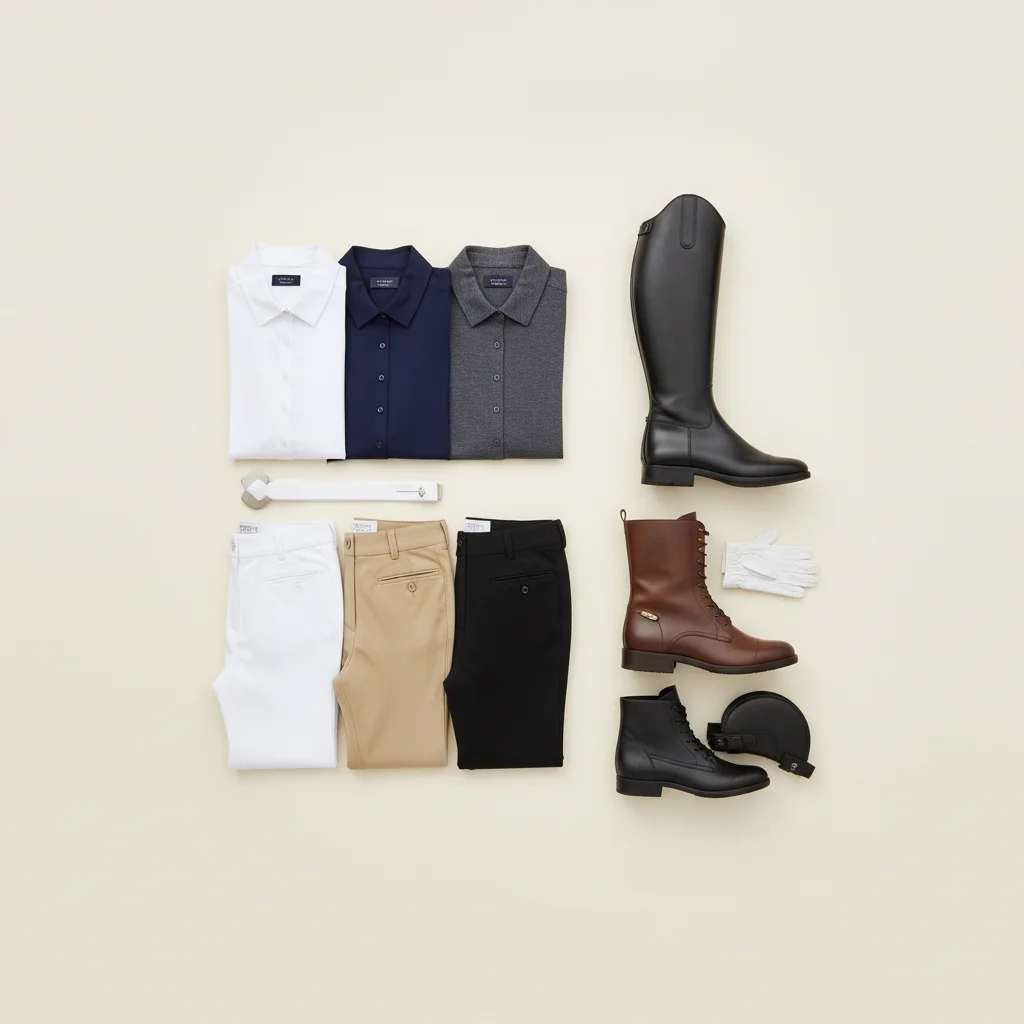
Most riders don't ruin their wardrobe in one dramatic moment; it happens one wrong purchase at a time. The biggest error? Style over safety. A beautiful boot with a flat sole can wedge in a stirrup. Helmets must carry ASTM/SEI certification, regardless of how trendy the brand is.
Another major issue is fit. Beginners often buy off-the-rack without checking measurements. However, many brands utilizing OEM/ODM services now offer "tall" or "short" variations that mimic custom sizing. Take advantage of this. An oversized boot kills your stirrup grip, and gloves that bunch ruin contact.
Conclusion: Ordering Your Perfect Ride
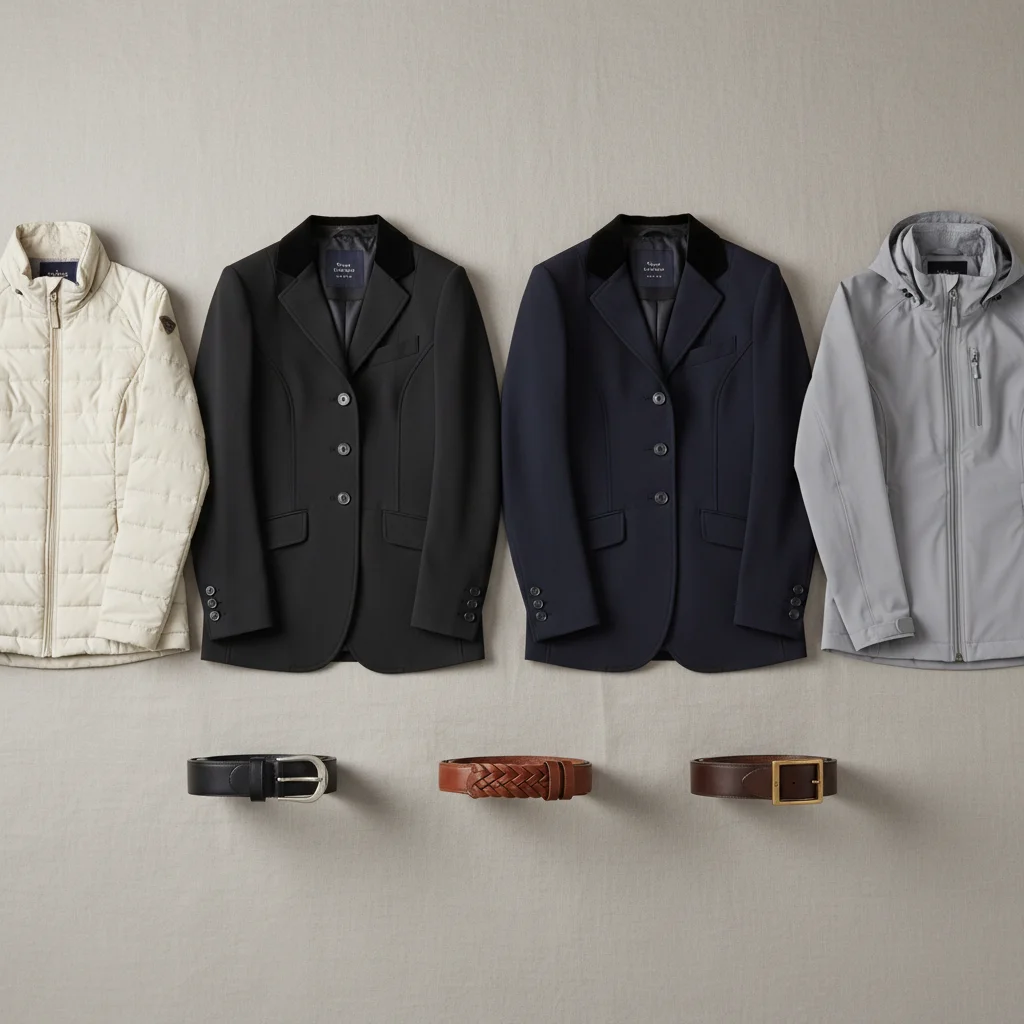
The 3-3-3 rule isn't just a styling trick—it's the difference between showing up and showing out. By limiting your wardrobe to high-quality, interchangeable pieces, you reduce decision fatigue and ensure you are always competition-ready.
Whether you are a rider building a capsule wardrobe or a business exploring private label equestrian clothing opportunities, the principles hold true: Fit, Fabric, and Functionality. Get the color coordination right, follow the discipline-specific dress codes, and avoid the common pitfalls.
Ready to upgrade your gear? Whether you need custom equestrian apparel for your team or are looking for reliable OEM/ODM services to launch your own line, great riding starts before you ever reach the saddle.