You're standing at the in-gate for your first show jumping competition. The last thing you need to worry about is whether your outfit meets the judge's standards. Yet every season, riders get eliminated or lose points simply because they didn't understand the dress code. Whether you are a rider or a retailer looking to stock the right gear, understanding these nuances is critical.
The confusion is real: do you need a shadbelly coat for schooling shows? Can you wear colored breeches in hunter classes? Maybe you're a parent building a wardrobe, or a shop owner looking for reliable equestrian clothing manufacturers to supply your inventory. Knowing what to wear goes beyond looking polished. It's about safety, avoiding disqualification, and showing you're a serious competitor.
For those sourcing gear, finding the right equestrian suppliers is just as important as the rules themselves. Whether you need a custom equestrian outfit for a team or are browsing wholesale equestrian clothing catalogs, quality matters. This guide breaks down every layer of show jumping apparel so you can walk into the arena—or stock your shelves—with total confidence.
Essential Show Jumping Attire Components (Head to Toe)
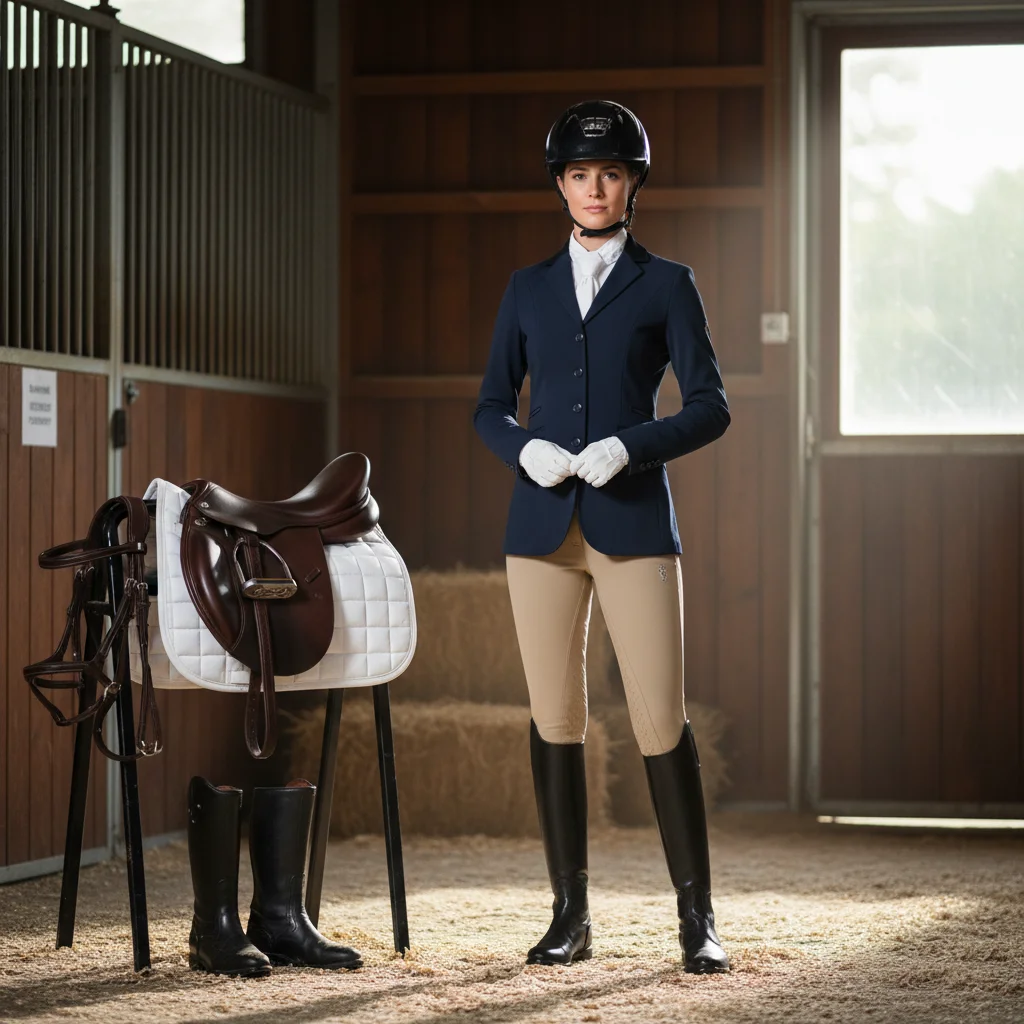
Every legal competition outfit starts with certified head protection and ends with polished boots. If you are working with equestrian outfit manufacturers to design a line, these are the non-negotiable standards you must meet.
Helmet Requirements
Your approved riding helmet must carry ASTM/SEI certification. While fashion trends come and go, safety does not. Solid black or dark blue covers are standard. Modern helmets use light materials that resist impact, a feature that top equestrian manufacturers prioritize in their production lines.
Upper Body Essentials
The show shirt with stock tie or choker is a staple. Options include white or light-colored fabrics with long sleeves, short sleeves, or sleeveless cuts. The key detail: every shirt needs a proper collar. Leading equestrian clothing manufacturers now use moisture-wicking fabrics with UPF 50 protection, blending traditional looks with modern athletic performance.
Your show coat requirements typically call for dark or muted tones—black, navy, dark green, or tweed. While custom equestrian apparel is becoming more popular, the classic hunt-style cut with 3-4 buttons remains the standard. It’s worth noting that Intermediate and Advanced level riders can sometimes skip the jacket in hot weather, provided their shirt is compliant.
Lower Body Standards
Riding breeches follow strict color rules. Valid choices include white, fawn, canary, pale yellow, beige, or tan. Fitted cuts with silicone knee or calf patches give you the needed grip. top equestrian clothing manufacturers focus heavily on the durability of these grip patches.
Footwear Specifications
The debate between tall boots vs paddock boots is decided by age and level. Field or dress boots in black or brown leather are the top pick for adults. Paddock boots paired with matching half-chaps work well for kids and lower levels. If you are sourcing wholesale equestrian clothing, stocking a range of boot options is essential to cover all rider levels.
Safety Standards and Helmet Certifications

Your helmet is the single most important piece of gear. It decides if you walk away from a fall or face serious injury. Reputable equestrian suppliers will never sell helmets that don't meet current rigorous standards.
ASTM F1163 is the required standard in North American competitions. If you have an older helmet, check the manufacturing date; materials break down over time. The Safety Equipment Institute (SEI) audits makers regularly to ensure quality remains steady. Other standards like PAS015:2011 (British) and Snell E2021 offer even higher protection levels involving crush resistance and different impact scenarios.
When choosing a helmet, or if you are an equestrian manufacturer designing one, remember that cycling or motorbike helmets do not count. They are tested for different types of impacts. Show management will turn you away if you lack the proper equestrian certification labels.
Coat Selection: Traditional vs. Modern Technical Fabrics
That show coat in your tack room might be outdated. Equestrian fashion has shifted dramatically over the last twenty years. Heavy wool has been replaced by softshell, mesh, and technical blends that stretch. custom equestrian clothing has led this charge, allowing riders to have breathable, machine-washable jackets that still look formal.
Hunters and Equitation riders stick to conservative styles: navy or black, 3-4 buttons, and minimal flair. However, modern high-end custom equestrian clothing allows for subtle Aero Mesh panels to keep riders cool without breaking tradition.
Jumpers have the most freedom. While traditional colors work, you will often seen coats in burgundy, bright blue, or green with contrast piping. This is a booming area for private label equestrian clothing, as brands can offer unique colorways that appeal to bold competitors. The focus here is on freedom of movement; the coat must allow the rider to fold over the jump without restriction.
Hunter vs. Jumper Attire: Understanding the Difference
Hunter and Jumper disciplines may use the same arena, but their dress codes reflect different judging criteria. Sourcing the right items from your equestrian outfit manufacturers depends entirely on which ring you are entering.
Hunter Division: This uses subjective judging. Appearance affects your score. The dress code is conservative to keep the focus on the horse's movement. You need dark, muted coats, tan or beige breeches, and black field boots. Bright colors or flashy custom equestrian outfit designs can be distracting and may result in a lower score. The look is about elegance and tradition.
Jumper Division: This is objective. It’s about speed and faults. Your outfit does not influence your score, provided it is legal. This allows for the "Standard Attire" rules which can include lighter-colored shirts, various breech colors, and more adventurous helmets. Many competitors use this freedom to wear custom equestrian apparel that reflects their personal style or team colors. As long as you don't break safety rules, function beats form here.
Boots, Breeches, and Optional Gear
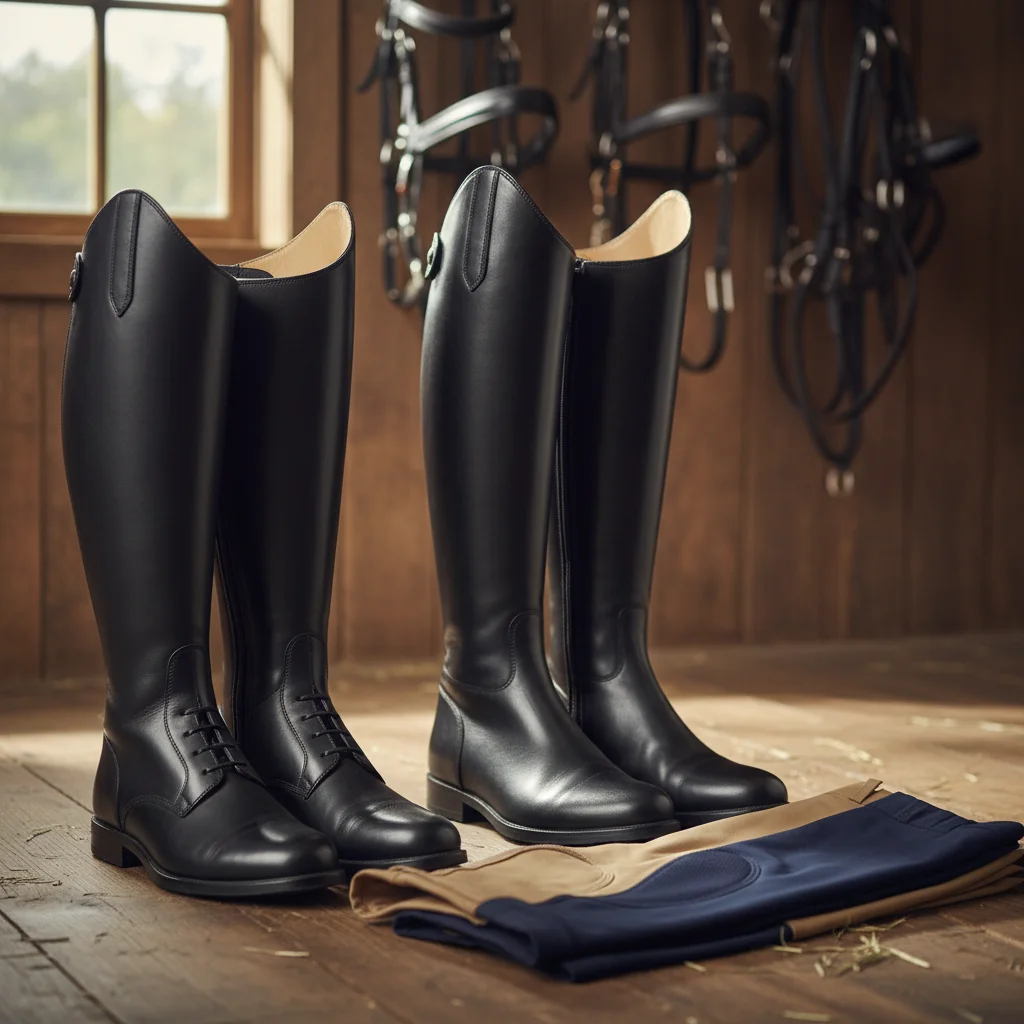
Budget often drives the choice between tall boots and paddock boots. Paddock boots with half-chaps are generally cheaper and easier to fit, making them a staple in wholesale equestrian clothing inventories. However, tall boots provide a cleaner line for the judge and are often required in upper-level equitation classes.
For riding breeches, fabric technology has evolved. A good equestrian clothing factory now produces breeches with four-way stretch, stain resistance, and specialized silicone grips. While color rules vary (Hunters generally require tan/beige; Jumpers allow white or grey), the fit must always be immaculate to prevent chafing.
Optional Equipment like gloves and spurs requires careful thought. Gloves are technically optional but highly recommended for grip. Black or brown are standard. Spurs must be used correctly; incorrect use or sharp edges can lead to elimination. Safety vests, while not mandatory in show jumping (unlike Eventing), are becoming common. A responsible equestrian clothing manufacturer will ensure their vests meet BETA Level 3 or ASTM F1937 standards.
Common Rule Violations and Youth Requirements
Nothing is worse than prepping for weeks only to get eliminated for a wardrobe malfunction. Judges are strict about neatness and safety. One major violation to avoid involves whip length—it cannot exceed 30 inches. Another strict rule: no electronic devices. If a judge sees a phone in your pocket or earbuds under your helmet, you are out.
For Junior riders, rules are often age-specific. The FEI Children's and Pony Divisions have strict height and attire guidelines. Junior riders must also be aware of the SafeSport training requirements once they turn 18. Parents sourcing gear should look for equestrian manufacturers that specialize in junior sizing, as ill-fitting gear can be a safety hazard.
RunEquestrian: Your Partner in High-Performance Gear
Whether you are outfitting a show team or stocking a retail store, the quality of manufacturing determines performance in the ring. This is where RunEquestrian steps in. As a premier equestrian clothing factory, we understand the specific needs of the hunter/jumper market.
We provide comprehensive OEM/ODM services for brands looking to create their own lines of technical show shirts, breeches, and coats. Unlike generic textile mills, we are specialized equestrian outfit manufacturers. We know that a show coat needs to stretch over an oxer, and that breeches need to resist arena dust.
Our services include:
Private label equestrian clothing: Put your brand name on high-quality gear without the overhead of owning a factory.
High-end custom equestrian clothing: We can source premium Italian fabrics and technical blends for the luxury market.
Custom equestrian outfit production: Detailed embroidery and team colors for scholastic or professional teams.
If you are looking for reliable equestrian suppliers who can handle everything from prototype design to bulk shipping, RunEquestrian is your solution. We bridge the gap between design concepts and podium-ready reality.
Ready to Source Premium Equestrian Gear?
Partner with RunEquestrian for custom riding apparel. ISO-certified factory, 98% on-time delivery, 200+ brand partners worldwide.
Conclusion

The right attire matters in the show jumping arena. It shows respect for the sport, keeps you safe, and marks you as a professional. Your approved riding helmet is non-negotiable. The choice between tall boots vs paddock boots affects both your leg position and your presentation.
Build your wardrobe thoughtfully. Start with safety basics, then expand. If you are a business owner, partnering with the right equestrian manufacturers ensures your customers are always ring-ready. Don't let dress code worries stop you from entering the gate. Thorough preparation builds confidence.
For those interested in creating their own line of gear, remember that working with an experienced equestrian clothing manufacturer like RunEquestrian can make all the difference. From wholesale equestrian clothing to bespoke designs, the right gear elevates the entire sport. You're ready to ride in with style, safety, and peace of mind.
