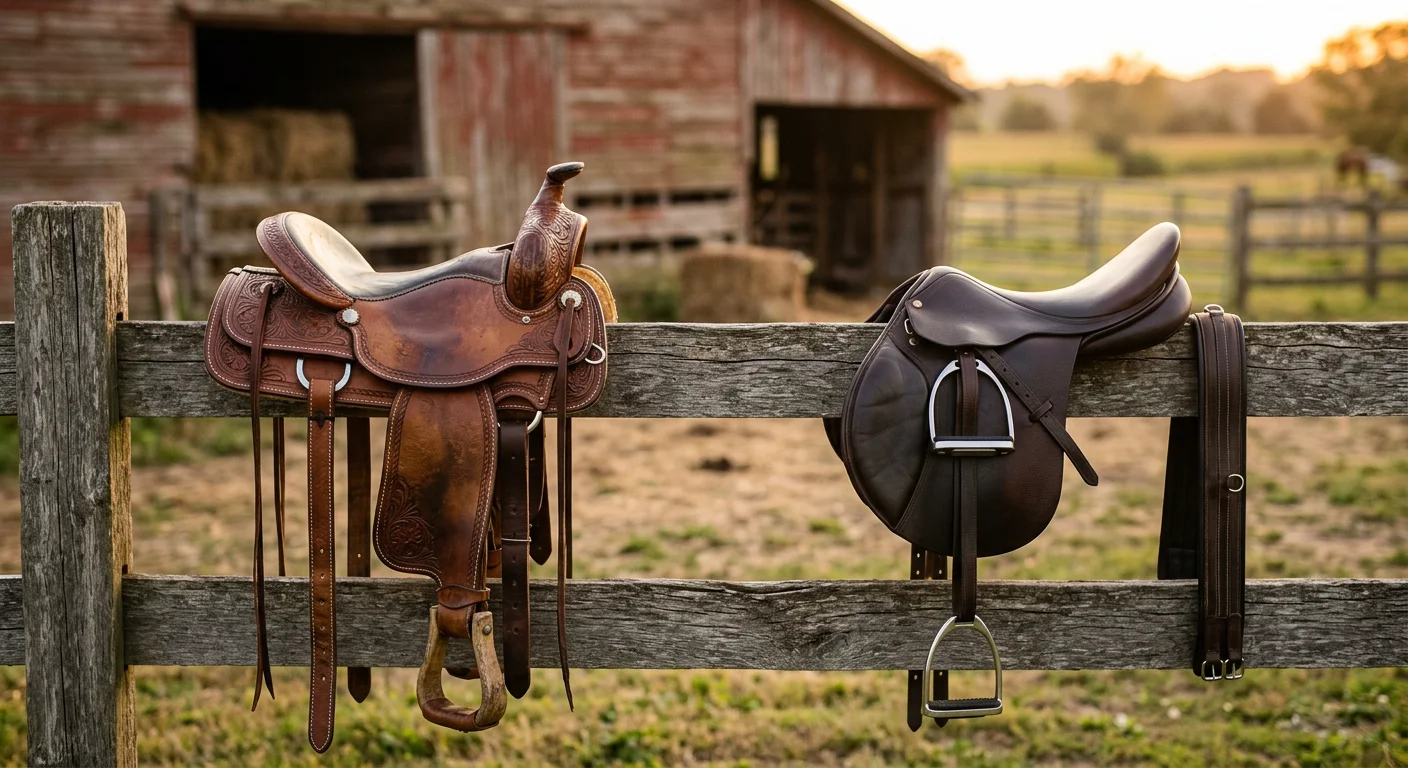
Choosing the wrong horse as a beginner isn't just frustrating — it can be dangerous. The good news? Some breeds are born calm. They're steady, patient, and forgiving in ways that make every ride feel safe and controlled. Of course, safety also involves wearing the right gear. Many beginners and riding schools rely on top-tier equestrian suppliers to ensure riders are outfitted properly. When you wear well-made custom equestrian apparel, you feel more secure, which helps your new horse stay relaxed.
Are you a nervous first-timer? A parent looking for the safest horse for your child? Or just ready to finally enjoy riding without the anxiety? The right horse, paired with quality gear from a reliable equestrian supply network, makes all the difference.
We've put together the 5 calmest horse breeds to ride. Each one made the list for three reasons:
A docile, easygoing temperament
A forgiving nature that suits beginners
A long track record of earning trust from riders who were new to the saddle
What Makes a Horse Calm to Ride? (Key Traits to Look For)
Not every quiet horse is a calm horse. There's a difference — and it matters more than most beginners realize.
True calmness comes down to a handful of measurable traits. Experts use a temperament scale of 1 to 10. Scores of 1 to 4 point to a steady, low-reactive horse that's safe for novice riders. These horses respond slowly to new stimuli. They don't startle at small things. They follow your cues without resistance.
Here's what to look for (and if you're new to the sport, our beginner gear guide covers what equipment you'll need):
Breed plays a real role here. Cold-blooded breeds — like Clydesdales and Belgians — are the most docile by nature. Hot-blooded breeds with Thoroughbred lines lean toward excitability. They suit experienced riders more than beginners.
Breed isn't everything, though. Age, training history, and past handling all shape a horse's temperament. A well-exposed horse from almost any breed, trained with consistency and patience, can build real steadiness. One that's been handled badly can lose that steadiness just as fast.
The bottom line: the calmest horses aren't just born that way. You find them by knowing the right traits — and choosing with care.
American Quarter Horse — The Gold Standard for Beginners
There's a reason the American Quarter Horse holds more registrations than any other breed in the United States. Thirty years of foal registration data from the American Quarter Horse Association backs this up: this horse keeps earning the trust of riders, generation after generation.
For beginners, that trust is everything.
Built for the Everyday Rider
The Quarter Horse is compact and solid. It stands 14 to 16 hands and weighs between 1,000 and 1,200 pounds. Short, broad head. Powerful shoulders. Firm hindquarters. This isn't just about looks. That build gives you real stability under the saddle. To further enhance this stability, training facilities often partner with a trusted equestrian clothing manufacturer to provide durable riding pants with a solid grip.
What makes this breed special isn't strength, though. It's temperament.
Quarter Horses are calm by nature. Low-reactive. Sharp-minded. Experienced trainers often describe them as having a genuine desire to please — a natural willingness to work with you, not against you. Beginner mistakes don't throw them off. Clumsy cues, uneven balance, sudden movements — a well-trained Quarter Horse handles it all without fuss.
The gaits feel smooth, steady, almost effortless. Like the horse is doing half the work for you.
One Breed, Many Roads
The Quarter Horse isn't tied to one discipline. Trail riding, Western pleasure (understanding English vs Western riding helps here), family riding, ranch work — this breed handles all of it with the same quiet reliability. That range matters for beginners who aren't sure yet which direction they want to go.
One Thing Worth Knowing Before You Buy
Not every Quarter Horse carries the same temperament. The breed breaks into three performance groups — stock, halter/pleasure, and racing lines. Racing bloodlines tend to run hotter and less predictable. For beginners or children, stick to horses from halter or pleasure lines. Check the AQHA four-generation pedigree. Look at the speed index. Pick geldings or mares over stallions for steadier, more consistent behavior day to day.
The right Quarter Horse doesn't just get you from point A to point B. It builds your confidence, ride by ride.
Morgan Horse — The Gentle All-Rounder With a Big Heart
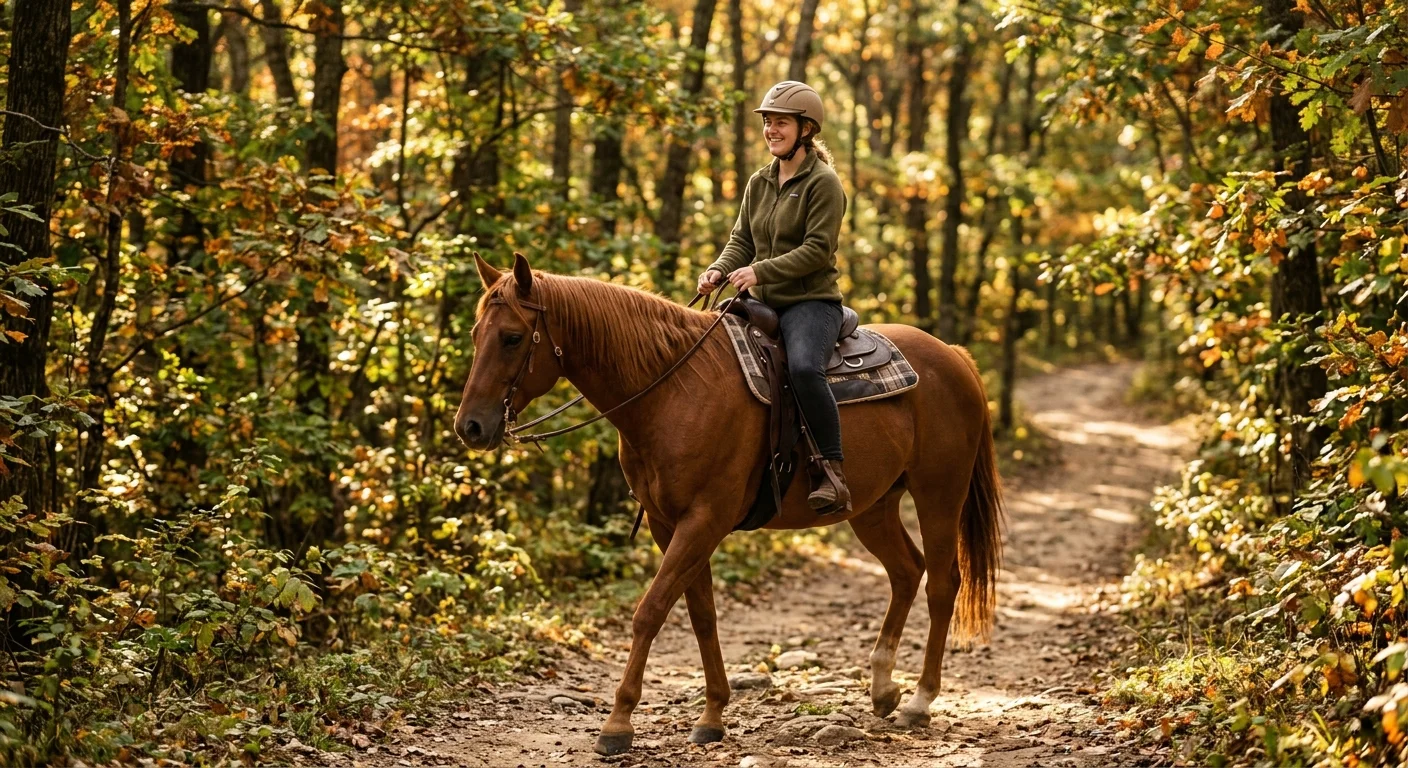
America's oldest breed carries something rare: a temperament built for riders who aren't sure of themselves yet.
The Morgan was the U.S. Cavalry's horse of choice — not for speed, but for common sense, stamina, and the ability to work on limited food across rough terrain. That same quiet reliability still shows up today, in every ride.
A Horse That Meets You Where You Are
Around 90,000 registered Morgans exist today. This breed is compact (14.1 to 15.2 hands), strong-backed, and smooth under saddle — smoother than most beginners expect. Riders often describe the experience as responsive without being reactive. That's a real difference, and it matters. This smooth ride is elevated even further when you're wearing fitted custom equestrian clothing that prevents chafing and allows flexible movement in the saddle.
Trainers notice one thing about Morgans right away: they're people-oriented. This isn't a horse that just puts up with humans. It pays attention to its rider. It reads the room. Willing, intelligent, eager to please — and able to adjust to the skill level of whoever is in the saddle.
That flexibility is worth a lot. A nervous beginner and a confident intermediate rider can both feel at ease on the same Morgan.
One Honest Caution
Morgans are easy keepers. They hold weight well — sometimes too well. The breed has a high risk of Equine Metabolic Syndrome (EMS, with heritability up to 80%), so diet management is non-negotiable. Obesity leads to laminitis. It's serious. It's also preventable.
Watch their feed. Keep them moving. Do that, and the Morgan gives back far more than it asks for.
American Paint Horse — Calm, Colorful, and Great With Kids
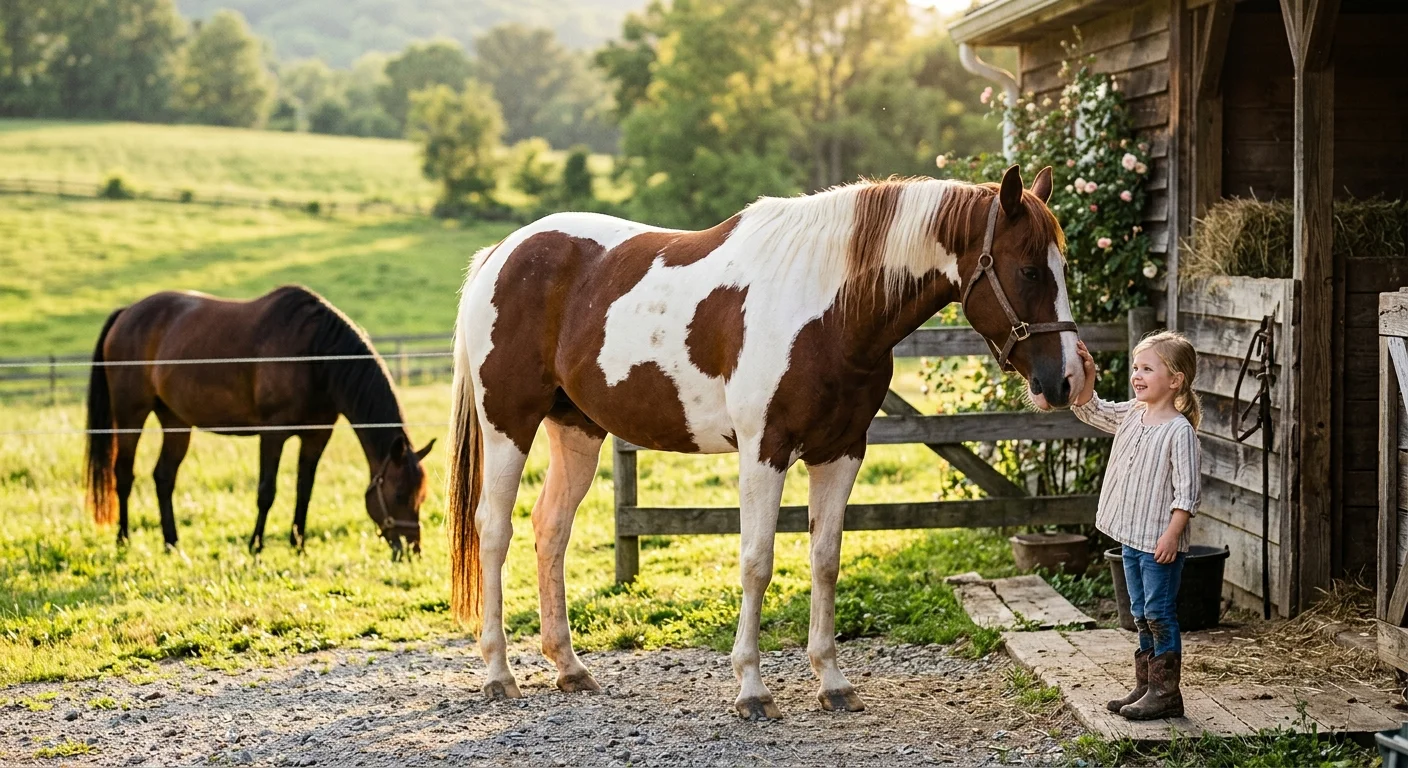
Few horses stop you in your tracks the way a Paint does. That coat — bold patches of white against dark, every horse wearing a pattern all its own — is hard to forget. But what keeps families coming back to this breed isn't the looks. It's what's underneath them.
The American Paint Horse stands 14 to 16 hands and carries 950 to 1,200 pounds on a compact, muscular frame. That build comes from a lineage that matters: Quarter Horse and Thoroughbred bloodlines. The Quarter Horse genetics do the quiet, important work — keeping this breed steady, trainable, and safe.
Calm Enough for Kids, Capable Enough for Everything Else
Paint Horses are smart without being stubborn. Athletic without being unpredictable. That combination is rarer than it sounds.
Their natural cow sense — an instinctive awareness built through generations of cattle work — carries over into something every parent wants in a child's horse: the ability to stay calm when things get chaotic. A sudden noise. An unsteady rider. An unfamiliar trail. A well-trained Paint takes it in stride. Because kids outgrow their riding clothes fast, parents often seek out a dependable equestrian clothing factory or shops offering wholesale equestrian clothing. This keeps young riders safely and affordably equipped while they focus on building their skills.
They're also built for variety. Trail riding, western pleasure, English disciplines, barrel racing, dressage — this breed handles all of it with ease. That range means a Paint can grow with a rider over years, not just seasons.
One Health Check That Cannot Be Skipped
The Paint's one real vulnerability is genetic. Overo Lethal White Syndrome (OLWS) affects foals born with two copies of the frame overo gene. Their intestinal tract doesn't form properly, and they don't survive. Carriers are healthy with no symptoms. But before you buy a Paint Horse, confirm APHA genetic testing has been done. It's a simple step. Don't skip it.
The breed also carries risk for HYPP through Quarter Horse lines and GBED in some bloodlines. Ask for documentation. A reputable seller won't hesitate.
With proper screening, the Paint is one of the most dependable, long-lived family horses you'll find — known to live to 30 years.
Haflinger — The Patient Mountain Horse for Nervous Riders
Mountain work builds a certain kind of calm. The Haflinger learned it centuries ago, carrying loads across the Alps. That same steadiness still defines the breed today.
This is a compact, sturdy horse. Pronounced withers. Deep chest. Powerful hindquarters. Short, broad legs built for balance and endurance. The size works well for most riders — children, small adults, and nervous beginners who aren't ready for a larger horse yet.
Why Anxious Riders Trust This Breed
Trainers often say Haflingers have a high tolerance threshold. They don't escalate fast. A sudden noise, an unsteady hand, a crowded arena — this horse takes it all in stride, no drama. Because Haflingers have shorter, wider builds, getting the perfect saddle fit is key. When it comes to the rider's fit, working with dedicated equestrian outfit manufacturers ensures you get a beautifully tailored custom equestrian outfit perfect for chilly mountain trails.
For nervous riders, that consistency is what matters most. Haflingers stay patient through mistakes. They don't punish bad timing or clumsy cues. That forgiveness rebuilds confidence, ride by ride, without the rider even noticing it's happening.
They're also sensitive — responsive to light aids without being reactive. Quiet, kind, and eager to please.
One Thing to Watch
The Haflinger's hardy metabolism is both an asset and a risk. This breed is prone to Equine Metabolic Syndrome (EMS) and PSSM type 1, which causes muscle cramping. Keep a close eye on their diet. Limit rich feed. Keep them in regular, steady work.
Haflingers are less common than Quarter Horses. Track down breeders through official Haflinger registries. The right horse is worth the extra effort.
Appaloosa — The Loyal, Level-Headed Trail Companion
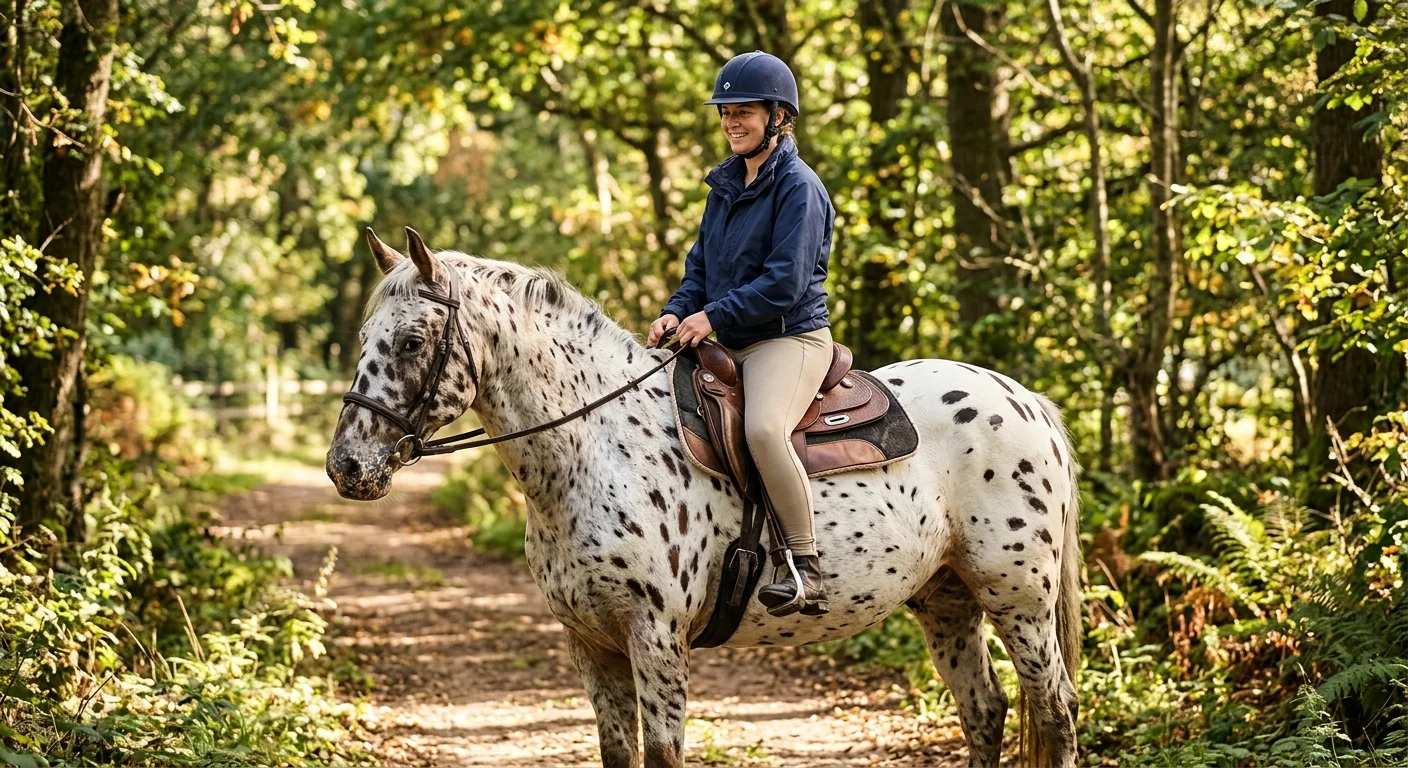
Over 700,000 horses have been registered with the Appaloosa Horse Club since 1938. That number says a lot. This breed has earned real loyalty across generations of riders.
The Appaloosa is easy to spot — leopard spots, blanket patterns, snowflake markings, mottled skin around the muzzle and eyes, striped hooves. But the coat is just the start. Under that bold exterior, you get a horse that is calm, willing, and patient with new riders.
Built for the Trail, Steady Under Any Rider
The Appaloosa stands 14.2 to 16 hands and weighs 950 to 1,100 pounds. It carries a sturdy, well-muscled frame. Deep chest. Sloping shoulders. Short, straight back. Rounded hooves built for varied terrain. The gait is smooth and covers ground well — not choppy, not stiff. Trail riders pick up on this fast. Their versatility means you might find yourself exploring various disciplines. Preparing for this adaptable riding style often involves sourcing protective gear from leading equestrian manufacturers who understand the daily demands of both the arena and the trail.
Trainers point to one trait above all else: adaptability. English, Western, trail, endurance, ranch work — this horse handles all of it. That range matters. A beginner won't outgrow the Appaloosa anytime soon.
One Health Issue You Must Address First
The Appaloosa carries a much higher risk — 8 times higher than other breeds — for Equine Recurrent Uveitis (ERU). Left unmanaged, it leads to cataracts, glaucoma, and blindness. The breed also carries risk for congenital stationary night blindness and HYPP through certain Quarter Horse lines.
Ask for documentation before you buy. Avoid HYPP-positive bloodlines. Put soundness ahead of color pattern — every time.
A well-chosen Appaloosa is patient, trustworthy, and steady. That's what a new rider needs.
Outfit Your Riding School or Stable
From custom breeches to competition attire — we manufacture premium equestrian clothing for brands worldwide.
Explore Custom DesignQuick Comparison: Calmest Horse Breeds Side by Side
Five breeds. One table. Everything you need to make a clear, confident decision.
| Breed | Temperament (1-10) | Best For | Ride Smoothness | Weight | Beginner Score |
|---|---|---|---|---|---|
| Quarter Horse | 9 | All-around riding, daily work | Smooth, versatile | ~1,000 lbs | 10/10 |
| Appaloosa | 9 | Family riding, trail work | Smooth, steady | ~1,000 lbs | 9/10 |
| Morgan | 8 | Versatile disciplines, nervous riders | Responsive, fluid | ~1,000 lbs | 9/10 |
| Haflinger | 8 | Children, anxious beginners | Gentle, forgiving | ~900-1,300 lbs | 9/10 |
| Paint Horse | 8 | Families, growing riders | Balanced, capable | ~950-1,200 lbs | 8/10 |
A Few Honorable Mentions Worth Knowing
Some solid breeds didn't make the core five — but they deserve a mention:
The right horse is already out there. Use this table to spot it fast.
How to Choose the Calmest Horse for YOUR Riding Goals
The right horse isn't found by accident. It's found by knowing yourself first.
Your riding goals determine everything — the breed, the age, the training background. Start there.
Match the Breed to Who You Are Right Now
Three Questions That Protect You Before You Commit
Before you ride or buy, ask these:
Don't Buy Before You Test Ride
Simulate your actual riding goals during the test — walk, trot, trail conditions. Watch for excitability. A calm horse keeps its heart rate under 49 bpm during mild stress. High snoring frequency is also a stress signal in horses. Pay attention to every detail — body language, reactions, and recovery speed all tell you something.
If You're Not Ready to Own, Start Smaller
| Commitment Level | Option | Estimated Cost | What You Gain |
|---|---|---|---|
| Just exploring | Renting | $50-100/hour | Test calmness without commitment |
| Building confidence | Leasing | $200-500/month | Time to find the right match |
| Long-term riding | Buying | $5,000-15,000+ | Full control, full bond |
Renting first isn't settling. It's smart. Many riding academies that offer leases also provide essential gear through OEM/ODM services or partner directly with an equestrian clothing manufacturer to guarantee a uniform standard of safety from day one. Over 60% of long-term riders say owning their own horse changed everything — but only after they knew what they were looking for.
The calm horse you're searching for exists. You just need to know what calm looks like before you go find it.
Video Guide
Conclusion
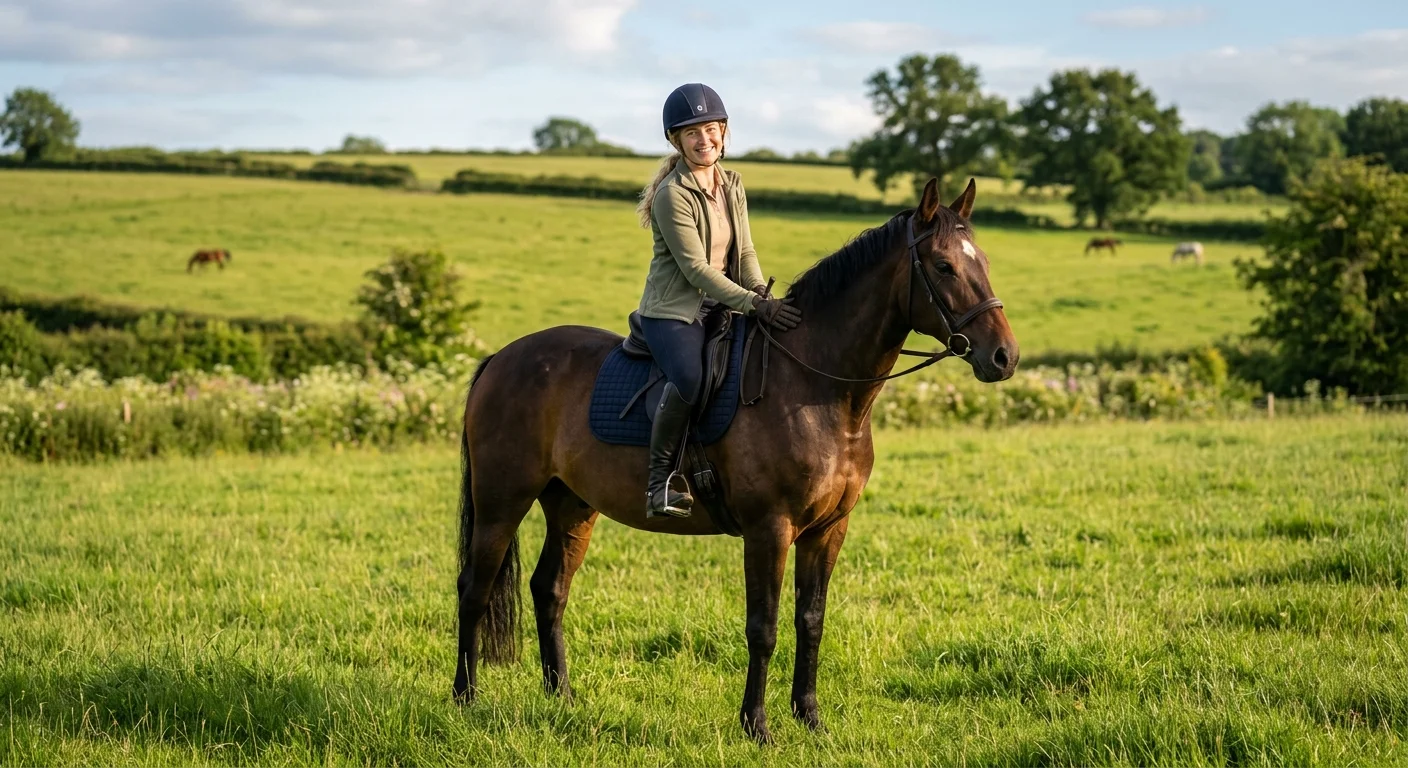
Your perfect riding partner is out there — and now you know where to look.
Love the steady calm of the American Quarter Horse? Or maybe the warm reliability of the Morgan speaks to you. Perhaps the gentle, child-safe nature of the Paint is the right fit. No matter which breed calls to you, one truth stays the same across all five: the right horse does more than carry you. It builds your confidence, ride by ride, until the saddle feels like home. Finding that perfect horse is just the beginning. To truly enjoy every moment in the saddle, partnering with trustworthy equestrian outfit manufacturers for your apparel will make all the difference in your overall comfort and security.
Don't overthink it. Start simple. Make sure you have the right riding helmet and visit a local stable. Spend time around these breeds. Pay attention to how a horse makes you feel — not just how it looks on paper.
The calmest horse for you isn't the one at the top of a list. It's the one that slows your heartbeat just by standing beside you.
That connection? That's where real riding begins.
Explore our equestrian blog and take your next step with confidence.