Two riding styles. One big decision.
Just booked your first lesson with no clue what "posting trot" means? Or maybe you're a parent Googling at midnight, trying to pick the right class for your kid. Either way, the English vs. Western question can feel like a lot to sort through.
The differences run deeper than the saddle. How you hold the reins. The boots on your feet. The competitive arenas you'd enter. The whole philosophy of how horse and rider connect — these are two distinct worlds.
This guide breaks it all down in plain language. By the end, you'll know which style fits your life.
What Is English Riding? Origins, Philosophy & Core Disciplines
English riding has deep roots. It grew out of European cavalry training. Soldiers needed horses that were precise, responsive, and easy to control under pressure. That military foundation shaped everything — the upright posture, the refined aids, the focus on technical skill. Over centuries, what started on battlefields moved into the Olympic arena.
Today, English riding centers on one idea — invisible communication between horse and rider. The goal isn't to direct a horse. It's to move with one. Subtle weight shifts, quiet leg pressure, soft hands on the reins — those are the tools. The horse and rider end up looking like one fluid thing.
That same emphasis on precision shows up in rider gear too. Many professionals now look beyond basic kit and invest in custom equestrian apparel that supports comfort, movement, and discipline-specific performance.
The Three Core Disciplines
English riding isn't one sport. It's a whole family of them. Three disciplines sit at the core:
Dressage — Often called "horse ballet." Riders guide horses through precise movements (piaffe, passage), scored on harmony and suppleness. Just 2.5% of horses ever compete at Grand Prix level. The sport rewards patience above all else.
Show Jumping — Riders complete clear rounds over obstacles from 1.2 to 1.6 meters high. Each knockdown costs four faults. Three refusals mean elimination. It's technical, fast, and thrilling to watch.
Eventing — Three phases rolled into one: dressage, cross-country endurance, and stadium jumping. The rider with the lowest total penalties wins. About 10% of horses reach the highest level.
All three have been Olympic sports since 1912. They're also among the few where men and women compete in the exact same classes — no separate categories.
The sport is dominated by women. In the UK, 88% of adult English riders are women. That pattern holds across France, Germany, and the Netherlands too. It's a sport with a strong, passionate community — 1.8 million regular riders in the UK alone, generating an estimated £5 billion in economic value.
For equestrian brands serving this market, working with experienced equestrian clothing manufacturers can make a real difference in producing apparel that balances elegance, flexibility, and durability.
What Is Western Riding? Origins, Philosophy & Core Disciplines
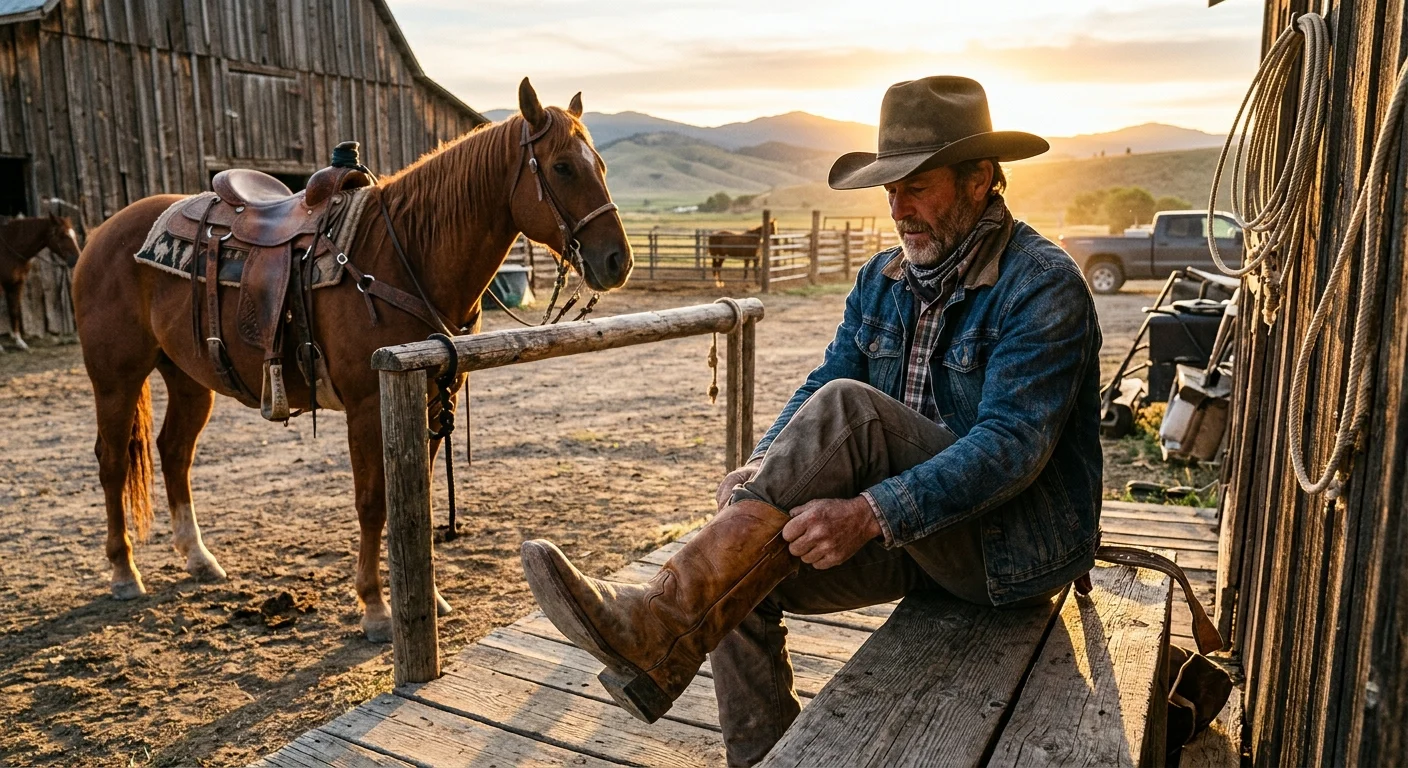
Western riding wasn't invented in an arena. It was born on a ranch, in the dust, with cattle scattering in every direction and a rider who needed both hands free.
That's the soul of it. American cowboys built this style out of pure necessity. They separated specific cows from herds of 10 to 20 animals, managed livestock across vast open land, and did real work on horseback every single day. The saddle got deeper and more supportive. The reins got looser. The horse learned to think.
That last part matters. English riding values invisible communication. Western riding takes it further — the horse acts on its own judgment. In cutting, a rider picks one cow from the herd, then drops the reins. The horse takes over. It reads the cow's body language and mirrors every dodge and feint, blocking the animal's return on pure instinct. No commands. No guidance. Just two animals working it out together.
The Core Disciplines
Western isn't a single sport. It covers a wide, practical range:
Reining — Often called "Western dressage," and for good reason. Horses run set patterns: sliding stops, spinning 360° turns, wide and tight lope circles, flying lead changes. The movements are precise, athletic, and flat-out beautiful to watch.
Cutting — The ranch-born original. Two to four "turnback riders" help at the edges. But once the horse commits to a cow, the rider's only job is to stay on.
Barrel Racing — A timed cloverleaf pattern around three barrels at full speed. At the pro level, women dominate the sport.
Western Pleasure — Slower, softer gaits: the jog (a gentle trot) and the lope (a relaxed canter). Judges score horses on lightness, responsiveness, and a calm, willing attitude.
Trail Class — Horses work through a designed obstacle course: crossing bridges, opening gates from the saddle, side-passing along rails. It mirrors real ranch terrain. For newer riders, it's one of the best places to start.
Team Penning — Three riders work together to cut three to five marked cows from a herd and drive them into a pen. It's fast, collaborative, and rooted in working ranch tradition.
The idea connecting all of this is functionalism. Gaits stay low and quiet to save energy over long distances. Rein contact stays light. The horse is treated as a partner with real judgment — not just a vehicle responding to cues.
That practical, trust-based relationship between horse and rider still shapes every Western discipline today. It also influences what riders wear, which is why demand for durable custom equestrian clothing continues to grow across both recreational and competitive riding communities.
English Saddle vs. Western Saddle: The Most Visible Difference
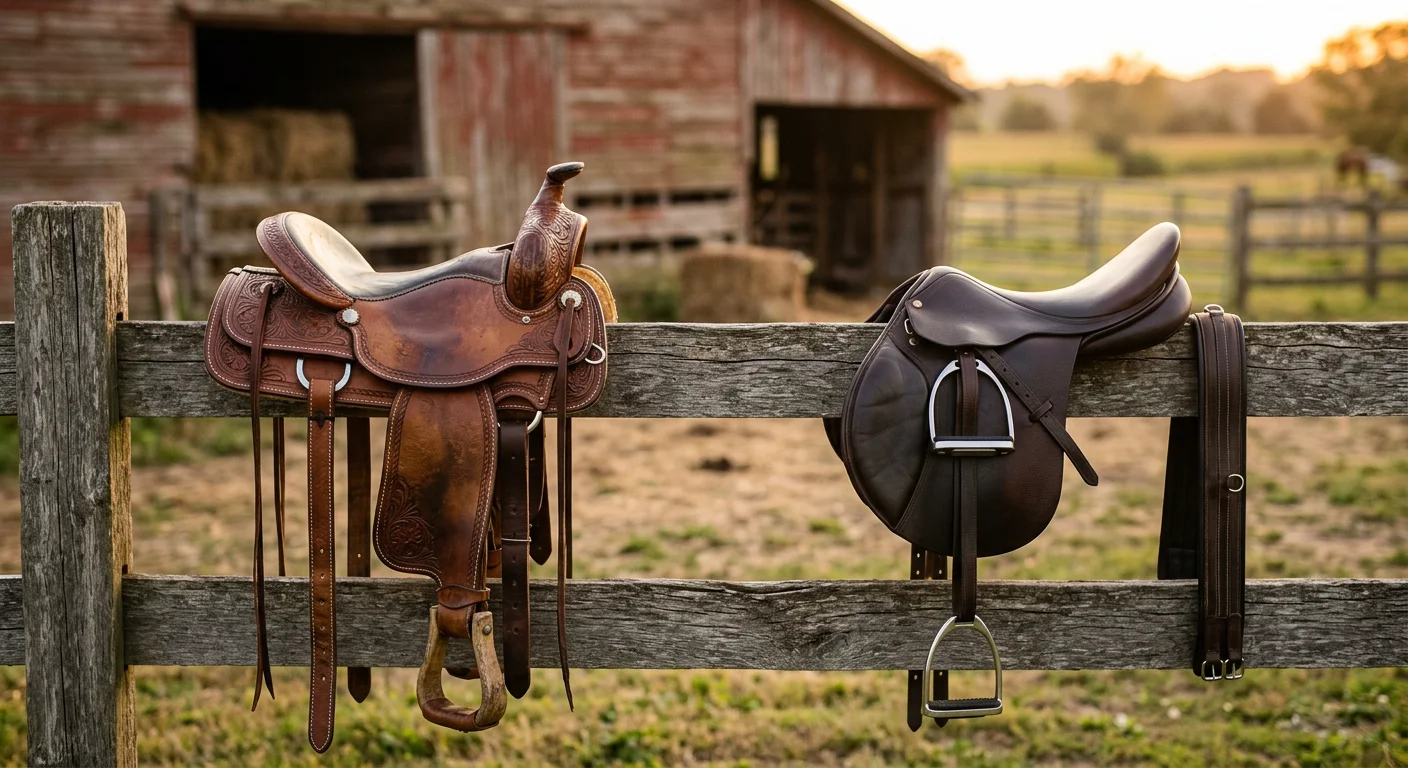
Place two saddles side by side. You'll see the difference right away — no explanation needed.
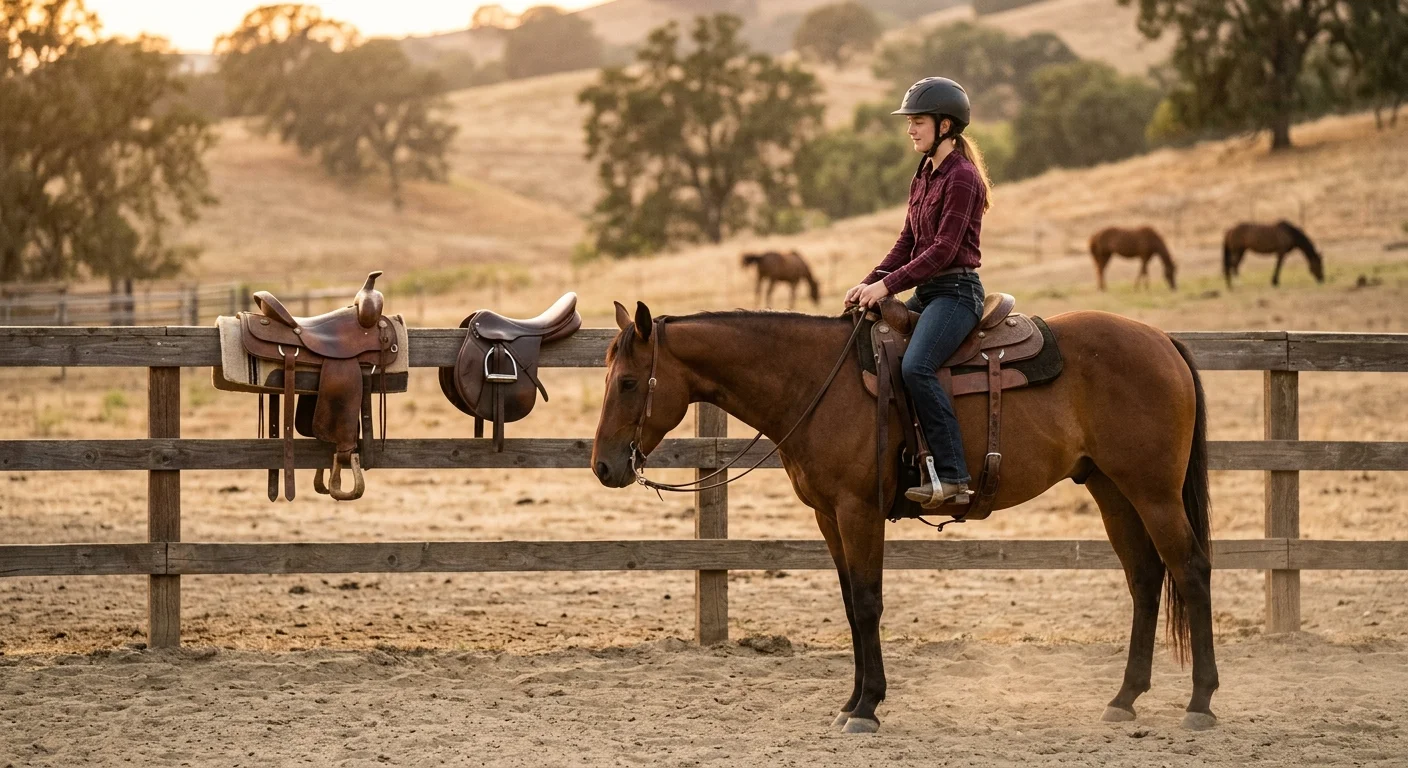
The western saddle is unmistakable. It's big, structured, and built for hard work. That prominent horn rising from the front — 4 to 6 inches tall, about 4 inches wide — was never meant for decoration. Cowboys used it to anchor a rope while working cattle. The deep seat wraps around you. The high cantle rises behind. The broad swell beneath the horn gives the whole thing a sculptural, purposeful weight. And it is heavy — 25 to 50 pounds. Stability matters more than lightness here. Eight hours on a trail or a full roping run demands that kind of solid foundation.
The English saddle looks almost bare by comparison. No horn. Low pommel. Slim flaps, minimal padding, a flatter profile that sits close to the horse's back. It weighs 15 to 25 pounds. Light enough that you start to feel the horse beneath you — every shift, every ripple of movement. That's the whole point.
For riding schools, clubs, and equestrian brands comparing gear categories, trusted equestrian suppliers often play a key role in sourcing everything from saddles to apparel across both disciplines.
How the Design Changes the Ride
The structural difference isn't just visual. It changes what your body does.
English saddles feature narrow stirrup leathers and thin flaps. Forward-cut for jumping. Long and straight for dressage. Your leg stays in direct contact with the horse. That closeness is how precise aids get communicated. Less leather between you and the horse means more information flowing both ways.
Western saddles use wide fenders that protect your legs, paired with heavier, wood-core stirrups wrapped in leather. This spreads your weight across a larger surface area. That's what you need for long hours in the saddle — or the sudden physical demands of barrel racing and roping.
One saddle is built for precision. The other is built for endurance. Neither is better. They're just built to answer two very different questions.
For businesses expanding into riding gear, some also choose private label equestrian clothing to create collections tailored to English or Western riders, with distinct cuts, materials, and branding that reflect each style.
Riding Technique Compared: How You Sit, Steer & Communicate With the Horse
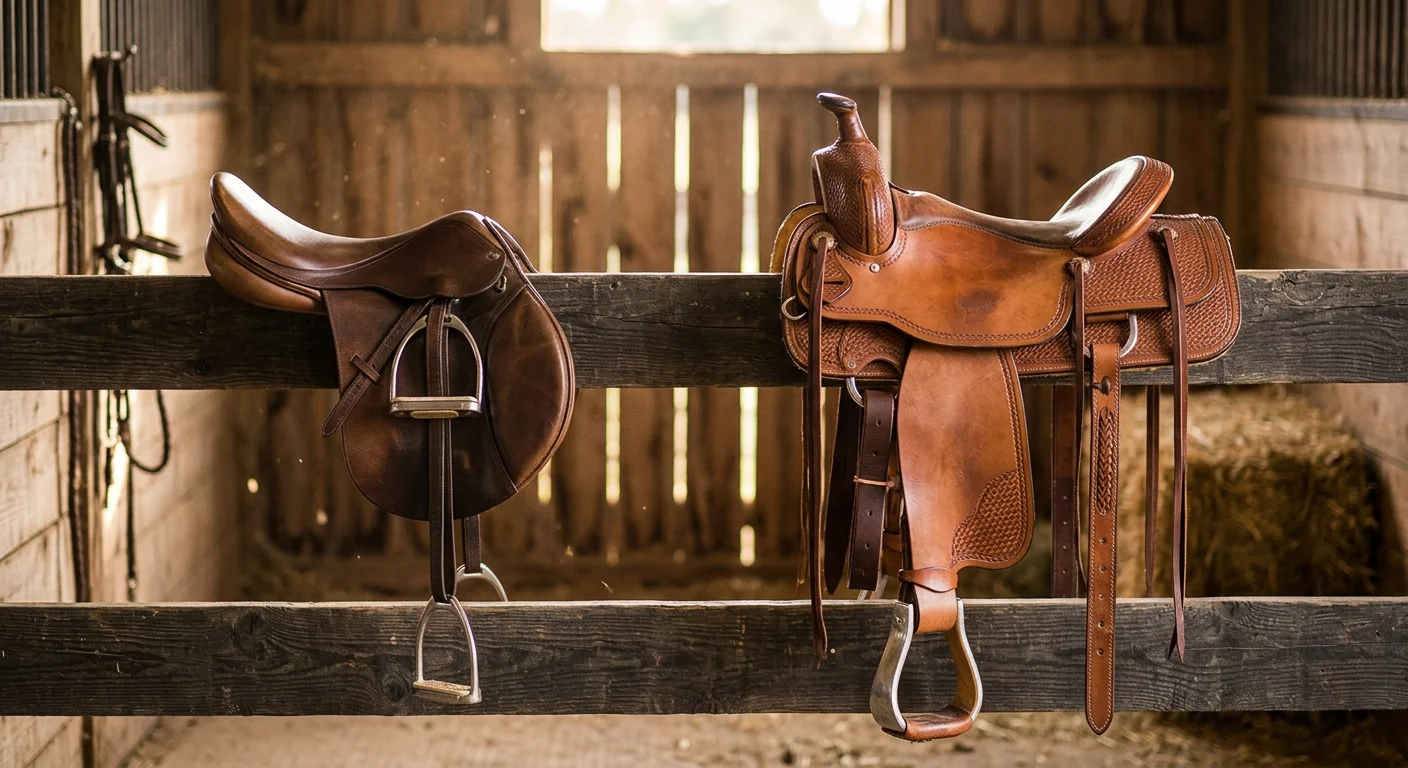
The saddle is just the beginning. What happens in your body — and between you and the horse — is where the two styles split apart.
How You Sit
English riders carry their weight forward. Knees bend to 45°, the pelvis tilts ahead, and the core drives that slight lean. Every angle points toward precision and quick response.
Western riders sit in a different way. Legs stay straighter. The pelvis settles into a neutral, relaxed position. Weight anchors you down rather than pushing you forward. It's a posture built for hours — not split-second signals.
That difference in posture isn't just about comfort. It changes how force moves through your body at every stride.
The Posting Trot vs. The Sitting Jog
Here's where beginners feel the gap most.
English posting trot asks you to rise and fall with the horse's rhythm. You go up on the outside stirrup, knees bent, pelvis rotating forward with each beat. Studies show rising trot places 20–30% more stirrup force per stride compared to sitting. That extra movement is demanding. About 70% of new English riders don't notice their posting becoming uneven. That imbalance can affect the horse's movement too.
Western sitting jog is slower and softer. You absorb the motion through relaxed hips and slightly bent knees. Peak stirrup forces stay lower. Beginners tend to find it more stable — though symmetry still matters. Proper weight distribution training has been shown to reduce lateral sway by 36%.
How You Steer
The rein logic works in a different way between the two styles.
English uses two hands. Each rein applies direct pressure to the bit — left rein to turn left, right rein to turn right. The response is clear, active, and immediate.
Western uses one hand and a technique called neck reining. You lay the rein against the horse's neck rather than pulling it. The horse reads that light neck pressure and turns away from it. No bit tension required.
One system guides with direct contact. The other suggests with a light touch — and trusts the horse to respond.
Communicating Beyond the Reins
Advanced riders in both disciplines share one key trait: core engagement. Studies show experienced riders use neuromuscular coordination at about twice the level of beginners. The communication doesn't stop at hands and reins. It flows through the seat, the legs, and the spine.
Even the first saddle experience shapes the horse-rider relationship. Studies comparing gentle training methods to conventional ones recorded first-saddle heart rates of 127 bpm versus 176 bpm. That gap is significant — and its effect carries through every ride that follows.
English vs. Western Attire: What You Need to Wear
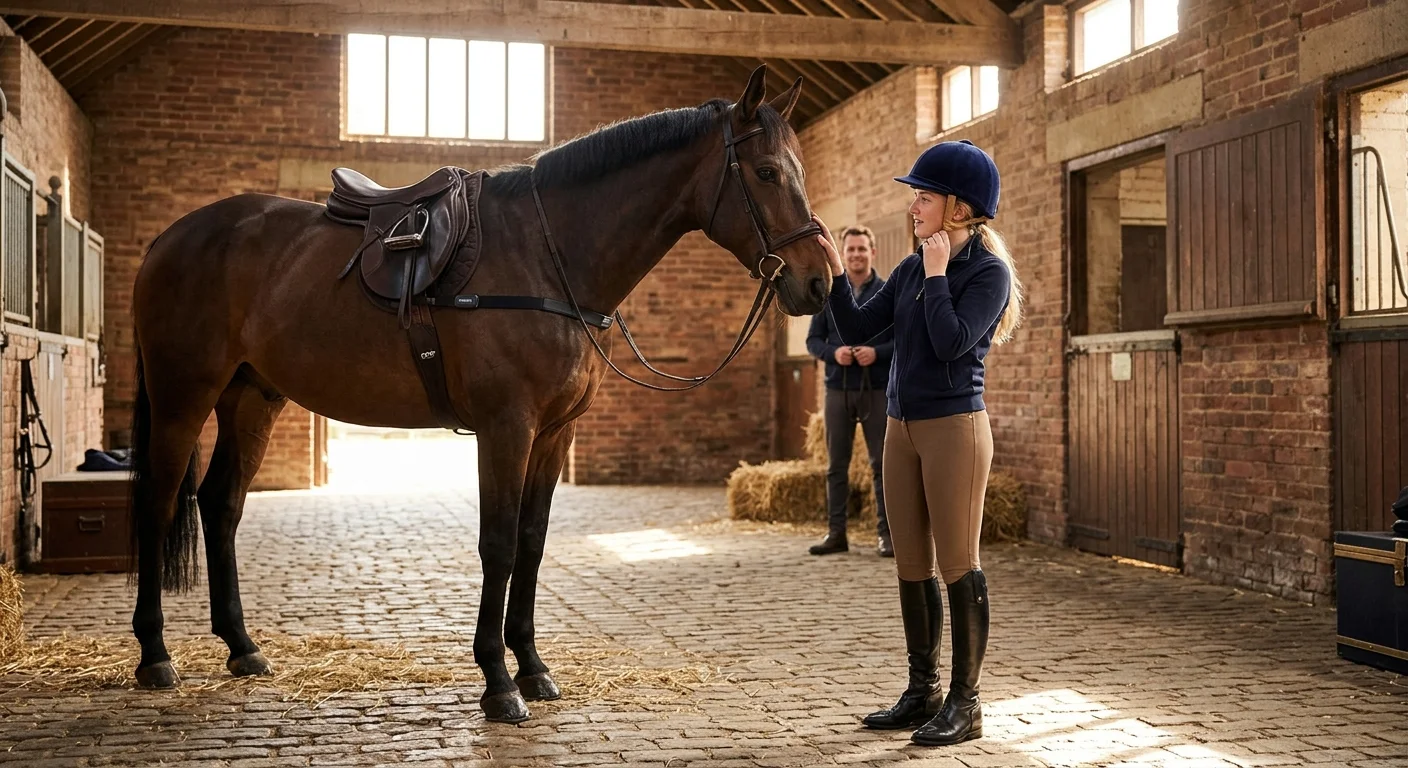
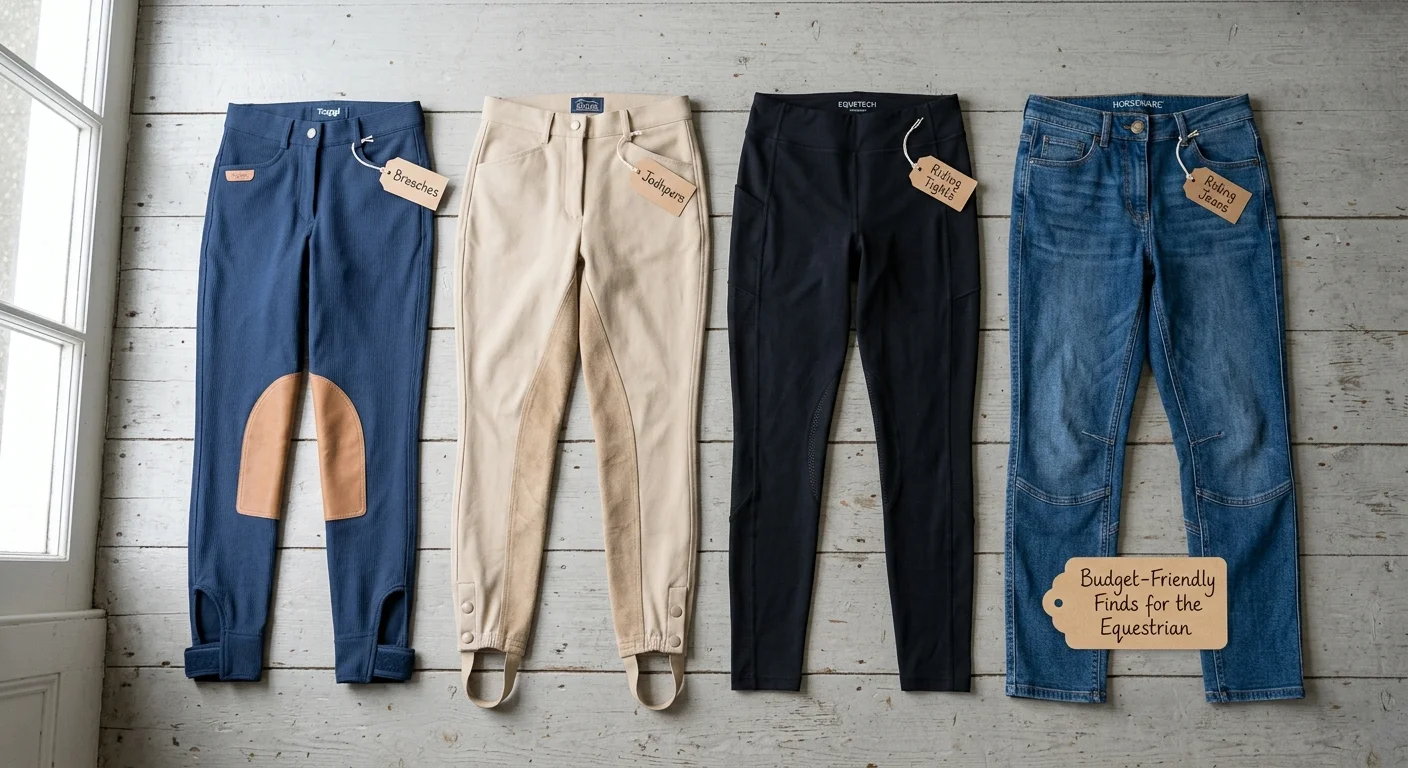
Walk into an English barn on your first day. Everyone looks dressed for something serious. That's no accident. English riding attire follows a clear set of rules — and those rules change based on where you're riding.
English: Two Wardrobes in One
Competition gear is polished and fitted. Here's what that looks like:
Tall black dress boots — 18–20 inches, knee-high
Wool hunt coats in black or navy, cut close to the body
White or tan breeches with suede knee patches
Nothing loose. Nothing casual.
Training days are more relaxed. You can wear paddock boots, a polo shirt, and darker stretch breeches. The dress code softens, but the basic structure stays the same.
Western: Already in Your Closet
Western attire is built on practicality. That's it. The core pieces are simple:
Straight-leg jeans
Cowboy boots with a stacked 1.5–2 inch heel and leather sole
A wide-brimmed hat — straw for everyday riding ($20–50), felt for shows ($50–150)
That's the bulk of it. No custom fitting. No special fabric requirements.
The Cost Gap Is Real
Item | English (Competitive) | Western |
|---|---|---|
Boots | $400–800 | $100–250 |
Pants | $150–300 | $30–60 |
Jacket/Shirt | $300–600 | $40–100 |
Full Set | $1,850–4,100 | $790–2,010 |
Western gear runs 20–50% cheaper than English competition attire. Jeans and cowboy boots don't need custom fitting or regular polishing — that's where the savings come from. The broader Western casual wear market shows this pattern too: $58 billion in 2022, more than double the formal English market's $28.5 billion. Each tradition puts its money where its values are.
Which Is Easier for Beginners: English or Western Riding?
Most riding instructors agree on this without hesitation: Western is the gentler starting point.
The reasons are clear. That deep, heavy saddle wraps around you like a supportive chair. The horn gives your hands something real to grab when your balance shifts — and it will shift. The jog, Western's version of the trot, moves slower and softer beneath you. No posting required. You sit, absorb, and breathe.
English riding demands more right away. The saddle is slim and close, with nothing to hold. The posting trot — that rhythmic rise-and-fall motion — adds a suspension phase that throws off new riders fast. Studies show it places 20–30% more stirrup force per stride than sitting gaits. Your body works harder before you even start to feel steady.
A Practical Breakdown
Factor | Western | English |
|---|---|---|
Saddle support | Deep seat + horn | Flat, no horn |
Main gait | Slow, steady jog | Bouncier posting trot |
Rein system | One-hand neck reining | Two-hand direct contact |
Balance demand | Lower | Higher |
Around 70% of stables recommend Western for a rider's very first lessons. Kids gain a lot from this — the horn cuts down on falls, and trail-based exercises stay low-pressure and fun.
That said, it depends on who you are. Riders with a strong athletic background — dancers, gymnasts, martial artists — often pick up English faster than most. Their existing balance and body awareness cuts out weeks of early ground work.
One caveat worth knowing: learning English first does make Western easier later. The reverse isn't always true. Leaning on the horn can push you away from building a solid, independent seat.
The safest advice? Try one lesson of each before you commit to either.
For many new riders, this first decision also shapes what gear they’ll need next — from saddles and boots to breeches and gloves — which is why experienced equestrian suppliers often recommend choosing your riding style before investing too much in equipment.
Matching Your Goals to the Right Riding Style
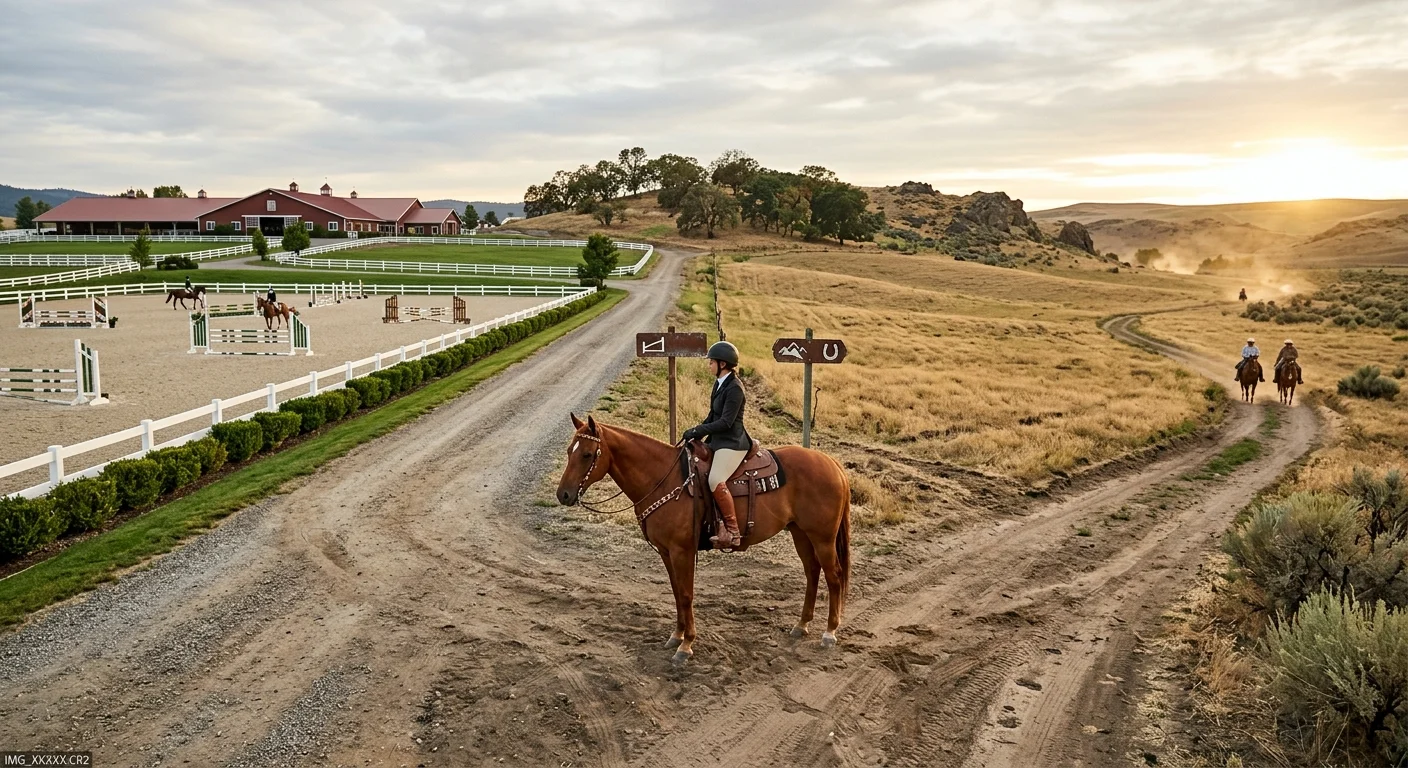
Your goal is the compass. Everything else — the saddle, the discipline, the boots — follows from it.
Think about why you want to ride. Not the romantic version. The real one.
Chasing competition? English is your path. Olympic disciplines like dressage and show jumping use structured scoring systems. They measure horse-rider harmony in clear, trackable ways. Research backs this up — riders outperform non-riders on balance metrics across both static and dynamic tests.
Want weekend trail rides and open sky? Western fits that life. Slower gaits, one-handed reins, a saddle built for long afternoons. No pressure. No scorecard.
Drawn to practical ranch skills? Working with cattle, handling real terrain — Western was built for exactly that. It grew out of that work.
As riders get clearer about their direction, they often become more selective about what they wear too. Riders pursuing show-ring polish may lean toward custom equestrian apparel, while casual Western riders often prioritize durability and all-day comfort.
A Simple Way to Decide
Write your goal down. Be specific.
"I want to compete in local hunter/jumper shows within two years" — that points straight to English.
"I want to trail ride through national parks with friends" — that points straight to Western.
Can't choose? Start Western. Build your balance and confidence first. Then layer in English technique. That sequence works well. Going the other way is harder.
FAQ: English vs. Western Riding — Quick Answers to Common Questions
Still have questions? Here are the ones people ask most.
Is Western or English riding easier to learn?
Western wins here. The saddle holds you in place. The jog is smooth and forgiving. About 90% of first-timers find their balance within an hour. English is a different story. You need upright posture, two-handed rein control, and a bouncy posting trot from day one. Most beginners need 2–4 lessons just to feel stable.
Which costs more?
English costs more. Saddles run $500–$5,000. Bridles alone hit $100–$500. Lessons average $60–$90/hour, compared to Western's $50–$70. Plan to spend 20–30% more to start with English.
What about attire?Western keeps it simple: jeans, cowboy boots, done. English asks for more — tall boots, a fitted jacket, and light breeches. The look is polished and specific. That’s one reason some clubs, schools, and retail brands work with an equestrian clothing manufacturer or even a specialized equestrian clothing factory to create discipline-specific apparel collections.
Can I switch styles later?
Yes, you can. The skills carry over. Most riders make the switch in 3–6 months with solid instruction.
Which is better for kids?
Western — by a wide margin. The saddle is larger. The gaits are relaxed. The pressure is low. Western accounts for 70% of U.S. youth programs. English tends to suit kids better after age 8–10.
Which is more popular?
It depends where you look. Western dominates the U.S. — 1.2 million Quarter Horse participants each year. English leads on the world stage, driving 70% of international competitions.
Conclusion
Here's the truth: there's no wrong door to walk through.
English and western riding each offer something beautiful — a real conversation between human and horse. No other sport comes close to that. Dressage brings quiet elegance. Barrel racing brings raw, sun-baked excitement. The saddle you pick, the discipline you follow, the boots you lace up before dawn — none of that matters as much as showing up and starting.
Still weighing your options? Let your goals point the way.
Want competitive precision? English riding disciplines are your match.
Want wide-open freedom and an easier start? Western riding fits that perfectly.
Choosing for a child? Either path builds confidence, focus, and a bond with animals that tends to stay with them for life.
And as that journey grows, many riders and equestrian brands start paying attention to fit, identity, and function in what they wear — from everyday schooling outfits to private label equestrian clothing and even high-end custom equestrian clothing designed for riders who want both performance and polish.
Now close the tab. Find a barn near you. Book the lesson.
The horse is already waiting.