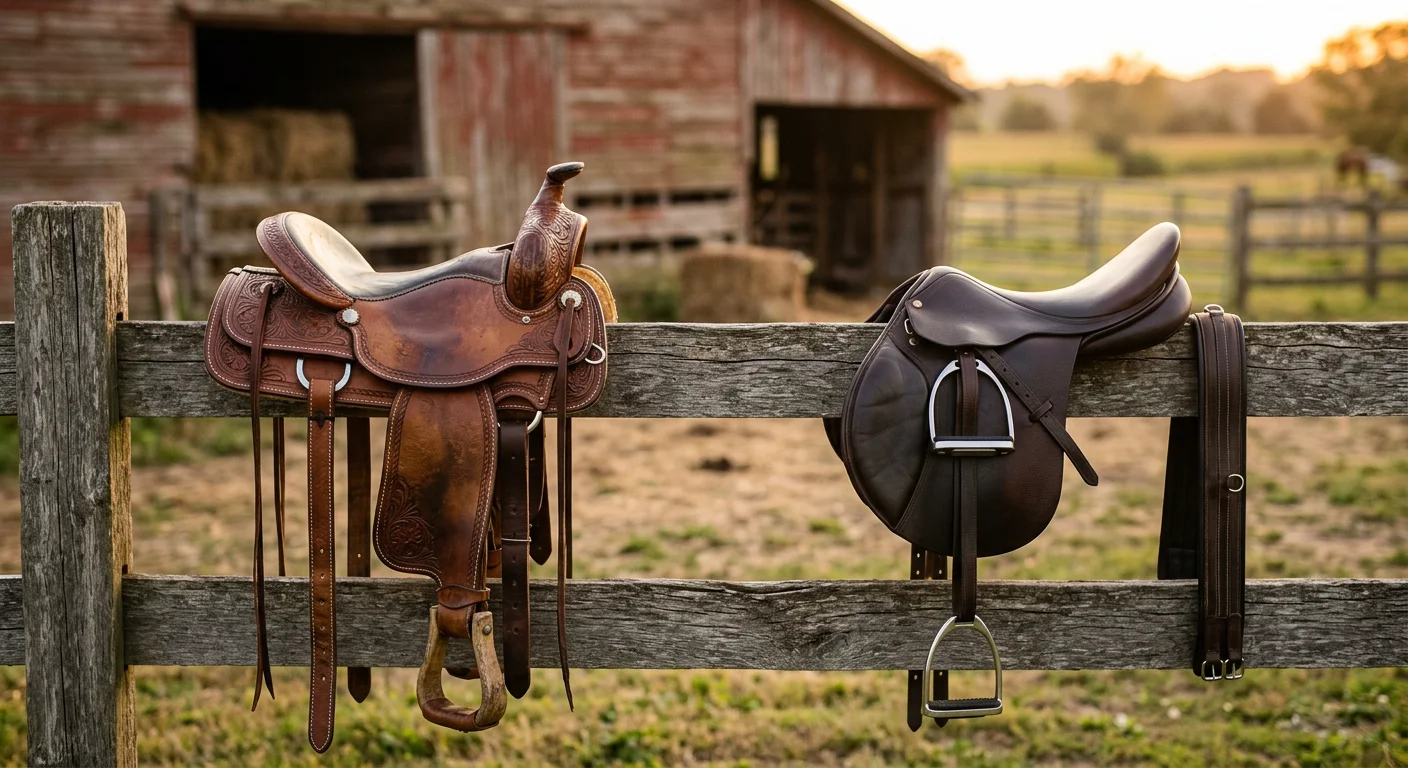
Every rider has a preference, but few can defend it well. Leather vs synthetic horse riding gloves — most people stick with what they've always used, or whatever the tack shop recommended. They rarely stop to weigh what each material actually delivers in the saddle. If you are checking options from top equestrian suppliers, or just a rider looking to update your gear, this decision deeply matters.
Grip, durability, breathability, price, and environmental footprint all shift depending on what's physically covering your hands. These aren't small differences; they noticeably shape how you ride, how long your gloves realistically last, and how you manage your overall equestrian supply budget. Whether you're buying a single pair or sourcing bulk wholesale riding gloves, recognizing what each specific material offers helps clear the confusion right away. This guide breaks down both options, scenario by scenario. You'll see exactly which material fits your riding discipline, your budget, and your core values — so you can finally stop guessing and just ride.
What Makes a Great Horse Riding Glove? (Core Evaluation Criteria)
Six main criteria separate a glove that genuinely works from one that just looks the part. We're talking about Grip, durability, breathability, fit, weather protection, and maintenance. These certainly aren't just empty marketing buzzwords crafted by fast-talking equestrian clothing manufacturers. They are the absolute real performance factors that dictate whether a glove helps you perform better or simply gets in your way.
The Six Criteria That Matter
Safety Standards Worth Knowing
You don't need to memorize these numbers. Use them as a filter. They help you skip gloves that look tough but fall short in real use.
Leather Horse Riding Gloves: The Traditional Choice
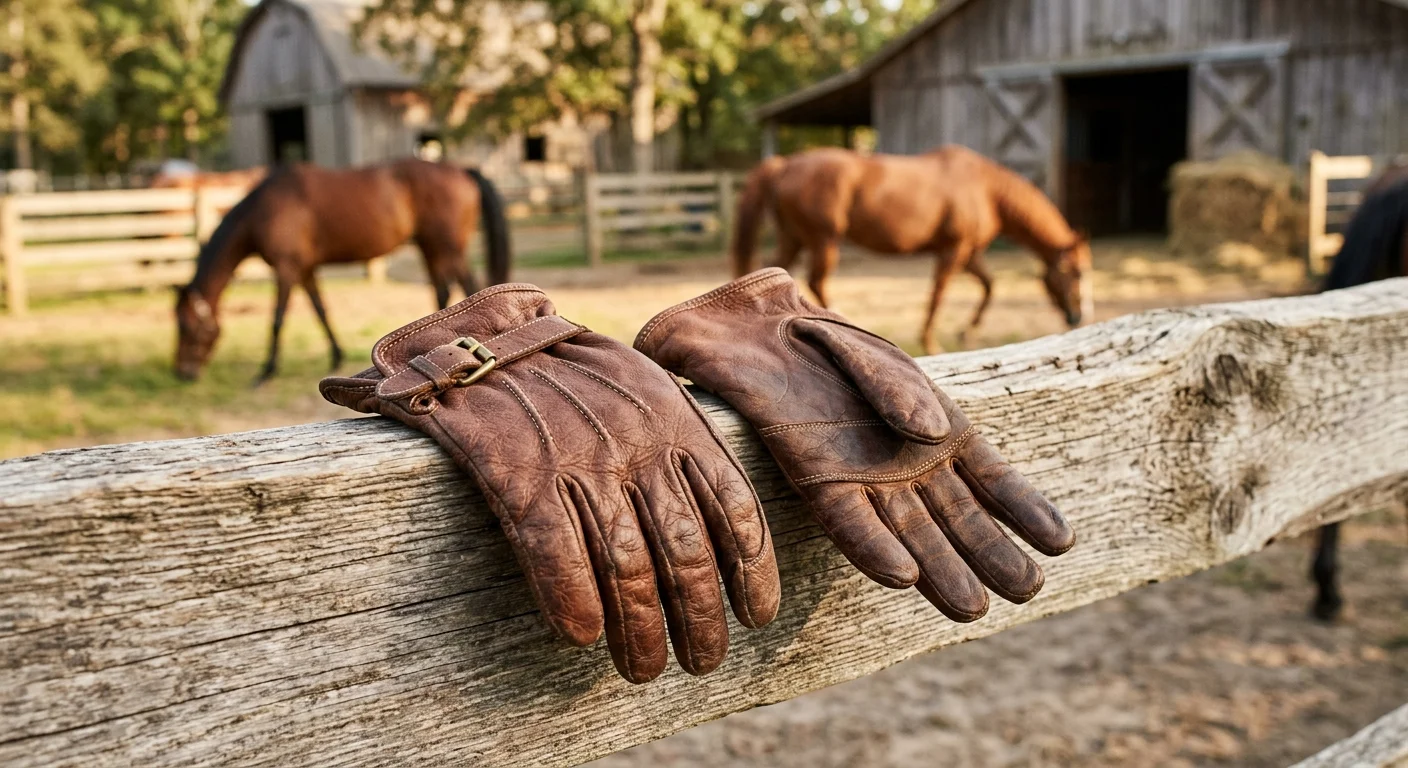
Leather has been covering riders' hands for centuries. Honestly, it hasn't stuck around for this long by accident. Full-grain leather sits right at the top of the hide, keeping the natural grain completely intact. That natural structure creates a beautifully textured surface that grips leather reins like absolutely nothing else can. Advanced rider benchmarks point out that this grip advantage is predictably 20–30% better than smooth synthetics in dry conditions. That's definitely not a marginal gain. It is the literal difference between a nicely collected canter and a jerky correction you never planned for.
When we look directly at what the numbers tell you, things get even clearer. Top-tier full-grain gloves generally run about 0.8–1.2mm thick. This specific thickness uniquely gives you incredible durability alongside real tactile feedback through the rein—a feature that riders heavily request when shopping for custom equestrian apparel. Split leather, cleanly cut from the lower hide, comes in slightly thinner, usually at 0.6–0.9mm. Sure, split leather is way more affordable, but it generally wears out much faster. On the topic of durability: if you actually take proper care of them, quality full-grain leather gloves can easily last 2–5 years of heavy daily use. They amazingly conform to your exact hand shape after just 10–20 rides. However, if you skip the conditioning routine, that timeline collapses incredibly fast. Dry cracks will likely appear in as little as 3–6 months.
- 20–30% better grip on leather reins in dry conditions
- Full-grain lasts 2–5 years with proper care
- Conforms to hand shape after just 10–20 rides
- Superior tactile feedback through the rein
- Restricts finger flex by 30–40% during break-in
- Grip drops 40–50% when fully saturated
- Needs 24–48 hours to dry after wet rides
- Failure rate rises to 50% after five wet rides without waterproofing
Pricing and Long-Term Cost
Over three years, the math shifts based on how well you maintain them. One pair with consistent care outlasts two pairs without it. That keeps your total cost closer to $100–$150 rather than $300+.
Leather stretches 5–10% with use, so size snug from the start. Wrap a tape measure around your knuckles (flat hand, excluding thumb), then round up at half-inches — 6.75 inches rounds to a size 7. The target fit is 0–0.25 inches of finger space, no wrinkling at the ring finger, and a secure wrist closure. Too loose and you lose 20% grip. Too tight and you restrict flex by 25%.
Synthetic Horse Riding Gloves: The Modern Alternative
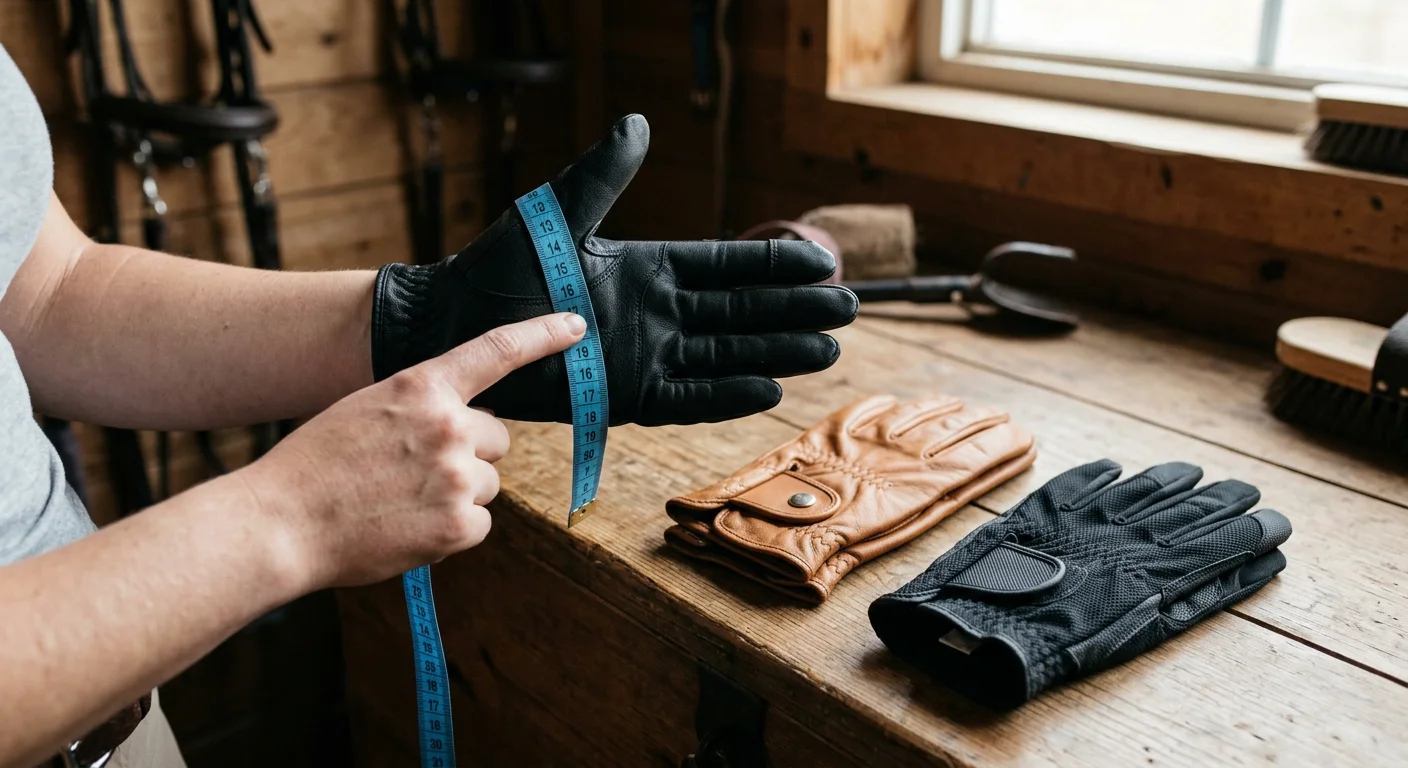
Synthetic gloves simply don't ask you to earn them over time. There is absolutely no break-in period. No annoying conditioning paste routine. You aren't painfully forced to wait 20 rides before they start fitting your hand right. That's the entire core appeal, and it's heavily backed by advanced material science that has successfully moved miles beyond traditional cheap imitation leather.
In today's fast-moving market, three main materials completely dominate this category: PU (polyurethane), microfiber, and Clarino. When an experienced equestrian clothing factory correctly works with these synthetic fiber blends, their real underlying focus is entirely on tensile strength without piling on clumsy extra thickness. Honestly, these aren't just cheap substitutes; they are perfectly purpose-built for intense rein work. If your business actively orders wholesale equestrian clothing, you've definitely noticed how universally huge these specific materials have ultimately become recently.
Where exactly do synthetics clearly outperform the classics? Fit is where synthetics pull ahead fastest. You instantly experience that incredibly comfortable second-skin feel right away. Breathability is a real strength. Modern mesh-backed and highly perforated designs easily pull excess heat cleanly away from your sticky hands. Additionally, daily maintenance is basically zero. Just toss them directly in the washing machine; they dry almost instantly. You'll even find some fantastic touchscreen capabilities in select modern synthetic models. It's truly easy to see why expanding brands consistently utilizing diverse OEM/ODM services push synthetic options so heavily into the market right now.
We also need to mention the environmental numbers. When compared directly to processing natural leather, producing modern synthetic materials predictably uses:
(Source: HIGG MSI 3.3; AX Suede NovoSplit 1.05mm)
But let's be fully honest about the frustrating weaknesses. Soaking wet synthetic or rubber reins can be a big problem because standard synthetic palms sometimes slip where highly textured leather would otherwise hold super tight. Manufacturing quality also fluctuates rather wildly across different newer brands, meaning you really have to be careful when specifically sourcing custom equestrian clothing.
As for upfront pricing and heavy practicality, synthetic gloves definitely cost way less at checkout. Troublesome long-term maintenance costs practically disappear entirely. For super budget-conscious riders or competitive folks who simply burn through their gloves weekly, the basic numbers plainly make total sense. Even better, you can happily find brilliant hybrid builds—beautifully featuring a solid leather palm with synthetic mesh back—that easily give you an amazing balance of both demanding worlds.
Head-to-Head Comparison: Leather vs. Synthetic Across Key Riding Scenarios
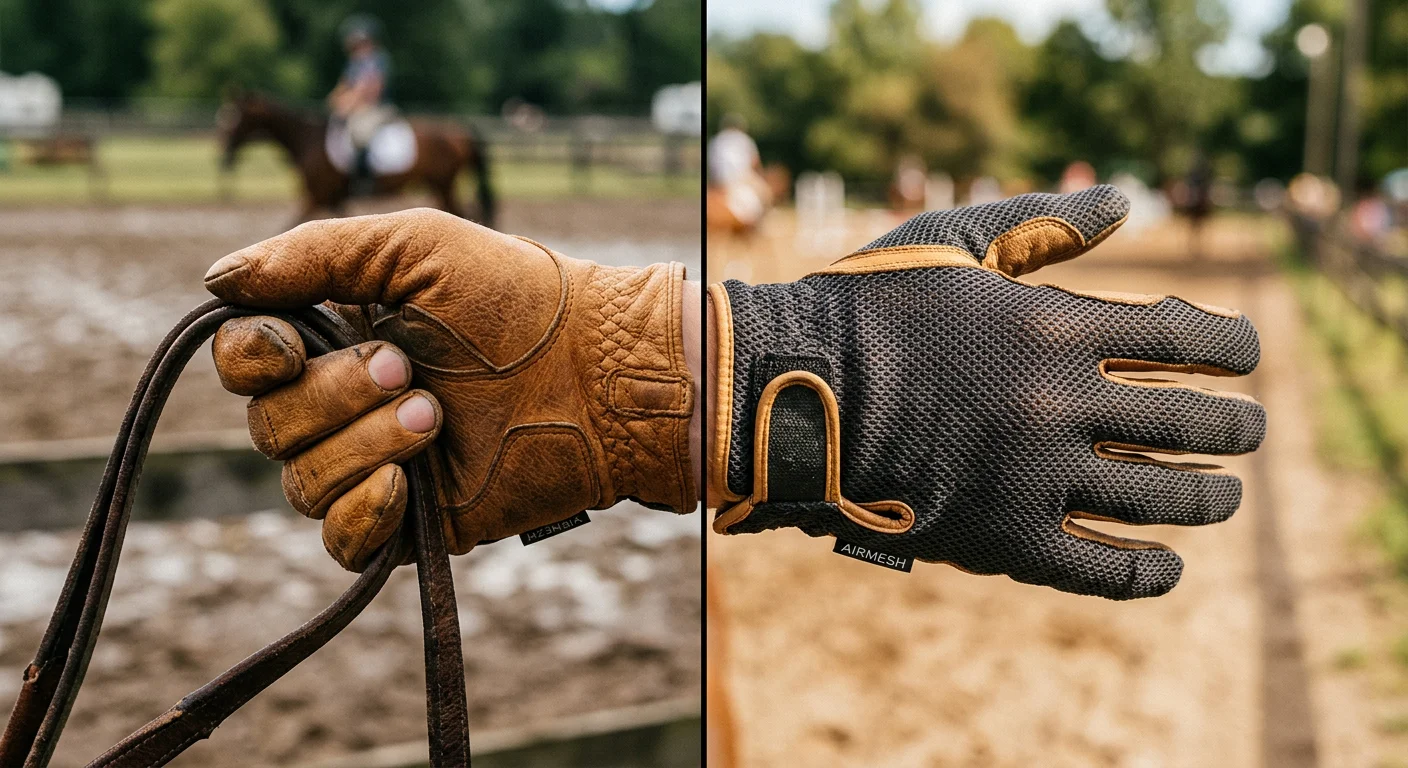
The material debate settles itself the moment you put it to actual work. Stop comparing them on the shelf. Compare them in the saddle, in the rain, in August heat, and after two years of weekly schooling sessions.
Here's what each one delivers.
Grip: Dry Conditions vs. Wet Reins
Dry conditions favor well-conditioned leather. The natural grain creates a softness against the rein that synthetic palms can't match. On leather reins, the material-on-material contact builds a tactile feedback that experienced riders train with on purpose.
Wet conditions flip the script. Synthetic keeps its grip steady once moisture hits. Untreated leather can slip and stiffen. Ride through rain without waterproofing treatment and surface cracking speeds up fast. Synthetic wipes clean. Leather needs attention.
Breathability: Long Rides and Hot Weather
This is where the gap between leather and synthetic gets physical. Leather breathes. Real leather releases heat from contact points in about 30 seconds. Synthetic materials take closer to a minute. Cheaper synthetics trap heat and hold it there.
Mesh-backed synthetic designs close that gap by a lot. Perforated panels and stretch-mesh tops push air through where heat builds up most. But a premium leather glove with open construction still handles sweat and airflow better than solid synthetic builds can.
For long summer sessions or hard arena work, ventilated synthetics are a solid choice. Riders who run hot and can't stand sticky palms — breathable leather is still the standard to beat.
Durability: What "Long-Lasting" Really Means
The answer depends on how much maintenance you're willing to do.
Leather rewards effort with a long life. Synthetic rewards low maintenance with steady performance. Neither is the wrong pick — it comes down to your routine.
Cold and Wet Weather Riding
Leather feels cold at first contact. It warms up as you ride, but synthetic gets there faster. In wet conditions, synthetic is straightforward — wipe it down, ride again. Leather needs a silicone-based conditioner applied on a regular schedule. Not as a chore, but as part of owning it.
Riders who condition their leather gloves 3–4 times per year keep weather performance strong. Skip that routine and you'll see fast what untreated leather looks like after five wet rides.
Neither material wins across the board. Leather leads on feel and long-term payoff. Synthetic leads on convenience, wet-weather toughness, and low upkeep. The right choice is the one that fits how you ride — not how you intend to.
Environmental Impact: A Factor More Riders Are Considering
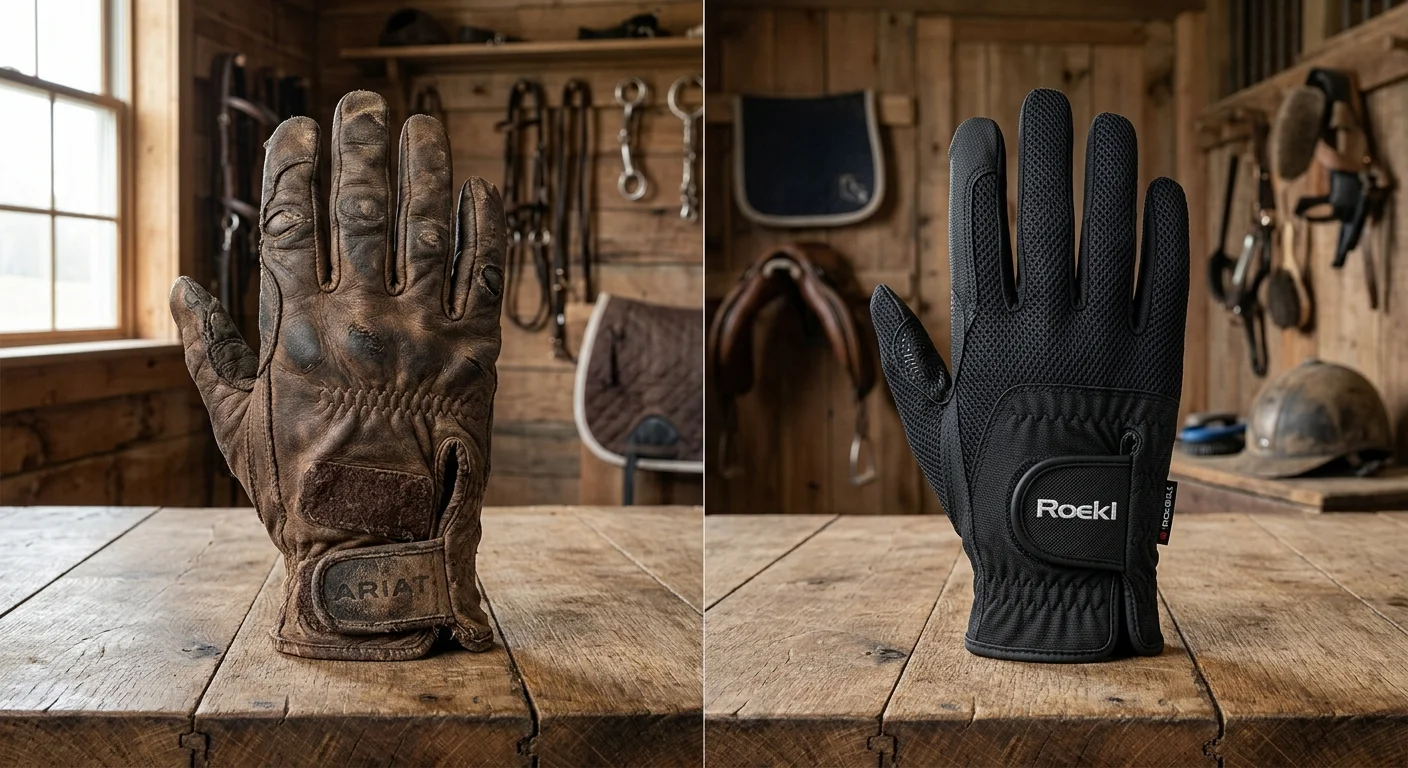
Your glove's footprint doesn't end after a ride. It follows the whole lifecycle of the material.
More riders now weigh environmental cost alongside performance. The gap between leather and synthetic is real — and big enough to shift how you see this choice.
Leather production is resource-heavy. Raising livestock, processing hides, and tanning all burn through large amounts of water and chemicals. Synthetic materials work differently. Compared to natural leather, synthetic glove materials use:
(Source: HIGG MSI 3.3; AX Suede NovoSplit 1.05mm)
These aren't small differences. That's a deep structural gap in how each material reaches your hands.
Synthetic gloves hold up through machine washing without breaking down. So you replace them less often. Less production. Less waste moving through the supply chain.
Leather has its own case for longevity. A well-maintained pair can last five years. A synthetic pair replaced every eighteen months produces more waste over the same period. On a pure waste calculation, leather can come out ahead — but only with consistent care.
Hybrid and Specialized Gloves: When Neither Pure Option Wins
Some problems don't have a clean answer — they have a better question. Instead of picking between leather grip and synthetic breathability, hybrid gloves take a different route: why not build both into the same glove?
The idea is simple. A leather or synthetic leather palm does the heavy lifting — grip, abrasion resistance, rein contact. A breathable mesh back handles the heat. Together, they cover what each material misses on its own.
Built for Specific Conditions
The real value shows up once you match the glove to your riding conditions:
Hot weather: Mesh-backed synthetics with silicone or leather palm inserts hold grip even as your hands sweat. The open back moves air and pulls moisture away.
Cold weather: Waterproof membranes paired with fleece or Thinsulate lining block moisture without giving up warmth. Full-finger builds dominate here — they cover every part of your hand.
Rough terrain: Full-finger hybrids with leather palms and gel or foam padding absorb shock across long rides. You get less ulnar nerve pressure and less vibration fatigue over time.
Where the Market Is Heading
Full-finger hybrid gloves lead sales right now. Complete protection plus all-condition grip has made them the go-to choice for serious riders. Medium sizing moves the fastest — it sits at the sweet spot between flexibility and support across disciplines.
One trend worth tracking: smart sensor integration is starting to show up in specialized builds. These gloves record real-time impact and movement data. It's an early development, but the direction is clear. Hybrid gloves aren't a middle-ground option anymore. They're where the real engineering work is happening.
Conclusion
Leather vs. synthetic horse riding gloves — there's no single right answer. That's the whole point. The right glove depends on your riding discipline, your budget, and how much break-in time you're willing to put in.
Ride hard in tough conditions? Leather pays off. The grip, feel, and lifespan still outperform what most synthetics can offer. Need something easy to care for, weatherproof, and budget-friendly? Modern synthetic gloves more than hold their own in any tack bag.
Stop settling for gloves that weaken your feel on the reins. Try a few options from both categories. Run them against your riding profile from the guide above. Then make the call based on your hands, your horse, and your goals.
The best glove isn't the priciest one — it's the one you forget you're wearing.