What Are The Rules For Show Jumping?
Watching a horse and rider sail over colorful jumps looks easy. Then you realize there's a whole rulebook for every stride, turn, and approach. For riders, coaches, and equestrian manufacturers alike, understanding these nuances is critical.
Preparing for your first show jumping competition? Or trying to figure out why that beautiful round just got four faults? Understanding the sport's penalty system clears up the confusion fast. Show jumping goes beyond clearing obstacles; it is a careful balance between speed and accuracy. Knock down a single rail, hesitate at a fence, or go over the time limit—any of these can cost you a clear round or get you eliminated.
This guides the rules of modern show jumping, a vital resource for athletes and the equestrian outfit manufacturers who support them. Whether you are looking for custom equestrian clothing that meets regulation standards or simply want to understand the sport, this breakdown helps. You'll learn how penalties are calculated, the drama of jump-off rules, and why private label equestrian clothing must adhere to specific safety and aesthetic codes. Compete with confidence or coach with authority knowing exactly why the crowd erupted as that rider crossed the finish line.
The Fundamental Scoring System: How Faults Are Calculated

Show jumping uses a simple penalty system where fewer faults equal a better score. Professional equestrian suppliers understand that gear failure cannot be an option here; the rules are strict enough without equipment issues.
A horse knocks down a rail, pole, or any part of an obstacle? That's four faults. This is the most common penalty. The rail doesn't need to fall completely; moving it from its cup counts. A refusal, run-out, or circling in front of a fence adds three faults (though some national federations penalize four). A second refusal adds another penalty, while a third usually results in elimination. This applies anywhere on the course, requiring riders to have total control, often aided by precision gear from a top equestrian clothing manufacturer.
Time penalties are equally crucial. Time allowed is when faults start adding up—one penalty for every four seconds over. The time limit is different; it is the absolute maximum, usually double the time allowed. Exceed it, and you are eliminated. Course designers calculate this based on track length and speeds of 325-375 meters per minute. A clear round means zero faults: no rails down, no refusals, and finishing within the time allowed. This objective system is why wholesale equestrian clothing buyers look for performance wear that aids aerodynamics and comfort, helping riders shave seconds off their time.
Immediate Elimination: Disqualification Rules You Need to Know

Some mistakes end your round on the spot. Elimination rules in equestrian competitions help avoid career-ending errors and ensure safety. These aren't subjective penalties; they are absolute disqualifications. For equestrian clothing manufacturers, understanding these safety triggers is essential for designing rule-compliant protective gear.
The "Third Refusal Rule" is a major trigger. If your horse refuses twice, you are on thin ice. A third refusal anywhere on the course triggers automatic elimination. Unlike cumulative faults, the moment number three happens, the round is over. Similarly, a fall of the horse or rider results in immediate elimination. Safety comes first. This includes partial dismounts where the rider touches the ground to support themselves. This focus on stability drives the demand for high-grip breeches from custom equestrian apparel brands.
Other violations include jumping the wrong course, missing an obstacle, or jumping a fence in the wrong direction (always approach red flags on your right). Starting before the bell or violating the absolute time limit also ends your day. Furthermore, dangerous riding conduct—such as excessive use of the whip, presenting a lame horse, or visible blood on the horse—results in elimination and potential investigation. modern equestrian manufacturers follow these welfare trends closely, developing gentler aids and spurs that comply with strict FEI regulations.
Competition Formats: Different Table Systems Explained
Show jumping uses different "tables" to change how competitions run and what penalties count. Riders who know multiple tables perform better, and they often require different kit strategies from their equestrian clothing factory partners.
Table A is the classic format where faults decide placement and time breaks ties. You get penalties for knocked rails and refusals. The rider with the fewest faults wins. Most big competitions, like the Olympics or Grand Prix, use Table A with a potential jump-off. If multiple riders go clear, they advance to a shortened course where speed becomes king. Here, a four-fault round in a fast time might beat a slow clear round. This format demands agility, which is why custom equestrian outfit choices often focus on lightweight, flexible materials.
Table C flips the formula: speed is everything. Faults are converted into time penalties (usually adding seconds) rather than points. A knocked rail doesn't stop you, it just adds time. The fastest total time wins. This format is popular for speed derbies. Additionally, Table A2 and other hybrid formats exist, mixing faults and time differently. Knowing which table applies allows riders to adjust their strategy—and their gear selection from trusted OEM/ODM services—to match the pace and risk required.
Course Design and Obstacle Heights by Competition Level

Course designers follow strict rules regarding height, spread, and distance. These dimensions correlate directly to the durability requirements for gear produced by equestrian suppliers.
Classes progress logically. Starter divisions feature jumps at 2'0" to 2'3" (60-70 cm), inviting new horses and riders. Novice levels bump this to roughly 90cm. The technicality increases significantly at the Training (1.00m) and Preliminary (1.10m) levels. By the time riders reach Advanced or Grand Prix levels, obstacles loom at 1.30m to 1.60m with massive spreads. Oxers (spread fences) and Triple Bars (ascending spreads) test a horse's scope. Water jumps, which can span up to 4.50 meters at the top level, require immense bravery.
cm
cm
1.10m
1.60m
Designers also manipulate "related distances" between fences. A one-stride combination might measure 24-25 feet at lower levels but tighten to 23 feet in advanced classes to test adjustability. Course lengths grow from 1,200 meters to over 1,800 meters. For high-end custom equestrian clothing brands, this means creating apparel that withstands the rigors of long, athletic courses while maintaining a polished look.
Mandatory Attire and Equipment Rules

Judges inspect gear before you even touch a rein. Dress code violations can disqualify a rider instantly, making the role of the equestrian clothing manufacturer vital in competitive success.
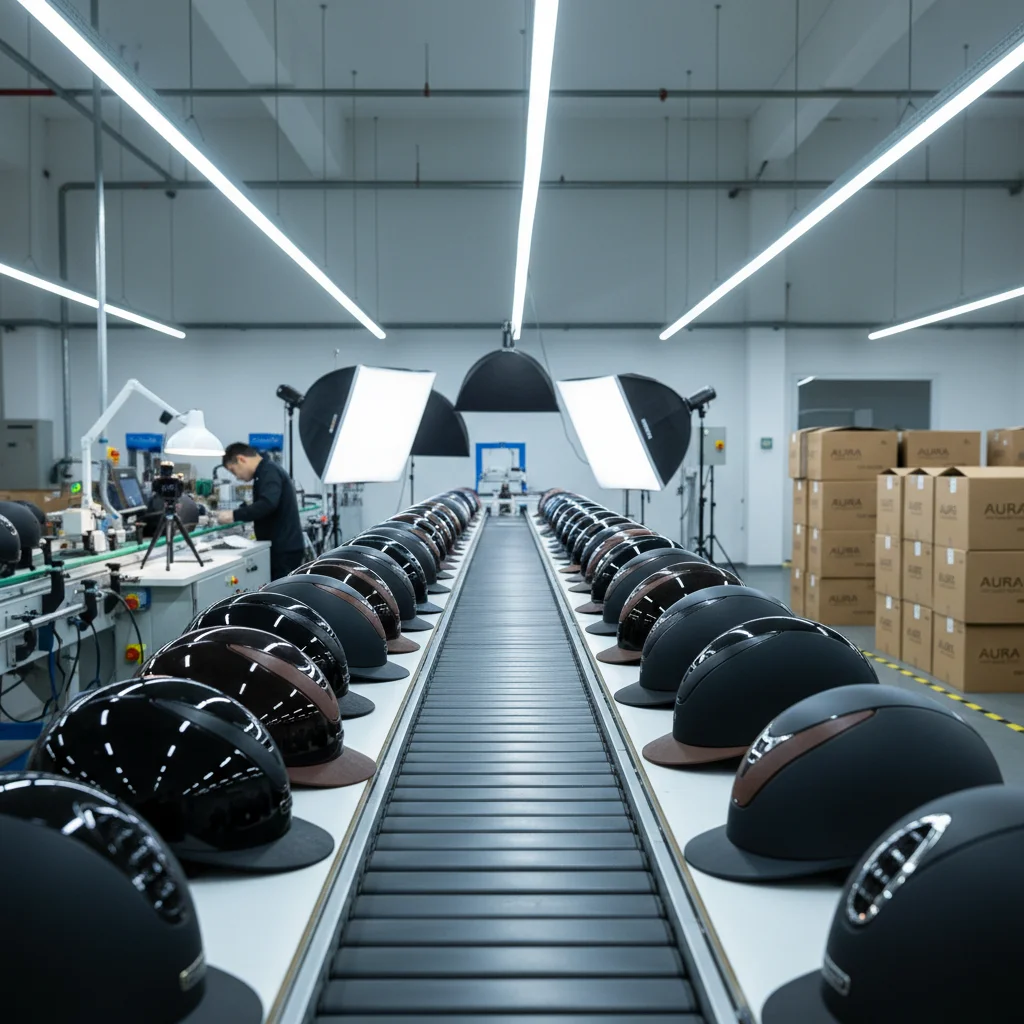
Helmet standards are non-negotiable. Headgear must meet ASTM/SEI or European safety standards; vintage caps are strictly banned. The harness must be secure. Beyond safety, aesthetic rules apply. Hunter divisions require dark coats (navy, black, green) and tan breeches, fostering a huge market for traditional styles from equestrian outfit manufacturers. Jumper divisions are slightly more relaxed, allowing polo shirts in some classes, but the helmet rule remains absolute.
Strict limits apply to spurs and whips. Spurs must not exceed specific lengths (often 4cm) and must be blunt. Whips are restricted by length (usually 75cm maximum) and weight. Ring stewards verify tack at the in-gate—checking for banned bits, draw reins, or illegal boots. Riders wearing unapproved gear, such as non-certified helmets or improper jackets, will not be allowed to start. This is where private label equestrian clothing services shine, helping brands create compliant, stylish gear that passes every inspection.
Safety Protocols and Horse Welfare
Show jumping prioritizes safety above all else, adhering to FEI regulations that protect both horse and human. This commitment to safety influences everything from course design to the materials used by equestrian manufacturers.
Medical personnel and ambulances are mandatory at sanctioned events. A fall stops the clock immediately, and riders must be cleared by medics before considering a return to the saddle. Concussion protocols are strict. Similarly, veterinary personnel monitor the horses. The "blood rule" is absolute: visible blood on a horse’s flank or mouth results in elimination. This bans hypersensitization techniques and mandates that all equipment—from bits to boots—must be non-harmful.
Warm-up arenas are also heavily policed to prevent dangerous overcrowding or aggressive riding. Stewards monitor tack and behavior, ensuring fair play. These protocols ensure the sport remains sustainable. OEM/ODM services in the equestrian world are increasingly focused on welfare-friendly designs, such as spur-protective girths and softer bits, to help riders stay compliant with these evolving safety standards.
Clear Rounds, Jump-Offs, and Winning Context
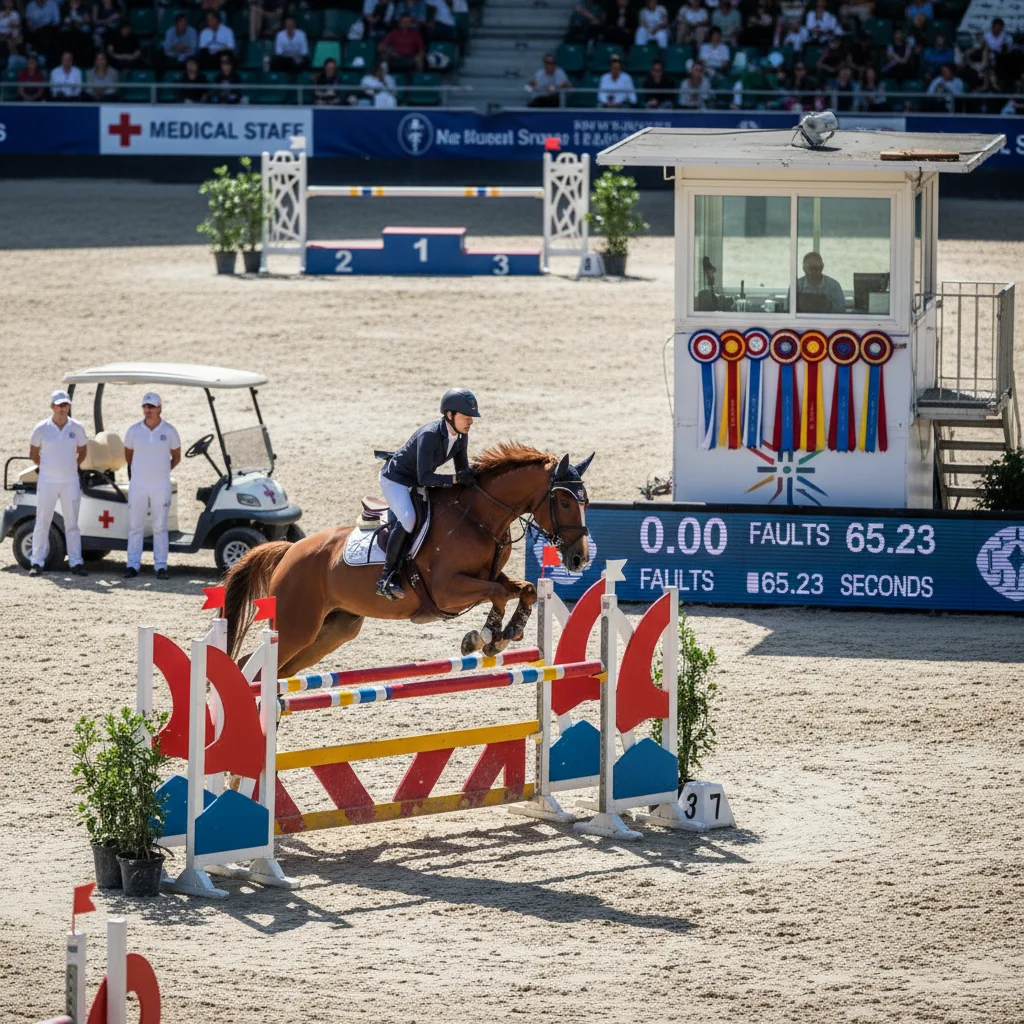
A clear round show jumping result is the gold standard: zero faults within the time allowed. When multiple riders achieve this, the jump-off decides the winner. This "sudden death" round features a shortened course with raised obstacles.
In a jump-off, speed is just as important as accuracy. Riders cut corners and gallop flat out. A rider with four faults in a fast time can beat a slower clear round in some formats, but typically, the fastest clear round takes the prize. Custom equestrian clothing plays a subtle role here; ill-fitting gear can distract a rider or restrict movement during these high-intensity moments. Tie-breaking typically looks at faults first, then time.
Statistics show how difficult this is. At the 5-star level, clear round rates often hover around 20-30% on difficult tracks. Factors like weather, footing, and horse temperament all play a role. To mitigate these variables, riders rely on consistent training and top-tier equipment from wholesale equestrian clothing providers who understand the performance needs of elite athletes.
Conclusion: The High Standards of Global Competition
Show jumping makes sense once you grasp the scoring. What seems confusing becomes strategic. The rules test the bond between horse and rider while ensuring safety and fairness. Whether you are aiming for a local clear round or following the FEI 5* circuit, jumping penalties and faults provide the framework for the sport.
From the precise specifications of the obstacles to the time allowed show jumping limits, every detail matters. This precision extends to the industry behind the sport. Riders cannot afford equipment failures. They depend on reliable equestrian clothing manufacturers to provide breeches that grip, jackets that stretch, and safety gear that protects.
If you are in the business of equestrian sports, partnering with the right production team is crucial. Whether you need OEM/ODM services to launch a new line of compliant jackets, or high-end custom equestrian clothing for an Olympic team, quality is non-negotiable. Top-tier equestrian suppliers and equestrian outfit manufacturers know that in a sport defined by seconds and millimeters, the gear must be as disciplined as the athlete. As you analyze the next round, remember that the perfect performance is a combination of training, rule knowledge, and the support of a dedicated equestrian clothing factory ensuring every stitch is competition-ready.