One second you're enjoying a peaceful trail ride. The next — your horse launches sideways like something invisible just tried to eat it. Your heart's pounding. Your reins feel useless. Your brain is juggling seventeen emergency decisions at once.
Ever found yourself wondering what to do if a horse spooks while riding? You’re definitely not alone in this — and more importantly, you’re not helpless either. Whether you source your specialized riding gear from trusted equestrian suppliers or rely purely on decades of hands-on practice, surviving a massive spook takes the exact same split-second responses.
Spooking remains one of the most fundamentally misread moments in horsemanship today. The difference between a small, harmless startle and a full-blown physical disaster comes down purely to what you do in those first few frantic seconds. This guide covers all of it comprehensively. We are going to dive into the warning signs, the split-second anatomical responses, the recovery moves, and the long-term mental fixes that systematically turn a spooky horse into a steady, reliable partner. Finding that consistency is much like finding a dependable equestrian clothing manufacturer; once you have the right foundation, every single ride feels significantly smoother.
Why Horses Spook — And Why It's Not Disobedience
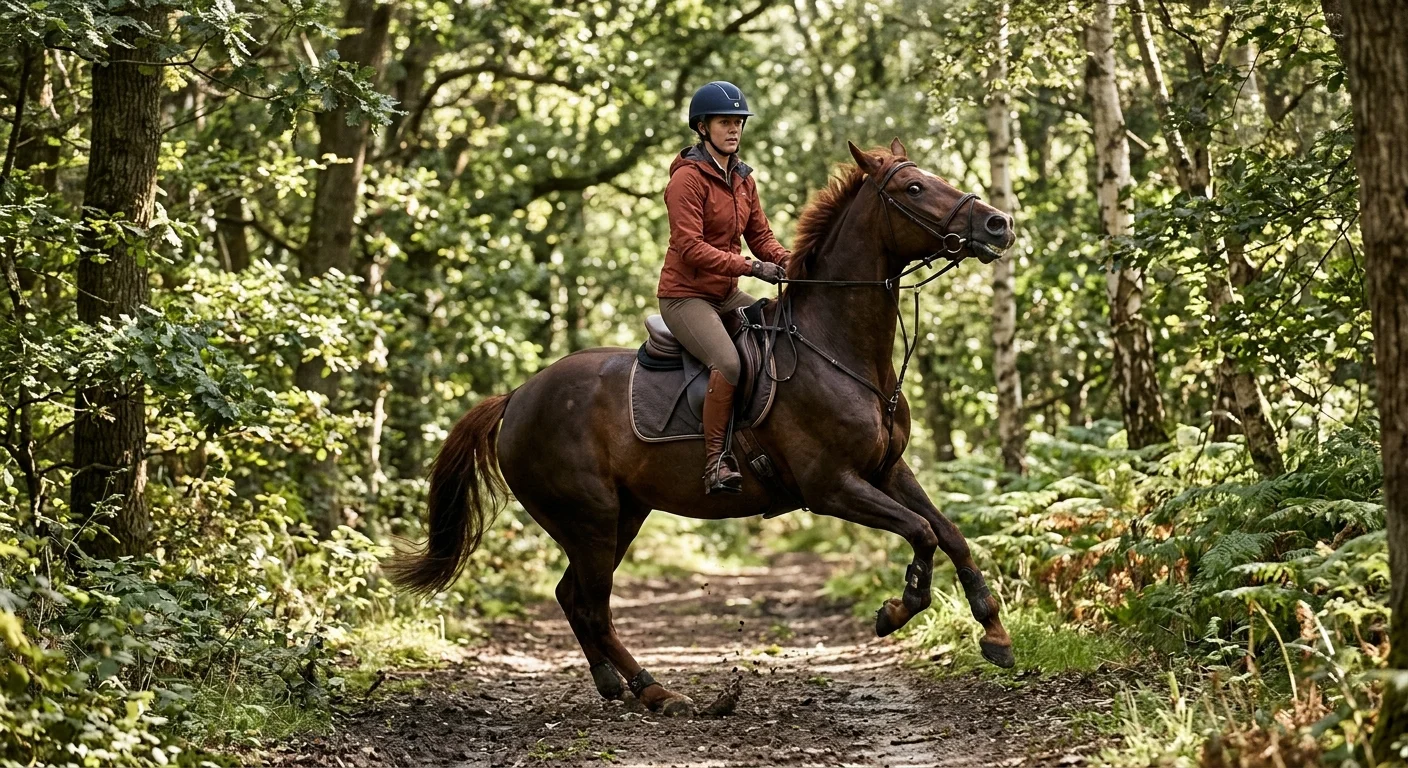
Here's something that might reframe every frustrating spook you've ever experienced: your horse isn't being a jerk.
Spooking causes 27% of horse-related accidents. That number alone makes it worth understanding at a biological level — not just a "bad horse" level.
Horses are prey animals. That's not a metaphor. For millions of years, the horses that survived were the ones who moved first and asked questions never. Their nervous system is wired to react before the brain can decide whether the threat is a Florida panther or a plastic bag flapping in an arena. The sympathetic nervous system kicks in fast. Heart rate spikes. Adrenaline floods the bloodstream. Muscles prime for flight. All of it happens in milliseconds. None of it is a decision.
That's the part most riders miss.
Not all spooky horses are the same, though. Research using heart-rate monitoring reveals two distinct types:
High-reactive horses — heart rate spikes and stays elevated. These horses stay on high alert, keep moving away, and build avoidance habits over time.
Quick-recovery horses — heart rate spikes, then drops back fast. They startle, look, and move on like nothing happened.
Same trigger. Two very different nervous systems.
Triggers fall into three categories: visual (plastic bags, umbrellas), auditory (rustling, distant sounds — horses hear far beyond human range), and environmental (new ownership, isolation, dietary imbalances). Horses aged 11–15 going through ownership changes are at higher risk.
Riders need to tell the difference between a genuine fear spook and a learned evasive response. Genuine fear shows up as sudden bolting or rearing. It also appears in subtler signs — facial tension, a hesitant gait — that most caregivers miss entirely. Learned spooking, by contrast, often traces back to rider anxiety, trust gaps, or excess energy from an unbalanced diet.
One looks like fear. The other is a habit. Each one calls for a different response.
Warning Signs Before a Full Spook Happens (Read Your Horse)
Your horse tells you what's coming. Every single time. The problem is most riders aren't listening to the right channel.
There's a whole broadcast happening underneath you — through your reins, through your seat, through the body you're sitting on. It starts before anything is visible. Before the head shoots up. Before the legs scramble. Before you're dealing with a four-legged freight train.
Here's the sequence, in order:
1. The jaw locks. This is the earliest signal — and almost nobody catches it. You feel it through the reins as a subtle stiffening. A tiny resistance. The poll tightens. It's not dramatic. It's almost nothing. But it's something.
2. The gaze fixes. Now your horse is staring. Hard. At that thing. Ears pricked forward, or flicking back and forth like a broken antenna. Head starting to rise. Neck going rigid.
3. The gait changes. A bad step. A hesitation. The rhythm breaks — like a record skip you almost didn't notice.
4. Responsiveness drops. You ask, and there's a lag. Your horse is somewhere else. Mind gone, body still moving.
5. Everything either stops — or explodes.
That entire sequence? One to five seconds. Jaw lock to full bolt, five seconds.
Most riders register only step six — the explosion. Research backs this up, and the findings are uncomfortable: caregivers are poor at spotting subtle pre-spook signals like facial tension or a hesitant step. The overt stuff — rearing, bolting — gets recognized. Everything before it? Riders miss it almost every time.
What to look for physically:
You must start watching for the sudden whites of the eyes becoming highly visible, the nostrils aggressively flaring with a sudden snorting sound, the physical tail tension massively building, and finally, that completely unmistakable rigid feeling of the horse literally "bracing through the withers" directly under your seat. Because your hips connect deeply with the saddle, your seat gives you visceral information actual seconds before your human eyes do. If you are wearing expertly designed custom riding breeches offering phenomenal grip and tactile feedback provided by elite equestrian outfit manufacturers, you naturally feel that tense brace dramatically faster. You must use that tiny window safely.
What To Do In The First 3 Seconds of a Spook
Three seconds. That's your entire budget.
Not three minutes to think it through. Not thirty seconds to recall what your trainer said last Tuesday. Three seconds — about the time it takes to read this sentence — and what you do in that window decides everything. Either this becomes a story you laugh about later, or one you tell from a hospital bed.
Here's the hard truth about those three seconds: your instincts are wrong.
The natural human response to sudden violent movement beneath you is to grab — hard — and curl inward. Grip the reins. Tighten the legs. Brace everything. Your brain screams hold on, so you hold on. It feels right. It is dead wrong.
Here's what works:
Second 1 — Breathe and sink. Before anything else, exhale. Push it out hard. This isn't zen advice — it's pure mechanics. A sharp exhale drops your shoulders, deepens your seat, and drives your weight down into the saddle instead of up and forward. A rider braced upright is easy to unseat. A rider who is heavy and low is much harder to throw.
Second 2 — Soften the reins, don't yank. A panicked horse that hits a wall of hard contact has one option: escalate. One rein — not two — with steady, lateral pressure gives the horse somewhere to go that isn't forward into chaos. Two hands pulling straight back is a tug-of-war you will lose.
Second 3 — Give the horse somewhere to look. Turn the head a little toward the scary thing, not away from it. Avoidance tells the horse the object is dangerous. Turning toward it starts to break that fear down.
Grab, brace, and pull back? That's the recipe for a spook that turns into a bolt.
Breathe, soften, redirect? That's how you stay on — and stay in charge.
How To Regain Control After the Spook
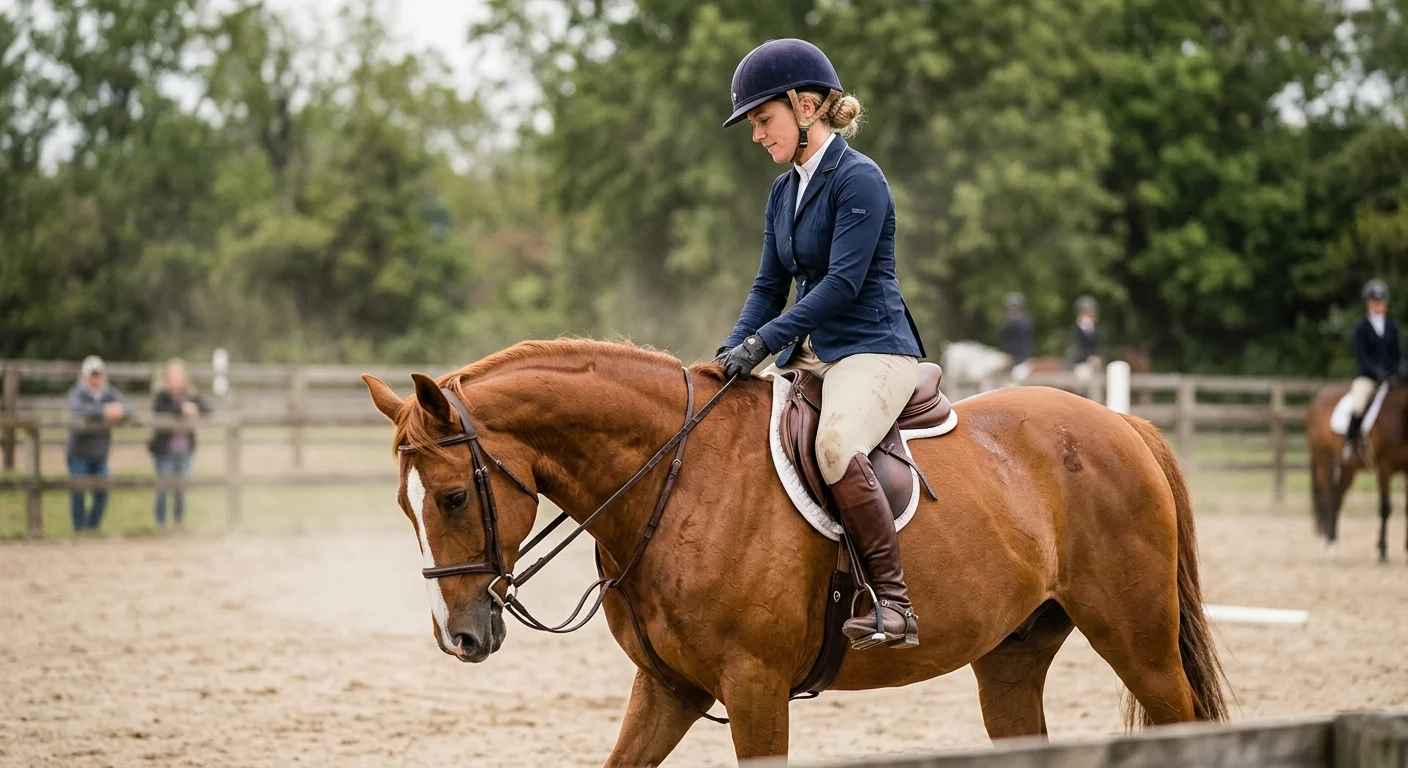
The spook happened. You're still on. Now what?
This is the moment most riders botch — not the spook itself, but the ten seconds after it. The horse is still wired. You're still wired. Everything you do right now either shuts down that fear response or throws more fuel on it.
Your first job is not to fix the horse. It's to fix yourself.
Horses intuitively intuitively read your current nervous system exactly like a biological lie detector. Shaky, trembling hands, a tightly clenched jaw, and fast, shallow breathing — your horse absolutely picks up all of that chaotic data. Before you practically ask absolutely anything of your mount, execute a fast internal physical check. Exhale completely. Actively unclench your tight jaw. Deliberately feel your heavy weight drop completely back safely into the saddle. Comfort goes a long way here; riders draped in highly unrestrictive, breathable custom equestrian clothing tend to regulate their wildly fluctuating body temperature and their spiking heart rates dramatically faster than those trapped in stifling gear.
The one-rein stop is your best friend here. One hand, one rein, steady sideways pressure. Not a yank. Not a pulley. Just a slow, firm ask that brings your horse's nose around toward your boot. This stops the forward push without setting off another blow-up. Two reins pulling straight back? That's a fight. One rein bending the neck? That's a redirect.
Once you've got a bend and a slowdown, circle. Not because circling is magic. It gives a still-fired-up horse a job to focus on instead of the scary thing behind the arena gate.
The dismount question comes down to one straight answer: is this horse escalating or settling? A horse that's blowing, looking, then calming — stay on and work through it. A horse that's spinning, rearing, or re-spooking at nothing — get off. There's no shame in stepping off. The shame is ignoring the answer your horse is giving you.
Once calm returns, go back past the scary thing. Take it slow. Not to prove a point — but because avoidance is how one spook turns into a permanent detour on every ride that follows.
Pre-Ride Preparation That Reduces Spooking
Most spooky rides are decided before you ever put a foot in the stirrup.
Pull a horse straight from the pasture, tack up in four minutes, and head out — you're not riding a horse. You're riding a loaded spring. Everything after that is just waiting for the trigger.
The core problem: a horse has two operating modes. There's the thinking brain — curious, responsive, focused on you. Then there's the reactive brain — the ancient, hair-trigger system that sees a shadow and goes sideways before any thought kicks in. Your job before mounting is to make sure you're sitting on the first one, not the second.
Groundwork: The Non-Negotiable First Step
Groundwork isn't a warm-up ritual. It's a neurological switch.
The fastest way to move a horse from reactive mode to thinking mode is frequent, unpredictable direction changes. Forwards, backwards, left, right — not endless circles. Endless circles let the mind wander. Direction changes demand attention. Lunging, C-patterns, and sidepass work all count. Energy level matters too — a lazy jog isn't enough. The freshness has to burn off for real.
Minimum benchmark: keep going until the horse's attention stays on you, not the treeline.
For trailered rides to new locations, run this entire sequence at the destination before mounting. New environments push the reactive baseline up fast — skip groundwork there and you've skipped it at the worst possible moment.
Desensitization Before You Ride
Your trail has a flapping tarp at mile two? Introduce that tarp on the ground first. The sequence is simple:
Expose the stimulus at a distance
Reward calm with a release of pressure
Close the distance one small step at a time
Watch for pre-spook signals during this phase — tense posture, wide eyes, flared nostrils. Those show up, and you found the problem before it found you.
The Rider Side of the Equation
Here's the part nobody talks about: you need a relaxation protocol too.
Tense shoulders → tight hands → stiff leg aids → horse reads it as something's wrong → flight readiness goes up. That's the whole chain. It runs on its own unless you break it.
Before mounting: drop the shoulders, soften the elbows, release the jaw. Do it on purpose. Horses run a constant read on your nervous system, and they're better at it than you think.
The Ridden Warm-Up
Start in familiar, low-distraction space before heading into open terrain. Build focus through:
Walk–trot–walk transitions — keeps attention on your aids, not the surroundings
Serpentines and direction changes — the under-saddle version of groundwork patterns
Lateral work (leg yields, shoulder-fore) — takes real mental effort, and it pushes reactive brain patterns aside
Horses settle into predictable routine. Same sequence, same warm-up structure, every ride — that pattern signals safety. Don't rush into canter or fast work in new territory. That spikes adrenaline before the horse has had a chance to settle mentally.
What NEVER To Do When a Horse Spooks
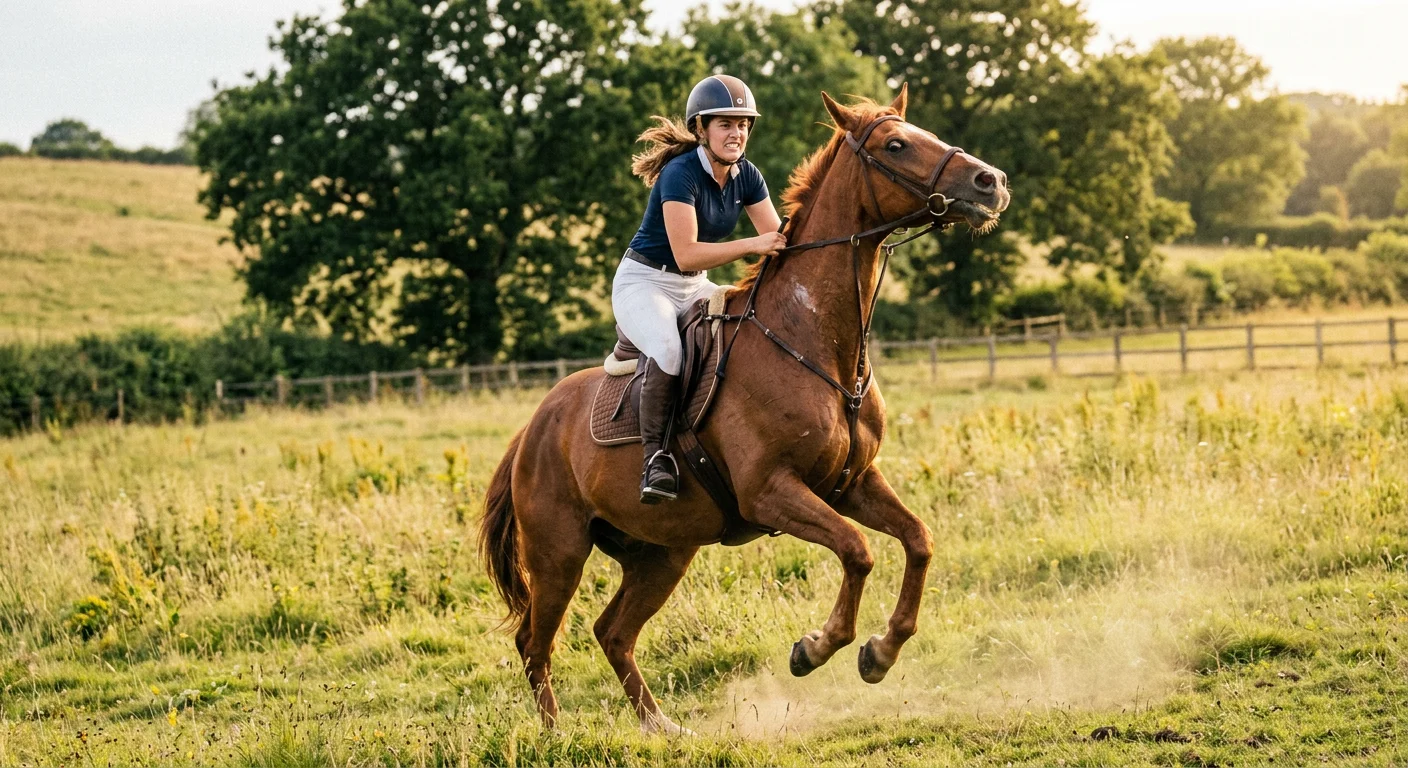
Sixty-six percent of riders who get hurt in a spook will later tell you it was avoidable. Experts agree — 60.8% of spook-related injuries didn't have to happen. That's not a rounding error. That's most of them. A huge chunk of that preventable damage comes down to one thing: riders doing the wrong thing at the worst possible moment.
Here's the list. Memorize it.
Don't grab the reins and pull back hard.
This is the most common mistake. It's also the most dangerous one. Your brain screams hold on, your hands clench, and you haul back on both reins with everything you've got. What happens next? The horse's entire nervous system is already screaming something is trying to kill me. Now it also has a source of pain attached to its face. Flight response meets resistance. That causes escalation — a spook that was a two on the panic scale becomes an eight. Bolts, rears, and bucks all become more likely, not less.
Don't lean forward.
Leaning forward is what your body wants to do. Something lurches beneath you, and you grab for stability. The problem? It wrecks your ability to influence the situation. Your weight shifts onto the horse's forehand. Your seat comes out of the saddle. Now you're a passenger with no steering. 74% of mounted falls in spook situations involve this kind of postural collapse. Even your equestrian clothing manufacturer choices can influence comfort and grip during sudden movements — proper apparel helps you stay balanced.
Don't yell.It feels like communication. It isn't. Horses hear at three to four times the range of humans. A sharp human shout at close range isn't a signal — it's a second threat coming from right on top of them. Their brain is already in full threat-detection mode. Don't add to the noise. Researchers have tracked falls linked to reflexive bolting, and shouting shows up in the overwhelming majority of them. Wearing gear from reliable equestrian clothing manufacturers ensures your clothing won't restrict movement in these moments.
Don't punish the horse after a spook.
This one is subtle, but the long-term damage is real. The horse spooks, you get scared, you get angry — so you reprimand it. You've just created an association between the scary object and pain. Next time your horse sees that tarp, its brain has two reasons to panic instead of one. That's a conditioned fear loop. That's how a one-off spook turns into a permanent behavioral pattern. Young, green horses already carry elevated risk — they're the most vulnerable to this kind of accidental programming.
Don't force your horse past the scary object at speed.There's a technique called flooding — exposing an animal to a fear trigger at full intensity until it stops resisting. It sounds efficient. It's actually a reliable way to create a deeper phobia. Gradual, controlled desensitization works. Flooding backfires. The 27% injury rate tied to unaddressed spooking is largely driven by riders who pushed through instead of working through. Good gear from wholesale equestrian clothing suppliers supports these gradual exercises without causing discomfort.
Call a Professional (Trainer or Vet)
Training articles don't like to admit this: sometimes a better technique isn't the answer. The horse might need a vet. Or you might need a trainer. Either way, the longer you delay that call, the harder the problem becomes to fix.
Rule one: sudden behavior changes go to the vet first. A horse that's been steady for years and starts spooking at familiar things — that's not a training regression. That could be pain. A vision problem. Something neurological. Get a full vet workup first. Building a desensitization program on top of an undiagnosed medical issue just puts more pressure on a horse that's already struggling.
Call a trainer when:
- You've done consistent work for 2–3 months and the spooking hasn't improved at all
- The spook has escalated into rearing, bolting, or refusing to move
- You feel unsafe — truly unsafe, not just shaken up
Look for a trainer and ask directly about their approach to fear-based behavior. Gradual desensitization is what you want. Find someone who reads the horse, not someone who bulldozes through resistance and calls that progress. Watch a session before you commit to anything.
The benchmark is straightforward: no real progress after consistent daily work means it's time to bring in someone with more experience and tools than you have right now.
Conclusion
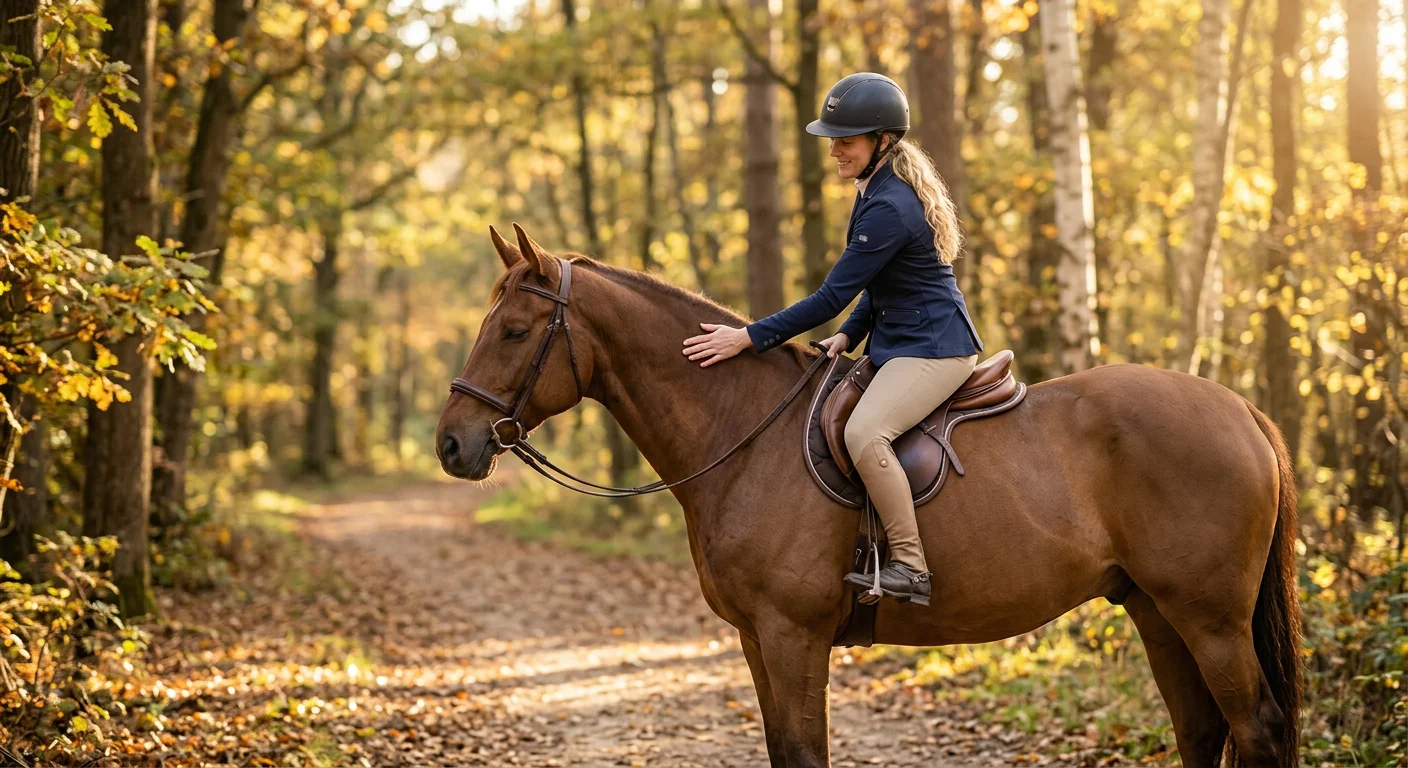
Every spook is your horse saying "I saw a monster and I panicked" — and your job isn't to punish the panic. Your job is to become the most trustworthy thing in that moment of chaos.
Here's the honest truth: knowing what to do if a horse spooks while riding doesn't make you fearless. It makes you prepared. Prepared riders stay in the saddle and stay calm. Over time, they build horses that are less reactive. The horse learns that its rider is a reliable signal — that the monster isn't real.
So here’s your next move: pick one thing from this guide. Maybe the three-second response drill. Maybe the pre-ride groundwork routine. Practice it before your next ride. Not all of it. Just one thing. Wearing proper custom equestrian clothing ensures you’re equipped for both safety and performance.