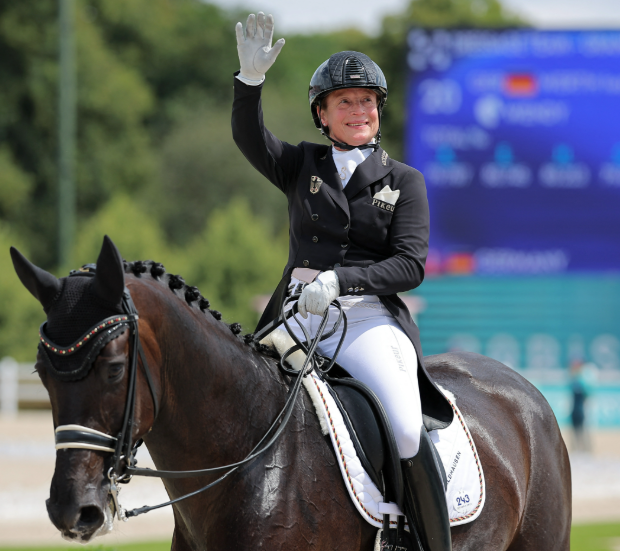
Every sport has its pantheon — the ones who didn't just compete, but changed what competing meant. Equestrian sport has more than its share. For equestrian suppliers and serious riders alike, understanding these figures provides the context for modern horsemanship.
Whether you are looking to source high-quality gear from elite equestrian outfit manufacturers or you are just starting in the saddle, knowing these legends goes beyond trivia. These twenty riders — across dressage, show jumping, eventing, and racing — didn't just win. They rewrote what winning looked like.
The Dressage Dynasties: Werth, Dujardin, Hester, and Van Grunsven
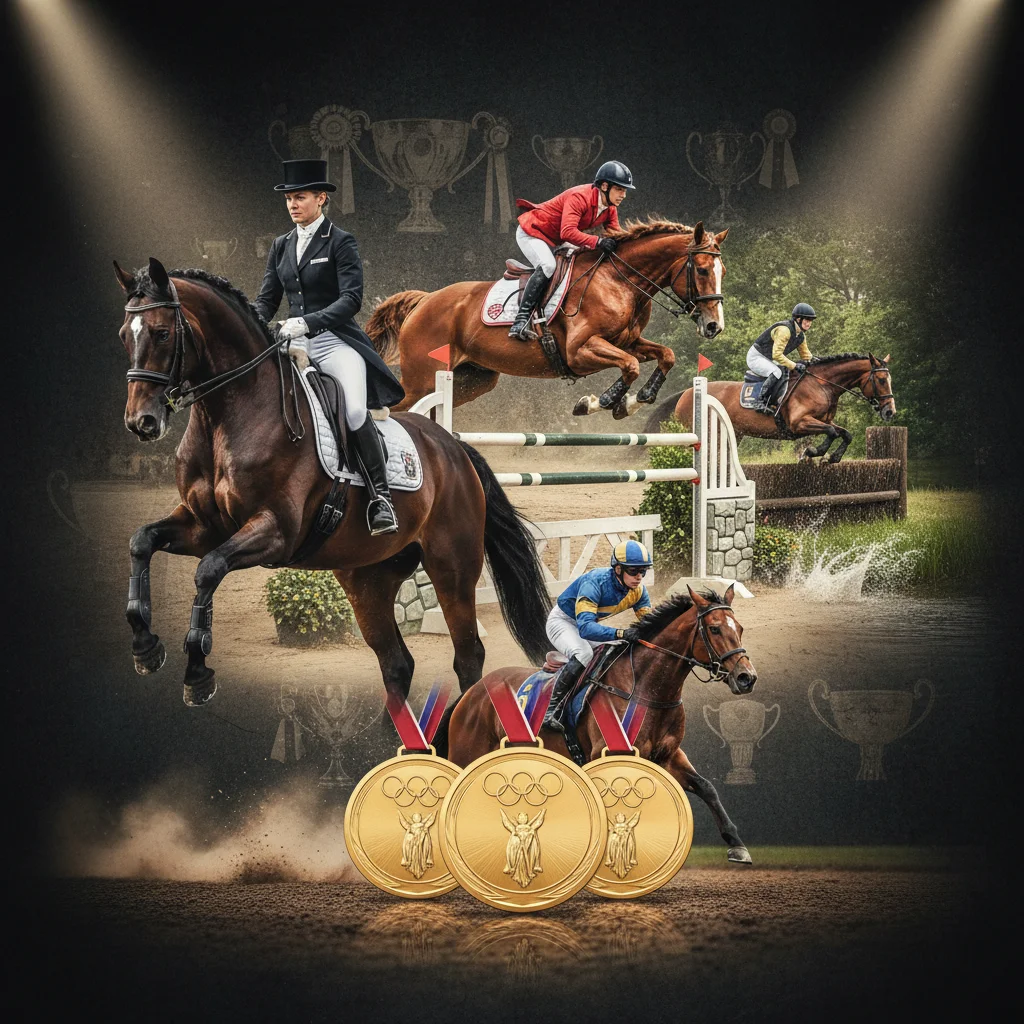
When it comes to dressage, Isabell Werth stands alone. With fourteen Olympic medals (eight gold) and appearances spanning from Barcelona 1992 to Paris 2024, she is the most decorated Olympic equestrian in history. She achieved this not with one horse, but with a succession of champions like Gigolo, Satchmo, and Bella Rose 2. Her consistency drives the industry, influencing how equestrian clothing manufacturers design gear for longevity and precision.
Following in those footsteps is Charlotte Dujardin, the woman who shattered records with Valegro. Their 94.300% freestyle score at Olympia remains the benchmark. Dujardin didn't just ride; she systematically broke world records, proving that high performance requires gear that moves as fluidly as the rider, a standard now upheld by creators of custom equestrian clothing.
Behind Dujardin's success is Carl Hester, Britain's visionary trainer and rider. Competing in seven Olympics, he didn't just hunt medals; he prioritized horse happiness before scores. His philosophy transformed British dressage, proving that patience yields gold. Similarly, the Dutch legend Anky van Grunsven dominated two decades with three consecutive individual Olympic golds. Her freestyle, Bonfire's Symphony, and her controversial but effective training methods, pushed equestrian manufacturers and trainers worldwide to rethink contact and connection.
Show Jumping Titans: Skelton, Steinkraus, Morris, and Farrington
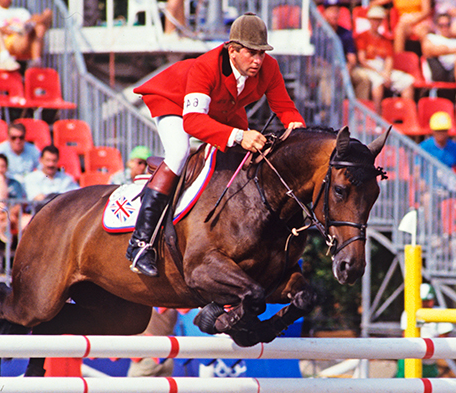
Nick Skelton defines resilience. At 58, with a broken neck in his history, he won individual gold at the Rio 2016 Olympics on Big Star. His career spanned 40 years, proving that in this sport, age is secondary to grit. Across the Atlantic, Bill Steinkraus became America's first individual show jumping gold medalist in 1968. His "elastic following hands" style set a technical standard that modern custom equestrian outfit designers still aim to facilitate through flexible glove and jacket technology.
Then there is George Morris. While his career ended in controversy with a lifetime ban, his impact on the "hunt seat" foundation is undeniable. He coached teams to gold in 1984, 2004, and 2008, establishing the American system of riding. Today's wholesale equestrian clothing market still reflects the classical, disciplined aesthetic he demanded.
Representing the modern era is Kent Farrington. A precision machine, he reached World No. 1 by valuing consistency. Winning the Rolex IJRC Top Ten Final and maintaining a 56% Top-10 rate at 1.60m, Farrington treats his riding like a business — efficient, fast, and exacting.
Eventing and Para-Dressage Icons: Green, Todd, O'Connor, and Pearson
Eventing requires gear that survives the toughest elements, the kind produced by a top-tier equestrian clothing factory. Lucinda Green tested those limits by winning Badminton six times on six different horses. She was a master of cross-country, once winning despite a fall where she was dragged under her horse.
New Zealand's Mark Todd was voted Rider of the 20th Century by the FEI. He won back-to-back golds in 1984 and 1988 on the small but mighty Charisma, then returned years later to win Badminton at age 55. In the US, David O'Connor served as the sport's greatest ambassador, winning individual gold at Sydney 2000 and later leading US Equestrian.
In the arena of Para-Dressage, Lee Pearson changed the game. With 14 Paralympic golds and a knighthood, he proved that horsemanship transcends physical limitations. He controls his horses primarily through his hips, a feat that highlights the symbiotic bond between horse and human.
Speed and Royalty: Racing Legends and The Crown
Eddie Arcaro remains the only jockey to win the Triple Crown twice (1941 and 1948). Known as "The Master," his ability to read a race was unparalleled. In the UK, Bob Champion provided the ultimate comeback story, recovering from aggressive cancer to win the 1981 Grand National on Aldaniti. His story inspired millions and funded the Bob Champion Cancer Trust.
Queen Elizabeth II was more than a figurehead; she was a true horsewoman. Riding until age 96 and owning winners like Estimate (Gold Cup 2013), her passion fueled the British racing industry. Similarly, Winston Churchill found solace in the saddle, playing polo until age 52 to manage his "black dog" of depression.
Historical Commanders: Grant, Lee, and Klimke
History's greatest commanders knew that a good horse was a weapon of war. Ulysses S. Grant was a riding prodigy who set a high-jump record at West Point that stood for 25 years. His counterpart, Robert E. Lee, is forever linked with Traveller, the iron-grey horse that carried him through the Civil War's harshest battles. These historical figures relied on durability, a trait that modern OEM/ODM services in the equestrian sector still prioritize when creating heavy-duty tack and apparel.
Bridging the gap between military tradition and sport is Reiner Klimke. A lawyer by trade, he won six Olympic golds between 1960 and 1988. His ride on Ahlerich in 1984, featuring 75 consecutive one-tempi changes, remains one of the sport's greatest moments.
Conclusion: The Legacy of Horsemanship
The greatest equestrians in history didn't just ride horses — they listened to them. From Isabell Werth's dominance to Bob Champion's resilience, these legends built something bigger than a trophy cabinet. For retailers and brands, this legacy is the foundation of the industry. Whether you are developing private label equestrian clothing or sourcing from global manufacturers, the standard set by these riders drives the quality we see today.
Equestrian businesses looking to capture this spirit often turn to specialized OEM/ODM services to create products worthy of such a heritage. A beginner finding their seat or a professional chasing a personal best relies on this ecosystem. These equestrian champions are not just distant monuments; they are the blueprints for excellence.
The horse doesn't care about your resume, but it knows when you are prepared.