Picking between Ariat and Dublin riding boots can feel overwhelming. Hundreds of forum reviews pull you in different directions. Barn friends disagree. And two very different price points make the decision even harder. You know the feeling. It's the same dilemma faced behind the scenes by top equestrian suppliers and wholesale buyers trying to decide what to stock for the upcoming season.
Both brands lead the footwear market, but they serve riders in fundamentally different ways. Interestingly, many prominent equestrian clothing manufacturers view these two brands as prime examples of how to effectively cover opposite ends of the consumer spectrum. Whether you are an individual rider shopping for your first pair of tall riding boots, or a retailer exploring wholesale riding boots to build out your store's inventory, the wrong pick costs you significantly. For an individual, it costs comfort in the saddle. For a business or a budding custom equestrian apparel brand, it costs reliable profit margins. Let's break down this head-to-head matchup with a clear, honest verdict.
Ariat Riding Boots: Brand Identity & Premium Engineering
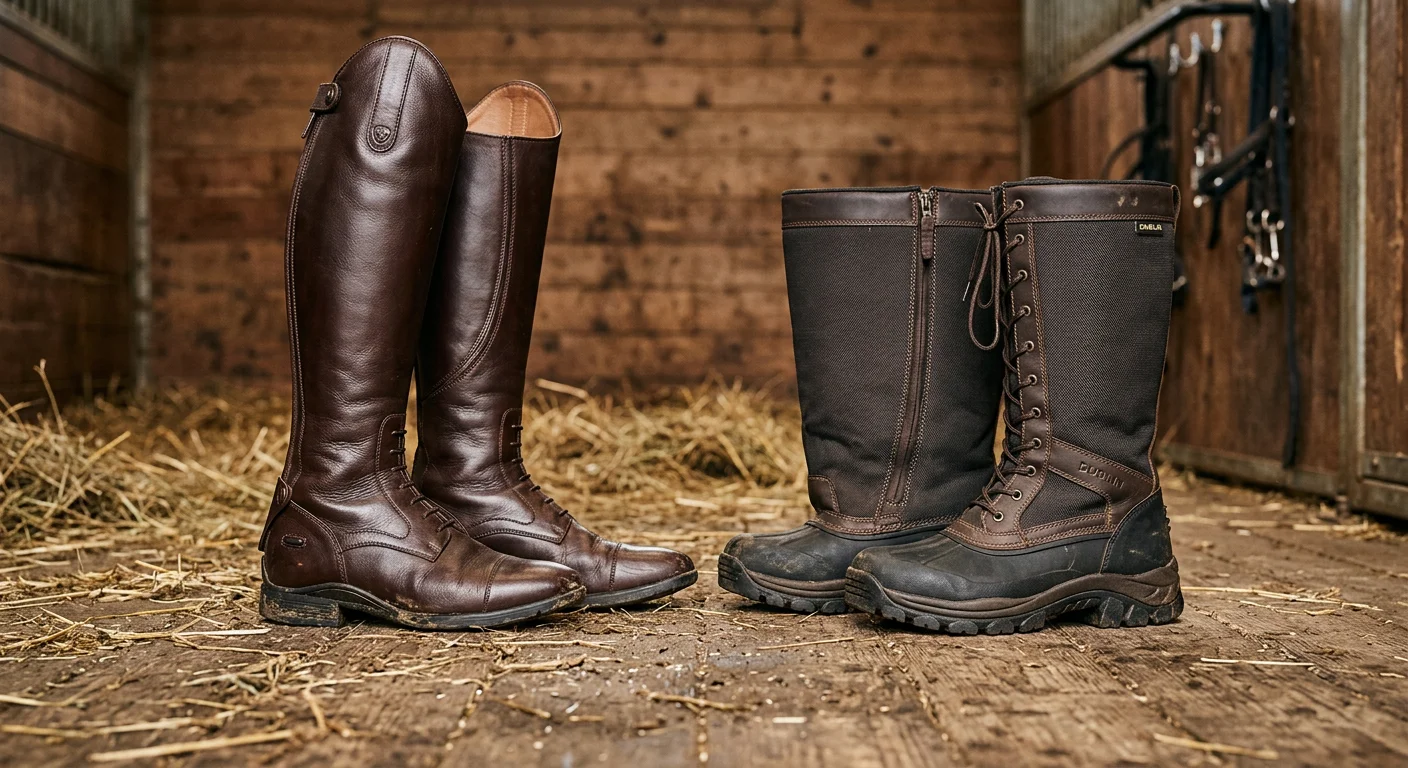
Ariat didn't just enter the equestrian market comfortably — it completely rewrote the rules of what a riding boot could be. Beth Cross and Pam Parker founded the brand back in 1993, naming it after Secretariat, the legendary 1973 Triple Crown champion. That choice reflects a standard of excellence that even a modern riding boots manufacturer struggles to emulate today.
Cross had consulted for major athletic brands. She paused and asked a disruptive question: why aren't equestrian boots built with athletic footwear technology? That simple question launched what Ariat proudly calls "The New Breed of Boot". It's a design philosophy that continues to influence equestrian outfit manufacturers globally. When assessing the premium price tag, you have to look at the process. There are 150 construction steps that go into each boot — this isn't a fluffy marketing claim, but a measurable standard that any serious equestrian clothing factory would respect. Furthermore, their dedicated biomechanical research and testing labs check durability meticulously before any footwear hits the shelves. Reinforced stitching covers high-wear zones, and superior leather finishing adds incredible longevity. Together, these boots outlast casual alternatives by a wide margin.
Today, Ariat holds the No. 1 equestrian brand position worldwide — pulling in over 74,500 searches for the brand name every single month. You're not just paying for a flashy name; you're paying for three decades of engineering focus applied to leather equestrian boots. For anyone in the business of securing reliable equestrian supply channels, Ariat's consistency is the gold standard.
Dublin Riding Boots: The Accessible All-Weather Contender
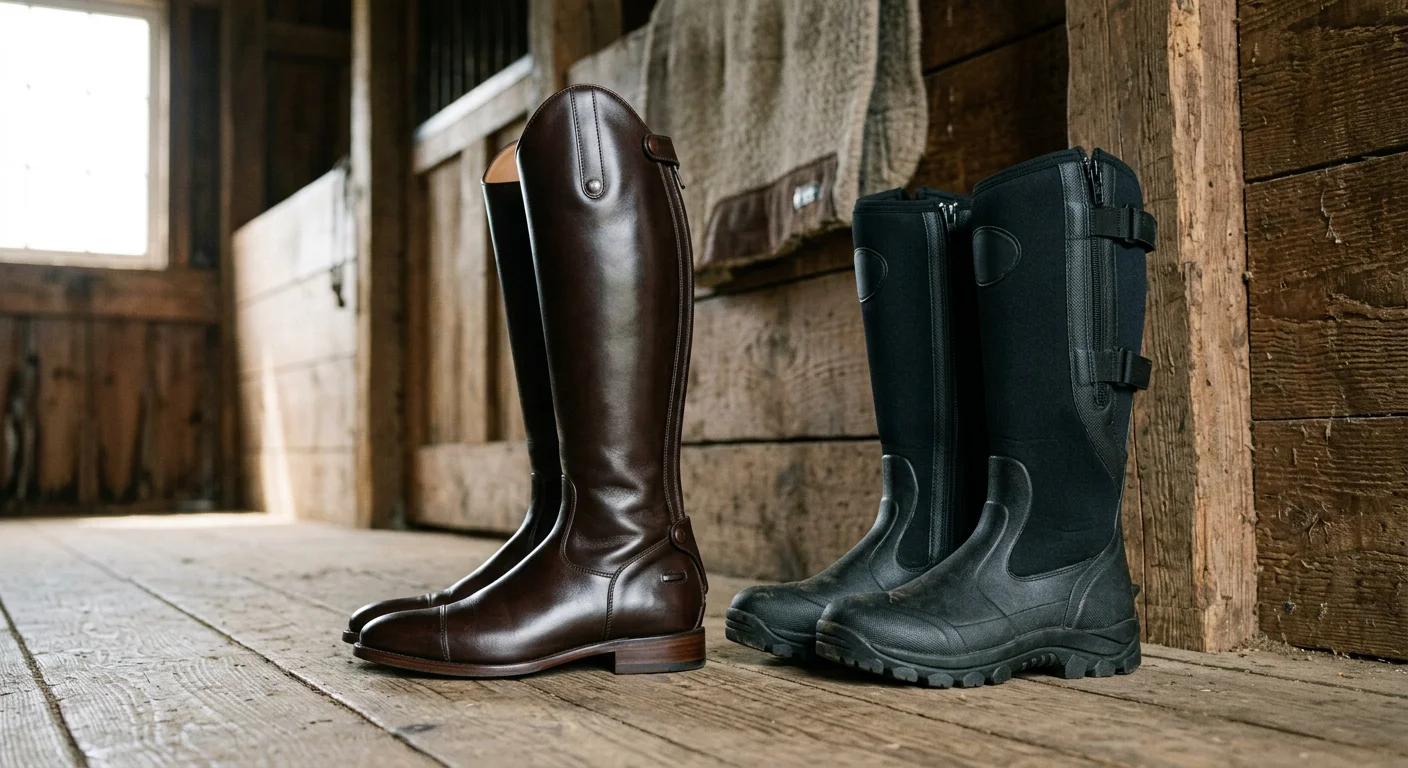
On the flip side of the arena, Dublin built its formidable reputation on one undeniable promise: solid performance in the worst weather at a price that won't ruin your month. While Ariat leads with engineering prestige, Dublin leads with practical all-weather durability. At the $150–$250 price point, you are looking at roughly half the cost of a comparable Ariat pair. This accessibility is exactly why equestrian suppliers move so much volume of this brand.
Unlike boots designed primarily for dry, impeccably groomed arenas, Dublin targets the real-world conditions most riders deal with daily—muddy paddocks, wet grass, and rough terrain. The River Boot 4 is Dublin's absolute flagship model. Its waterproof membrane repels water effectively while staying pleasantly breathable. The Tough Tec sole features a 4mm self-cleaning tread pattern that has passed rigorous grip tests on clay and mud slopes up to a 30° incline. In 24-hour submersion testing? It remained 100% waterproof with zero failures. When sourcing wholesale equestrian clothing and gear, this is the exact metric retailers demand.
There is also a significant fit advantage that nobody talks about. Dublin beats much pricier competitors in one key area: calf fit options. You get three width categories — Slim, Regular, and Wide — across every major size, a detail that many independent equestrian outfit manufacturers are only just starting to offer.
UK Size | Regular Calf | Wide Calf | Slim Calf |
|---|---|---|---|
3 | 29–31 cm | 32–34 cm | 26–28 cm |
5 | 31–33 cm | 34–36 cm | 28–30 cm |
7 | 33–35 cm | 36–38 cm | 30–32 cm |
9 | 35–37 cm | 38–40 cm | 32–34 cm |
The numbers truly say it all here. 85% of Dublin users report zero calf rubbing — compared to just 60% for Ariat. A smart custom equestrian clothing designer knows that fixed calf sizing leads to higher returns from fit mismatches. Dublin's three-width system cuts that problem off before it even starts. The highly praised Rider Comfort System (RCS) footbed rounds out the package beautifully. Dublin is solving a unique problem: providing reliable, waterproof horse riding boots that fit a wider range of riders and leave money in your pocket—perhaps enough to invest in a bespoke custom equestrian outfit later on.
Price vs. Value: The Real Financial Math
Let's be real—the sticker price on a box tells you almost nothing about what a boot truly costs you over time. This is a conversation that an experienced equestrian clothing manufacturer will often have with bulk buyers navigating wholesale riding boots investments. Dublin entry-level boots generally run $100–$150. Ariat, however, typically sits at the $300–$400+ mark. At a quick first glance, Dublin wins effortlessly on affordability. But when you factor in lifespan, the conclusion flips dramatically.
Brand | Upfront Cost | Lifespan | Annual Cost | Cost Per Ride |
|---|---|---|---|---|
Dublin | $125 | ~6 months | $250 | $2.50 |
Ariat | $350 | 4+ years | $87.50 | $0.88 |
If you run those numbers across four years of regular, aggressive riding, you'll likely replace those Dublin boots a staggering eight times. Your total spend? $1,000. Buy an Ariat pair once: $350. You are looking at a 71% lower annual cost — directly from the boot that looks far more expensive in the store. This is the exact trap budget riders and ill-advised equestrian manufacturers fall into. The cheaper boot isn't actually cheaper; it's just cheaper today.
Value, however, isn't just about how long a boot takes to break down. Studies show that 40% of consumers define value through quality, service, and warranty — not the initial price alone. Ariat builds to a demonstrably higher standard. Conversely, Dublin's overarching strength is a low barrier to entry. It allows shops relying on strong equestrian supply metrics to move inventory fast, and it lets beginners try out riding without overwhelming financial risk.
Comfort, Fit & Environmental Performance
Comfort and environmental resilience aren't just extra features; they are the entire point of a proper riding shoe. Spend eight hours in the wrong pair, and you'll understand what sore arches and raw ankles feel like. Any top-tier riding boots manufacturer knows that break-in periods and material flex can make or break a brand's reputation.
Regarding the break-in phase, Ariat asks for patience. Because of their heavy-duty leather construction, expect one to four weeks before the stiff ankle area molds correctly to your foot. To speed this up safely, wear them around the house for one to three hours on day one. Dublin's softer synthetic materials, however, require almost no adjustment phase. Companies dealing in OEM/ODM equestrian services often study Dublin's material blends to achieve this exact 'out-of-box' readiness for their own custom equestrian clothing and footwear lines.
When it comes down to sizing philosophy, the split is aggressive. Dublin runs large. It is built with a wider footbed that easily accommodates broader feet or high arches. Narrow feet? Size down, or you'll suffer from heel slip. On the other hand, Ariat fits snug. They require you to ensure you have exactly half to one thumb-width of toe room with a locked heel. If you skip Ariat's essential break-in, you will experience noticeable ankle fatigue and rubbing during long sessions. Meanwhile, Dublin wearers often report beautifully reduced lower leg fatigue across long rides right from the very first wear.
The ground beneath your horse is equally unforgiving. Ariat's Durotread outsole employs Ultratac rubber specifically engineered for hardpack and dry arena surfaces. Dublin's Tough Tec sole prioritizes slip resistance on wet grass and treacherous mud. Let's be real—if you ask a factory making private label equestrian clothing to recommend a terrain pairing, they will segregate by moisture level.
Terrain | Ariat Durotread | Dublin Tough Tec |
|---|---|---|
Hard ground | High grip + bomber durability | Moderate |
Sand / grass | Good stability extension | Fair |
Mud / wet terrain | Standard | Superior non-slip |
Waterproofing exposes another massive gap. Dublin utilizes a full waterproof membrane that acts as a complete barrier, while Ariat sticks to moisture-wicking liners built for partial resistance. Furthermore, stirrup fit is highly impacted by shaft height. Dublin's notoriously tighter stirrup slots can cut mechanical leverage efficiency by 15–20%, whereas Ariat's taller shaft and specifically engineered heel offer superior lock-in.
Style, Aesthetics, and Riding Discipline
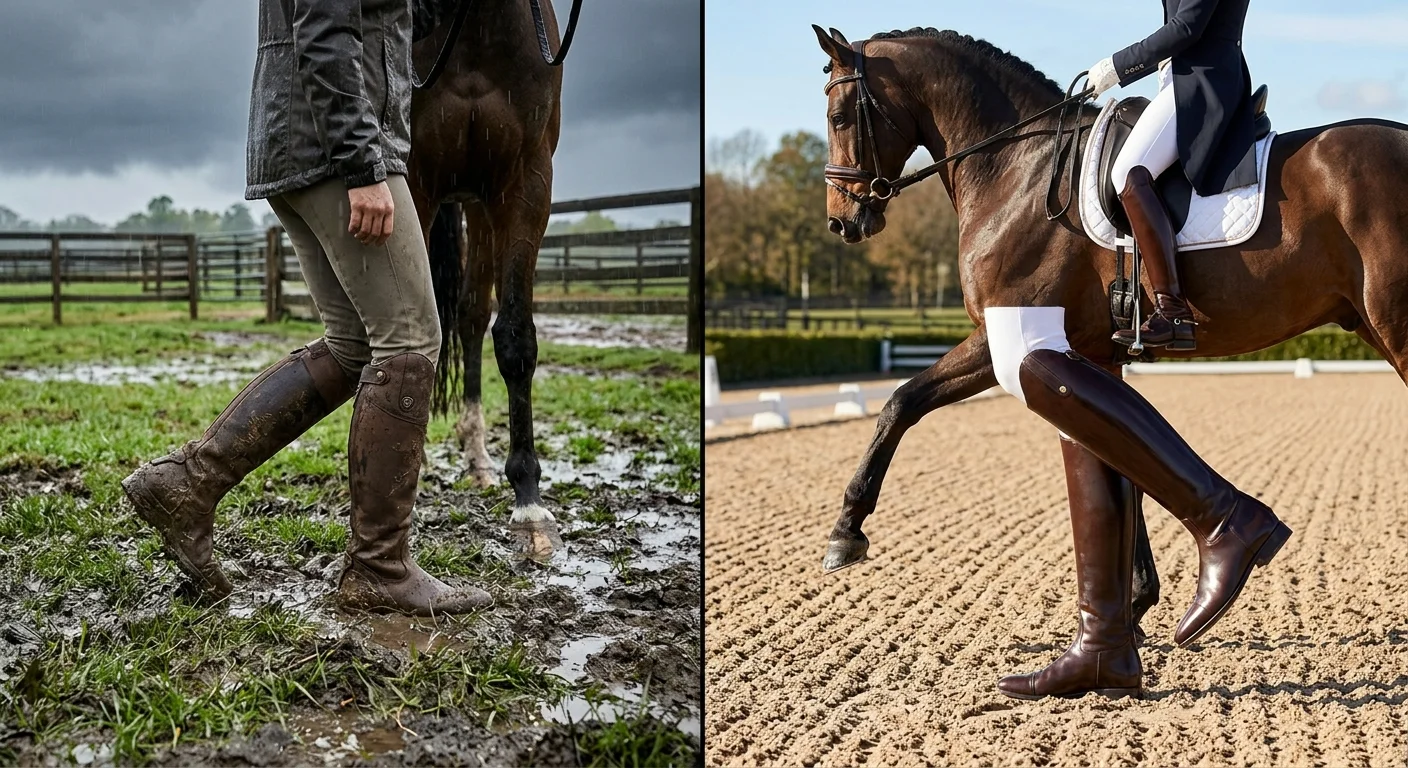
Your riding discipline undeniably shapes every gear decision you make. This is a reality acknowledged across the global market, which is on track to hit a massive $11.9B by 2035. Major equestrian clothing manufacturers recognize that performance demand, comfort expectations, and high-end fashion identity are colliding. Ariat leads the polished world of English riding disciplines like dressage and highly competitive show jumping. High-income, competition-focused settings demand nothing less than beautifully structured tall leather equestrian boots.
Conversely, Dublin finds its sweet spot within the recreational and leisure segment. When sourcing custom equestrian apparel, weekend paddock riders and newcomers don't require strict dress code compliance; they need practical weather protection. Ariat outfits the podium; Dublin covers the everyday trail ride. For brands looking into private label equestrian clothing opportunities, finding where your demographic sits on this spectrum is the very first step to profitability.
The Definitive Brand vs. Brand Breakdown
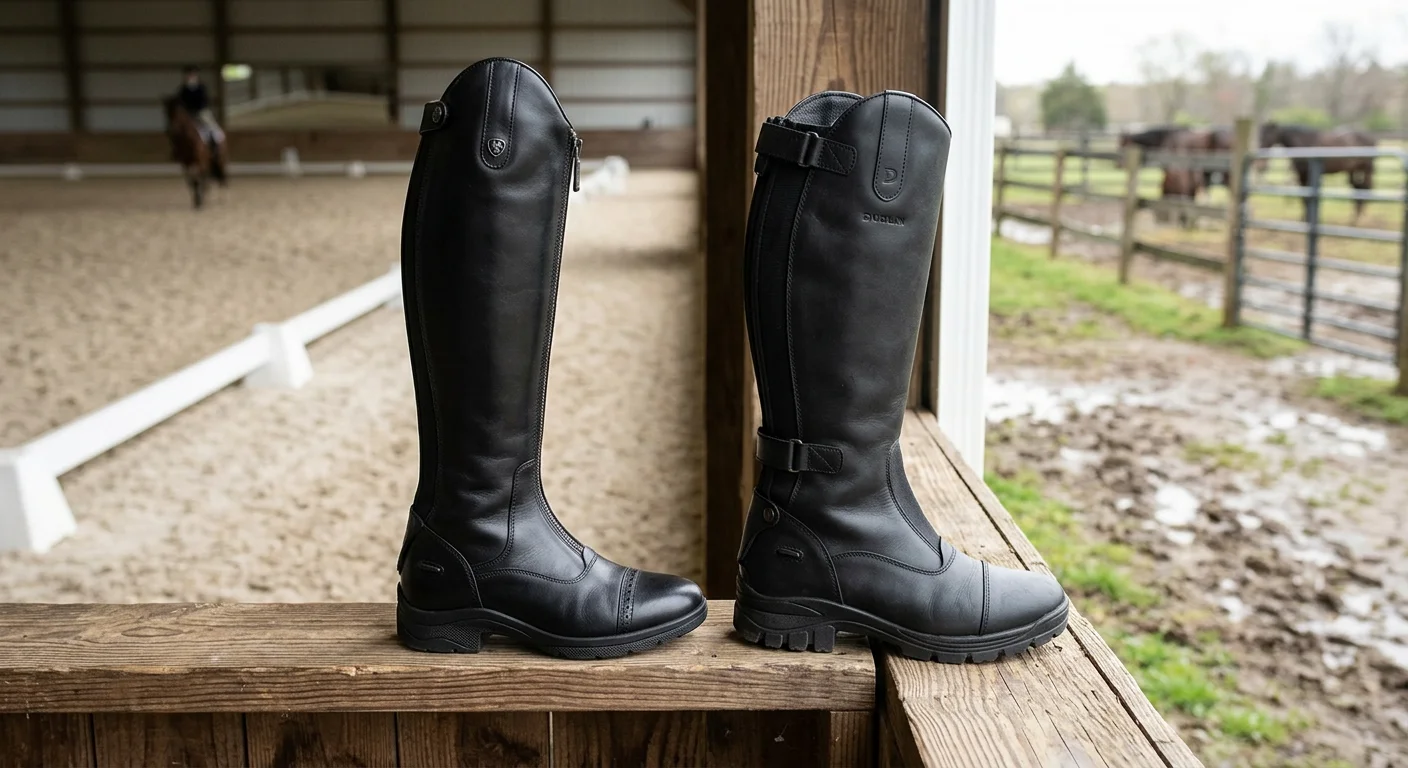
Comparing these boots side by side clarifies everything. Whether a consumer is shopping on Amazon, or a B2B buyer is sourcing bulk wholesale equestrian clothing, the core specs cannot be ignored.
Category | Ariat (Grasmere) | Dublin (River) |
|---|---|---|
Price Range | £200–£250 | £150–£200 |
Upper Material | Full grain leather | Redskin leather |
Waterproofing | Sympatex membrane | Waterproof breathable lining |
Sole | Riding-compatible | Tough Tec rubber |
Calf Fit Options | Regular + Wide | Slim, Regular, Wide |
Entry System | Speed lace | Full-length side zip |
Best For | Serious riders, long sessions | Yard, casual, everyday wear |
Riding Safety | ✅ Riding sole | ⚠️ Country sole — not riding-specific |
That final row matters immensely. Dublin's inherently flat country sole simply lacks the mechanical heel shape required for safe stirrup friction. When evaluating true riding boot safety, Ariat is the undisputed winner. It's what most top-tier equestrian manufacturers strive to mimic.
When we look at specific models, the Ariat Heritage Contour II Field Zip relies heavily on advanced 4LR™ support technology and easily lasts four-plus years. It's often bundled alongside high-end custom equestrian outfit packages. Meanwhile, beneath heavy use, the budget-friendly River Boot 4 gives out in about six months. For arena competitors, the Ariat Palisade Show Tall is the epitome of precision English riding boots, whereas the basic Dublin Foundation Jodhpur Boots II (or the slightly sturdier Dublin Pinnacle) serves the beginner market flawlessly.
When purchasing, bear in mind that Ariat requires you to order half a size down from your street shoe size to accommodate eventual stretching.
Feature | Ariat Palisade ($399.95) | Dublin Foundation Jodhpur II |
|---|---|---|
Rider Level | Advanced / competition | Beginner |
Boot Height | Tall | Short |
Ankle & Joint Support | High | Basic |
Durability | 4+ years | ~6 months (River benchmark) |
Price Tier | Premium | Affordable entry |
Decision Guide & Final Conclusion
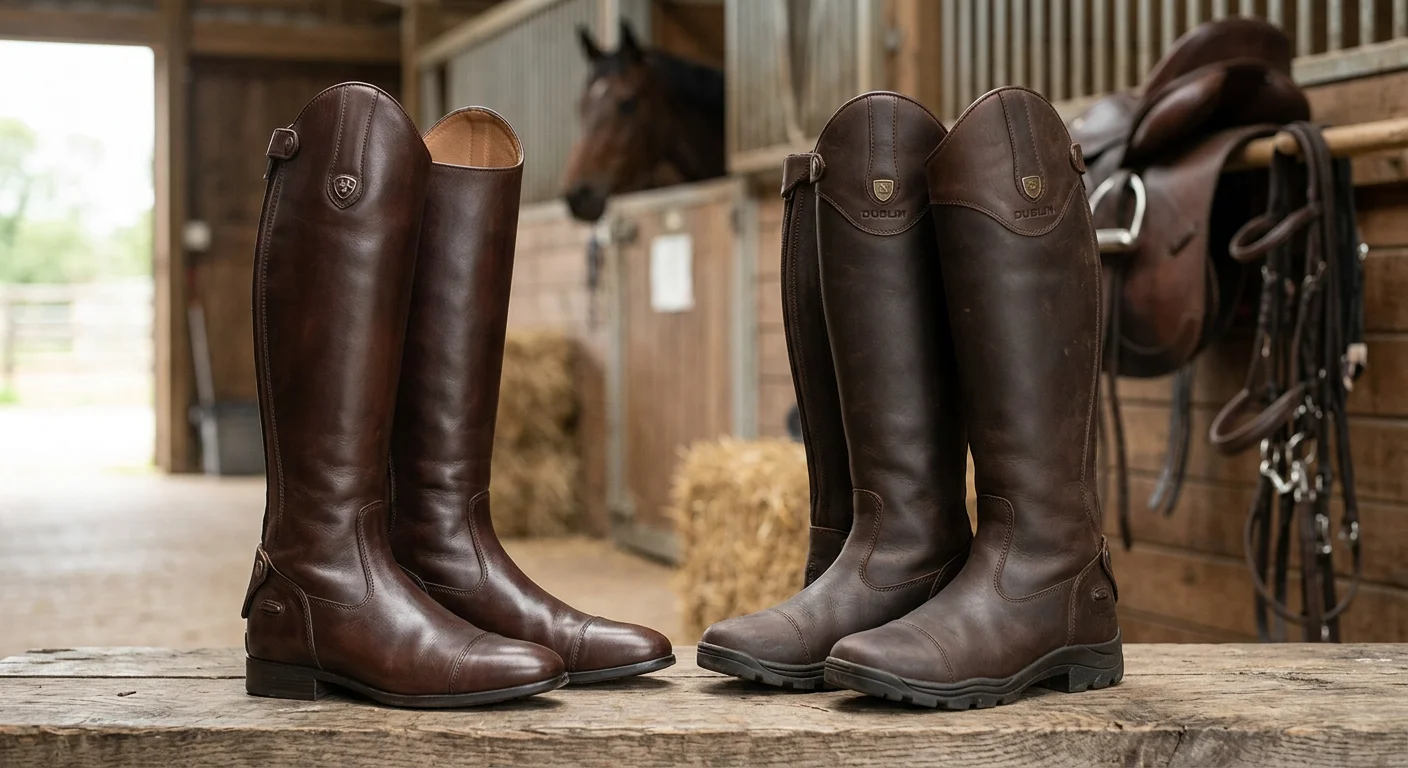
Both of these trusted brands absolutely belong in the modern saddle room, but they sit on entirely different shelves. Knowing your personal profile—or your target customer profile if you are a retailer navigating global equestrian suppliers—is the secret to making the right call.
If you ride daily, compete frequently, or spend intensely long hours at the barn, Ariat's impressive 4LR rebound technology and safety-compliant Duratread™ outsole will confidently support you through years of hard riding. It is exactly the kind of longevity a premium riding boots manufacturer promises. On the other hand, if you are extremely budget-conscious, just stepping into the equestrian world, or you frequently traverse notoriously wet, sloppy terrain, Dublin gives you massive value. Their RCS double-cushion footbed paired with the remarkably grippy Tough Tec rubber outsole ensures you stay upright without emptying your bank account.
Ultimately, the biggest mistake isn't picking the "wrong" brand out of a hat. The real mistake lies in purchasing footwear that doesn't genuinely align with your riding lifestyle. This same logic echoes beautifully across the B2B sector. A skilled equestrian clothing factory providing highly tailored OEM/ODM services scrutinizes these exact consumer models when designing private label equestrian clothing and riding gear. They recognize that versatility and dedicated performance serve two different demographics.
So, before you proceed to checkout—whether you're picking up a single pair for yourself or collaborating with equestrian outfit manufacturers for bulk wholesale riding boots—ask yourself honestly: Are you buying for the pristine arena, or the unpredictable, muddy trail? Once you answer that, you have found your perfect boot.