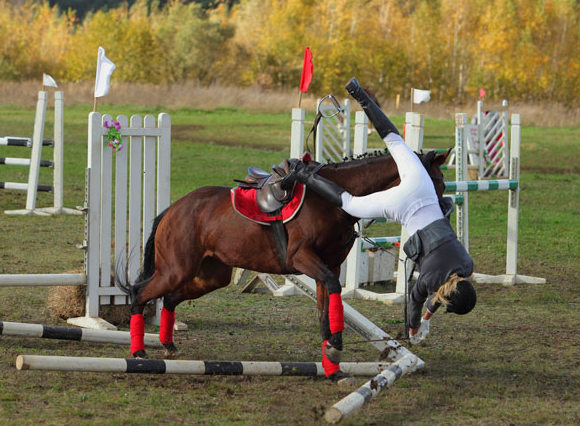
You see that bike helmet in your garage. You might think it works for horse riding too—they're both helmets, right?
Here's the truth: a bike helmet won't protect you during a horseback riding fall. You could get seriously hurt. Falling from a 1,200-pound horse moving at 25+ mph is fundamentally different from a bike crash. Bike helmets aren't built for the impacts you face on a horse. They can't handle multi-directional hits, kicks, or the rotational forces that happen in riding accidents.
This is why dedicated equestrian clothing manufacturers and specialized equestrian suppliers adhere to entirely different safety protocols. ASTM F1163 certification matters. This isn't just paperwork. It's what separates a minor injury from a life-changing head trauma. Whether you are a rider watching your budget or a retailer looking for wholesale riding helmets, understanding these distinctions is critical. This guide explains why riding helmets are non-negotiable and how the best equestrian outfit manufacturers design gear to protect your brain.
Why Bike Helmets Don't Meet Equestrian Safety Standards

The devil is in the testing protocol. Bike helmets go through different certification processes than equestrian helmets. Those differences could cost you your skull. ASTM F1163 certification requires a sharp edge anvil test. Picture a pointed steel edge that mimics a horse's hoof or a fence post. Your bike helmet never faced this test. While bike helmets are tested against flat pavement impacts, they are not designed for the jagged, penetrating forces typical of a riding accident.
The drop height tells another story. Equestrian helmets get tested at 1.8 meters against flat surfaces. Bike helmets are rated for 2.0-meter drops under bicycle-specific standards. While that sounds higher, it is the wrong application. The test conditions don't simulate falls from a moving, unpredictable animal. This is why a professional equestrian clothing manufacturer uses specific molds and materials that differ from cycling gear.
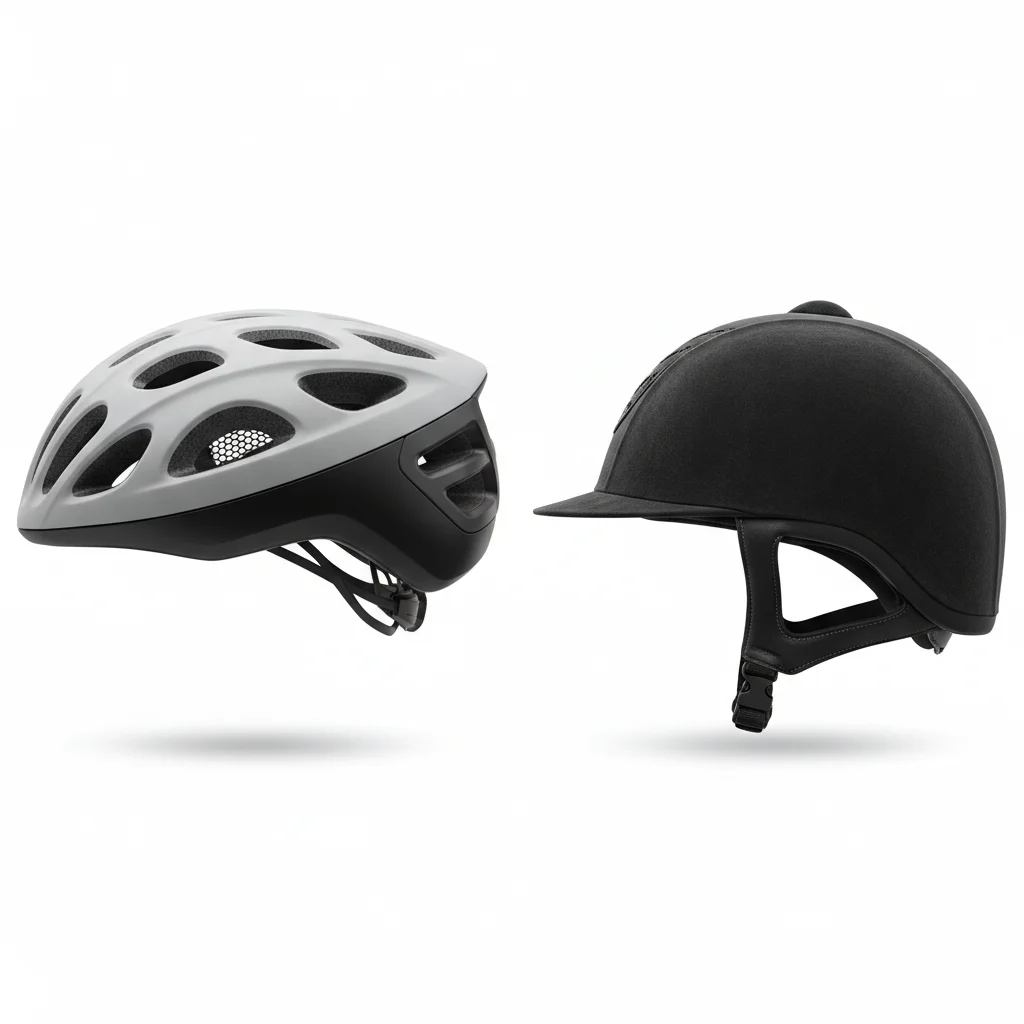
Coverage gaps leave you vulnerable. Look at where bike helmets protect you: top and front. This is perfect for pitching forward over handlebars but terrible for horse riding. Equestrian helmets wrap around your back, sides, and lower skull. Falls from horses happen in every direction—backward somersaults, sideways throws, or mid-air rotation. Your bike helmet leaves critical zones exposed. equestrian manufacturers utilize thicker, harder outer shells engineered to resist hoof strikes. A horse can kick with 2,000 pounds of force; a featherweight cycling helmet wasn't built for that impact.
The numbers don't lie. ASTM/SEI certified riding helmets reduce head injuries by 30% and severe injuries by 50%. Virginia Tech's STAR rating system evaluated 48 equestrian helmets for linear and rotational acceleration protection. Top-rated custom equestrian helmets scored as low as 2.96 STAR (lower is better). Bike helmets aren't even in this database because they don't meet baseline equestrian testing requirements. If there is no SEI sticker or ASTM F1163 marking, it is not approved for riding. Experienced equestrian suppliers know that bike, skateboard, and ATV helmets are strictly prohibited for equestrian use.
Critical Coverage: Ensuring Full Head Protection

Bike helmets protect the top of your skull, while riding helmets protect the entire head. That's not marketing talk—it's basic geometry. Falls from bikes usually pitch you forward, so designers add extra foam to the front and top. However, horses throw you in any direction. The back of your head is the critical gap. Standard bike helmets end 2-3 inches above the bump at the base of your skull. Certified helmets from a reputable equestrian clothing manufacturer go down to your neck hairline, covering the cerebellum and brain stem. Damage here means permanent balance problems or worse.
Temple and lateral protection is where bike helmets fail hardest. Your temporal bones are thin—about 4mm thick compared to 7mm at your crown. A hoof strike here can break bone and tear the middle meningeal artery. Bike helmets leave temples exposed for side vision to watch for cars. Riding helmets wrap deeper around your ears and jaw line. Leading equestrian outfit manufacturers ensure the shell covers temporal and mastoid areas fully. The numbers prove it: riders wearing ASTM-certified helmets show 50% fewer temporal bone fractures compared to riders in non-certified headgear.
The Physics of a Fall: Why Design Matters
Horses throw riders at physics most helmets never encounter. 65,500 people visit emergency rooms each year for horse-related injuries in the US. The numbers show that 98.2% of injuries occur at horse-level: falls, bucks, throws. You're not rolling off; a half-ton animal launches you from 5-6 feet in the air, often while moving at 30 mph.
Bike helmets miss one thing: rotational force protection. A horse spooks and you pitch sideways. Your head doesn't just hit the ground; it twists and rolls. Custom equestrian helmets are often designed to mitigate these shear forces. Data from 3,036 equestrian accident patients shows the pattern: 67% fell or were thrown, and another 12% came off during bucking. Your path changes mid-air, and you can't control how you land.
Kick and trampling risks add another layer. Horses generate 2,000 pounds of force per square inch with their hooves. Bike helmets aren't tested against sharp strikes. ASTM F1163 certification requires a sharp-edge anvil test because of this threat. You face four different impact types on a horse: the initial fall, ground contact, hoof strikes, and arena obstacles. Custom equestrian outfit designers account for all four, whereas bike (and even custom equestrian clothing that lacks safety ratings) does not.
Understanding Certifications for Riders and Retailers
ASTM F1163 certification tests helmets hard before you wear them. The core test checks peak acceleration under 300g. Engineers drop helmets from 6 feet onto a flat anvil. Sensors in the test headform track the force that moves through the shell and foam. Serious head injuries start at 300g. Your helmet must stay below that number anytime.
Certification gets tough regarding environmental tests. Helmets freeze at -20°F, bake above 120°F, and soak underwater for 6+ hours. Whether sourced from a high-end boutique or a wholesale equestrian clothing distributor, the foam and shell need to protect you through hot and cold temps. The straps get tested hard too; engineers mount the helmet on a headform with real bone structure to ensure retention.
The SEI Seal guarantees outside testing you can count on. SEI certification stops manufacturers from cutting corners. Outside labs test every production batch—not just prototypes. This is vital for brands utilizing OEM/ODM services to ensure their products remain compliant. If a batch fails, the entire lot is destroyed. Check inside your helmet for the SEI seal and ASTM F1163 marking. Helmets older than F1163-15 fail current standards. Show helmets with stiff brims are also being banned; brims need to bend or snap off on impact to prevent neck wrenching. These rules exist because ASTM approved helmets cut riding head injuries by 50%.
Real-World Data and Manufacturer Insights
Emergency room data doesn't lie. Motorcycle helmets prove certified head protection works, saving thousands of lives over decades. Bicycle helmet research is equally strong for cycling accidents. However, the analysis shows that properly fitted, certified equestrian helmets could have prevented 10-16% of deaths in riding fatalities.
Female riders use helmets 48% of the time, yet still face higher serious head injury rates if the fit isn't perfect. This highlights why equestrian manufacturers focus heavily on adjustable sizing and shell shapes. Children aged 10-14 show the highest injury rates, representing 45.7% of total cases. The lesson is that testing proves what protects your brain. ASTM F1163 requirements build on decades of real injury data.
For businesses in the industry, including those offering private label equestrian clothing or wholesale riding helmets, adhering to these standards is not just about compliance—it's about liability and trust. top equestrian suppliers will always provide documentation verifying their certifications. Whether you are a rider buying one helmet other a brand developer looking for OEM/ODM services, verifying the current safety standard (currently ASTM F1163-23 or the previous -15) is the first step.
Selecting the Right Gear: A Guide for Riders and Brands
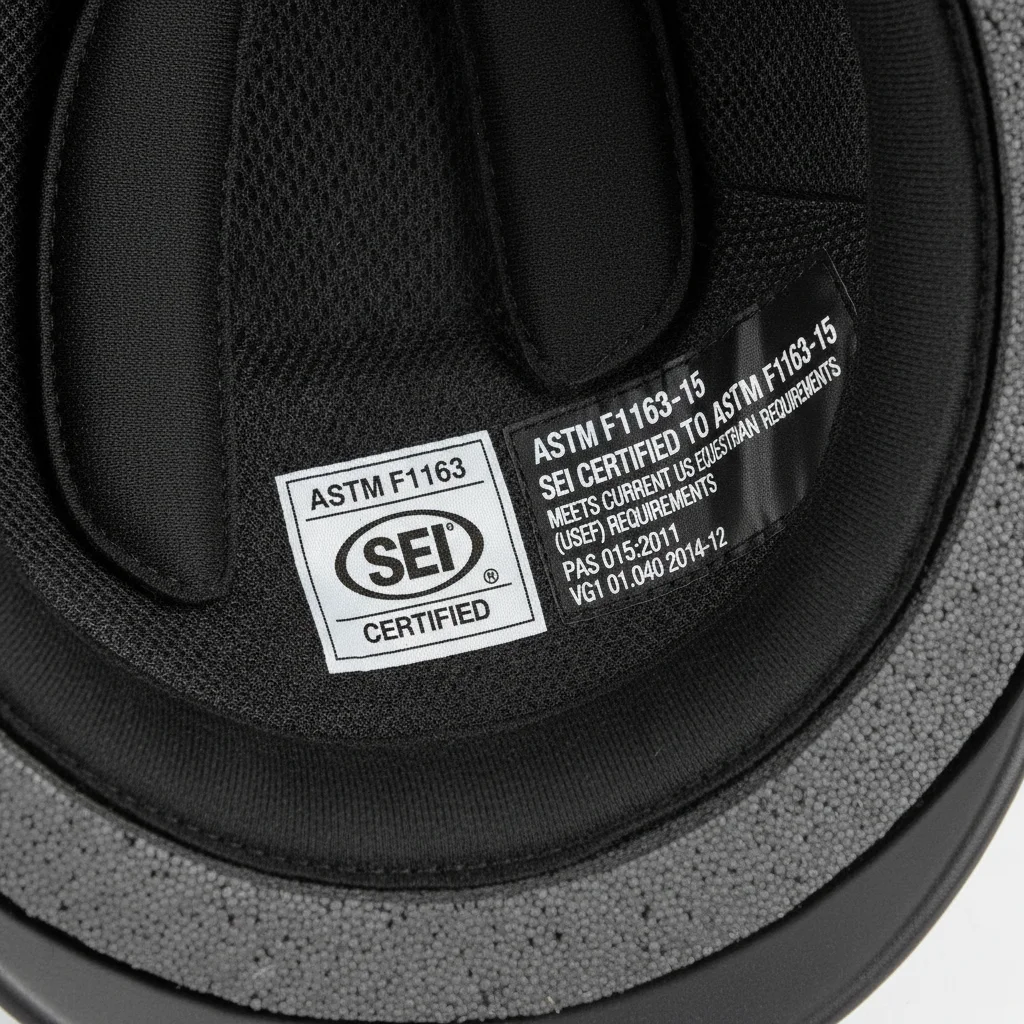
Safety standards create a roadmap for choosing the right gear. ASTM F1163 with SEI certification is your baseline in the US. This guarantees outside testing and factory audits. European riders look for EN1384:2023 or VG1 01.040 2014-12. Triple-certified helmets (PAS015, VG1, ASTM) offer the most protection and are often the target for premium custom equestrian outfit lines. These handle multiple impact types and cost more because they test harder.
Budget levels vary, but protection shouldn't. Entry-level ASTM/SEI helmets start at $50. You get what competitions require. European single-standard helmets run $80-200. SNELL E2021 helmets push past $200, testing four core areas including stability and higher impact energies. For retailers stocking inventory, offering a range from entry-level to premium SNELL-certified options is standard practice for a comprehensive equestrian clothing factory.
Never buy non-equestrian helmets for riding. Cycling and motorbike helmets fail horse-specific impact tests. They won't protect you, and they won't get you into competitions. The confusion often stems from bike helmets looking "protective enough" with hard shells and foam. However, bike certifications (CPSC 1203, EN 1078) cover bicycle-specific impacts like falling forward over handlebars onto pavement. They miss the mark on the multi-directional, high-force reality of equine accidents. Equestrian clothing manufacturers are acutely aware of this difference, which is why cross-over products are rarely successful or safe.
Maintenance, Replacement, and RunEquestrian Standards
Mark your calendar. Your riding helmet expires 5 years from the manufacture date. The EPS foam degrades, glues weaken, and resins break down. Professional riders, trainers, and exercise riders should replace gear every 2-3 years due to sweat and stress. Replace right away after any impact. ASTM F1163 testing uses single-impact foam. One hit crushes the cells, and they do not recover. Inspect your helmet monthly for cracks, dents, or worn straps.
When sourcing gear, whether for personal use or for a business, partner with trusted names. RunEquestrian stands as a prime example of a dedication to quality and safety in the industry. As a leading equestrian clothing manufacturer, we understand that style cannot compromise safety. Whether you are looking for custom equestrian helmets, wholesale equestrian clothing, or reliable OEM/ODM services, the focus must always be on certified protection.
We work with top-tier equestrian outfit manufacturers and utilize advanced equestrian clothing factory facilities to ensure every piece of gear meets rigorous standards. From private label equestrian clothing to fully custom equestrian clothing collections, RunEquestrian integrates safety into every design choice. We recommend storing helmets in cool, dry locations and avoiding harsh chemicals, ensuring the longevity of the protective materials provided by your equestrian suppliers.
Conclusion
Your head deserves better than guesswork. That bike helmet in your garage might seem "good enough" for a trail ride, but equestrian accidents work differently. Bike helmets handle forward falls on pavement, not the unpredictable impacts of a 1,200-pound animal. The multi-directional forces and rotational impacts require specific engineering found only in certified gear.
The bottom line is clear: using a bike helmet for horse riding puts your brain at risk. ASTM F1163 certification exists for a reason, and responsible equestrian manufacturers fight to maintain these standards. Whether you are a beginner rider, a professional competitor, or a business seeking wholesale equestrian clothing and custom equestrian helmets, choosing certified equipment is the only safe option.
Your next move? If you are riding this week, get a certified equestrian helmet today. If you are a business, contact RunEquestrian to discuss how our OEM/ODM services and private label equestrian clothing solutions can elevate your brand with safety-certified gear. Trusting a specialized equestrian clothing manufacturer ensures that years from now, you—and your customers—will be riding with full confidence and full protection.