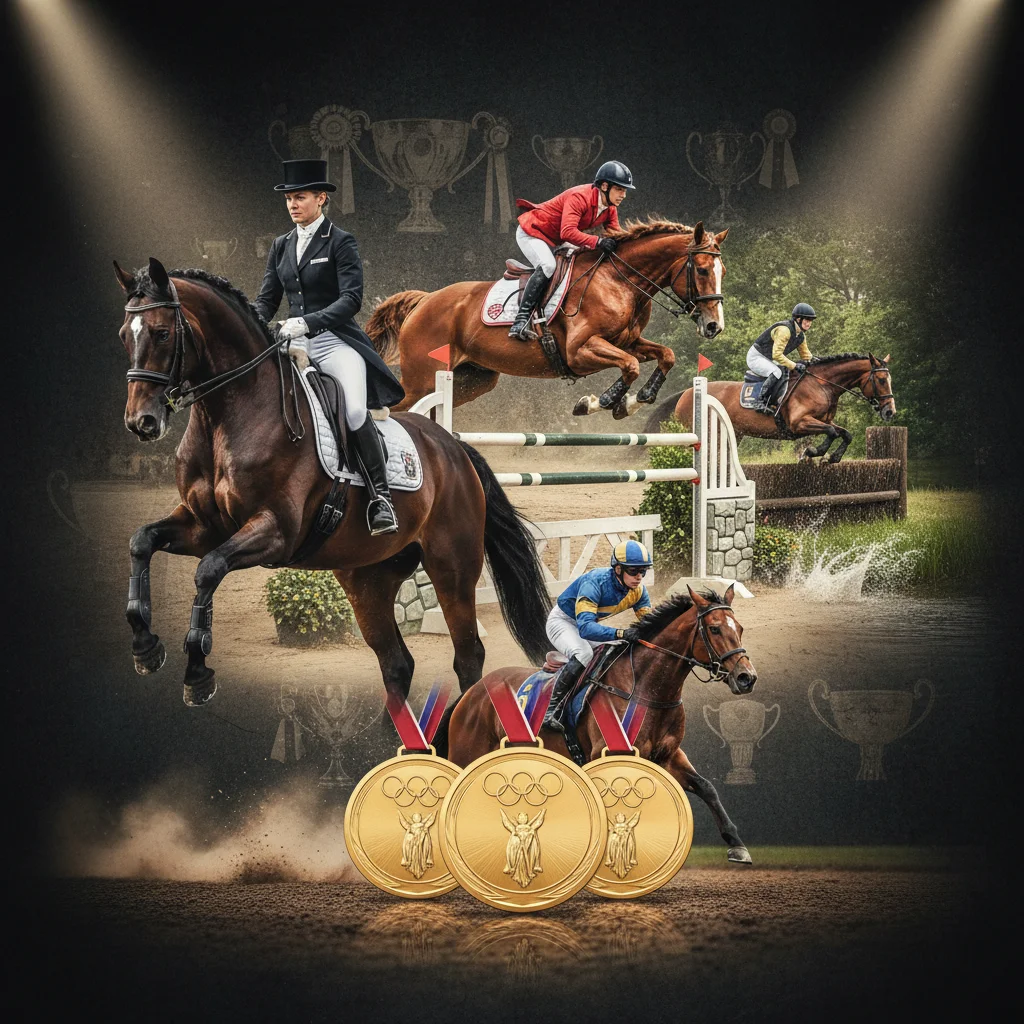
Few riders reach the top of the world rankings without a story worth telling. Henrik Von Eckermann's story doesn't start on a grand competition stage. It starts on a Swedish farm, where horses were part of daily life long before they became his career. Even in those early farm days, the basics of equestrian life surrounded him—from sturdy riding gear sourced from local equestrian suppliers to the durable, functional pieces that would later spark his appreciation for craftsmanship in the sport.
Today, his name is tied to King Edward, to the FEI world number one title, and to a level of quiet excellence that makes elite show jumping look easy. So how did he get there? How did he start riding in a way that actually set a career in motion?
The path traces back to a key moment at a horse show, a school horse named Chess, twelve formative years inside Ludger Beerbaum's legendary stable, and one bold bet on himself at age twenty-two. Along the way, he relied on partners that understood elite equestrian demands: trusted equestrian outfit manufacturers that delivered precision-fit gear, and specialists offering high-end custom equestrian clothing tailored to the unique needs of competitive show jumping, blending performance, comfort and sophistication for the world stage.
Henrik Von Eckermann's Childhood on a Swedish Farm — Where It All Began
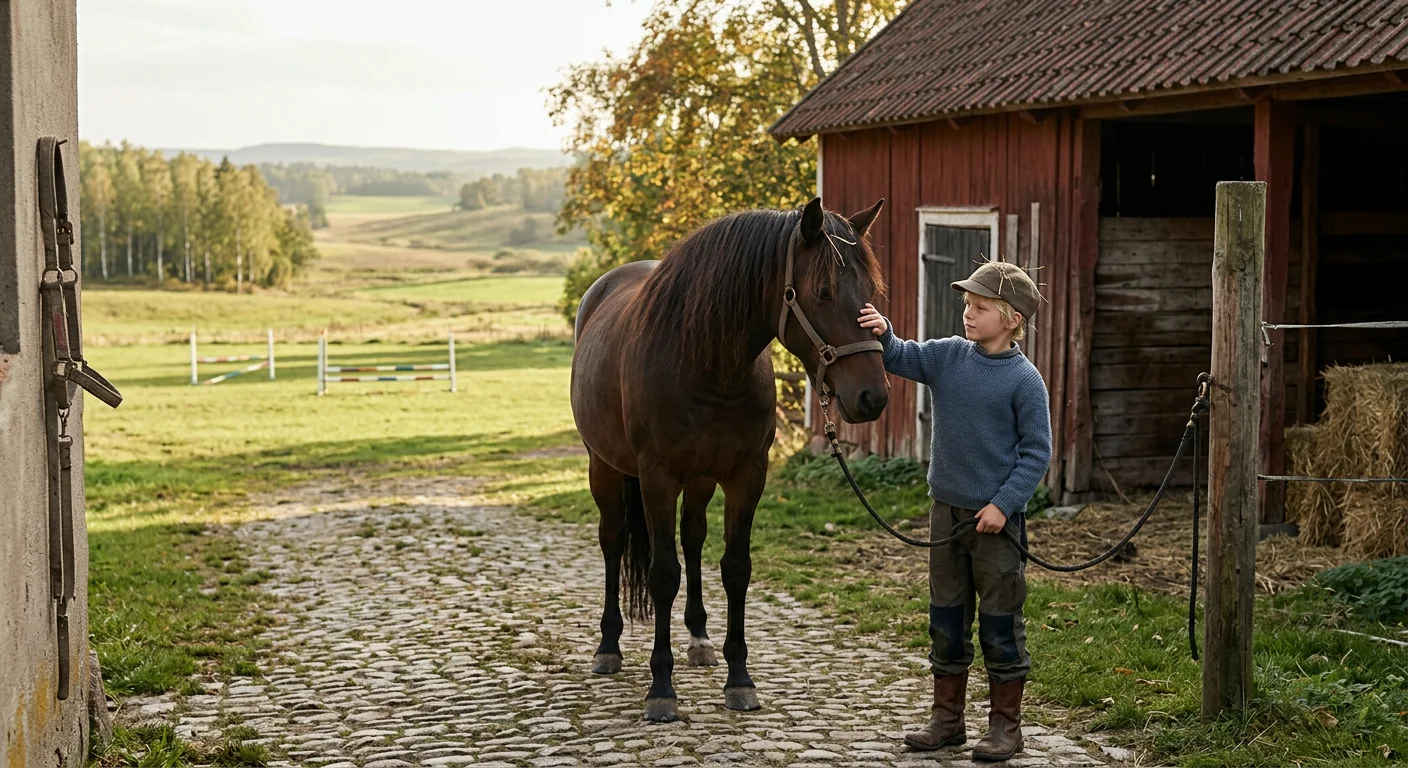
Horses were there — long before Henrik Von Eckermann ever thought of competing on one.
He grew up on a farm near Nyköping, Sweden. His family had kept horses for five generations. His mother owned two horses — long-haired, gentle, the kind that tolerate curious children without complaint. Cows grazed nearby. Open land stretched in every direction. Those two horses were just part of daily life for young Henrik.
His mother took him out on forest hacks on a regular basis. No arenas, no coaching, no pressure. Just quiet trails and a boy getting used to animals larger than himself.
He also played tennis, soccer, and ice hockey — the usual paths a Swedish kid might try. None of them held his attention the way horses did.
The real turning point came during a family trip to the Gothenburg Horse Show. He watched riders clear big fences with precision and trust between horse and rider. Something changed in him that day. His years on the Swedish farm had built the foundation. That afternoon pointed him toward a direction.
The Gothenburg Horse Show Moment That Changed Everything
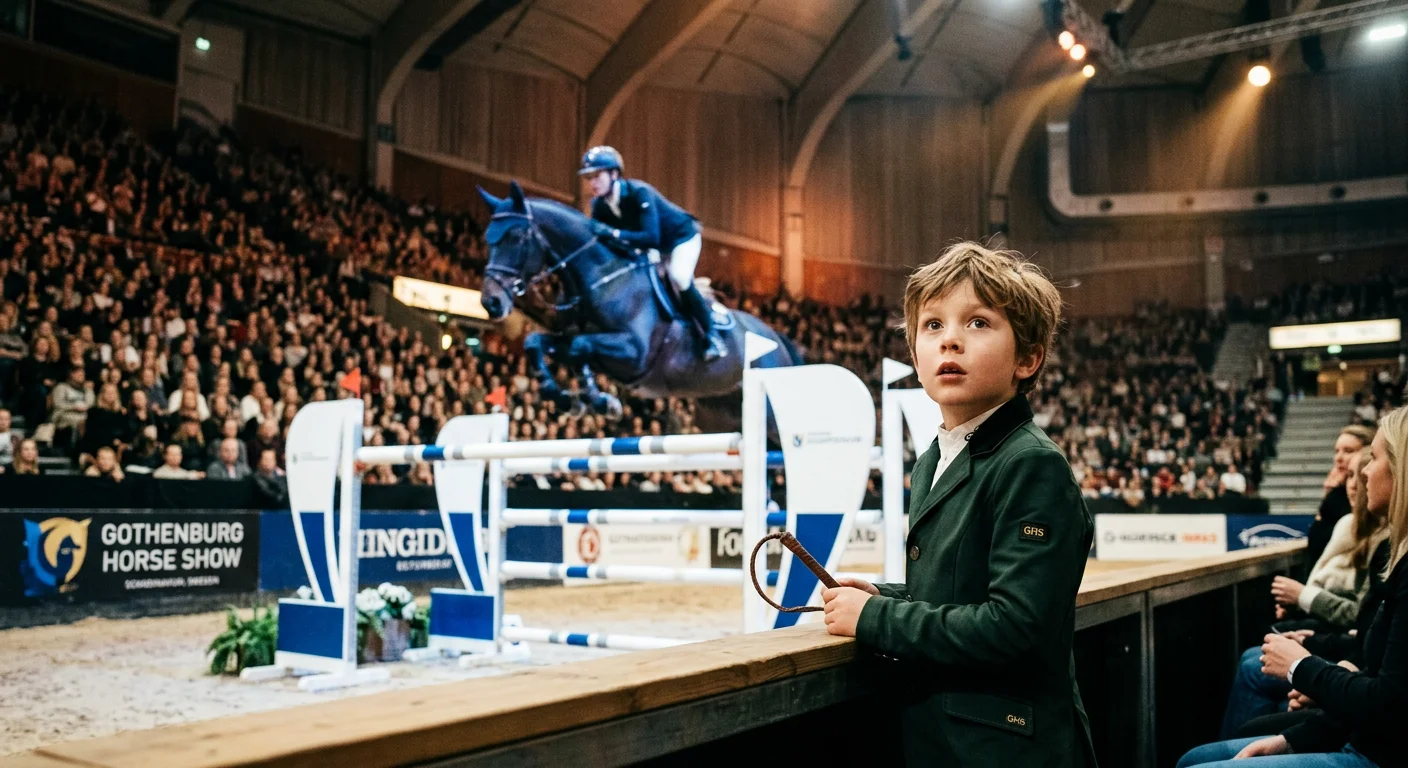
Henrik was just a boy when his family drove to Gothenburg. He wasn't there to compete. He wasn't even there because he asked to go. He was there because his family went — and that afternoon changed something in him for good.
The Gothenburg Horse Show is not a small event. It draws tens of thousands of spectators over five days, with some years hitting over 90,000 attendees. The noise, the crowd, the smell of the arena — none of that is what grabs a child's attention. What grabs a child's attention is a horse and rider moving like one thing.
That's what Henrik saw.
Riders clearing huge fences with a calm, sharp focus that looked almost impossible. The trust between horse and rider wasn't just visible — it was felt. You could sense it from the stands.
Henrik had grown up on quiet forest trails. Those rides with his mother taught him to feel at ease around horses. Gothenburg gave him something else — direction.
He didn't just leave wanting to ride more. He left wanting to compete. That gap matters. It's the difference between a hobby and a calling.
The farm made him comfortable with horses. Gothenburg made him want more from them.
Age 14: His First Pony and the Beginning of Formal Jump Training
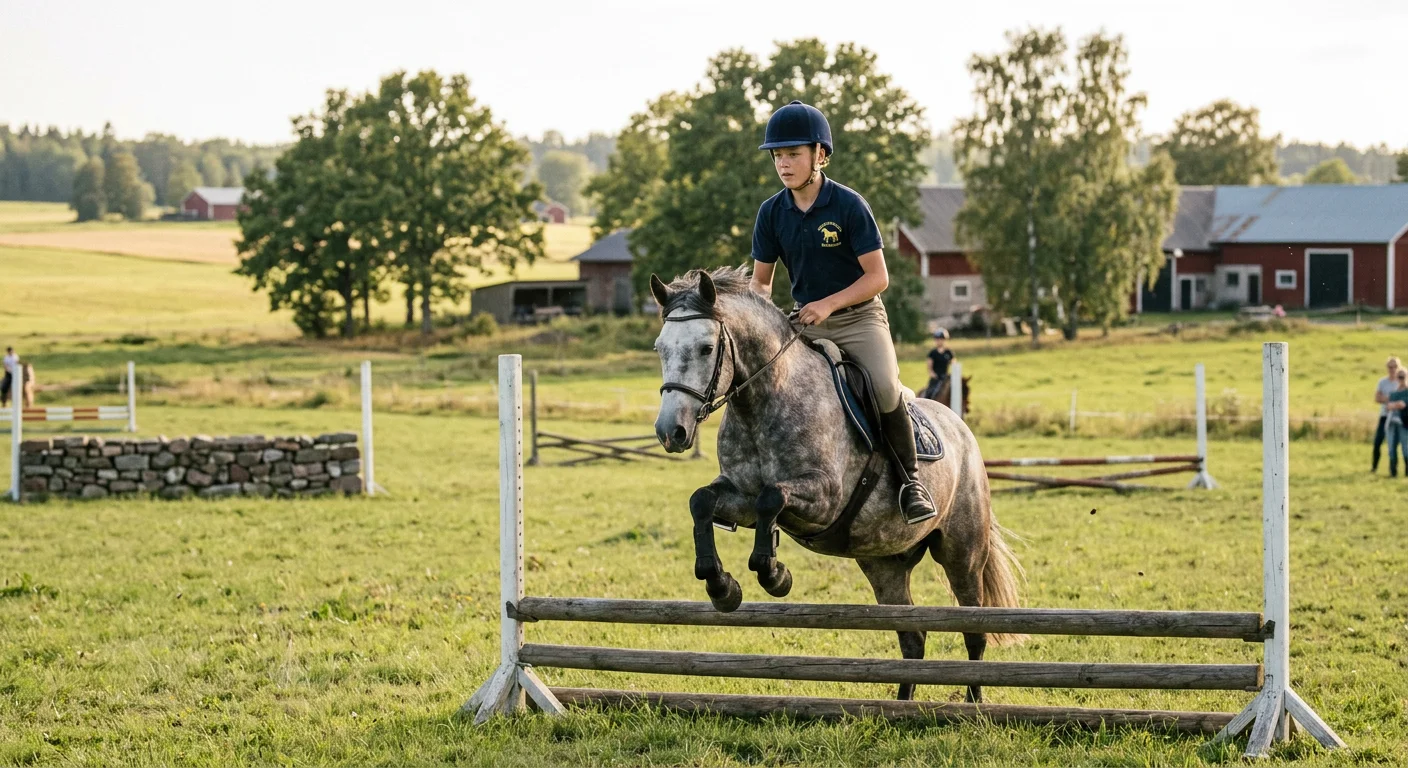
Fourteen is a specific age. Old enough to be serious. Young enough that a pony still makes sense.
That's where Henrik stood. The riding stopped being something he did and became something he was trained to do. A pony entered the picture — not a grand warmblood built for the Olympic circuit, but the right horse for a teenager learning what jumping demands of a rider's body, timing, and nerve. To match this shift from casual riding to structured training, his family turned to reputable equestrian suppliers for reliable gear, and sought out specialized equestrian outfit manufacturers that catered to young developing riders, prioritizing fit and durability over flashy designs.
Most riders who go on to compete at the highest level start formal jump training right here. The pony teaches things a bigger horse cannot. Distances feel tighter. Feedback is faster. Mistakes are immediate and honest. Even the small details mattered: he began wearing proper show jumping wear instead of everyday casual clothes, a subtle shift that reinforced the discipline of competitive riding and signaled his commitment to the sport.
At this stage, the FEI framework sets a clear standard: junior-level competition means clearing 1.20 meters or higher with minimal faults. That's no casual Sunday afternoon fence. It's a target that demands structure, repetition, and a coach with a clear plan.
Henrik started to see it plainly. This was no longer recreational. The forest hacks of childhood were behind him. What replaced them had real stakes — height, standards, the quiet pressure of a stopwatch, and a clean round as the only goal. Every piece of gear, from his riding boots to his competition top, was chosen to support performance, a far cry from the makeshift pieces of his early riding days.
The pony was where that accountability began.
Meeting Peder Fredricson: The Clinic That Unlocked His Talent
Peder Fredricson doesn't just teach riders how to jump. He teaches them how to think about horses — and that difference is everything.
Henrik Von Eckermann was a teenager still building his foundation in Swedish show jumping. Meeting Fredricson didn't just help him. It changed how he saw everything. Here was a rider who built his whole system on one bold, simple idea:
"Everything you do with the horse shapes it."
Every interaction. Every correction. Every quiet moment in the stable before the saddle goes on.
That philosophy landed.
Fredricson's clinics ran at well-known Swedish venues like Strömsholm and the Jönköping Horse Show. These weren't private sessions for elite riders only. They ran before full stands. Audiences came to watch a master explain his method in real time. The atmosphere was serious and technical — yet strangely close and personal for a crowd that size.
The sessions focused on basics most riders overlook. The half-halt. Groundwork before ridden work. The weight of first contact with a new horse. Fredricson made one point clear: foundation isn't preparation for real training — it is the real training.
For Henrik, taking in this framework changed how he approached every horse. Not as a tool for competition results. But as something being shaped — day by day, choice by choice, ride by ride.
That shift didn't just sharpen his technique. It pointed him toward the rider he would grow into: precise, patient, and utterly lethal in the ring.
Chess: The School Horse That Carried Him to European Championships
Not every great partnership begins with a great horse.
Chess wasn't a warmblood with an impressive pedigree or a price tag worth mentioning. Chess was a school horse — the kind of animal that carries dozens of students through their first awkward jumps. It absorbs countless mistakes without complaint. It teaches more riders than any single trainer ever could.
For Henrik Von Eckermann, Chess was the right horse at the right time.
School horses carry a particular kind of wisdom. They've seen enough nervous riders to stay calm when you tense up. They've felt enough unbalanced seats to know how to adjust when yours isn't right. They give you room to be imperfect. Then they show you, with no sugarcoating, where imperfect isn't enough.
That's what Chess gave Henrik. A safe space to fail. And a clear signal when he was ready to stop failing.
The results followed. Henrik rode Chess through junior-level competitions. These weren't just ribbon-chasing events. They built a real equestrian career — one based on resilience, timing, and quiet confidence. That kind of confidence grows from trusting a horse that trusts you back. It's what carried Henrik all the way to European Championship level.
Chess didn't just carry Henrik over fences. Chess carried him forward.
From Business Student to Self-Employed Rider at 22: The Career Bet
Henrik Von Eckermann walked away from a business degree to bet everything on horses — and he did it at twenty-two.
That's not a romantic metaphor. It's what happened. Henrik enrolled in business studies — a sensible, structured path. The kind parents approve of. The kind that looks good on paper. But the stable pulled harder than the lecture hall. So he made a call most people would have backed away from: he went self-employed as a professional rider.
Twenty-two is young to carry that kind of risk — financially and professionally. You have no established client base. No reputation outside junior circuits. No guarantee that talent turns into income.
He chose it anyway.
- Leaving behind a clear academic path with predictable outcomes
- Taking full financial responsibility for his career — no salary, no safety net
- Betting that his foundation — Swedish farms, Gothenburg arenas, Peder Fredricson's clinics, and years on Chess — was strong enough to compete at the professional level
That kind of self-driven commitment got Ludger Beerbaum's attention. Beerbaum is one of the most decorated show jumping riders in history. During this stretch of Henrik's early career, he joined Beerbaum's stable in Germany. What followed was twelve years of elite-level formation.
That apprenticeship didn't happen because Henrik sat and waited. It happened because he had already made himself ready — by choosing the horse over everything else, without hesitation.
The career bet paid off. But he had to place it first.
The Ludger Beerbaum Years: 12 Years Inside the World's Elite Stable
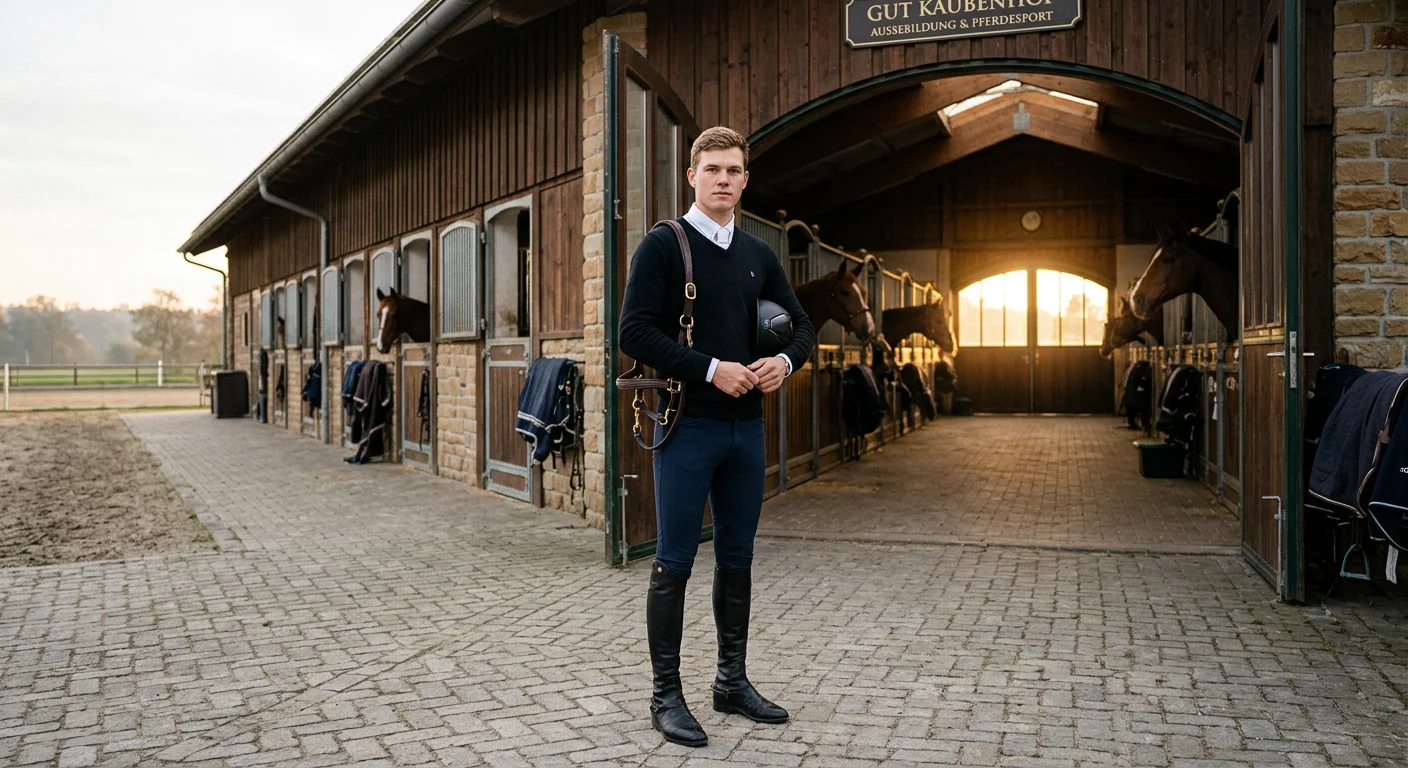
Twelve years is a long time to be anyone's student. Long enough to unlearn bad habits, build new ones, break those too, and find something that works.
That's the stretch Henrik Von Eckermann spent inside Ludger Beerbaum's world in Riesenbeck, Germany. The environment he entered was no casual training yard. Beerbaum Stables ran on a different scale. Over 250 full-time employees. Annual revenue reported at EUR 175 million before a major acquisition in 2021. Elite show jumping, run with the discipline and infrastructure of a serious enterprise.
Beerbaum himself is not a man you impress without effort. His record makes that clear:
4 Olympic gold medals — team golds in 1988, 1996, and 2000; individual gold in 1992 aboard Classic Touch
2 World Championship team golds — 1994 on Ratina Z, 1998 on P.S. Priamos
9 European Championship medals, including individual gold in both 1997 and 2011
5 times ranked FEI world number one, with 24 championship appearances and 133 German team rides
That is the standard Henrik walked into at twenty-two.
What Beerbaum built in Riesenbeck wasn't just a stable — it was a proving ground. The horses that moved through it were exceptional: Ratina Z, Goldfever, Gladdys S, Classic Touch. Each one was a product of relentless development, not luck. Henrik absorbed that culture from the inside. He learned what it means to manage a horse's career over years, not seasons. To think about preparation the way a craftsman thinks about shaping a material — steady, deliberate, patient.
By 2014, the results were measurable:
That rhythm, that relentlessness, was Henrik's classroom.
Twelve years of it. That's not an internship. That's a formation.
King Edward and the Road to World Number One
After twelve years inside Beerbaum's machine, Henrik Von Eckermann didn't ease into the next chapter. He accelerated into it.
The name behind that acceleration is King Edward — a Dutch warmblood gelding who arrived in Henrik's life and shifted everything that followed.
What made King Edward different wasn't just talent. It was timing. Henrik had spent over a decade learning how to develop a horse the right way — slow, steady, no shortcuts. King Edward arrived at the right moment. Henrik was ready. Not a young rider still figuring things out. A craftsman.
Their partnership produced results that speak for themselves:
2021 European Championship gold — individual title at Riesenbeck, in front of a crowd that knew what they were watching
FEI World Number One ranking — the top of a global sport, built through consistency across the circuit's most demanding events
2024 Paris Olympics — representing Sweden at the highest stage the sport offers
None of that was accidental. It traces back to everything covered in this article — the farm, the Gothenburg moment, Chess, Fredricson's philosophy, and twelve years of Beerbaum-level formation. King Edward was the horse those years prepared Henrik to ride.
This partnership carries a real lesson for aspiring riders. The world number one title didn't come from one great horse showing up at the right moment. It came from a rider who built himself into someone capable of meeting that horse — and doing something rare with him.
The road to world number one started long before King Edward. But it finished with him.
What Aspiring Show Jumpers Can Learn from Henrik Von Eckermann's Path
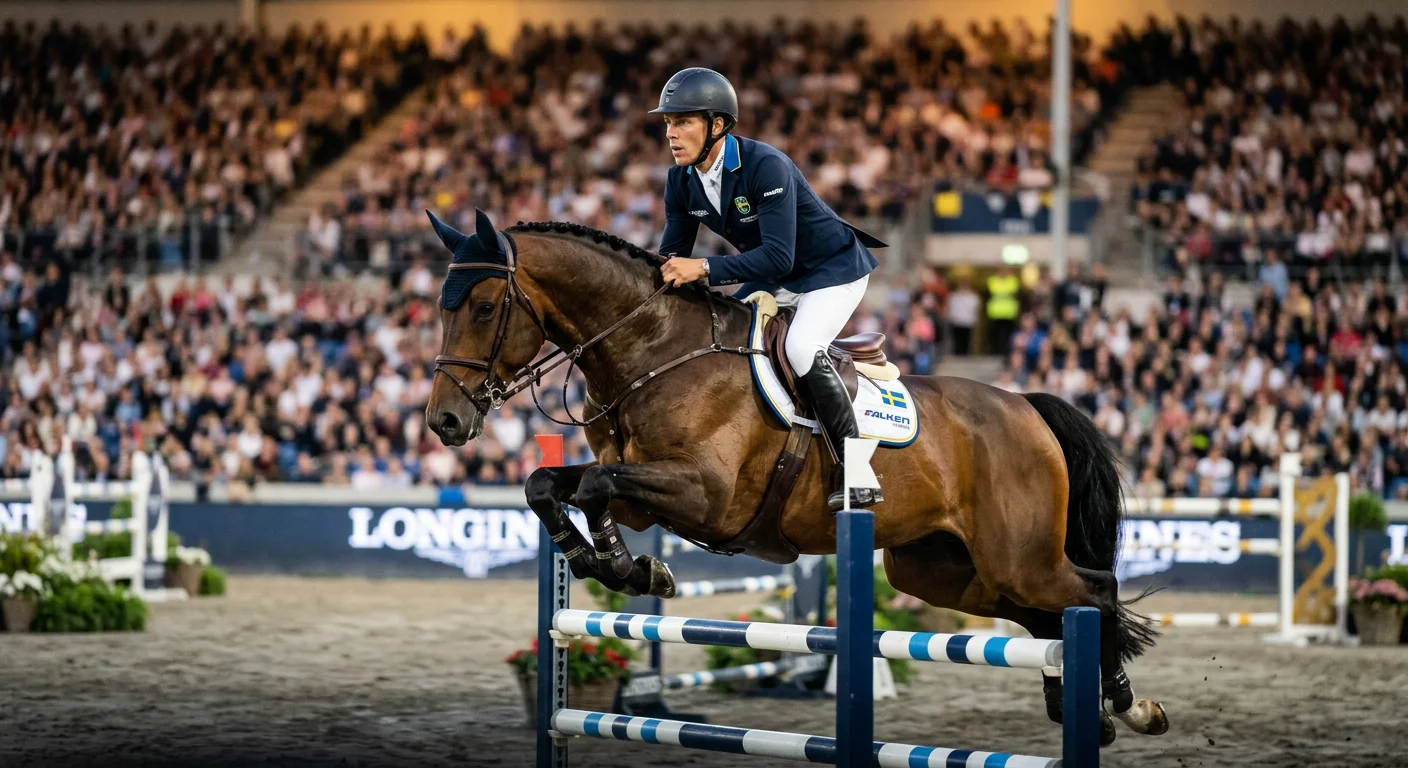
Henrik Von Eckermann's career isn't a highlight reel. It's a ledger — 2,830+ starts, built one result at a time over decades.
That number matters. Not because volume alone creates champions. It shows what the path to world number one truly looks like from the inside. No shortcuts. No single breakthrough moment. No overnight change.
Here's what his record teaches:
Consistency beats brilliance. Henrik held the FEI world number one ranking for 24 consecutive months, accumulating 3,495 points. That threshold — 3,000+ points — takes 30 great results across 12 months. Not one perfect Grand Prix. Thirty.
Horse partnerships compound over time. King Edward cleared 64–73% of rounds at 1.60m across 81+ starts. That percentage didn't come in year one. Henrik spent twelve years under Beerbaum's guidance, learning patient and deliberate horse development. That foundation built the numbers you see now.
Timing follows preparation. Henrik's climb to number one began after Tokyo gold, then held steady: top-10 for a year, top-3 for six months, then the summit in August 2022. Each step came in order. The results reflected work already done long before the ranking changed.
His own words settle it:
"The number one ranking comes from long-run consistency, not one-off wins."— Henrik Von Eckermann
That's not modesty. That's the blueprint.
Watch Henrik Von Eckermann in Action
Conclusion
Henrik Von Eckermann grew up as a farm kid in Sweden, watching horses through a fence. Today, he holds the FEI world number one ranking. That shift didn't happen because of raw talent. It happened because of patience stacked on patience — and the right mentors showing up at the right time.
The path is easy to trace. He never rushed. He spent his childhood around horses. A teenage moment at Gothenburg lit the spark. At 22, he made a bold move. Then came twelve years inside Ludger Beerbaum's world-class stable — absorbing, growing, and refining his craft. Even as he climbed the ranks, he prioritized practical, performance-driven gear: he sourced tailored pieces from trusted equestrian clothing manufacturers that specialized in durable, mobility-focused designs, and invested in polished competition attire that balanced professionalism with comfort for long days in the saddle. Last came King Edward, the horse that made it all click.
That's the real answer to how Henrik Von Eckermann started riding: one deliberate step at a time. He never skipped the hard chapters.
You're an aspiring equestrian — or maybe you're raising one. Either way, his path is worth studying closely. Look into other top-ranked show jumpers. Read about their training philosophies. Study the moments that separated good riders from truly generational ones. Those details matter more than most people realize, right down to the gear you choose and the partners you trust to outfit your riding journey.
The fence is there. The question is: will you climb it?