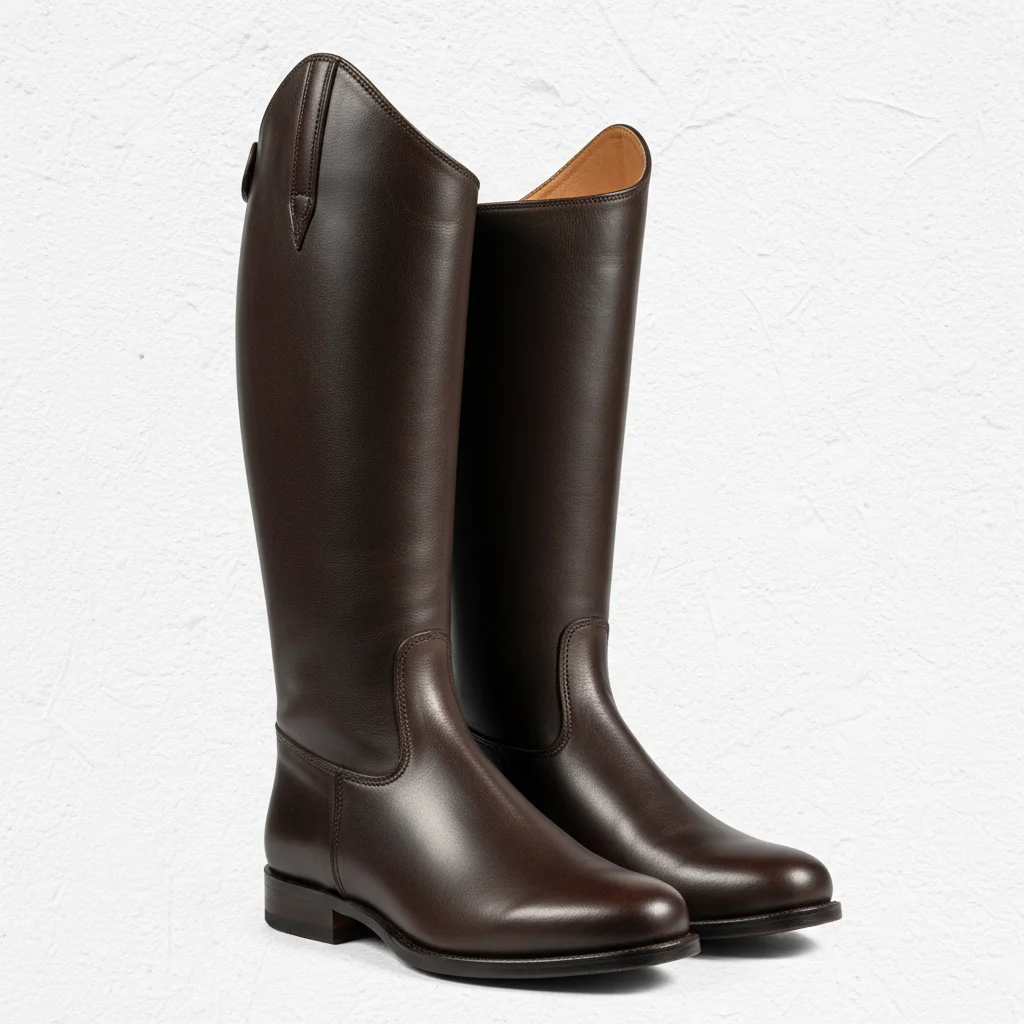
Your $500 riding boots need more than a quick wipe after a muddy trail ride. My first pair of field boots cracked beyond repair in eighteen months. Twenty minutes of monthly care could have prevented this disaster. As experienced equestrian suppliers, we know that leather durability starts with maintenance.
How to care for riding boots goes beyond looks. You're protecting a major investment and your safety. Whether you are buying off the rack or sourcing from equestrian outfit manufacturers, good leather boot preservation extends your boots' life from two years to over a decade. This guide ensures your boots remain as professional as the day they left the equestrian clothing factory.
Confused about the right boot conditioner application or which products equestrian clothing manufacturers recommend? This guide covers it all, turning boot care into a simple habit.
Essential Tools for Professional Boot Care
Quality riding boots require specific tools to maintain their structural integrity. Leading equestrian manufacturers always emphasize that the right brushes and cleaners transform maintenance from guesswork into a routine that protects custom equestrian apparel.
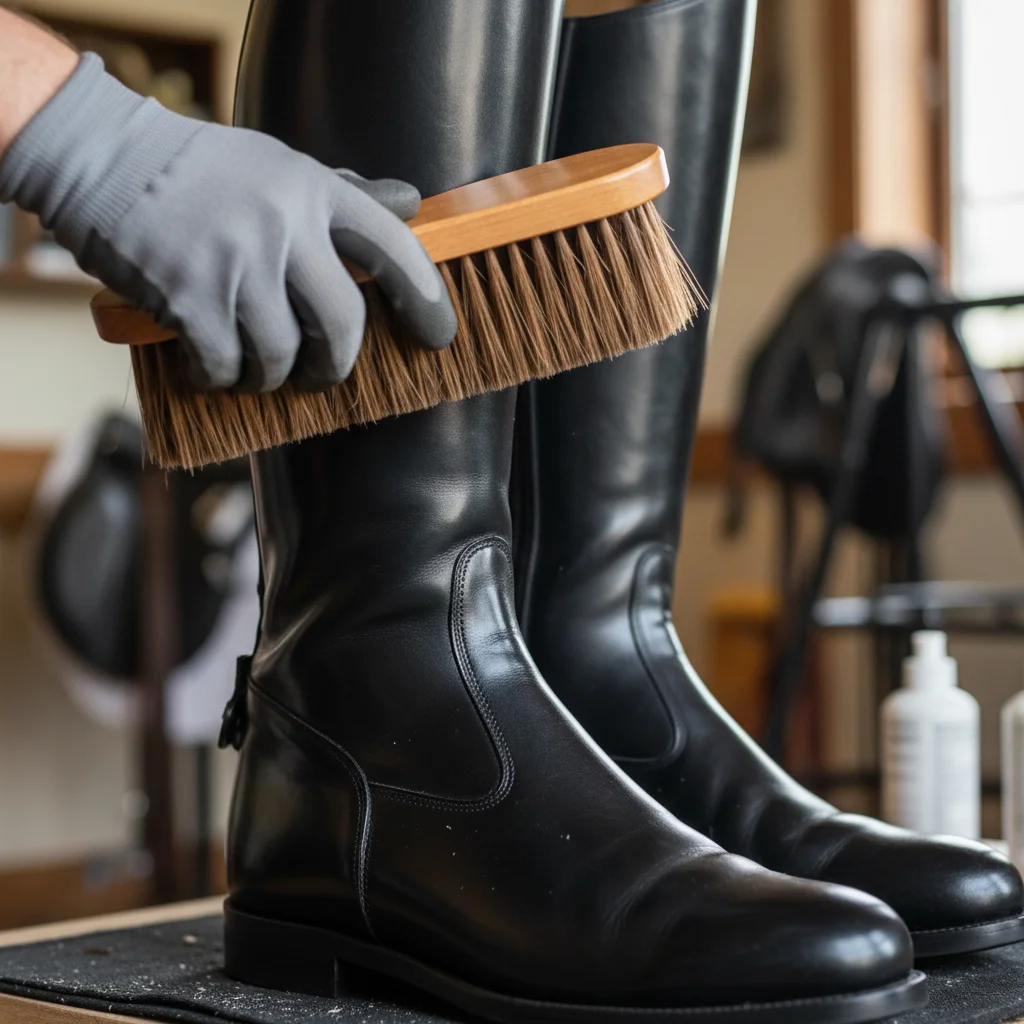
Start with your brush collection. Nylon boot brushes tackle the heavy lifting, scrubbing off mud without scratching. Horsehair brushes are essential for the finishing touch—use these soft-bristled tools solely for buffing to create that show-ring shine. For precision, Dauber brushes allow you to spread oils and polish without messy fingerprints, a standard practice in high-end custom equestrian clothing maintenance.
Product selection is equally critical. Glycerine soap is the gold standard for cleaning, gentle enough not to strip the leather's natural oils. Follow this with Leather grease or oil to feed the material, but allow a 24-hour resting period before polishing. To restore color and water resistance, apply Boot polish in black or brown thinly. Finally, a quality Leather conditioner keeps boots soft, while Zipper spray serves as cheap insurance against expensive repairs. Building a pro setup—similar to what we use at our equestrian clothing factory—saves money long-term.
Gold standard for cleaning leather
Feeds & nourishes the material
Restores color & water resistance
Keeps boots supple & soft
Cheap insurance for costly repairs
The 5-Step Cleaning Ritual
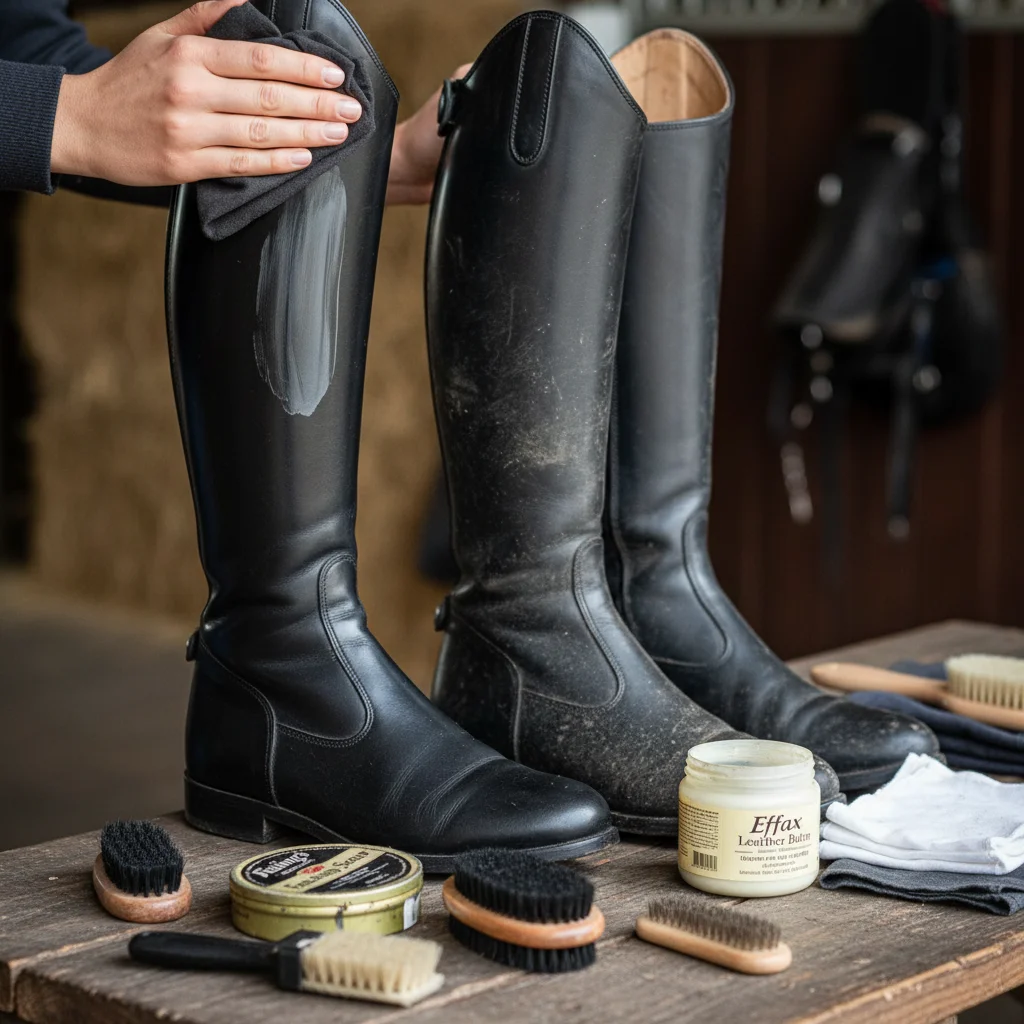
Leather has a memory. It recalls every muddy ride and missed conditioning session. Following a strict protocol, similar to the quality control steps used by top equestrian clothing manufacturers, can reverse damage.
Conditioning and Waterproofing: The Science of Leather
Conditioned leather breathes; waterproofed leather resists. Balancing these two is the secret to longevity, whether you're wearing standard paddock boots or a custom equestrian outfit. New boots should be conditioned after the first few rides to set a foundation. Afterward, a schedule of every 4-6 weeks works best, though winter riders should increase this frequency.
Choosing the right product matters. Leather oils penetrate deeply to soften fibers from within—ideal for breaking in stiff boots. However, use them sparingly; too much oil can weaken stitching, a common issue seen in wholesale equestrian clothing returns. Leather balms, often beeswax-based, sit on the surface to condition and add water resistance, making them perfect for focusing on areas prone to boot cracking.
Waterproofing is your second line of defense. A good boot waterproofing treatment blocks rain and manure. Apply spray-on products in thin coats, or use wax based treatments for heavy-duty protection. Expert equestrian clothing manufacturer advice usually suggests waiting until the conditioner has fully absorbed before sealing the leather with waterproofing agents. This ensures your OEM/ODM services products maintain their spec-standard durability.
Polishing and Finishing Techniques
A good shine does more than impress judges; it acts as a shield against the elements. To Polish riding boots effectively, adopt the two-stage system used by professional gentle. First, build a base by applying a thin layer of wax polish with a dauber. Let it sit for 15 minutes to harden. Then, bring the shine with a horsehair brush, using friction to wake up the waxes.
For high-stakes events, use a soft cotton cloth and a drop of water to "spit-shine" the toe and heel. This creates the mirror finish seen on high-end custom equestrian clothing. Between deep polishes, a quick buff with a silicone-free shine spray keeps boots looking fresh. This maintenance adds years to the boot lifespan.
Material-Specific Care and Troubleshooting
Different boots require different tactics. Full-grain dress boots need polish and minimal oil to maintain their shine and stiffness. In contrast, oiled leather field boots, often found in wholesale equestrian clothing lines, require oil-based balms to replenish their matte, tacky finish. Never use high-gloss polish on oiled leather; it ruins the texture.
Modern boots often feature mixed materials. Synthetic panels and rubber soles need simple soap and water. Be careful not to get leather conditioner on synthetic parts, as it can degrade the material—a design consideration for any equestrian clothing manufacturer offering hybrid boots.
Solving Common Problems:
Remove mud only after it dries. For salt stains, a vinegar and water solution breaks down the crystals. Baking soda paste lifts sweat stains from custom equestrian apparel.
Light cracks can be fixed with heavy conditioning. Deep cracks require filler and professional help. Dealing with cracks early prevents boot cracking from becoming fatal.
Zipper-Ease is the best lubricant. Keep tracks clean to avoid blowing out the slider, a common repair on standard and custom equestrian clothing alike.
Bacteria causes smell. Use Odor-Eaters or enzyme sprays to sanitize the interior.
Check soles monthly. Light wear reduces grip slightly; Moderate wear smooths the tread; Severe wear requires immediate re-soling.
Storage: The Silent Killer of Boots
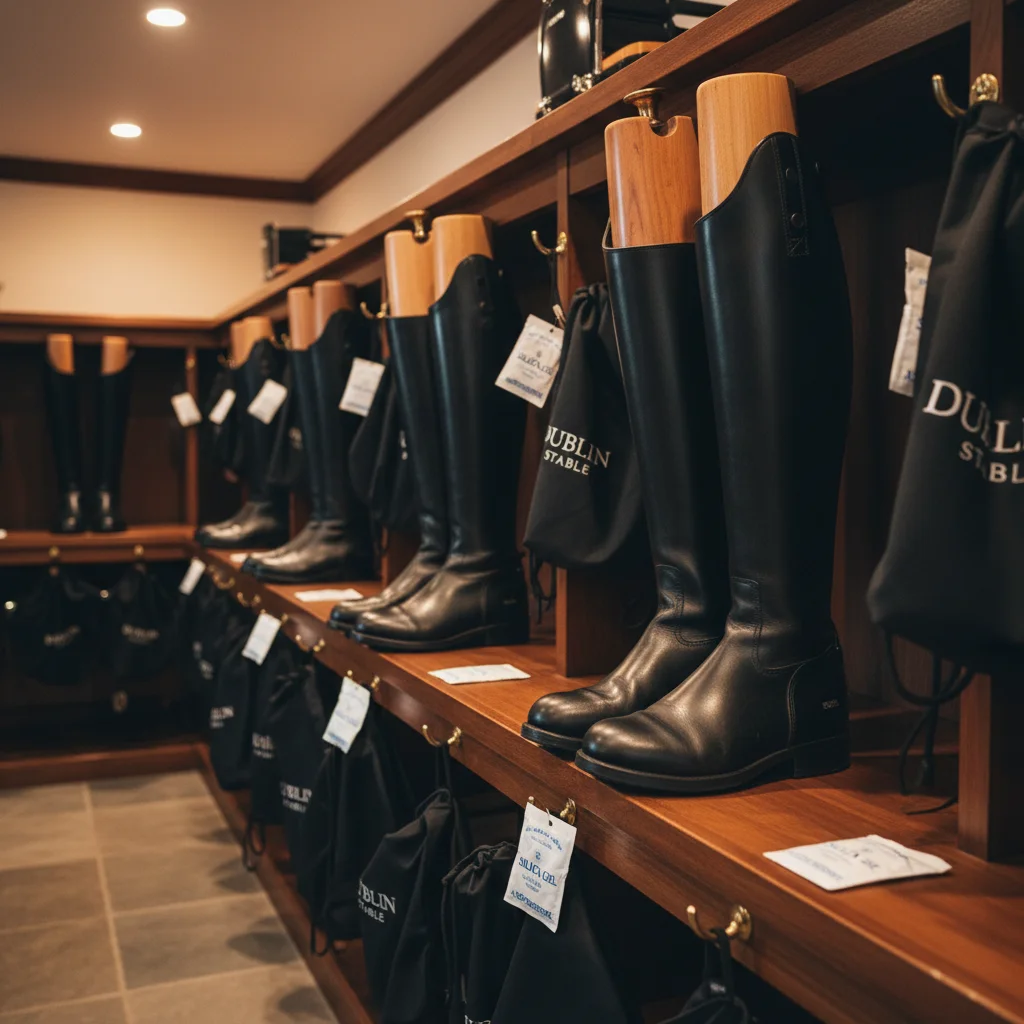
Improper storage ruins more boots than riding does. Off-season, your boots must be clean, conditioned, and stored in a climate-controlled area. Basements and attics are death sentences for fine leather due to humidity and temperature fluctuations. As a provider of OEM/ODM services, we see countless returns caused simply by poor storage.
Boot storage methods are non-negotiable. Always use boot trees to prevent the ankle from collapsing and forming permanent creases. If you don't have trees, stuff them with acid-free paper. Store them upright in breathable bags to extend boot lifespan. Check them monthly for mold or dryness.
The math is simple: Maintenance saves 40% over buying new boots. A $50 annual investment in care products protects an $800 asset. Boot care is a front-loaded investment with long-term payoff.
RunEquestrian: Your Partner in Quality
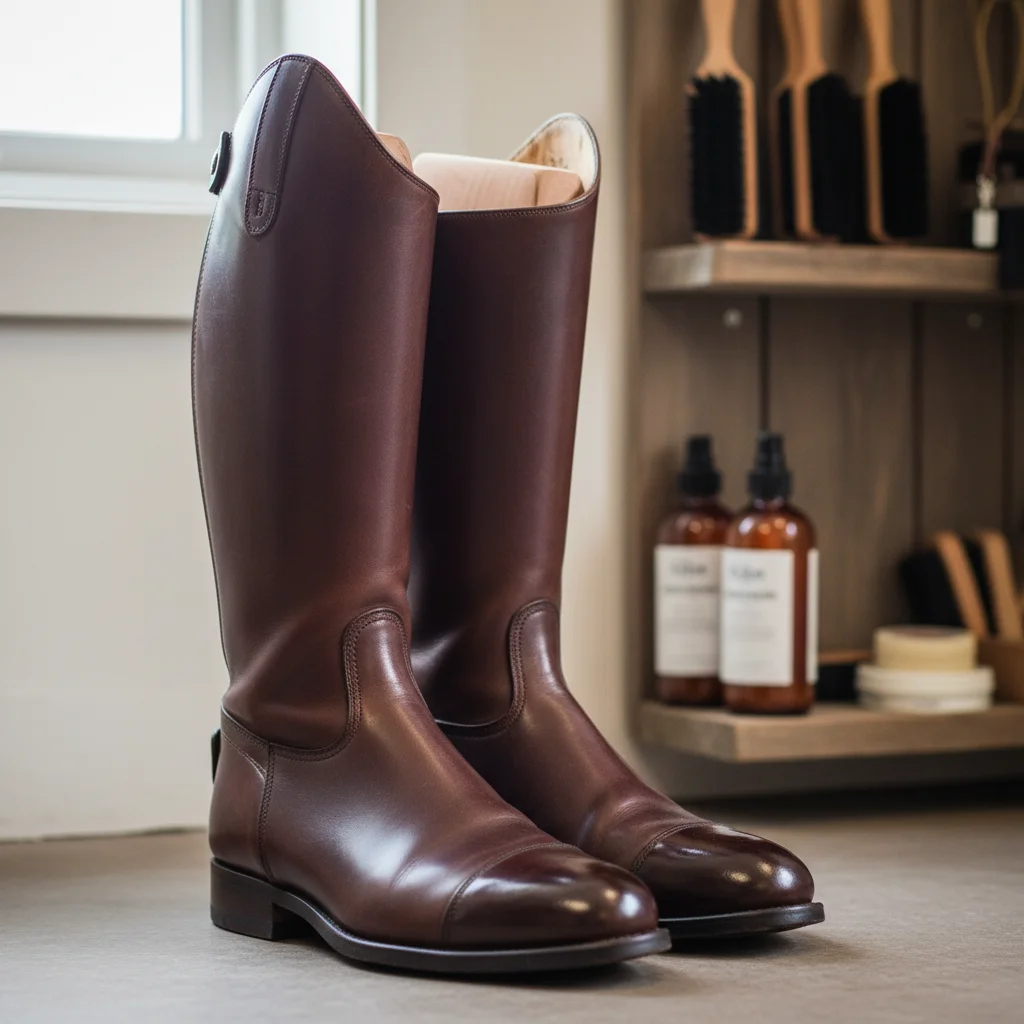
Your riding boots are an investment in your passion. Whether you ride in a bespoke custom equestrian outfit or reliable daily gear, preservation is key. However, longevity begins with manufacturing quality.
At RunEquestrian, we pride ourselves on being more than just equestrian manufacturers; we are craftsmen. As a premier equestrian clothing manufacturer, we understand that materials matter. From sourcing premium European leathers to utilizing advanced stitching techniques, our equestrian clothing factory produces gear designed to last.
We offer comprehensive solutions for brands, including OEM/ODM services and private label equestrian clothing production. If you are looking to create a line of high-end custom equestrian clothing or need reliable wholesale equestrian clothing for your retail business, RunEquestrian delivers precision and durability.
Don't settle for less. Partner with trusted equestrian outfit manufacturers who understand the ride as well as the gear. Contact RunEquestrian today to explore our custom equestrian apparel solutions and elevate your brand's quality.