Something shifts in the saddle — and at first, you can't quite name it. Maybe you're gripping tighter than you used to, or your sitting trot feels strange in a body you've ridden in for decades. Maybe you've started making excuses to hack out alone because the thought of being watched fills you with a dread you can't explain.
If any of this sounds familiar — even a little — you are not losing your mind. You aren't losing your riding skills either. Menopause changes your riding life entirely. The physical and mental shifts can feel isolating and confusing, and frankly, the equestrian world doesn't talk about it enough. But there's a lot you can do. As your body changes, so does your need for supportive, adaptive gear, which is why top equestrian suppliers and empathetic equestrian clothing manufacturers are finally starting to pay attention. This guide covers exactly what's happening to your body and how to rebuild your confidence from the ground up. It is the honest, practical guide you probably needed a long time ago.
What the Numbers Say (And Why They Matter)
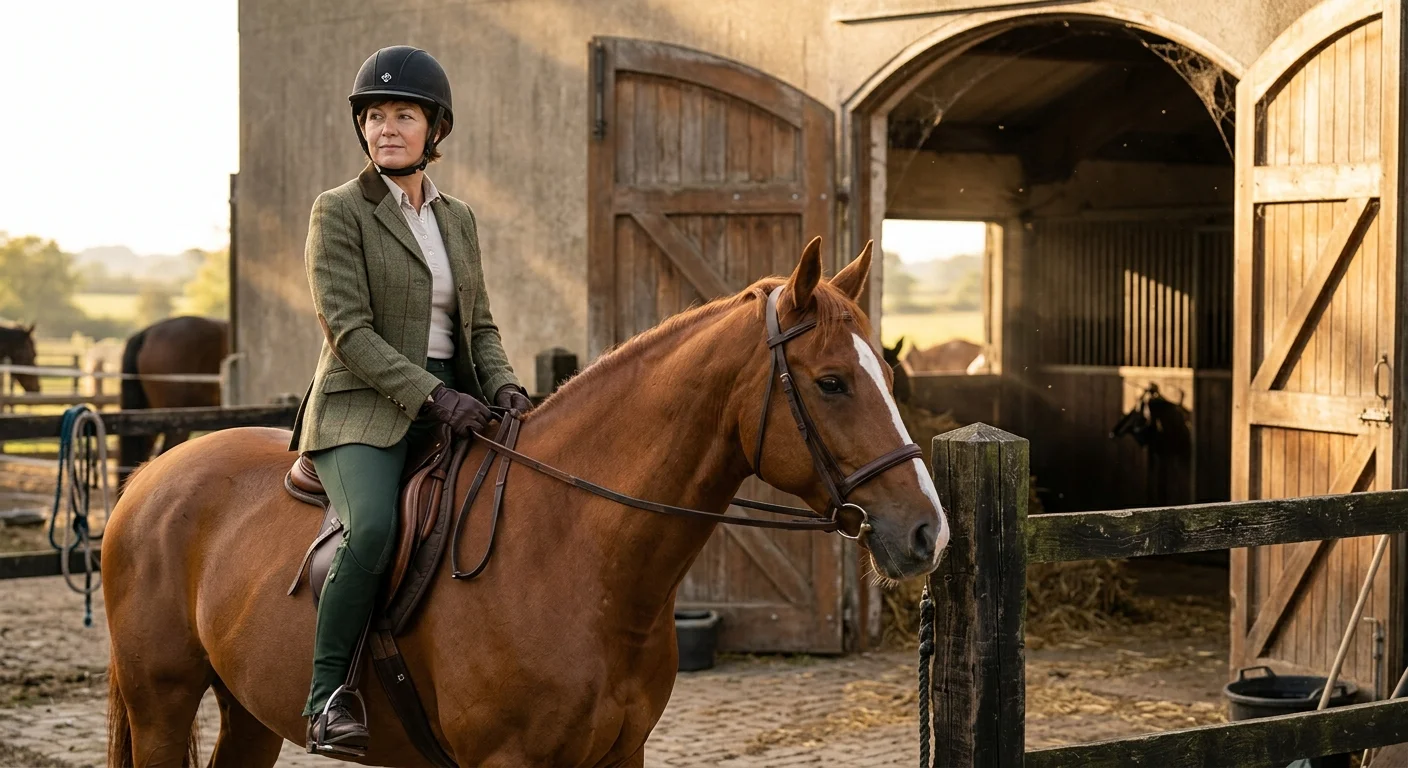
The statistics surrounding menopause and riding are exceptionally striking — and incredibly validating for anyone struggling. A massive study of over 1,600 female riders discovered that 33% stopped riding — some for a while, others for good — primarily because of menopause symptoms. They didn't stop because they lost interest or because life got too busy. Their bodies and minds were going through a profound transformation, and nobody had prepared them for it.
That same research revealed numbers that paint a very clear picture of this transition:
An astounding 78% of women experienced anxiety that actively affected their riding, while 75% lost their riding confidence, especially around jumping and faster work. Beyond the mental hurdles, 74% dealt with severe joint pain and sleeplessness, and 71% noticed a significant drop in their core and leg strength. Most shockingly, 50% of jumpers and eventers felt completely compelled to step back from their discipline or significantly scale down their training routines.
You have to realize these are not small numbers. They represent thousands of women who loved riding deeply and suddenly found themselves struggling to explain why it felt so unbearably hard. The good news here is that this is a fully documented, well-understood transition phase. Real, practical ways to navigate through it absolutely exist. You are not alone in this feeling, and you certainly are not imagining it.
What Menopause Does to Your Body in the Saddle
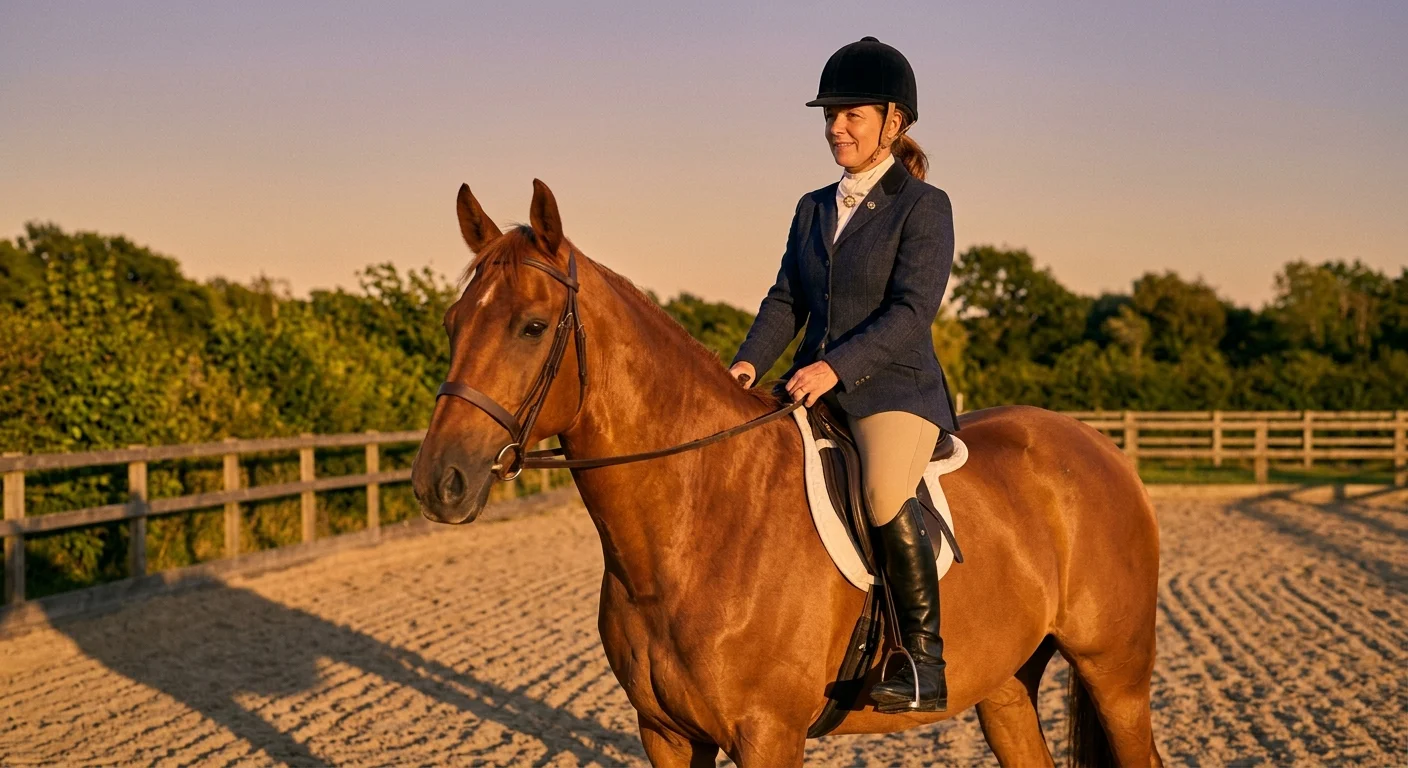
Riding has always been a full-body conversation between you and your horse, and menopause interrupts nearly every single part of that dialogue. The physical changes are very specific, undeniable, and worth naming out loud. Once you understand exactly what's happening internally, all those strange sensations in the saddle start to make logical sense.
Estrogen does a lot more for your riding than you might think. As hormone levels fall naturally, your body produces less synovial fluid, which is the necessary liquid that keeps your joints moving with ease. For 74% of female riders, this translates directly into joint pain that feels noticeably worse in the saddle than in everyday life. The repetitive impact of riding in a fixed position just exacerbates the issue. Things that used to feel entirely effortless start to ache deeply. Your core and leg holding muscles also weaken and change, making your entire position feel much harder to control.
Then we have to address what happens in the saddle itself. Vulvovaginal tissues lose collagen and natural fat padding during menopause, which unfortunately means less cushioning over your sit bones. Tissues become significantly drier, thinner, and far less elastic. Prolonged saddle contact and friction can cause painful chafing and micro-tears that were never an issue before. This biological reality is exactly why any forward-thinking equestrian clothing manufacturer is investing heavily in seamless crotch designs and moisture-wicking fabrics. Furthermore, hot flashes seriously don't help. Your body struggles to regulate heat in the warm, enclosed environment of a leather saddle. Finding breathable gear from understanding equestrian manufacturers can honestly make or break a summer riding session.
And let's not ignore the cognitive layer, which is often the hardest part to talk about. Sleeplessness directly dulls the mental sharpness and split-second reaction times that good horsemanship requires. Memory gaps and reduced motivation creep in silently. Anxiety spikes dramatically around falls, and with your bone density declining, that fear is not irrational — especially given the health benefits of horse riding that keep you wanting to stay in the saddle in the slightest. Riding asks your body and mind to show up together perfectly, but menopause heavily challenges both at the exact same time.
Why Your Confidence Takes Such a Hit (And Why That's Not "Just in Your Head")
Confidence rarely disappears all at once in the equestrian world. It usually erodes day by day, ride by ride, until you are standing at the mounting block just wondering if you should even bother getting on. With 75% of female riders reporting a significant loss of confidence, it's obvious that something internal has shifted in a way you couldn't instantly control. It is vital to understand that hormonal anxiety is strictly biochemical, not imaginary.
Fluctuating estrogen and progesterone levels throw your stress hormone, cortisol, completely off balance. When cortisol spikes, it pushes your central nervous system straight into threat mode. A slightly spooky hack, a horse that jogs, or a wobbly canter transition suddenly feels loaded with imminent danger. That overwhelming anxiety flows straight into a deep fear of falling. Astonishingly, 60-70% of anxiety-related riding cases include this specific fear. The perceived risk of injury feels two to three times higher when you are stressed, even when the actual, statistical risk hasn't changed at all.
Your horse is going to notice this shift almost instantly. Horses naturally read rider tension in under five seconds through muscle grip, subtle weight shifts, or even just a held breath. In 80% of cases, a tense rider creates a far more reactive horse. More reactivity makes you feel like control is out of reach, which only deepens your fear. Brain fog just adds another frustrating layer onto this. Under heavy stress, your memory recall drops by roughly 40%, causing your arena decisions to become much slower and less certain. This isn't weakness; it is pure neuroscience at work.
Menopause Might Be the Real Reason You're Struggling to Ride
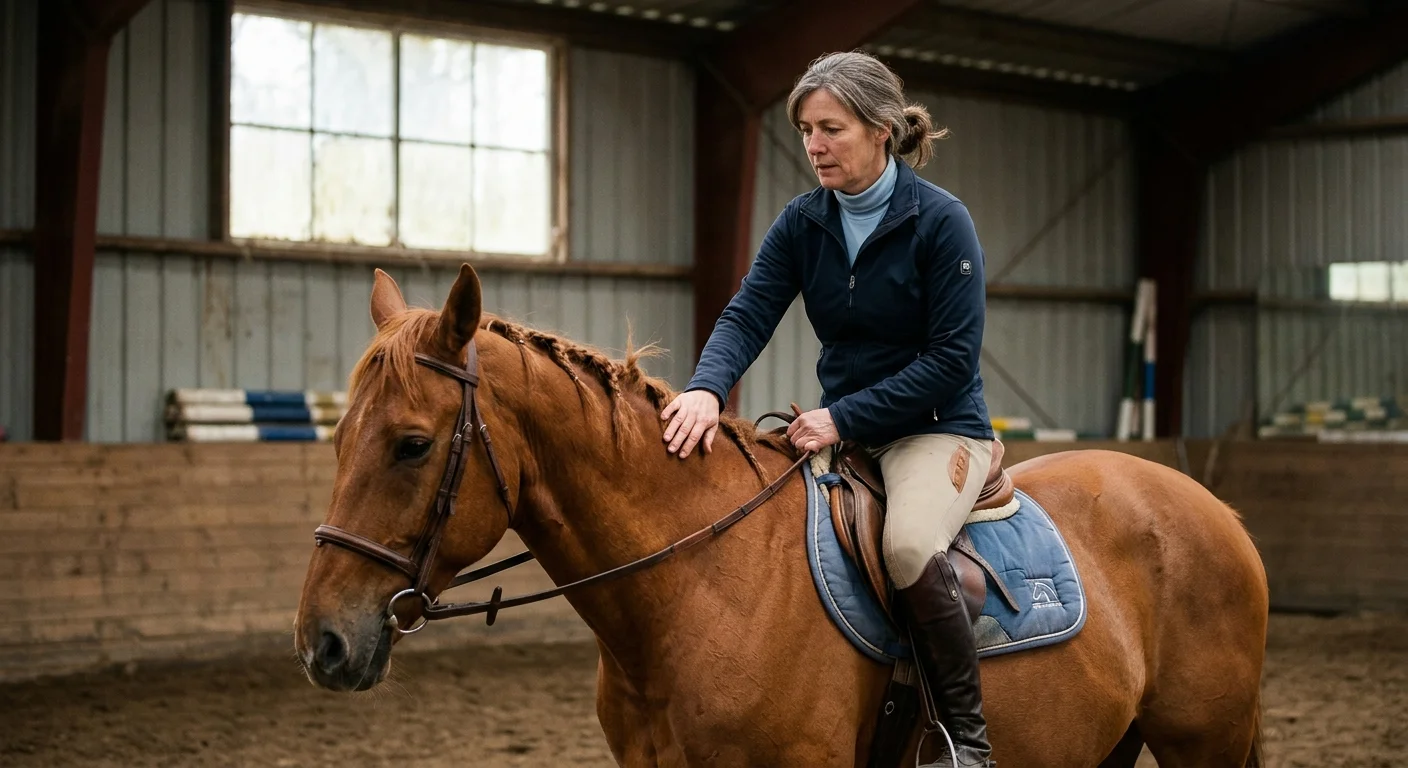
Equestrians are historically great at self-blame. We constantly tell ourselves that we're just getting worse, that our horses are being difficult, or that we are simply getting too old for the sport. These explanations feel incredibly logical until you finally see what's actually been hiding underneath. Perimenopause can begin entirely unannounced in your mid-40s, right in the absolute middle of a confident, highly experienced riding career. The symptoms build so gradually over time that most women never connect them to what's going wrong in the arena.
You can start by simply matching what's happening in your body to what's happening on your horse. If posting trot feels punishing and you can't hold your position through a schooling session, you are dealing with a real physical symptom that 97% of women in perimenopause report. If you are cutting sessions short due to physical and mental exhaustion, you share that exact experience with 83% of female athletes in this demographic. Poor sleep disrupts 88% of women in this group, ruining essential riding consistency, while unpredictable mid-ride anxiety hits 72% of perimenopausal women. Rather than quitting, many riders are adapting by seeking out high-quality custom equestrian apparel designed to forgive bodily fluctuations. Distributors handling wholesale equestrian clothing are seeing massive spikes in demand for highly elastic, stabilizing garments specifically because riders are finally recognizing their changing physiological needs.
How to Adapt Your Riding Sessions Without Feeling Like You're Giving Up
Scaling back your riding is not the same thing as stepping back or quitting altogether. There is a very real difference between proactively adapting what you do and abandoning who you are as an equestrian. The women who successfully keep riding through intense menopause aren't the ones stubbornly pushing through unchanged. They are the ones who completely renegotiate the terms without any drama or apologies.
You need to start shortening your sessions, but do it with true intention. Therapeutic riding research definitively shows that 30 minutes of quality, highly focused riding within a standard one-hour session produces measurable physical and neurological gains. Try arriving early and using the grooming and tacking process as part of your grounding session, not just a rushed chore before the warm-up. Ride for 30 to 45 minutes rather than pushing for a grueling 90, because fatigue severely compounds joint pain and dulls your focus. When you finish, taking your time handling your horse on the ground settles everything nicely.
You also need to lower the intensity without feeling an ounce of guilt. Walk work isn't remedial; it is exactly where your position, feel, and communication fundamentally live. Start with basics that build genuine skill, like straight-line halt transitions on the rail, serpentines at the walk, weaving poles, and simple lateral work. These exercises will quickly show you where your body has changed and where your feel is still razor-sharp. Run a quick lunge or a loose-walk review before moving into trot work to give your joints essential time to warm up. Additionally, you need to add brain breaks into your riding. Walking the arena once with no agenda before mounting genuinely works to lower your cortisol and settle anticipatory anxiety. When a session starts feeling overwhelmingly tough, just return to the walk. Your horse truly doesn't know the difference between a training choice and a perceived setback.
Most importantly, you absolutely must reframe what progress currently looks like for you. Stop measuring today's sessions against your pre-menopause self. Research notes that 70% of riders who adapted their training saw clear improvements in core target behaviors like balance, rhythm response, and attention when they focused on consistency rather than high intensity. Progress today might just look like a smooth canter transition that felt incredibly easy or simply spending twenty minutes without gripping with your knees. When you support these mindset shifts with comfortable, technically advanced pieces from dedicated equestrian outfit manufacturers, the transition feels significantly smoother.
The Physical Fixes: Managing Your Body So You Can Stay in the Saddle
It is vital to remember that your body hasn't betrayed you. It is merely asking for a totally different kind of attention right now. Staying in the saddle through menopause isn't about pushing harder; it is about deeply understanding what's actually happening between your pelvis and the leather.
First, be fully aware that your saddle might be part of the actual problem. Seat angle has far more power than most riders realize. A seat that sits slightly too flat—or tilts backward even a fraction—makes holding a neutral pelvis almost impossible. Your hips inevitably tilt, your lower back immediately compensates, and the whole anatomical chain breaks down rapidly. Since menopause already directly affects your joint mobility, a poorly fitted saddle does incredible damage. Female pelvic anatomy is naturally wider, so tell your saddle fitter exactly where you're collapsing and book checks at least twice a year. Couple a well-fitted saddle with premium breeches featuring targeted support. A leading equestrian clothing factory offering comprehensive OEM/ODM services to high-end brands is actively redesigning waistbands to ensure they support the lower back without digging in.
You cannot ignore building strength off the horse either. It's the step most riders skip, but it fundamentally changes everything. Just three careful sessions a week focusing on slow dead bugs, side plank progressions, and half-kneeling Pallof presses will massively improve the rotational stability you desperately need for a balanced canter. Add roughly 8 to 12 minutes of gentle mobility work, like hip flexor stretches and thoracic extensions, after each ride. Never rush it, and never hold your breath.
Before throwing yourself into a new routine, check your body's asymmetry first. It sounds technical, but it simply involves measuring each leg from hip bone to ankle and testing your sideways bend. Research on 94 equestrians found clear shoulder and pelvic height differences across the group. Placing just 5 to 10 percent more weight on one seat bone puts the intense pressure of a bowling ball on one side of your spine for hours, creating deep wear and tear that heavily compounds menopause symptoms. Micro-habits help drastically. Breathe fully into both seat bones during transitions, shorten your stirrups a single hole to cut pressure spikes, and never try to fix an uneven seat with a heavier inside hand. Bring in reputable professionals like a physiotherapist before mild asymmetry turns into chronic, screaming pain. Taking advantage of custom equestrian outfit fittings, where equestrian manufacturers tailor the garment to your unique leg lengths and hip drops, provides another brilliant layer of relief.
Should You Consider HRT? What Equestrian Women Need to Know
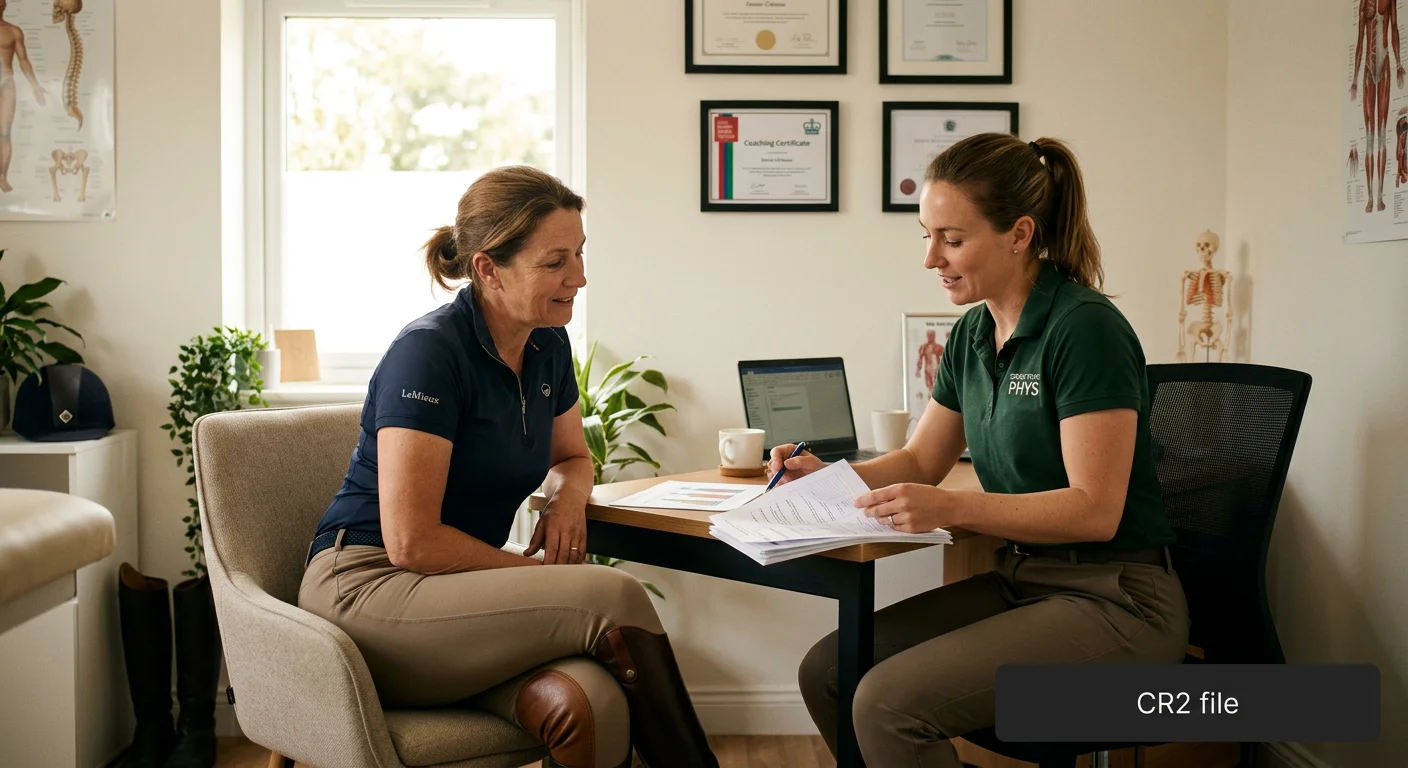
Hormone Replacement Therapy is often treated as a taboo topic confined to whispers in the tack room, so let's state it clearly: for a huge number of women, it helps incredibly. In that major study of over 1,600 female riders, a striking 71% of those who used HRT reported sustained participation in riding. It didn't just casually ease their symptoms; it literally kept them in the saddle by offering relief from physical aches, overwhelming fatigue, and paralyzing confidence loss.
The research specifics are deeply important here. Estrogen-only HRT actually showed a 23% reduction in breast cancer risk in a major long-term trial, while combined estrogen and progestogen does carry a slightly higher risk over prolonged use. It's also worth noting that HRT reliably improves key cholesterol markers. Given that around 38% of postmenopausal women use HRT, deciding if it fits your life is a crucial conversation to have directly with your GP. Go in prepared with your full riding goals and your symptom picture.
What Good Coaches and Yard Communities Should Understand
Equestrian coaches hold far more power than they usually realize. They don't just dictate technique; they often influence whether a vulnerable woman decides to keep riding at all. Comprehensive research across 43 different sports studies found that negative coaching behaviors, like impatient yelling or ignoring a changing body's needs, were the number one reason people abandoned their sports entirely.
For a menopausal rider, an impatient sigh during a sticky transition or a silent assumption that she isn't trying hard enough can cut incredibly deep. Good coaching requires a coach to ask how the body feels today rather than making assumptions. They must celebrate riding consistency on hard days as a primary achievement and create safe spaces for honest, quiet conversations. Yard communities share this burden equally. Creating a barn culture where women feel entirely safe saying they need to step back this month, without offering any apologies, is what genuinely keeps riders riding.
Keeping the Mental Game: Protecting Your Love of Riding Through the Transition
Your love for horses doesn't usually leave first. It's the deep joy that vanishes bit by bit until getting to the barn starts feeling like something you simply endure rather than eagerly choose. The mental side of riding during menopause is absolutely the entire game.
Because anxiety slams into your physical body before it ever reaches your conscious mind, you end up with tight reins and a braced back without even realizing it. Your horse reads that instantaneously, and the two of you get trapped in a real-time loop of nervous feedback. To break that agonizing loop, you have to completely redefine what success looks like right now. Deep connection and safety are real achievements, not consolation prizes. If your anxiety feels totally stuck, looking into techniques like brainspotting can help shift mental blocks so you can find your flow state again. Most importantly, speak up. The riders who successfully stay in the sport are always the ones who voiced their struggles out loud to their community.
Conclusion
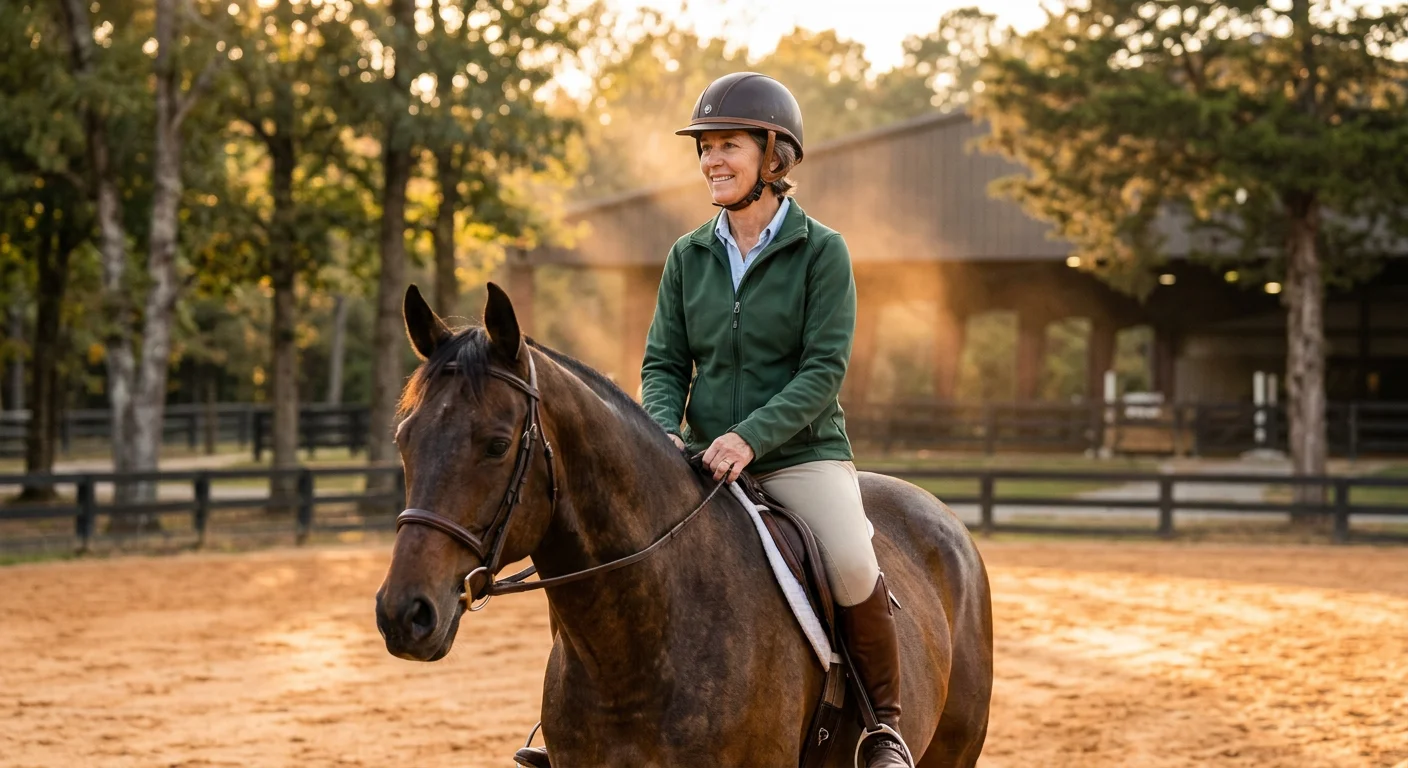
Menopause does not get to boldly decide whether you are still a rider or not. That specific part of the story belongs entirely to you.
What it can do, frustratingly, is temporarily change the terms of your engagement. Your body undeniably requires different care and support now. Your riding confidence might wobble in harsh ways that feel deeply foreign, and on some challenging days, the horse you've loved and cared for for years will feel like a complete stranger beneath you. That reality is raw, and it is worth acknowledging without shame.
But the skills you possess are also incredibly real. You have spent countless years learning how to accurately read a horse. You have learned exactly how to soften your entire body when things get hard and how to stay remarkably present in chaotic moments that don't go strictly to plan. Those are massive, life-altering skills, and they are the exact same skills this hormonal transition is demanding of you right now.
Menopause affecting your time in the saddle is absolutely not a reason to lower your bar or quit; it is simply a brilliant reason to ride smarter and demand better comfort. Don't hesitate to seek out high-end custom equestrian clothing or innovative private label equestrian clothing brands that are specifically designing dynamic custom equestrian clothing for mature bodies. When you collaborate with forward-thinking equestrian suppliers, adapt your physical routine, and speak up for what your body needs, you safeguard your passion. Talk to your coach. Adjust your saddle and your mindset. And then, get back on. You're not done riding. You are not even close.