You've heard all three terms thrown around at the barn — farrier, blacksmith, equine podiatrist — sometimes by the same person, sometimes used as if they mean the same thing, and almost never with any explanation. If you're nodding along while silently wondering whether they're the same thing, you're not alone.
These roles overlap enough to cause real confusion. But the differences matter more than most horse owners think. Your horse is off. A hoof wall is cracking. You need to know who to call — and the wrong choice costs you time and your horse's comfort.Even seasoned riders who rely on trusted equestrian suppliers for gear and advice can find this distinction surprisingly unclear.
Here's a clear breakdown of what each professional does, what training they have, and how to match the right expert to your horse's needs.
What Is a Farrier — And What Do They Actually Do?
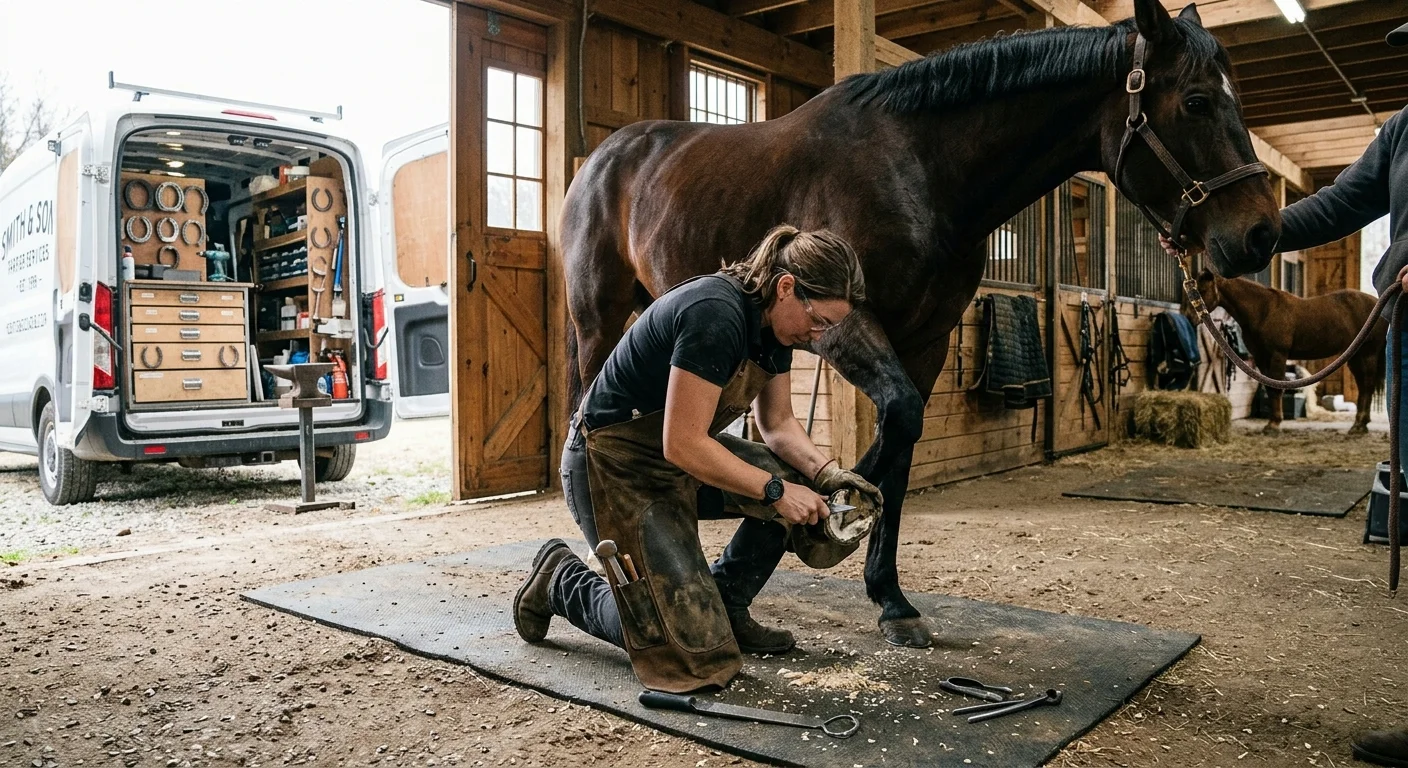
The farrier is the backbone of equine hoof care. They're also one of the most underappreciated skilled tradespeople in the horse world today.
A farrier handles complete hoof care for equines: horses, ponies, mules, and donkeys. That includes cleaning, trimming, and fitting horseshoes. They work with both shod and barefoot animals to keep hooves healthy and performance on track. But the job goes much deeper than most people expect. A good farrier combines veterinary knowledge, metalworking skill, and hands-on horse handling — all in a single visit.
What a Farrier Does on the Job
The core duties are clear-cut, but doing them well takes real expertise:
Most horses need trimming or shoeing every 4 to 8 weeks. The average horse gets seven farrier visits per year. A full-time farrier on a busy schedule completes around 1,904 trims and shoeing services per year, serving 322 different horses and 148 clients.
That's a heavy workload. It also explains why qualified farriers almost never need to advertise for new clients. Demand exceeds supply — much like in specialized sectors such as custom equestrian clothing, where craftsmanship and reputation drive consistent demand.
A Skilled Trade With Real Earning Power
Here's something that catches most people outside the industry off guard: farriery ranks as "one of the most lucrative divisions of the equine industry." The average farrier brought in $73,108 in gross income based on 2010 survey data. That number had already jumped 16% in just two years. Today, experienced full-time farriers earn over $100,000 per year.
More than 25,000 farriers operate across the U.S., and most of them are self-employed. They set their own schedules. They pick their clients. They run lean, independent businesses — often with nothing more than a well-stocked truck and a strong reputation.
One more thing worth knowing: the horse community widely considers farriers the top experts on lower limb and hoof mechanics. In practice, they often know more about this than most equine veterinarians, who receive just six hours of horseshoeing instruction in their entire college education. The best farriers don't work alone, though. They team up with vets and trainers to build shoeing plans specific to each horse's needs.
What Is a Blacksmith — And Why They're Not the Same as a Farrier
Walk through the back of any racetrack and you'll spot a sign that reads "Blacksmith Shop." The workers inside? They're farriers. That label is a relic — a holdover from a time when the two trades blurred together out of economic necessity.
That era is long gone.
A blacksmith is a metalworker. Full stop.
They forge and shape iron into tools, structural parts, railway components, and hardware. It's demanding, skilled craft work — but it has nothing to do with horses. The skillset overlaps only at the surface level — similar to how equestrian manufacturers may share production techniques with general apparel factories, yet operate in entirely different functional contexts.
The Practical Difference Comes Down to Where They Work and What They Know
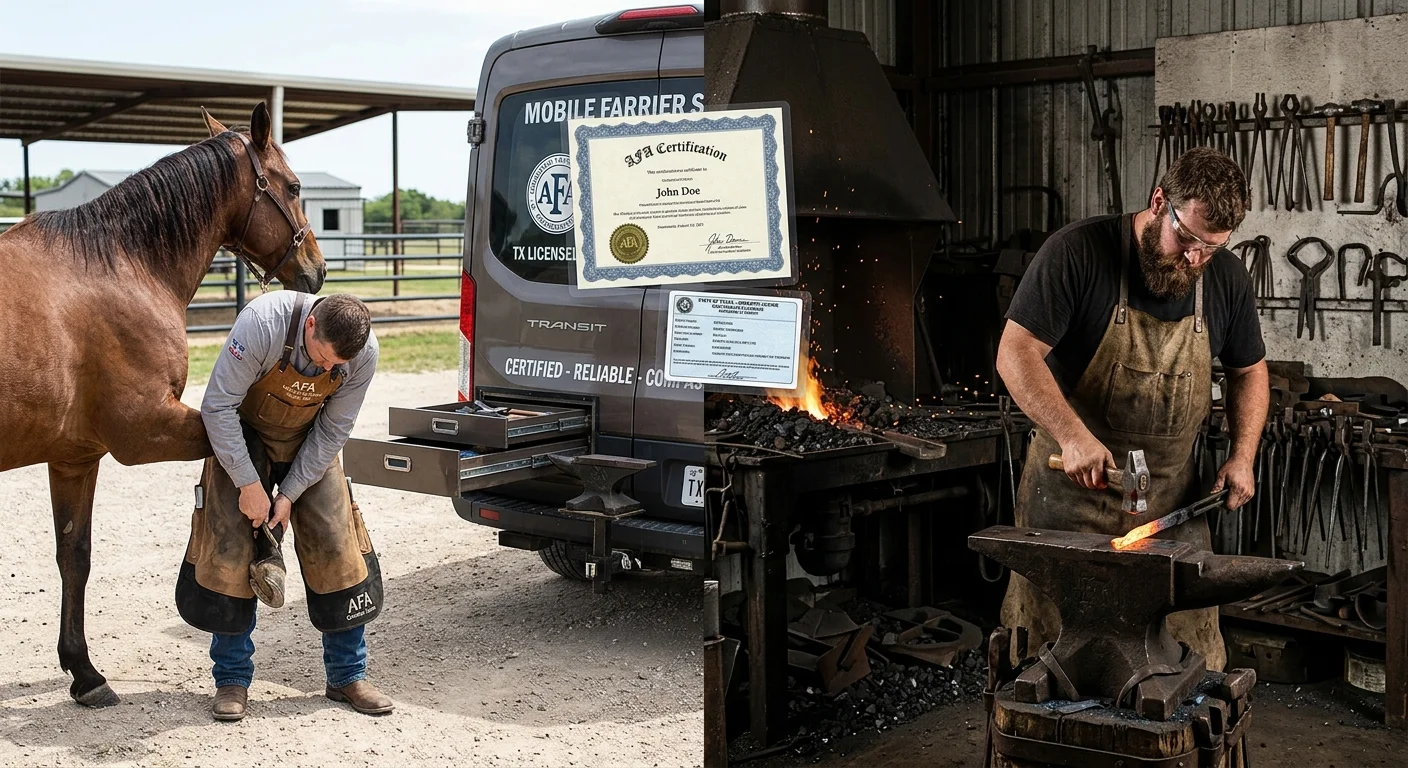
A blacksmith works from a fixed forge. A farrier runs a mobile van stocked with everything needed for hoof care. That's not a small detail — it reflects two separate professional worlds.
On top of that, a blacksmith has no training in equine hoof anatomy, disease spotting, or movement balance. Bad trimming doesn't just leave your horse sore. It leads to lameness. It speeds up disease. Yes, the metalworking skills touch at the edges — but hoof care knowledge doesn't cross over.
So, someone calls themselves a blacksmith and offers to shoe your horse? Walk away. Call a registered farrier.
What Is an Equine Podiatrist — The Barefoot Specialist Explained

Two-thirds of the Swedish show jumping team competed barefoot at the Tokyo Olympics. Not one shoe between them. Their horses placed among the upper-level field — and across 60 observed animals, lameness was minimal.
That result didn't happen by accident. Someone understood equine podiatry, and it showed.
An equine podiatrist focuses on barefoot hoof care and physiological trimming. This is the science of returning the hoof to its natural, functional state — no metal shoes involved. The field draws from both farriery technique and veterinary biomechanics.
Unlike traditional approaches, this philosophy aligns closely with broader trends in the industry — where performance, comfort, and natural movement also shape innovations in custom equestrian apparel and functional riding gear.
Here's the firm boundary: an equine podiatrist cannot apply horseshoes. That's not a personal preference — it's a regulatory line. Their entire practice stays on the barefoot side of it.
What Barefoot Does to a Hoof
The case for physiological trimming is built on mechanics, not ideology. A shoe locks the hoof into a fixed shape. It blocks the natural expansion and contraction that happens with every stride. Barefoot movement lets each heel move on its own. Sensor data confirms measurable up-and-down motion in circles — shod hooves cannot replicate this.
Over time, that freedom produces real structural change. Research tracking 60 horses through a barefoot transition recorded consistent improvements:
Twenty documented cases of underrun heels showed major palmar section gains after going barefoot. Other research ties barefoot management to better joint motion, improved circulation, and increased sole development. The evidence also points to horses being structurally sounder as they enter their second year of training on barefoot care.
The Transition Window and What to Expect
Switching a shod horse to barefoot care takes time — it's not instant. The standard transition runs 30 to 60 days, depending on the horse's starting hoof quality. In the first one to two weeks, light riding on firm footing helps condition the sole. Keep turnout to a smaller area for two to three weeks while the hoof adjusts.
To check credentials in the UK, look up the Equine Podiatry Association, founded in 2006. It's the main registration body for verified practitioners.
Farrier vs Equine Podiatrist: The Core Differences in Hoof Care Approach
Both professionals work from the ground up — but they come from very different ideas about what a healthy hoof should look like.
A farrier treats the horseshoe as a tool. Sometimes a horse needs protection. Sometimes it needs correction. Sometimes the terrain demands support that bare hoof wall can't provide on its own. The farrier adapts — shoeing when it serves the horse, trimming when it doesn't. The whole approach is built around function across different conditions.
An equine podiatrist starts from a different base: the hoof, given the right trim and environment, can handle most of this work on its own. Their practice centers on physiological trimming — working with the hoof's natural movement patterns rather than adding metal to support them. No shoes. No changes to the natural expansion pattern. Just focused, anatomy-based trimming aimed at restoring what the hoof does best when left to work on its own.
Same horse. Same four hooves. Two very different care frameworks.
Where Their Work Overlaps — And Where It Doesn't
The overlap is real. Both professionals examine hoof balance. Both understand hoof wall structure, sole depth, and frog health. Both can spot trouble before it turns into a lameness issue. In that sense, they cover the same ground.
The differences show up fast once you get into specifics:
That last row carries more weight than it looks. Farriery has formal state-recognized qualifications backed by regulated training programs. Equine podiatry — in many countries, including France — has no standard regulation. Private training programs vary a lot in depth and quality. That doesn't rule out the field. It does mean you need to screen an equine podiatrist more closely before hiring one.
These Aren't Rival Professions
Farriers and equine podiatrists aren't competing for the same job. Think of them as different tools for different situations.
Some horses spend their whole working lives shod. Others do well barefoot for years before a shift in workload or surface calls for a different approach. Many horses move between the two — shod during heavy competition seasons, barefoot during lighter periods or rehab. The right professional fits the horse's current situation.
One thing stays constant: neither profession replaces veterinary diagnosis. A horse with persistent lameness or unexplained pain needs a vet first. No trim and no shoe fixes the root problem until a vet has assessed the whole animal. The hoof is one area of equine medicine where two professionals are both needed — the vet diagnoses the horse, the farrier maintains the hoof. Good care flows only when each one knows where the other's role ends.
The practical takeaway for horse owners:
No professional is the right answer for every horse. The real question is: what does this horse need right now, on the ground it lives on, doing the work it does? Answer that straight, and the right choice tends to follow.
Farrier vs Blacksmith: Why the Confusion Exists (And How to Tell Them Apart)
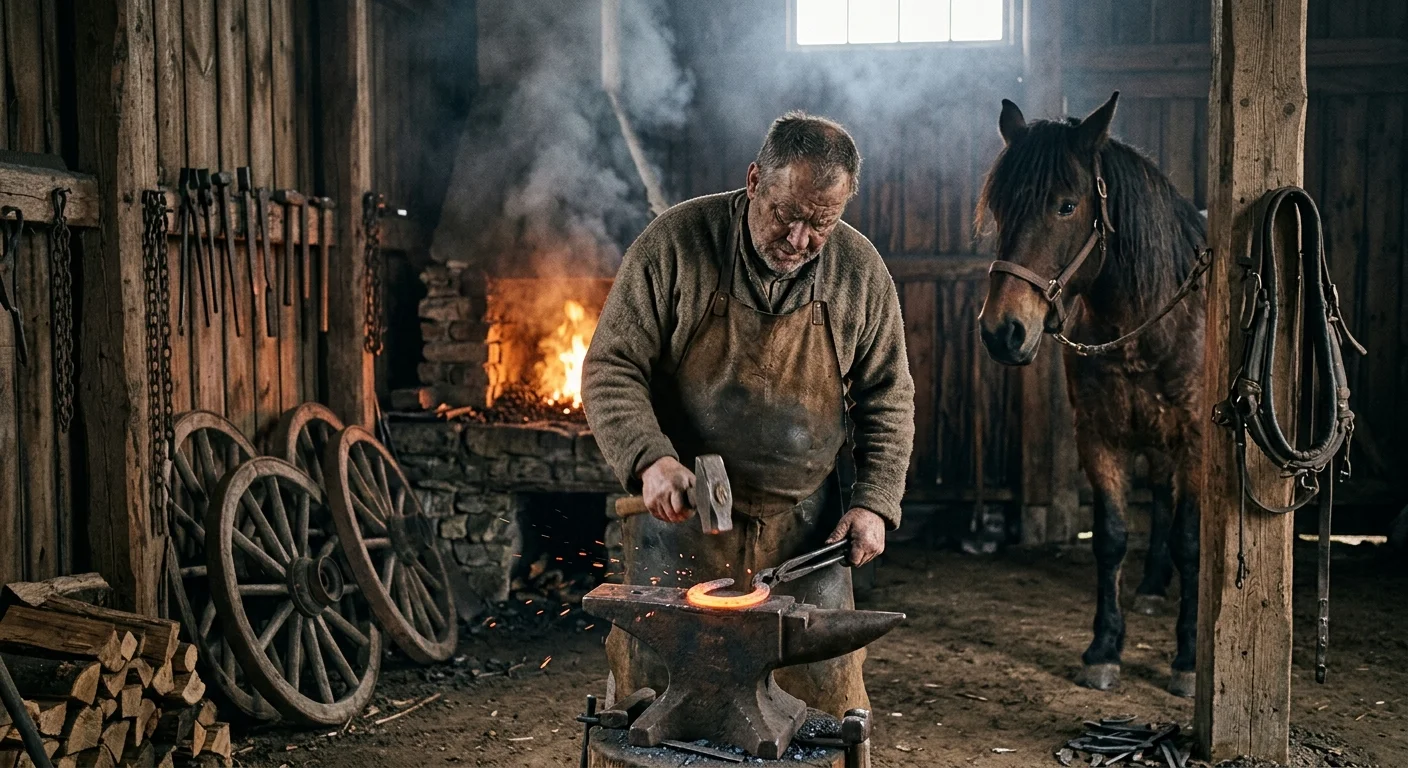
"Smith" is one of the most common surnames in English. That fact alone says a lot about how central the blacksmith trade once was to daily life. For centuries, the man who shod your horse was often the same man who repaired your plow, fitted your wagon wheels, and forged your gate hinges. He was a jack of all trades with a hot fire and a heavy hammer. The farrier and the blacksmith weren't separate professions. They were the same guy.
That changed in 1975.
The UK's Farriers Registration Act drew a legal line where none had existed before. Shoeing a horse without proper registration became a criminal offense — not a matter of professional courtesy, but actual law. Overnight, the two trades split apart. Modern blacksmiths work with general metal: steel, iron, railway components, decorative work, farm hardware. They heat, hammer, bend, and cut. What they don't do is touch your horse's feet — not by law, not by trade.
The Tools Look Similar. The Knowledge Doesn't.
This is where people still get confused. Farriers use blacksmithing tools. A farrier forging iron shoes at the anvil is doing blacksmith work at that moment. But that crossover only goes one way. A blacksmith picking up those same tools has no background in equine hoof anatomy, balance assessment, or disease recognition. The tools overlap. The expertise does not.
A farrier's whole skillset centers on one specific structure: the hoof. Trim angle, wall balance, frog health, sole depth — every choice ties back to how that horse moves and carries its weight. A blacksmith who builds beautiful gates and solid railings has none of that training. Zero.
The numbers make this clear. The average full-time farrier brings 20 years of experience to every visit, works 40-hour weeks, and earned a gross income of $89,699 in 2017. That's a career built on equine hoof work alone — not general metalworking with horses on the side.
How to Tell Them Apart in Practice
Four quick checks:
The racetrack "Blacksmith Shop" sign is still out there. Now you know it's a farrier inside.
Looking for Premium Equestrian Clothing?
We supply riding breeches, show jackets, and base layers to equestrian brands worldwide. Since 2009, trusted by 200+ brands.
Browse Our ProductsWhich Professional Does Your Horse Need? A Practical Decision Guide
Most horse owners don't get this wrong out of ignorance. They get it wrong because nobody ever laid it out clearly.
Here's the plain version.
Your horse wears shoes? A farrier is your primary contact. Standard shoeing runs every four to six weeks. That's the baseline. Don't complicate it.
Your horse is barefoot — or you're moving toward barefoot — an equine podiatrist handles the work. Their focus is natural trim and wall support. The shift takes time — six to twelve months is normal. Sole growth averages one to two millimeters per month. Patience is part of the process.
Orthopedic issues or lameness? You need a farrier and a vet working together. Not one or the other. Both.
Bring in the Vet — No Exceptions
Two conditions make veterinary involvement non-negotiable.
Laminitis moves fast. Acute cases need X-rays and heart bar shoes within 24 to 48 hours. A farrier or podiatrist alone cannot manage this. The vet comes first.
Navicular disease needs diagnostics first — MRI, nerve blocks — before any shoeing decision gets made. After that, a farrier handles the mechanical side: rolled toes, wedge pads, adjusted breakover. Around 30% of equine vets manage chronic navicular cases as a regular part of their practice.
Frequently Asked Questions
Do farriers and blacksmiths have the same training?
No. A farrier's training focuses on equine hoof anatomy, balance, and spotting disease. That's it. A blacksmith works with metal — forging, shaping, and cutting iron for tools, gates, and structural parts. The tools may look alike. The knowledge does not.
Can an equine podiatrist shoe my horse?
No. Equine podiatrists only do barefoot trimming. Putting on horseshoes is outside their scope — that's a regulation, not a personal choice. Your horse needs shoes? Call a farrier.
My horse has a cracked hoof wall. Who do I call?
Start with a farrier. Hoof wall cracks can point to structural imbalance or the start of disease. A farrier checks how serious it is and decides whether a vet should be brought in. Don't put this off.
How often does my horse need a farrier visit?
Every four to eight weeks, depending on workload, hoof growth rate, and terrain. Seven visits per year is the average for most horses.
Is barefoot always better?
Not always. Terrain, workload, and your horse's hoof quality all play a role. Some horses do well barefoot for years. Others need shoes to work and move without risk. The horse's condition drives that call — not what's trending.
Watch: Farrier at Work
Conclusion
Your horse doesn't care about job titles — but you should.
The professional pulling up to your barn might call himself a farrier, a blacksmith, or an equine podiatrist. Each title means something different. A farrier shoes horses. A blacksmith shapes metal. An equine podiatrist treats hooves as a whole-body health issue. Knowing that difference could mean the difference between a sound horse and a lame one.
Even beyond hoof care, making informed choices — whether selecting the right specialist or sourcing reliable gear from trusted equestrian suppliers — is part of responsible horse ownership.
Use the right expert at the right time. A certified farrier handles routine horse shoe fitting. An equine podiatrist steps in when something deeper is going on. Just like riders carefully choose custom equestrian clothing for performance and comfort, your horse’s care should be just as intentional.
That's not just smart horsemanship — it's the baseline standard your horse deserves.