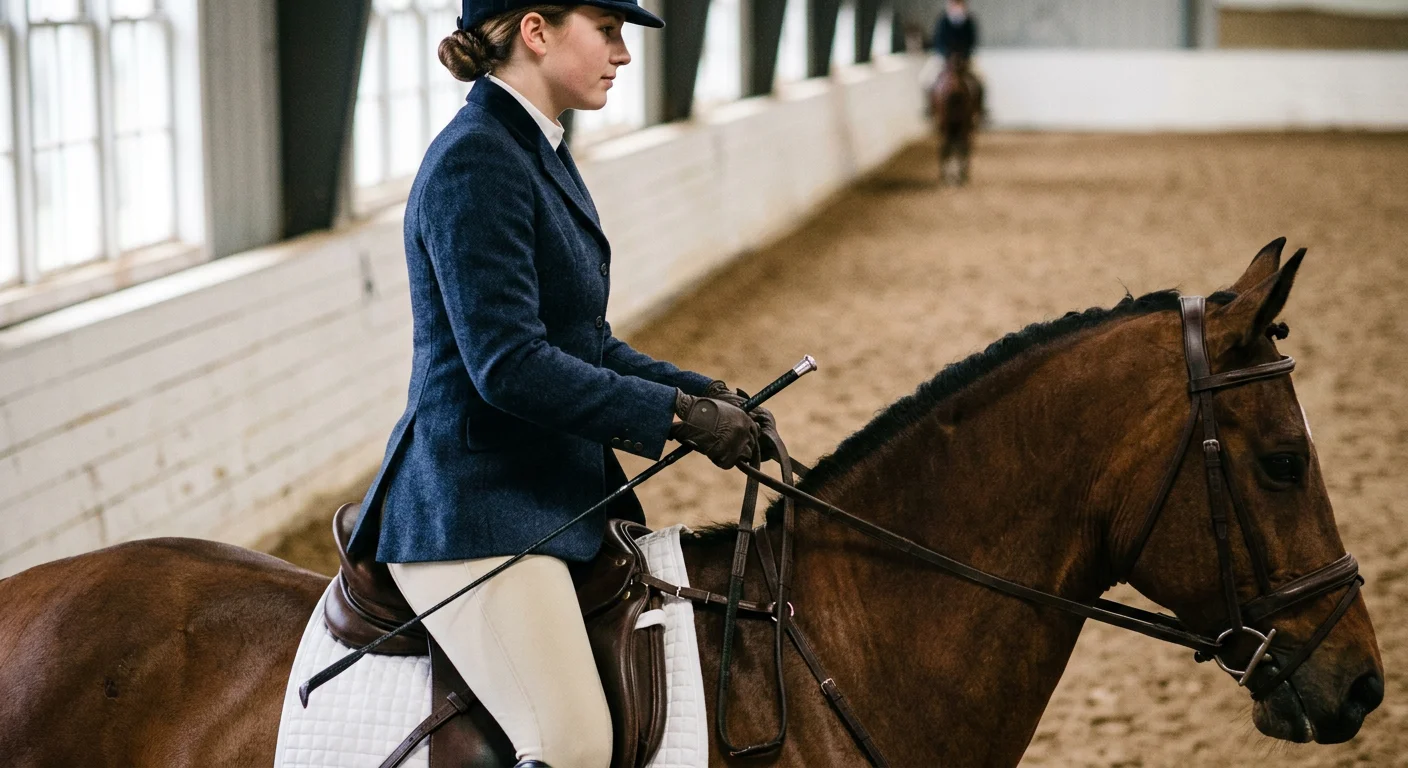
Most riders underestimate flatwork. Then one day, their horse ignores their leg, falls apart on a circle, or rushes every transition like the arena is on fire.
Here's the truth: everything you want your horse to do well starts on the flat. Long before a jump pole enters the picture.
These 8 top flatwork exercises for horses cover what beginners need to build a real foundation. Not just going round and round hoping something improves — but riding with clear intention: better rhythm, truer balance, and a horse that listens. Even riders working with professional equestrian suppliers know that good training matters just as much as the right gear.
Your horse might be stiff, unbalanced, or a little green. Either way, this guide gives you a practical starting point. Each ride starts to feel less like a struggle and more like a conversation — something both riders and equestrian apparel manufacturers aim to support through better equipment and design.
What Is Flatwork in Horse Training (And Why Beginners Should Start Here)
Flatwork is training on a flat surface — no jumps, no poles, no obstacles. Just you, your horse, and the arena floor.
But simple doesn't mean easy. That flat surface holds everything: balance, rhythm, suppleness, and responsiveness. These four qualities are the foundation of every good horse. It doesn't matter if they're built for jumping, eventing, or a relaxed Sunday hack — all four matter.
Here's what flatwork is not — it isn't dressage competition patterns. It's the unglamorous, essential groundwork. It comes long before any test or course is ever part of the plan.
For beginners, this is where real communication starts. Your horse learns to respond to light, quiet aids — not heavy, demanding ones. You learn precision. Both of those things take time, and flatwork is where you build them.
Keep sessions to 30–40 minutes. That's long enough to make real progress. Short enough that neither of you loses focus or gets frustrated. Riders often find that having comfortable, well-designed gear from equestrian clothing manufacturers or opting for custom equestrian apparel can also improve their effectiveness in the saddle.
The 4 Core Things Flatwork Actually Trains in Your Horse
Every well-trained horse is built on four qualities: balance, rhythm, suppleness, and responsiveness. Flatwork builds all four. The key part? You can't train them separately. They stack on each other like a pyramid.
Rhythm forms the base. Without it, suppleness can't develop. Without suppleness, true balance stays out of reach. Without balance, responsiveness turns forced instead of willing.
Check your horse for these signals: heavy on the forehand, rushing or dragging between gaits, resisting lateral movement, or slow to respond within 2–3 strides. Each one points back to one of these four areas.
Exercise 1: Square in Walk/Trot — The Foundation of Straight Lines
Straight lines don't come easy to horses. Left to their own instincts, they drift, fall out through the shoulder, and slide away from the effort of true straightness. The square exercise is how you fix that.
The idea is straightforward: ride a square shape around the arena. Make clean 90° turns at each corner instead of soft, drifting curves.
How to ride it:
Walk first. Ride straight along each side. Before each corner, collect with intention — legs active, seat still — then bring the shoulders around in a firm, controlled turn. Straighten right after.
Check your body. Your position must be straight before each turn. Any drift in your seat goes straight to your horse.
Common mistake: pulling the inside rein. This bends the neck but loses the shoulder. Use your outside leg and rein to guide the shoulders through.
Once the walk is confirmed — relaxed, no drifting — bring in trot-walk-trot transitions at the corners.
Square size guide:
| Level | Recommended Size |
|---|---|
| Beginner | Larger (poles optional) |
| General | ~30 ft walk / 50 ft trot |
| Advanced | ~15 m per side, tight turns |
After each set of 1.5–2 squares, take a walk break. Too many repetitions dulls the horse. It stops sharpening and starts numbing. Plan for about one month of steady practice before real mastery shows up.
Exercise 2: Half Diamond — Building Steering Precision and Inside Hind Engagement
The half diamond looks almost too simple on paper. Get on your horse and ride it — every gap in your steering shows up fast.
Here's the shape: start at E (the midpoint of the long side), ride a diagonal line to G (the center of the arena), then out to B on the opposite side. That gives you two clean angled lines meeting at a point. No curves. No fudging. Precise, intentional steering from start to finish.
How to ride it:
Set up at E in walk. Look ahead to G — not down, not sideways. Your eyes lead your horse.
Ride the angle with purpose. Both legs stay active. Your inside leg pushes the hindquarters through the turn, not around it.
At G, change direction. Outside rein steadies the shoulder. Inside leg drives the hindquarters to engage.
Finish straight to B. Any drifting here means the inside hind dropped out before the line ended.
What this trains:
| Quality | Why it matters |
|---|---|
| Steering precision | Forces sharp directional changes without relying on strong rein contact |
| Inside hind engagement | Each diagonal line asks the hindquarters to step under and carry |
| Outside rein connection | Riders learn to contain the shoulder, not just pull the nose |
The most common mistake is over-bending the neck toward the new direction. The neck follows — it doesn't lead. Keep your outside rein steady. Let the whole body bend through, not just the head.
Get the walk confirmed and clean first, then move into trot. Same lines, same precision — just sharper.
Exercise 3: Turn-on-the-Forehand — Teaching Your Horse to Listen to Your Leg
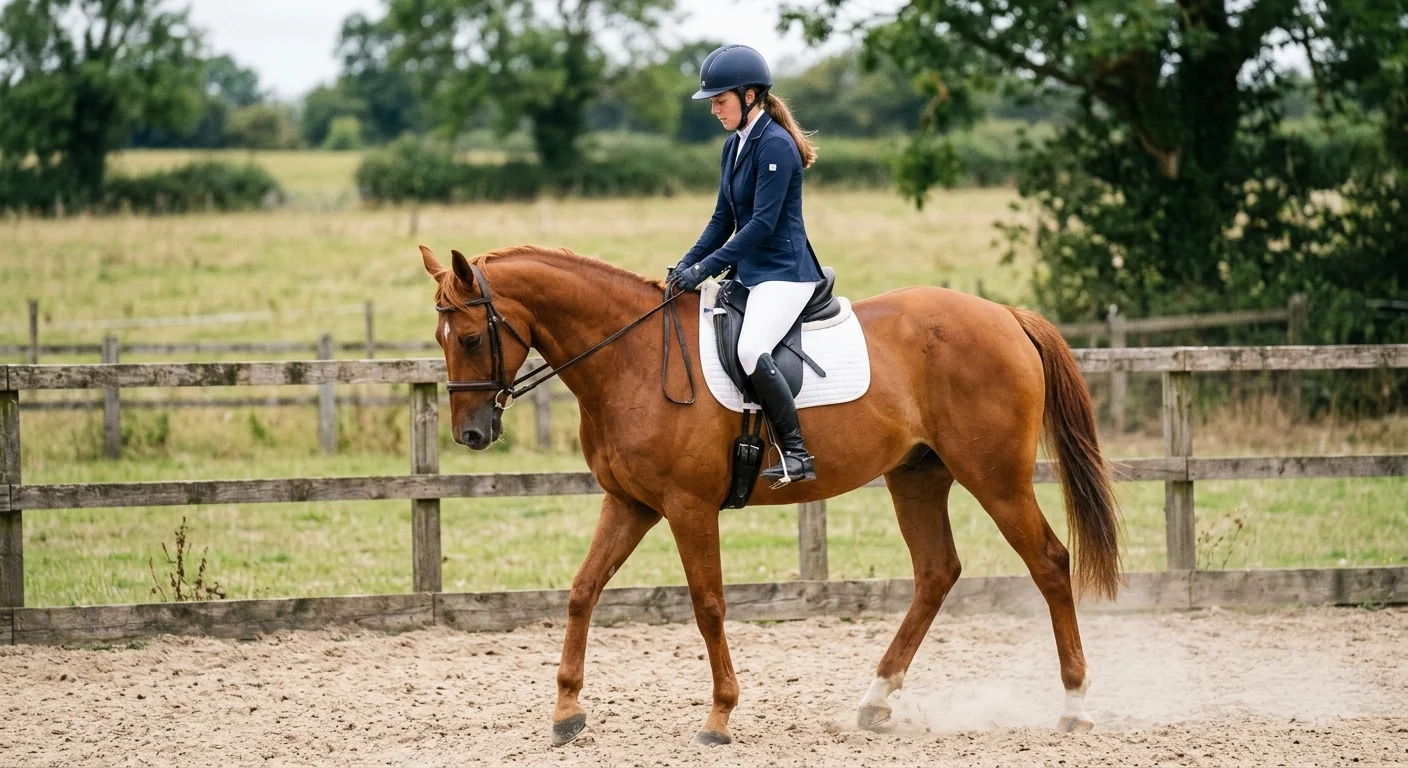
Leg aids mean nothing if your horse doesn't respect them. The turn-on-the-forehand is where that changes.
The movement is simple. The hindquarters swing around a still front end. Your inside leg asks the haunches to step away. That's it. This simple move builds the base for every lateral exercise that follows — leg-yield, shoulder-in, haunches-in. All of it starts here.
How to ride it (right turn):
Establish a forward, energetic walk with soft, light rein contact
Look ahead to a marker about 6 metres away — not down at your horse
Shorten the steps a little, keeping a thread of forward energy
Press your inside leg behind the girth with a steady rhythm. Time each press as the inside hind lifts
Let the front feet stay in place while the hindquarters swing through
Use outside rein half-halts to keep the shoulder honest
Ask for one or two steps only, then halt, relax for 3–5 seconds, and walk forward
Keep it small. One step per ask. This matters with green horses in particular. Rush it and you get spinning or drifting — neither is the goal.
What this builds: your horse learns that leg means yield, not just go. That distinction is everything in lateral work.
Exercise 4: Serpentines with Transitions — The Hot Horse's Best Friend
A horse that rushes, braces, and ignores your half-halts isn't being difficult. It's being unbalanced. Serpentines with transitions are what that horse needs most.
The shape itself does part of the work. Weaving through the arena asks your horse to bend, straighten, and bend again. This breaks the forward momentum that hot or unbalanced horses rely on. Add a transition into that pattern, and your horse has to listen.
Two versions to know:
3-loop serpentine — Broad, generous loops. Start on the rail after a relaxed long-rein warm-up trot. The wide curves make this version manageable at both trot and canter.
4-loop serpentine — Narrower loops, and clearly harder. Begin from the middle of the short end to avoid running into the fence.
Where transitions come in:
Walk one loop, trot the next. Alternate between jog and lope through the bends. Make the gait change happen at the straight — right in the middle, where your horse has to think and rebalance.
For young or green horses, keep it fence-to-fence. Simple. Clear. Repeatable.
Before you start: your circles need to be accurate — consistent shape, size, and placement. That's the foundation this exercise builds from.
Exercise 5: Spiraling Circles — Developing Rhythm and Relaxation at Trot/Canter
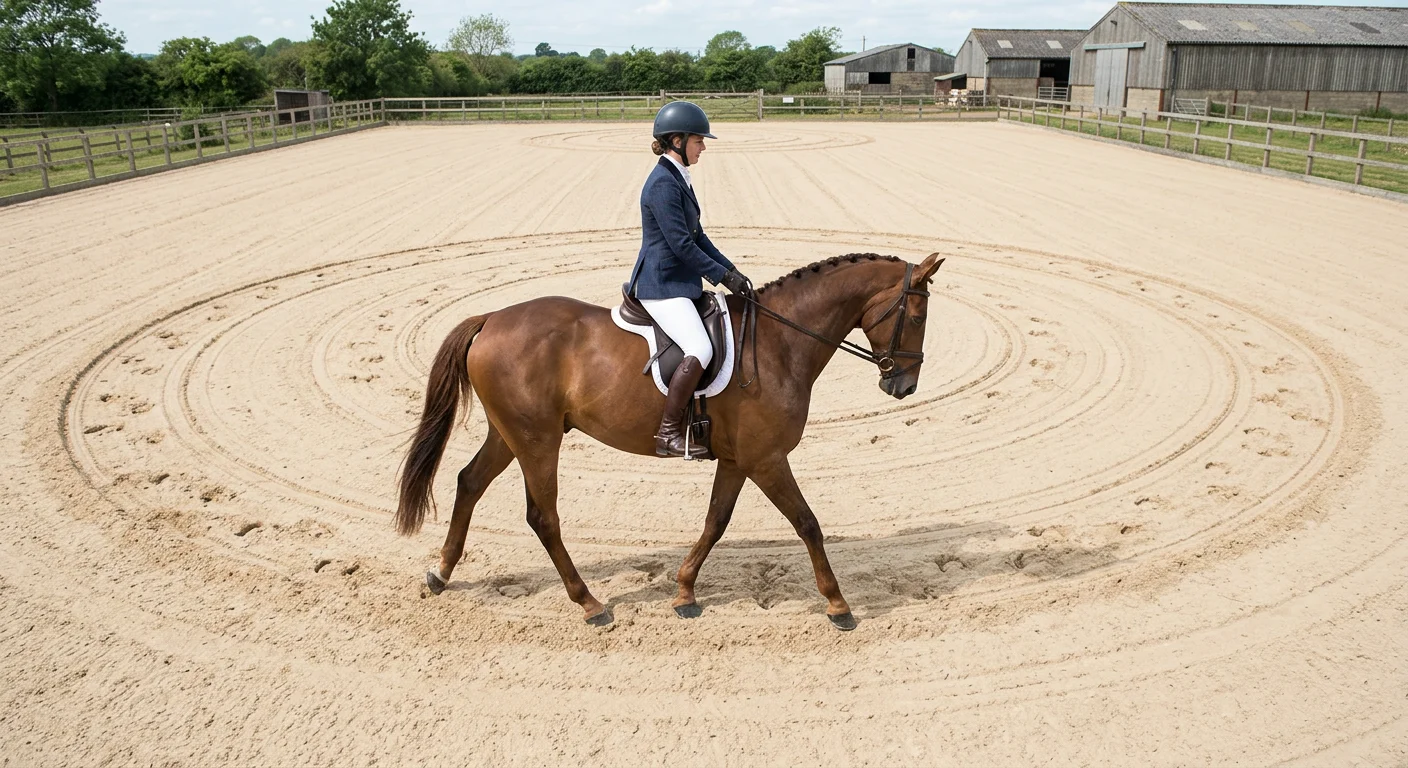
Rhythm either holds or it doesn't. Spiraling circles tell you which one you're dealing with.
Start on a 20m circle at trot. Count your strides out loud if you need to — it helps more than you'd think. Get the rhythm settled and steady. Then start spiraling inward. Move in about 1–3 feet tighter per lap with a green horse. Use your outside rein and leg to guide the turn. Use your inside leg to hold the bend and keep energy moving forward.
Reach 10m over three to four circles. Hold a full circle at each size before going smaller. Then leg-yield back out to 20m in the same direction.
Watch for these rhythm signals:
The smaller the circle, the more your inside leg does the work. Don't wait for the rhythm to fall apart before you act. Start expanding the moment you feel the shoulder drop or the stride shorten on one side.
Walk and trot feel solid? Bring in canter. As your horse develops, add variations: transitions between 20m and 10m, shoulder-in on the circle, or a long-rein stretch spiraling outward.
Exercise 6: Trot-Walk-Trot Transitions — The Green Horse Balance Builder
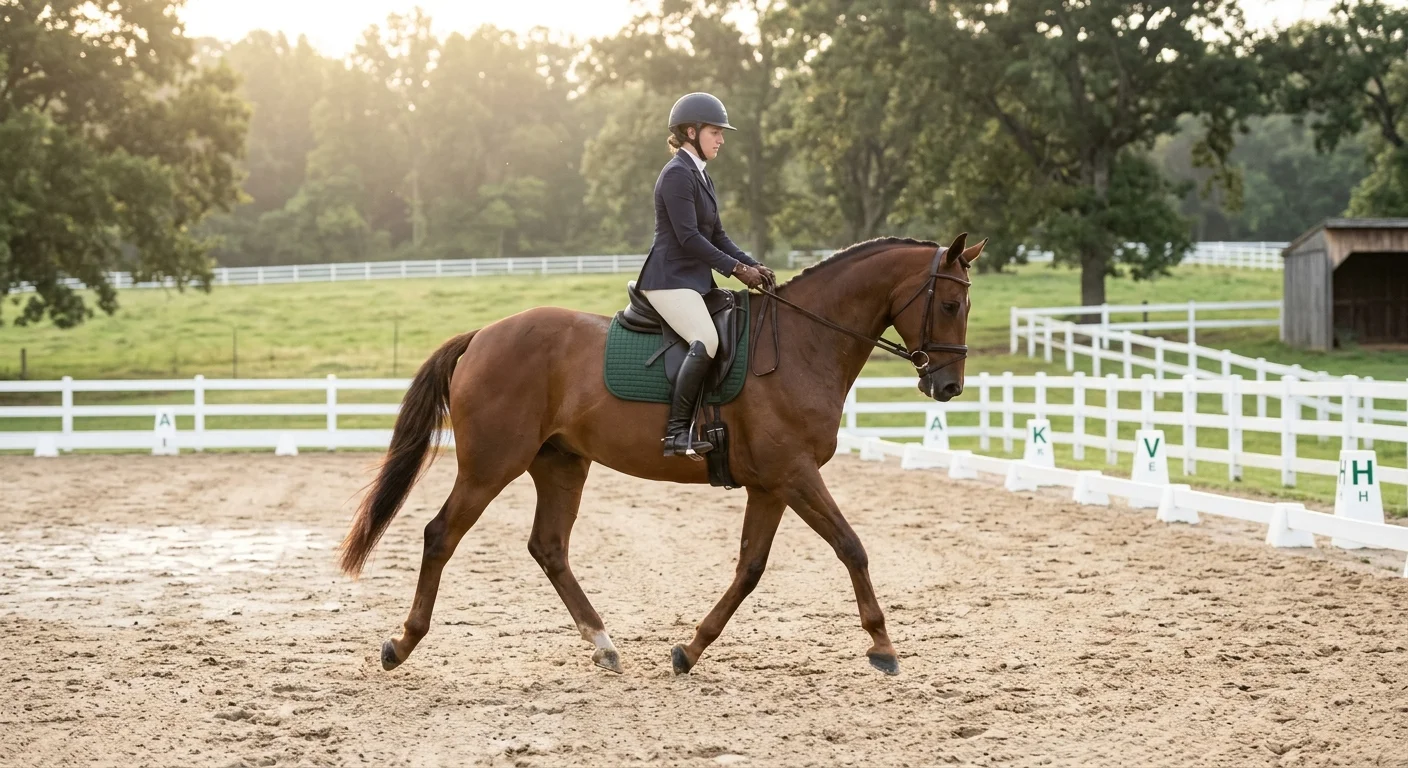
Balance doesn't arrive all at once. It builds — one quiet transition at a time.
Trot-walk-trot transitions look plain. No dramatic movements, no complex patterns. The work is simple: a steady shift of weight toward the hindquarters. That shift teaches a green horse to carry itself instead of dumping weight onto the forehand. It's not flashy, but it's everything.
How to ride it:
Approach the wall at V in trot. Sit still, soften your leg, and ease the rein the moment the walk arrives
Hold the walk for 3–4 clear steps — enough for the hindquarters to fully engage
Return to trot with a slight increase in leg pressure at the girth. Think "invite forward," not "push"
Repeat 4–6 times at V per session, then move onto circles or cavalletti spaced 4 ft 3 in apart
What a good transition feels like:
Set it up with half-halts. Several, not one. Shorten the stride step by step. Count in your head — 3… 2… 1… walk — then go still. The transition should feel prepared, not sudden.
Quality over quantity. Ten crisp transitions beat forty drifting ones. Always.
Exercise 7: Shrinking and Expanding Circles — Correcting Bend and Straightness
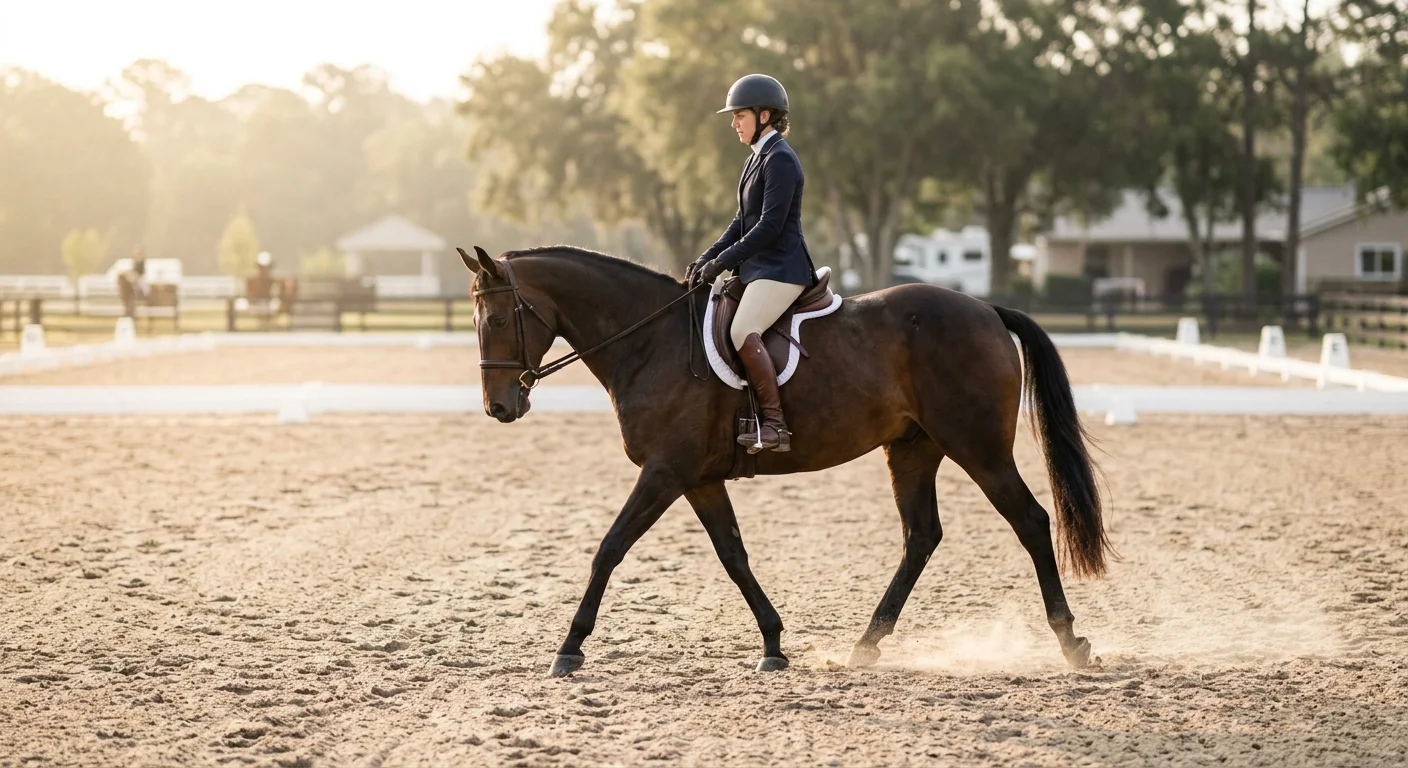
Bend problems almost always hide in plain sight. Your horse looks round, feels round — and yet something is off. One rein takes more contact than the other. The circle drifts left. The shoulder keeps escaping right. Shrinking and expanding circles expose exactly that.
Start on a 20m circle at walk or trot. Establish a steady, even rhythm first — nothing fancy, just consistent. Then shrink the circle down toward 10m, moving inward over several laps. Keep your inside leg active at the girth, asking the horse to bend around it. Your outside rein contains the shoulder. Without it, the neck bends but the body doesn't follow.
What to watch for as you shrink:
Once you reach 10m, hold for one clean circle. Then leg-yield back out to 20m — same rhythm, same softness, no rushing.
The expanding phase matters just as much. A horse that bulges out as the circle grows is losing straightness, not gaining it. Ask for the outward movement with your inside leg. Don't drop the outside rein to get it.
This exercise trains your horse to bend through the whole body — not just perform the shape of a circle.
Exercise 8: Pole Work in Line (3–5 Poles)
Three poles on the ground. That's all it takes to show exactly what your horse's rhythm is — or isn't — doing.
Pole work sits at the top of the flatwork ladder. It bridges flat training and jumping. Most beginners don't realise how much power that gives you. Riders who run regular 3–5 pole sessions report significant improvements:
The poles don't create new problems — they expose the ones already there.
How to set it up:
How to ride it:
Trot in. Ride a 10–20m circle before the line to set your rhythm
Canter through with even, steady strides — no rushing
Repeat 4–6 times, then add a fourth or fifth pole
Move to raised poles (6–12 inches) once the rhythm stays solid
A 10m circle before entry shortens the stride and collects your horse. A 20m circle opens it up. Use both on purpose — that choice alone shifts entry rhythm by up to 25%.
Keep sessions to 20–30 relaxed passes. The rhythm you build here feeds straight into every jump that follows.
How to Structure a 30–40 Minute Flatwork Session (Ready-to-Use Template)
Thirty minutes, used well, changes everything.
Sessions beyond 45 minutes push both you and your horse into exhaustion. The sweet spot is 30–40 minutes, split into three clear phases. Warm-up, main work, cool-down. Simple enough to repeat every ride without overthinking it.
The template:
| Phase | Duration | What to do |
|---|---|---|
| Warm-up | 5–10 min | Walk-trot transitions on straight lines and circles; soft contact, easy rhythm |
| Main work | 15–20 min | 2–3 targeted exercises with short breaks between |
| Cool-down | 5 min | Loose rein walk; let the neck stretch and the breathing settle |
Consistency in your routine matters just as much as consistency in your gear—something both riders and equestrian suppliers understand when supporting long-term training progress.
Three ready-to-use combinations:
Balance focus (30 min): Start with trot-walk-trot half-halts (4→3→2→1 walk paces) for 10 minutes. Move to transitions on a 20m circle (halt 4 seconds → trot → walk → canter) for another 10 minutes. Finish with your cool-down.
Engagement focus (35 min): Ride 15m circles with serpentines first. Then work direct trot-halt-trot transitions. Follow with half-halts in canter. Build in a 5-minute break between each block.
Variety session (40 min): Work through half-halts, circle halts, and serpentines with leg-yield. Take a rest in the middle. End with a proper walk-out.
Pick two exercises per session. Ride them with intention. Just like working with reliable equestrian clothing manufacturers, steady repetition and quality matter far more than chasing one perfect outcome.
5 Beginner Mistakes That Cancel Out Your Flatwork Progress
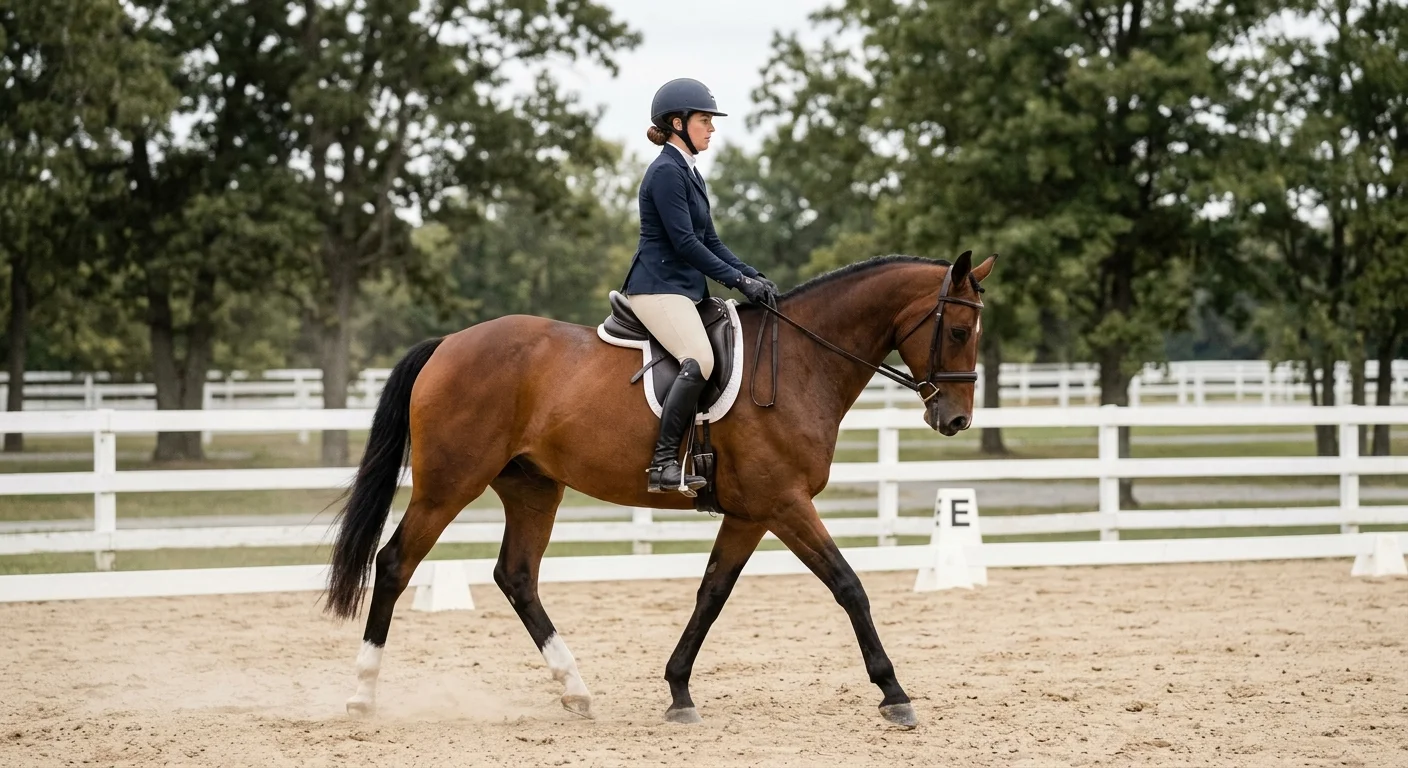
Good flatwork breaks down long before riders notice. Not in big, obvious moments — but in small, repeated habits that build up over weeks until the training stops working.
These five mistakes show up in almost every beginner's ride. Spot them early and you're already halfway to fixing them.
1. Pulling instead of riding forward
The hands take over when things feel uncertain. But contact without forward energy creates a dead, heavy horse — not a soft one. Forward comes before contact. Full stop.
2. Skipping the warm-up
Fifteen minutes of purposeful walk work is not wasted time. A cold, tight horse can't bend, can't balance, and won't respond well. Cut the warm-up and you don't save time — you spend it later fighting stiffness.
3. Repeating the same exercise until it stops working
Too many repetitions dull the horse. What sharpens in the first three circuits goes flat by the tenth. Change the exercise before you lose the quality. Don't wait until after.
4. Looking down
Eyes drop, weight shifts forward, horse tips onto the forehand. It's a chain reaction. It starts with one glance at the ground. Pick a fixed point ahead and ride straight toward it.
5. Riding the shape, not the horse
A circle only works if the horse bends through it. Patterns mean nothing without quality.
Many riders refine their performance not only through training, but also through properly fitted gear—often sourced from custom equestrian apparel apparel providers who understand movement and comfort.
Video Guide
Conclusion
Flatwork isn’t glamorous. No jumps, no ribbons—just the quiet, honest work of building something real. But every experienced rider knows: the magic starts here.
Balance is earned. Trust is built one transition at a time.
Start small. Pick two exercises. Ride them well. Use the 30-minute template. Stay curious about your mistakes.
Whether you're improving your riding or sourcing from a trusted equestrian clothing manufacturer, progress always comes down to consistency, attention to detail, and patience.
The horse always tells you the truth—your job is to learn how to hear it.