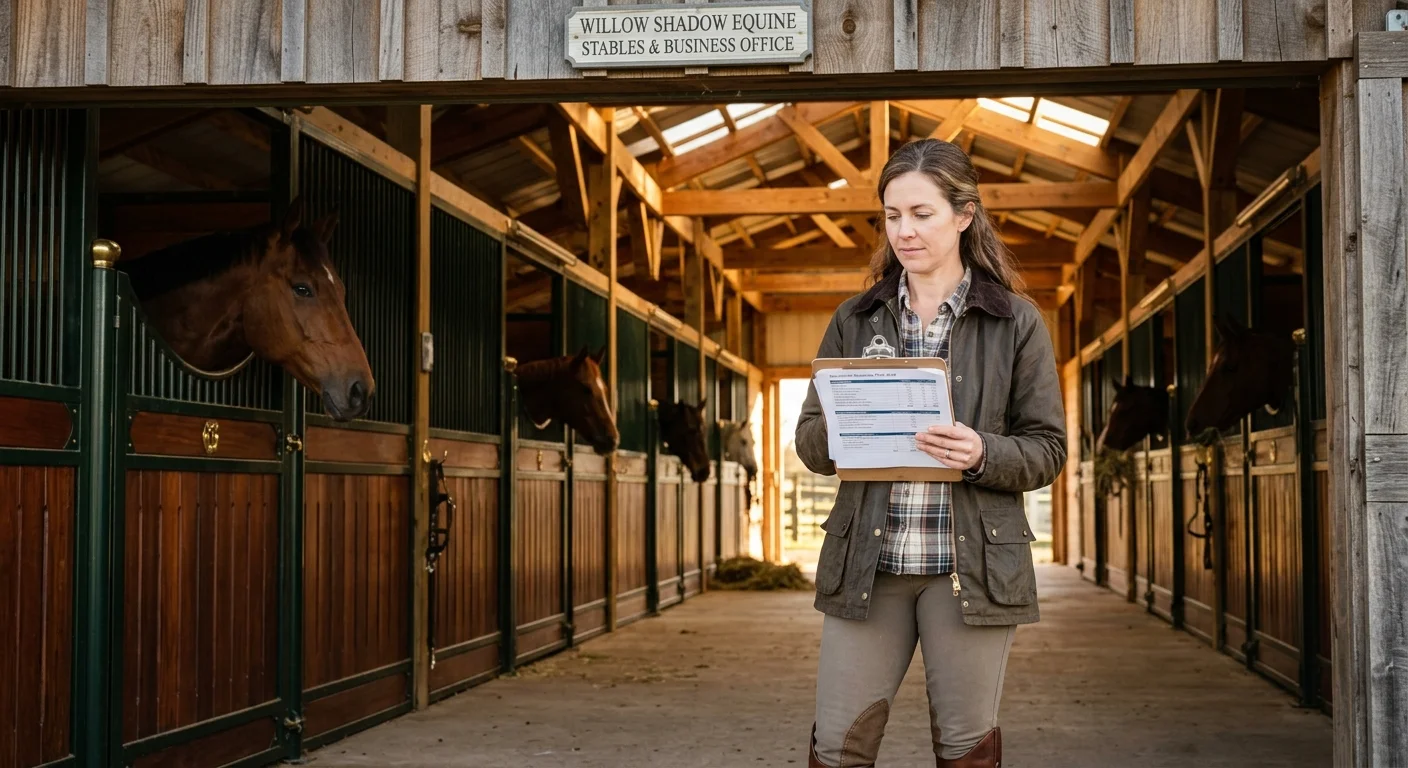
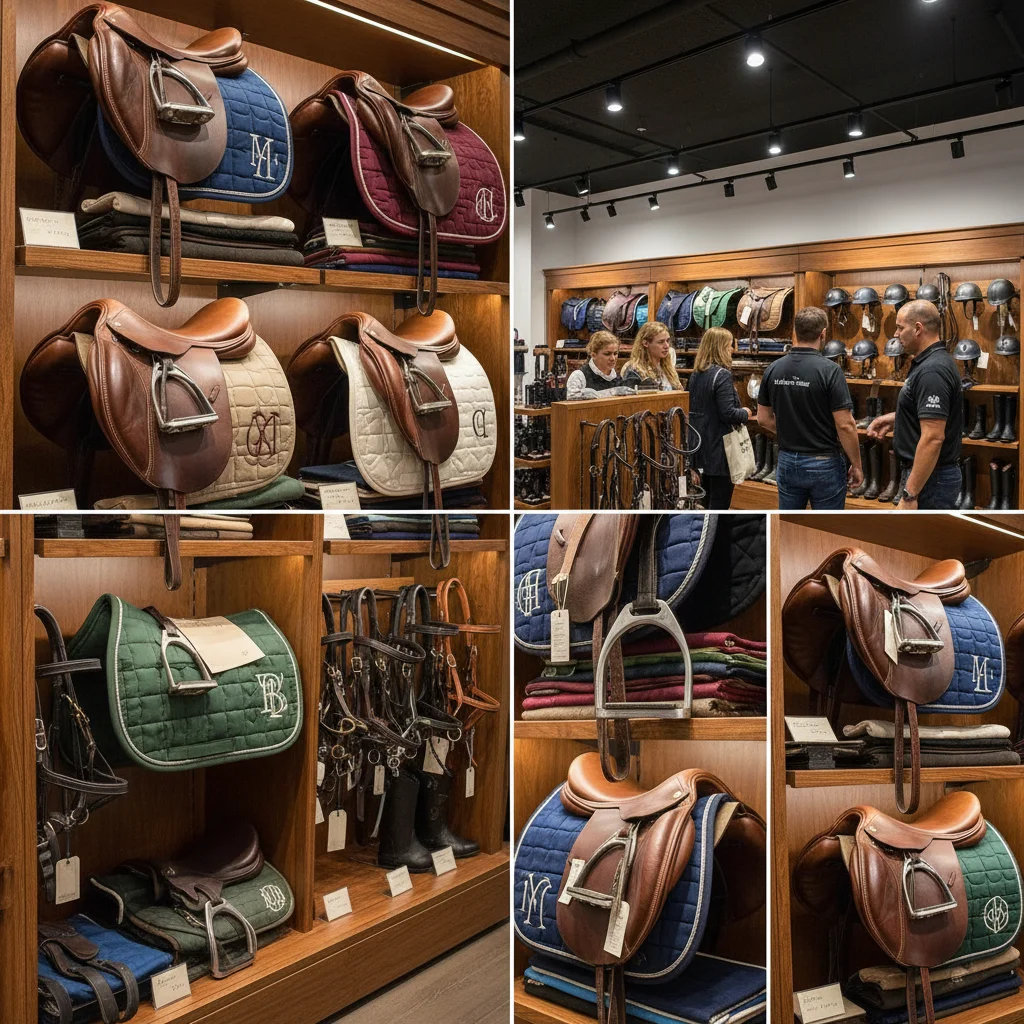
Every year, horses like Justify and Secretariat become racing legends. But behind the glory, there's a financial story most people never hear, one that extends beyond the track to the daily grind and the equestrian suppliers who quietly outfit the massive teams required to keep stables running.
The real picture of racehorse ownership costs versus actual earnings is messy, complex, and far more fascinating than the winner's circle photos show. Some owners walk away with life-changing prize money. Others write checks month after month, waiting for their horse to break through. Before you start dreaming about Kentucky Derby purses or syndicate earnings, you need the real numbers. This involves everything from training fees, vet bills, prize money splits, and the rare but very real windfalls, down to managing team expenses by sourcing gear from reliable equestrian clothing manufacturers. That's what we're covering here — no sugarcoating.
How Much Money Do Racehorse Owners Make?

Most racing enthusiasts won't say this out loud. But the truth is simple: the typical racehorse owner loses money — every single year. The median annual earnings for a racehorse owner sit at just under $14,000. That's less than 20% of what it costs to keep that horse running. The average ownership bill per year? $60,000. That gap stays wide open.
This guide breaks down where the money goes — and where it sometimes comes back. We look closely at how prize money gets divided between owners, trainers, and jockeys, real purse figures across different race levels, and cost-versus-earnings comparisons from documented cases. We also explore syndicate ownership, how shared stakes change the math, and the rare scenarios where ownership actually pays off. This financial picture isn't meant to scare you off. It's about going in with clear eyes, understanding the business top to bottom—even down to why top stables work with an experienced equestrian clothing manufacturer to keep apparel costs low.
How Racehorse Owners Get Paid: The Purse Money Breakdown
Here's what the winner's circle photos never show you: that trophy gets handed over, and the owner's cut has already been split three different ways. Purse money doesn't land in the owner's pocket whole. It moves through a distribution chain first. Every stop takes a percentage.
Most tracks pay out across the top finishers in a standard split where first place takes 50% of the total purse, second place receives 25%, third gets 12%, fourth takes 8%, and fifth place claims the remaining 5%. However, the owner's portion isn't even that clean. From the horse's share, 10% goes to the trainer and 10% goes to the jockey — right off the top.
Run the real numbers on a $10,000 race win: the owner's gross share at 50% is $5,000. After subtracting a 5% trainer fee of -$250 and a 5% jockey fee of -$250, the owner's actual check is $4,500. Scale that up to a $20,000 purse, and the owner nets closer to $8,000 gross — or $6,400 after standard deductions. For syndicate members holding a 10% stake, that $4,500 net becomes $450 per person. That's not a typo. Finishing second still matters too. A $10,000 purse pays $2,500 for second — about $2,125 net after splits. It's not glamorous, but those checks stack up across a full season.
What Racehorse Owners Earn on Average: Real Numbers by Race Level
The numbers don't lie. In racehorse ownership, they tell a story that's both humbling and eye-opening. In 2021, the average North American Thoroughbred earned $25,892 across the full racing year. That sounds reasonable — until you stack it against the average annual ownership bill of $45,000–$60,000. That gap doesn't close on its own.
The median earnings figure cuts deeper: just under $14,000. That's about half the average. The reason that gap exists matters. A small group of high-earning horses pulls the average up. This makes the overall picture look better than it is for the typical owner paying bills every month.
Not every race pays the same, and the difference between levels is huge. Claiming races—the backbone of everyday racing—tell a clear story. The $10,000 to $15,000 claiming races have an average purse of $11,633, while $15,000+ claiming races offer an average purse of $16,154. The average profit per claiming horse sits at $4,824, though the range wildly runs from a $26,979 loss to a $100,250 gain. Claiming horses earned purse money in 69% of their starts. That sounds good, but with just 6–7 starts per year on average, the math still leaves most owners deeply in the red.
Take Dyana, a 2021 three-year-old filly who ranked in the 87th percentile of her peers. She outran 87% of horses her age. Her year ended with a total income of $21,568 against total expenses of $45,532. The net result? She was still thousands in the hole. That's not a struggling horse. That's a flat-out good racehorse, and she still couldn't break even. It's a reality check that changes how you see this business. A horse needs to win close to every race at the $20,000 purse level just to get near break-even on a $60,000 annual cost. Very few ever get close.
The Real Cost of Owning a Racehorse: Annual Expenses Breakdown
Pull out a legal pad and a sharp pencil. These numbers deserve your full attention. Owning a racehorse isn't a hobby with a price tag — it's a business with a billing cycle that never stops. Your horse could be racing, injured, or standing in a stall doing nothing useful. Either way, the checks keep going out.
At a primary US track like Belmont or Saratoga, the baseline annual cost lands between $40,000–$75,000. This massive budget is eaten up by training fees at roughly $90 a day, which equals $32,850 a year just to keep the horse in professional hands. Farrier and hoof care run about $200 a month ($2,400/year), while routine veterinary visits add up to $300 a month ($3,600/year) with no emergencies included. Feed, supplements, tack, transport, and outfitting your team through equestrian outfit manufacturers fill out the rest toward that $40,000+ total. In fact, many budget-conscious stables partner directly with an equestrian clothing factory to source wholesale equestrian clothing for their grooms and riders just to keep overhead manageable.
Step down to a secondary track like Finger Lakes, and costs drop to around $30,000/year. Own a champion-caliber Thoroughbred? Budget closer to $45,000 for the basics alone. The costs nobody warns you about cut even deeper. Emergency vet bills can run $106–$461 per incident. Joint therapy costs $1,178 per year for about 60% of owners. Insurance runs 3–8.5% of the horse's value every year, on top of everything else. Here's the part that stings: those bills don't pause during injuries or off-seasons. Training, stabling, and care keep running whether your horse does or not. UK owners face the same reality, with annual costs ranging from £20,000 to £50,000, with training alone eating up £15,000–£35,000 of that total. The expense column simply doesn't wait for the income column to catch up.
Racehorse Ownership Profitability: The Honest Math Most People Don't Talk About

Let's lay it all out on the kitchen table and look at it straight. The numbers in racehorse ownership don't get discussed at dinner parties, but they should. Stack the industry's total ownership costs against the purse money paid out, and the math points in one stubborn direction: most owners are funding this sport, not profiting from it.
The ledger for a typical year reveals an average annual cost per horse of $45,000 to $60,000 compared to average annual earnings of under $14,000 for the median horse. That leaves a brutal gap of $30,000 to $46,000 in the red, every year, like clockwork. That gap doesn't care how much you love your horse. Some savvy operators offset this loss by establishing lifestyle brands, leaning on equestrian manufacturers for OEM/ODM services to sell custom equestrian apparel, but for most, it's a straight loss.
There is a path where ownership starts making financial sense, and it runs straight through the tax code. Under the One Big Beautiful Budget Act (OBBBA) 2025, racehorse owners can claim 100% bonus depreciation on Day 1 of their investment. On a $10,000 stake, an owner in the 37% tax bracket walks away with a $3,700 tax write-off right away — before the horse ever sees a starting gate. When running a real 6-month claiming horse model, your $10,000 day 1 investment is immediately softened by that +$3,700 write-off, leaving $6,300 at risk. After factoring in 6 months of training costs (-$6,000) and modest earnings (+$7,750), your net at risk drops to $4,550. That's not a windfall. But it's a completely different picture than writing blank checks into the void.
Active owners get the strongest benefit, naturally offsetting all income types. The IRS applies a simple test here: show a profit in 2 out of 7 years, and your ownership gets treated as a legitimate business rather than a hobby. That distinction makes a real difference at tax time. The honest truth? For most owners, tax strategy is the real profit center — not the prize money.
Breeding and Stud Fees: The Alternative Income Stream Most Owners Miss

Tucked between morning training sessions and monthly vet invoices, a quiet opportunity waits. Most owners never spot it. When a racehorse's track career ends, the earning potential doesn't have to. Breeding and stud fees open a separate revenue channel, though this path isn't open to everyone.
Commercial breeding value demands elite credentials. That means G1 wins, exceptional pedigree, and proven bloodlines. A horse retiring after a modest claiming career won't draw mare owners willing to pay real money. At the very top, the figures get hard to believe. Stallions like Into Mischief and Gun Runner can demand $250,000 per covering, while Sea The Stars charges €300,000. Tapit once charged $185,000 per cover and served about 125 mares each year. That puts potential revenue above $23 million in a single year.
Those are outlier numbers. Realistic mid-market stud fees look more like $10,000 for horses like Independence Hall, $7,500 for Audible, and $2,500 for Promises Fulfilled. For owners whose horses do qualify, programs like WinStar's Safe Bet Program offer a strong setup, providing a graded stakes winner guarantee or charging no fee at all. The breeding lane is rare. But for owners who can reach it, this is the one revenue stream that keeps paying long after the racing silks come off for good.
Racehorse Syndicate Ownership: Lower Risk, Lower Reward — Is It Worth It?

Sixty thousand Australians can't all be wrong. That's how many people own a piece of a racehorse through syndicate arrangements — and the number keeps climbing. The math is simple: split a $60,000 to $75,000 annual cost twenty or fifty ways, and racehorse ownership stops being a rich person's exclusive club.
A syndicate divides one horse into shares ranging from 2.5% to 20%. A 5% stake in a modest horse costs $2,000–$5,000 to enter, while a 10% share in a Group-level prospect runs $10,000–$25,000. Either way, your annual expenses fall to a manageable $300–$3,750 based on what you hold. Top syndicates love to foster team spirit, frequently reaching out to an equestrian clothing factory to design a custom equestrian outfit or custom equestrian clothing for their members, creating a sense of unity with private label equestrian clothing.
Prize money flows the same direction, just in smaller amounts. The trainer takes 10%, the jockey takes 5%, and owners share 85% of the purse. Your personal cut matches your share percentage, meaning a 5% owner in a $20,000 race win takes home $480 net. It's not retirement money, but it's yours. The honest trade-off here is that your losses are capped at your share value, unlike a solo owner who faces $100,000+ upfront. What you give up is control over retirement and breeding decisions.
For first-timers, 5%–10% is the sweet spot. You get enough skin in the game to feel the thrill, plus owners' enclosure access, trackwork mornings, and a community of people who understand why you care. So is it worth it? The math still works against you for pure profit, but access, experience, and a real stake in something thrilling make it highly worthwhile.
Who Makes Money in Horse Racing? (Real Owner Profiles)
Here's the honest answer: a very small group of people. The industry data is clear that more than 80% of racehorse owners lose money over the long haul. The ones who actually thrive operate at a scale most of us will never reach, heavily supported by sprawling business operations and dedicated equestrian clothing manufacturers backing their staff outfits.
Operations like Godolphin and Coolmore aren't just prestigious — they're profitable because of how they're built. Godolphin's Sovereignty won both the Kentucky Derby and Belmont Stakes in 2025, pushing the operation to the top of North American earnings. Coolmore bought a filly called Believing for 70,000 guineas, watched her become a Group 1 winner, and resold her for 3,000,000 guineas. That's a 42x return that makes the whole business model click into focus. Similarly, Amo Racing spent 11,045,000 guineas on ten yearlings in a single day. That's not gambling; that's calculated portfolio construction.
Step down from those elite operations, and the picture changes fast. Owners running one to three claiming-level horses face massive training bills, vet costs, and travel expenses that swallow up race winnings whole. Your horse needs to finish in the top two at decent purse levels on a regular basis just to break even. Scale protects you, and most owners simply don't have it.
Is Owning a Racehorse Worth It? Key Factors Before You Invest

The honest answer falls between "no way" and "it depends on what you're buying." Losing $40,000–$60,000 per year isn't the worst case — it's the starting point. Prize money adds to your income, but it does not replace it. Before you sign anything, you need to ask yourself if your finances can absorb continuous annual costs, regardless of the season. Think about your real motivation; racing access and emotional reward are valid, but clarity is crucial. Consider whether a solo or syndicate route works better for you, vet your trainer thoroughly since daily rates run $85–$120, and ensure the prospect matches your budget. Navigating all this, from tracking purse splits to ordering gear from trusted equestrian suppliers, is what defines your experience. Know the math going in, then decide what the journey is worth to you.
FAQ: Racehorse Owner Earnings — Quick Answers to Common Questions
Do most racehorse owners make money?
No. The median owner takes a net loss every single year. Costs run $45,000–$60,000 per year, while median earnings sit under $14,000. For the everyday participant, the math just doesn't work.
Can racehorse ownership ever be profitable?Almost never — and only under very specific conditions. Elite multi-horse operations turn a profit through massive scale, secondary breeding revenue, and large-scale merchandise backed by high-end custom equestrian clothing producers. For the typical owner, prize money rarely covers expenses contextually.
How does prize money get paid and split?
The track pays the owner a direct share based on finishing position. First place takes 50%, second takes 25%, third takes 12%, fourth takes 8%, and fifth takes 5%. If you win a $10,000 purse, the gross share is $5,000. Trainer and jockey fees each take 5%, meaning the owner officially nets $4,500.
What does a syndicate member earn?
Your earnings perfectly match your ownership percentage. If you hold a 5% share of that same $4,500 net, you walk away with $225.
Conclusion
Here's the honest truth about racehorse ownership that nobody at the track will tell you: most owners lose money — and they do it anyway.
That's not a warning. It's just the reality of an industry where passion and practicality don't often ride in the same saddle. Real racehorse ownership costs stack up at a breathtaking pace, and prize money gets split six ways before it reaches your bank account. Only a handful of horses ever compete for purses that make the numbers work in your favor.
But the financial picture shifts for the right person. That's someone who understands the exact odds, safely explores syndicate ownership to spread the risk, or perhaps operates an advanced stable closely partnered with reliable equestrian suppliers and an equestrian clothing manufacturer to strictly control team overhead and produce top-tier custom equestrian apparel. So before you write a single check, approach the math with clear eyes. Read the numbers. Understand the splits. Know exactly what you're walking into.
Then decide if the thunder of hooves makes it all worth it. Something tells me you already know your answer.