Picking between paddock boots and tall boots seems straightforward. But stand in a tack shop with a budget in hand, and doubt sets in fast. Are you about to overspend on gear you don't need yet? Or buy something too basic that'll hold you back in the arena?
Both boots have their place in English riding. The right choice comes down to more than personal preference. Your discipline, skill level, show schedule, and budget all play a pivotal role. Behind the scenes, dedicated equestrian suppliers and experienced equestrian clothing manufacturers work tirelessly to design footwear and apparel that seamlessly meet the rigorous demands of riders at every level. Whether you are browsing for your own personal use or collaborating with a large equestrian clothing factory to source team gear, understanding how footwear functions is essential.
This guide covers fit, function, price, and competition rules for both standard options. Whether you're shopping for your first pair of ankle riding boots or are finally ready to move up to sophisticated dressage tall boots, you'll find the clarity you need to make a choice that perfectly complements your wardrobe, especially if you are investing in a tailored custom equestrian outfit.
What's Different Between These Two Boots
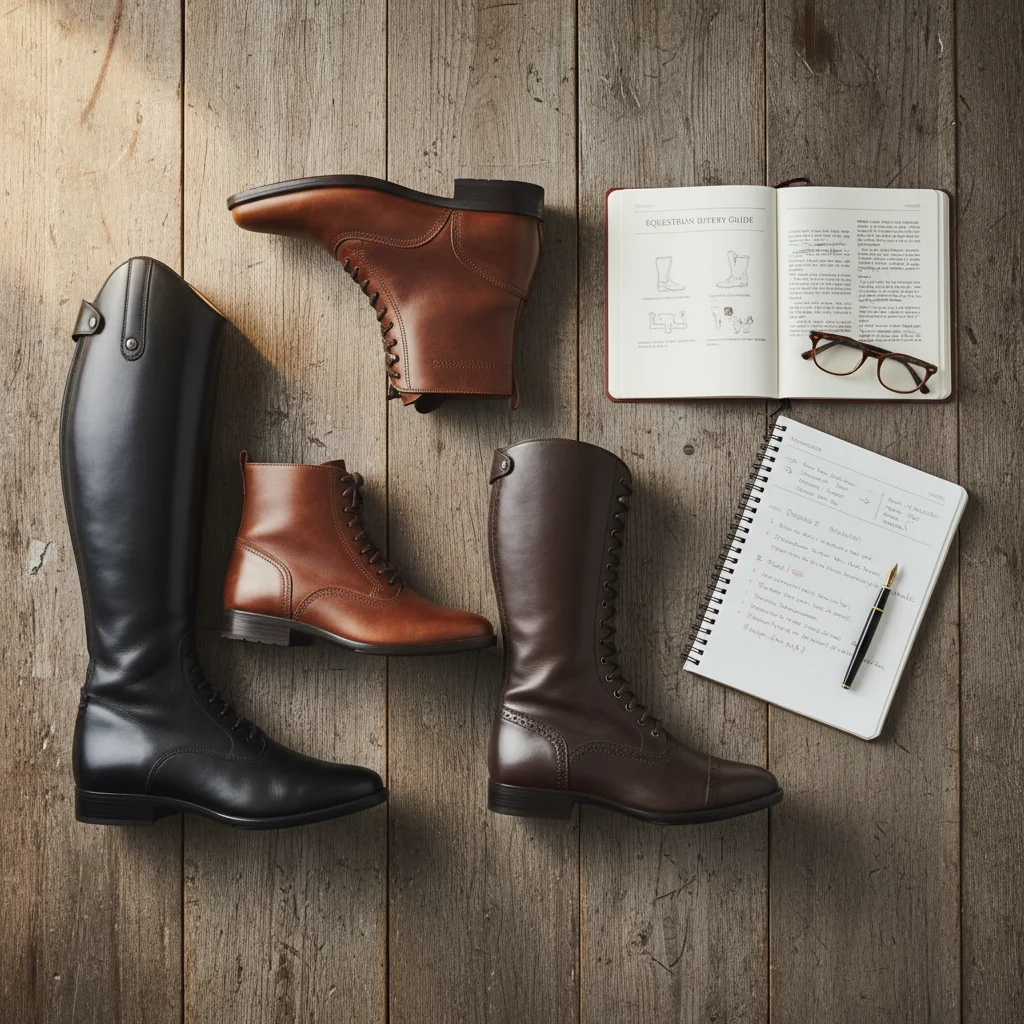
Height is the most obvious difference — but it's certainly not the only one that matters. Paddock boots sit just above the ankle. They generally fit right out of the box without requiring any complex calf measurements. In contrast, Tall boots extend entirely to just below the knee, covering your lower leg in one clean, uninterrupted line. That extra coverage significantly shifts three critical factors: overall protection, formal presentation, and upfront price. Today, leading equestrian manufacturers specifically engineer these structural differences to support distinct disciplines and riding habits.
Feature | Paddock Boots | Tall Boots |
|---|---|---|
Height | Ankle | Below knee |
Leg coverage | Needs half chaps | Full lower leg |
Break-in period | Minimal | Extended |
Fit complexity | Simple | Calf width + height |
Cost | Lower | Higher investment |
Paddock boots are built heavily for flexibility. Think intensive schooling sessions, weekly lessons, casual trail rides, and muddy yard work. On the other hand, tall boots belong properly in the arena and the formal show ring. Both remain incredibly solid choices; the real question is which one aligns best with where your riding life is focused right now.
What Are Paddock Boots? Design, Features & Rider Profile
Paddock boots solve one very simple problem: you absolutely need a riding boot that works effectively outside the show ring too. These ankle-height boots — roughly 4 to 6 inches tall — are universally recognized as the rugged workhorses of English equestrian footwear. Instead of confusing sizing charts, choosing them usually comes down to three closure styles. Lace-up versions provide the most adjustable fit and best ankle support, while zip-up models ensure incredibly fast on and off times. Pull-on styles simply offer no fasteners and essentially no fuss. The sole construction matters immensely more than most entry-level riders expect. A rigid, low heel — measuring at minimum half an inch — keeps your foot from dangerously sliding through the stirrup iron. The highly popular Ariat Paddock Boot cleverly uses a Duratread™ rubber outsole embedded with directional traction zones, which provides a real tangible advantage over varied, slippery terrain. Similarly, the Dublin Apex Zip Front runs a thick full rubber sole holding up dramatically better in wet or icy yard conditions than traditional leather-soled alternatives.
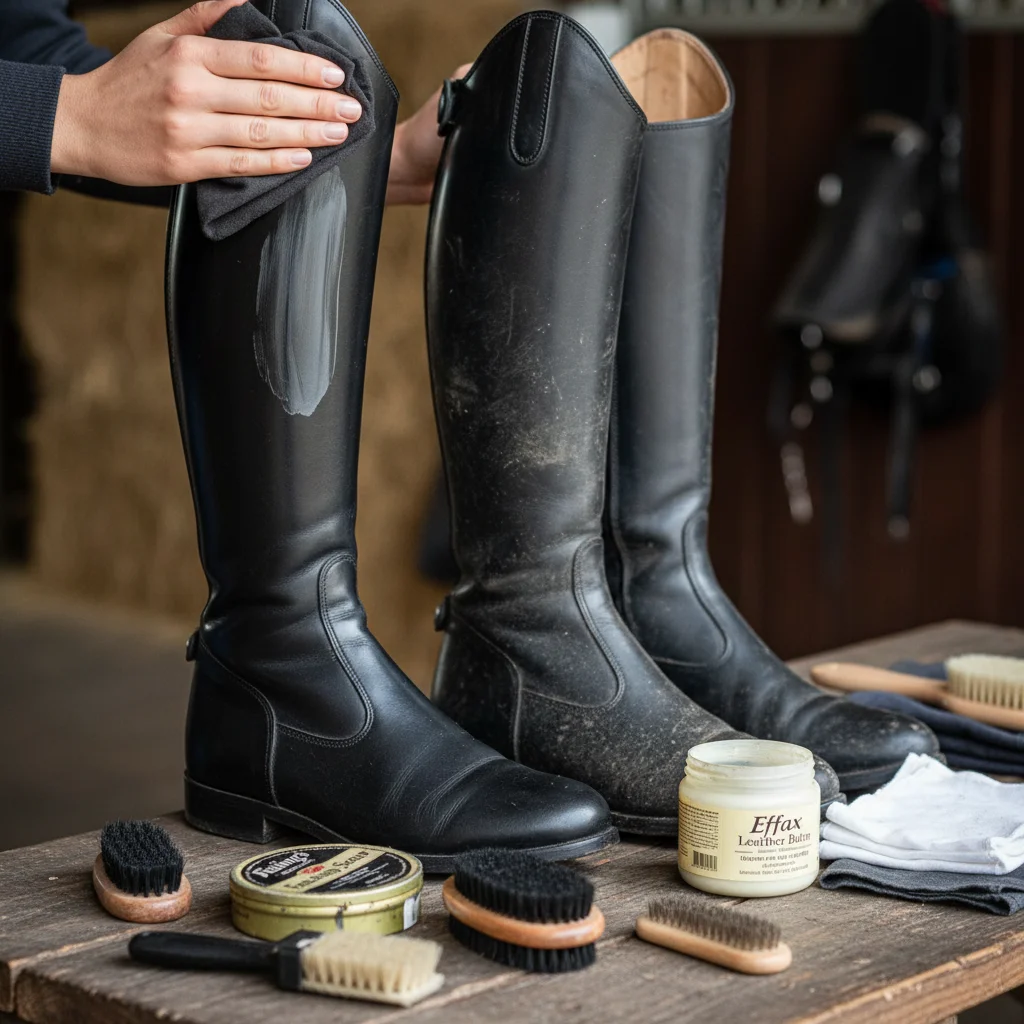
When examining material breakdown, reputable suppliers of wholesale equestrian clothing often note that premium full-grain leather physically molds to your foot over time and lasts substantially longer if oiled properly — our riding boot care guide covers the full maintenance routine. Conversely, engineered synthetic materials need far less tedious upkeep, wick interior moisture efficiently, and cost distinctly less upfront. The broad price range gracefully sits between $50 and $200. Entry synthetics for children start conveniently around $50, whereas distinguished professional options readily land squarely within the $100–$180 range. Ultimately, nearly all riders wear paddock boots most of the time. Beginners immediately benefit from the blissfully easy break-in period, while kids achieve a proper safety fit without navigating the dreadful calf-sizing headache. Even advanced trainers religiously wear them for schooling sessions. Most riders naturally Pair them with half chaps for extra desired leg coverage and vital saddle protection.
What Are Tall Riding Boots? Design, Features & Rider Profile
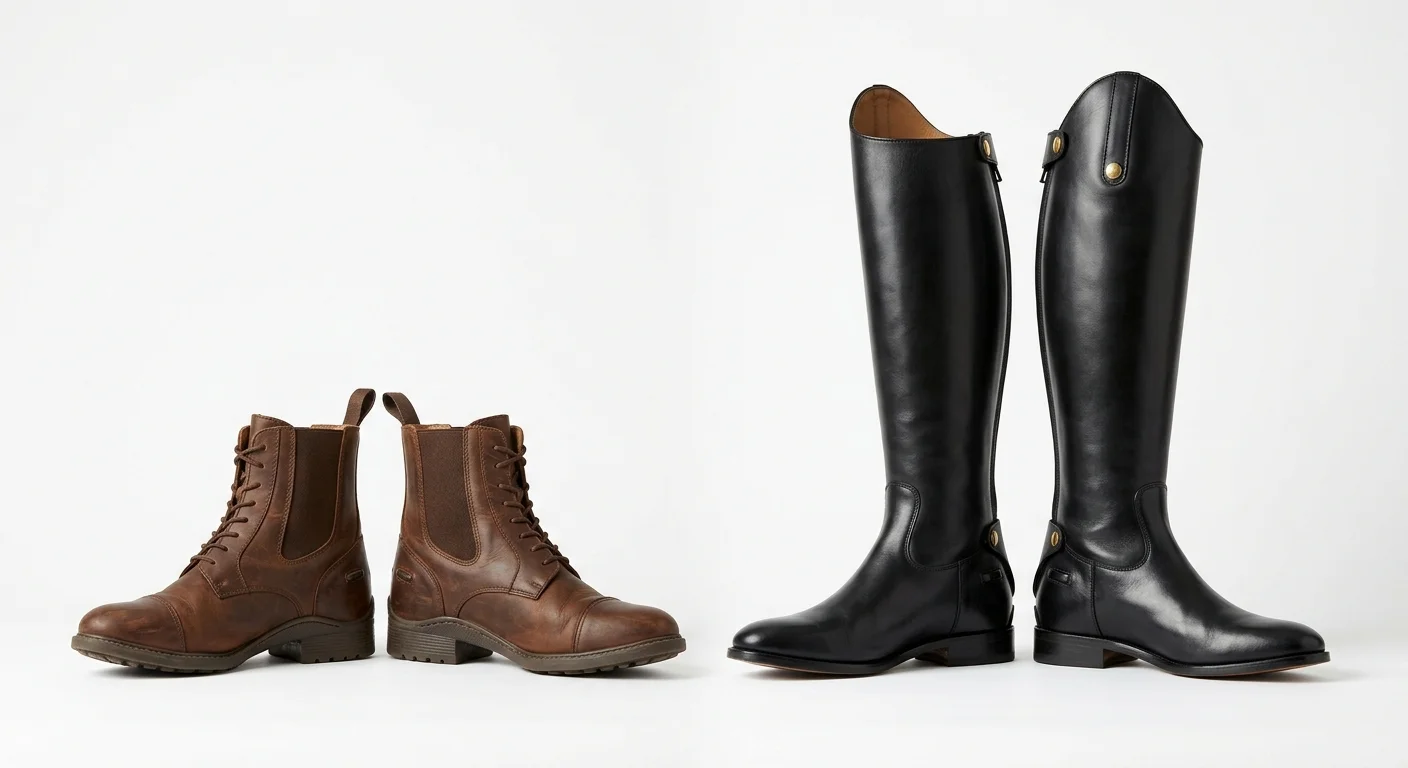
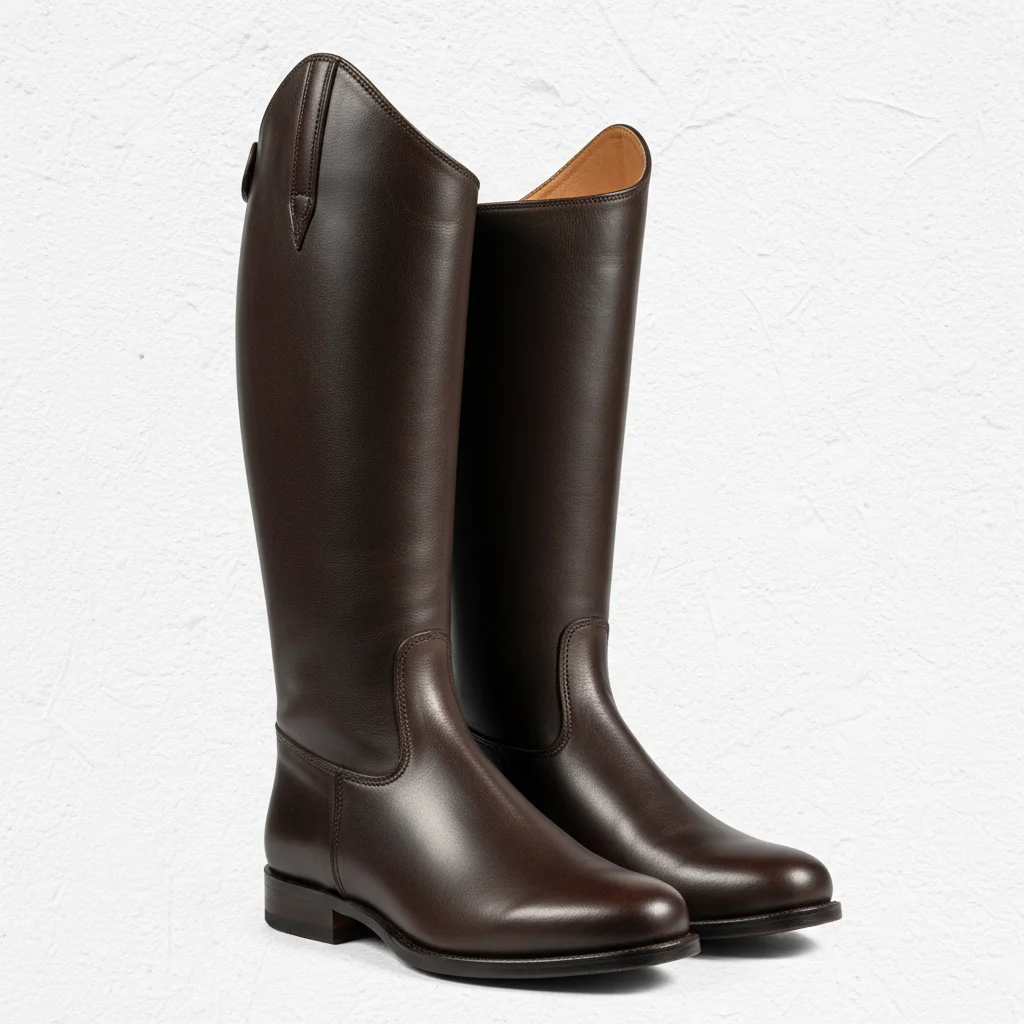
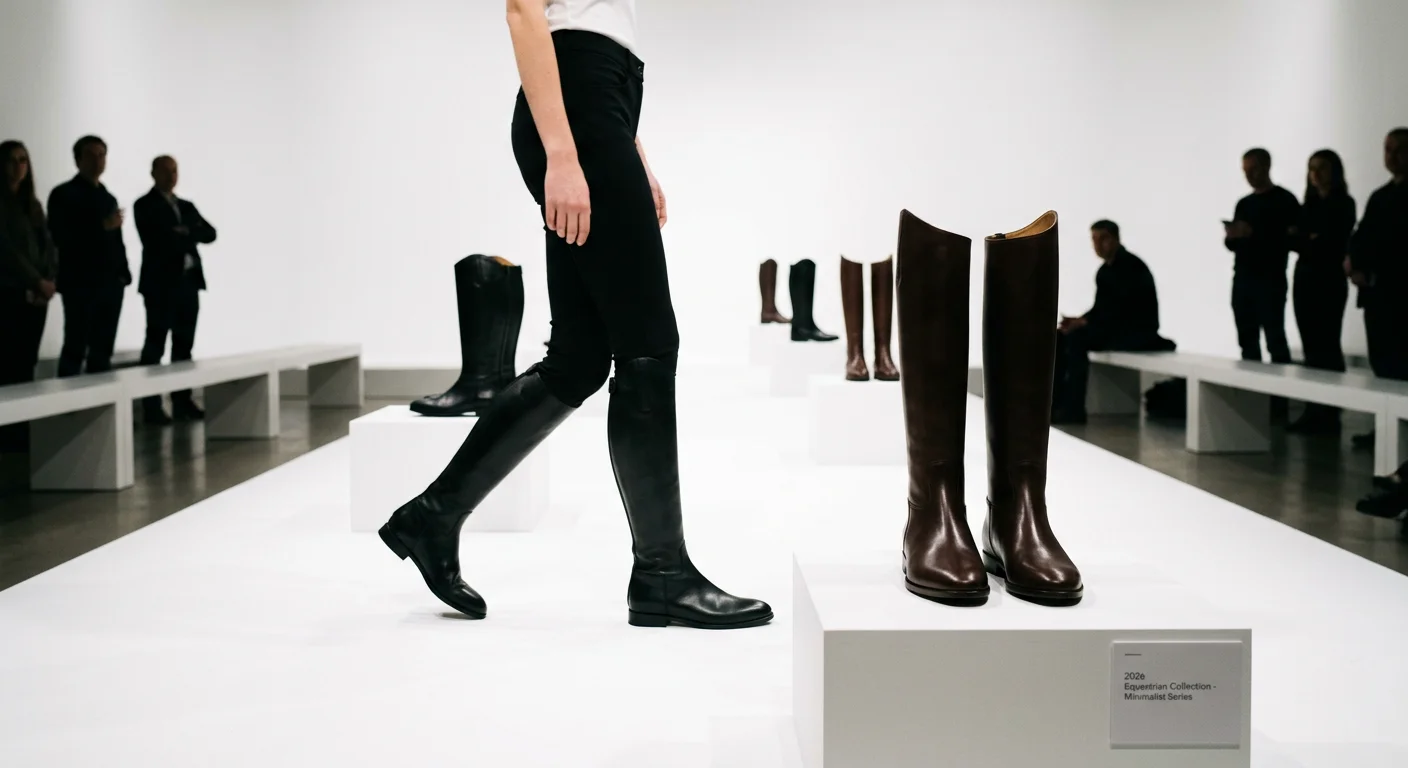
Tall boots decisively earn their pristine reputation within the show ring. Presenting one exceptionally clean line of polished leather extending from the ankle right to just below the knee — featuring absolutely no gaps, completely eliminating chaps, and requiring zero layering. That is the true defining feature, and frankly, it matters drastically more than mere aesthetics alone. Modern equestrian outfit manufacturers construct English riding boots in this specific category through three primary stylistic subtypes tailored for individual disciplines. Field boots utilize soft, highly supple leather integrated with built-in ankle flex, purposely engineered for jumping where your heel fundamentally needs to drop deeply with ease. Dress boots maintain a strikingly similar silhouette to field boots but lack the ankle laces, typically employing a hidden back-zip closure instead. Finally, elite dressage tall boots utilize a rigid, stiffer build—sometimes integrating a front quarter-zip—with a distinctly rigid outer shaft designed to relentlessly support the tall, upright leg position that upper-level dressage strictly requires. The beautiful Spanish cut topline — representing that distinctive, elegant curved rim sweeping along the upper outside edge — isn't merely decorative. It visually creates an elongated leg line that strict judges instantly appreciate, especially when observing a rider utilizing a shorter stirrup position.
Securing the perfect fit demands appreciably more effort than casually sizing paddock boots, a fact universally understood by those who regularly invest in high-end custom equestrian clothing. Two uncompromising measurements matter most: your calf circumference measured accurately at its absolute widest point, and your true shaft height measured firmly from heel to the back of the knee while bent precisely at 90 degrees. Here is the critical element most new buyers tragically miss: you absolutely must plan for drop. Quality leather naturally compresses through the ankle after the initial break-in phase. Soft field boots will comfortably see roughly 1–2 inches of total height drop, whereas heavily stiffened dressage boots expect significantly less, usually closer to 0.75–1 inch. As a result of this complexity, tall boots are predominantly worn by dedicated intermediate and advanced competitors. Anyone maintaining a calendar spanning show jumping, dressage, and technical hunt seat disciplines ultimately justifies this footwear. The standard price range runs $150 to $500+ depending critically on custom measurements and leather grades. Unprepared first-time buyers notoriously underestimate the break-in severity; these boots always start stiff, necessitating wearing breeches and thick riding socks directly from day one to aggressively prevent blistering.
4 Types of Tall Boots Explained
Not all tall boots are identically built, and hastily purchasing the wrong discipline type is historically one of the most painfully common mistakes English riders make. Four highly distinct structural types exist within the tall boot catalog, and experienced equestrian clothing manufacturers rigorously design each around a highly specific riding posture, discipline mechanic, and official show rule set.
The classic Dress Boots prioritize formal structure. Featuring absolutely no ankle lacing and presenting a sleekly stiff shaft, the premium polished leather and elegantly contoured Spanish topline look remarkably deliberate and effortlessly refined. Show jumpers and hunters demanding an uninterrupted classical line adore them. Moving alongside them, Field Boots consciously trade rigid structure for vital movement. The defining key detail is the traditional lacing present tightly across the front ankle, an essential feature generating real mechanical flex right where your delicate joint needs it most. When absorbing a massive fence, your heel plunges and your knee sequentially softens; a field boot moves sympathetically with you, acting as the undisputed go-to choice for dynamic jumping and technical eventing phases. Meanwhile, Dressage Boots rank as the absolute stiffest, most hyper-specialized option discussed here. An internal reinforcing stiffener runs deeply up the back spine of the calf shaft, entirely preventing the ankle from dropping, contouring, or wrinkling. This strict design essentially locks your lower leg into full, unyielding solid contact directly against the horse's barrel. Official regulation states that USEF Dressage competitors at levels 2 through 4 must wear plain black boots, and these rigid models satisfy that exacting rule effortlessly. Finally, harsh weather Winter Boots unashamedly place rugged function completely ahead of sleek looks. Manufactured with dense thermal insulated lining and heavy anti-slip treads, they easily conquer snow and dangerous stable ice, ensuring your winter training schedule remains effectively intact.
Boot Type | Flexibility | Closure | Best For |
|---|---|---|---|
Dress | Stiff | Zip / pull-on | Dressage, hunters, show jumping |
Field | Flexible | Lace + zip | Jumping, equitation, eventing |
Dressage | Stiffest | Full zipper | Dressage (USEF levels 2–4) |
Winter | Varies | Varies | Cold-weather daily riding |
Paddock Boots vs Tall Boots: Side-by-Side Functional Comparison
When you dissect the actual mechanics, five very practical dimensions safely separate these two boots. Any knowledgeable equestrian clothing manufacturer uses these precise parameters when refining product lines. It's truly not just about stable vibes; these are highly measurable differences that fundamentally dictate how securely you ride, exactly how long your expensive leather lasts, and precisely how much you initially spend.
Dimension | Paddock Boots | Tall Boots |
|---|---|---|
Ankle & Leg Support | ★★★★★★★ (7/10) | ★★★★★★★★★ (9/10) |
Leg Protection Coverage | ★★★★★ (5/10) | ★★★★★★★★★ (9/10) |
Comfort & Break-in | ★★★★★★★★★ (9/10) | ★★★★★★ (6/10) |
Durability for Daily Use | ★★★★★★★★ (8/10) | ★★★★★★★★★ (9/10) |
Ease of On/Off | ★★★★★★★★★ (9/10) | ★★★★★ (5/10) |
While tall boots technically score higher on overall support, the context behind the rating deeply matters. That impressive 9/10 rating truly only applies strictly after the dreaded break-in phase. Fresh out of their expensive box, they desperately compress your calf and feel closer to a stiff 6/10. Conversely, paddock boots consistently give you comfortably steady ankle support right from your very first ride because the pliant materials graciously work alongside your foot shape rather than stubbornly fighting against it. However, paddock boots do severely fall short specifically on raw leg protection when worn totally alone. Their brief, ankle-only coverage immediately leaves your inner calf disastrously open to painful stirrup leather pinches and heavy saddle flap friction. Importantly, if you systematically Pair them with half chaps, that glaring protective gap closes remarkably fast, granting you roughly 90% of a tall boot's protective function at around 60% of the cost.
Furthermore, a quality tall boot requires grueling commitment; expect two to six weeks of near-daily wear before reaching optimal comfort. For detailed guidance, see our guide on how to break in new riding boots.
Ultimately, For training (the majority of your riding life): paddock boots reliably hold up fantastically to aggressive daily wear, muddy yard work, and chaotic early morning lesson schedules. No delicate babying is vaguely required. However, For competition: premium tall boots resolutely remain the golden standard—and quite often, the literal written rule. This stark reality essentially births The hybrid strategy most working riders use: diligently wearing casual paddock boots for messy daily schooling while rigorously reserving highly polished tall boots exclusively for prominent show days.
Which Riding Disciplines Require Tall Boots? Official Rules Breakdown
The stark competition rulebook unfortunately doesn't deeply care about your immediate seasonal budget. Several prominent disciplines categorically mandate tall boots, leaving incredibly limited room for tactical wardrobe negotiation. For Dressage (Levels 2–4):, riders must exclusively wear sleek, plain black tall boots. Zero field boot lacing is allowed, and absolutely no exceptions exist seamlessly at rated competitions. During Eventing: trials, wearing a tall boot remains severely mandatory across every diverse phase—dressage, demanding cross-country, and stadium show jumping. Finally, inside Hunters/Jumpers: arenas, while junior rules tentatively bend mostly at regional lower levels, tall boots function aggressively as the notoriously unspoken industry standard. Ambitious brands producing private label equestrian clothing constantly monitor these evolving dress codes to ensure their sponsored riders are safely compliant on show day.
Discipline | Required Boot Type | Key Rule |
|---|---|---|
Dressage | Dressage boots | Plain black, no front lacing |
Eventing | Field, dress, or dressage boot (phase-dependent) | Tall boot mandatory all phases |
Hunters/Equitation | Field boot (dress boot now more accepted) | Fitted, polished black leather |
Jumpers | Field or dress boots | Black traditional; colored piping emerging |
Certain extremely low-level local schooling shows provide comforting leniency, allowing ambitious novices to successfully navigate introductory Level 2 Dressage in field boots. Yet, that friendly flexibility drastically shrinks as you competitively ascend. Riders should carefully note that actively attempting to soar over massive jumper fences while forcibly wearing stiff dressage boots creates a profoundly miserable, deeply unsafe experience. Always deploy the correct tool for the designated sporting job.
The Half Chaps + Paddock Boot Combo: A Budget-Friendly Alternative?
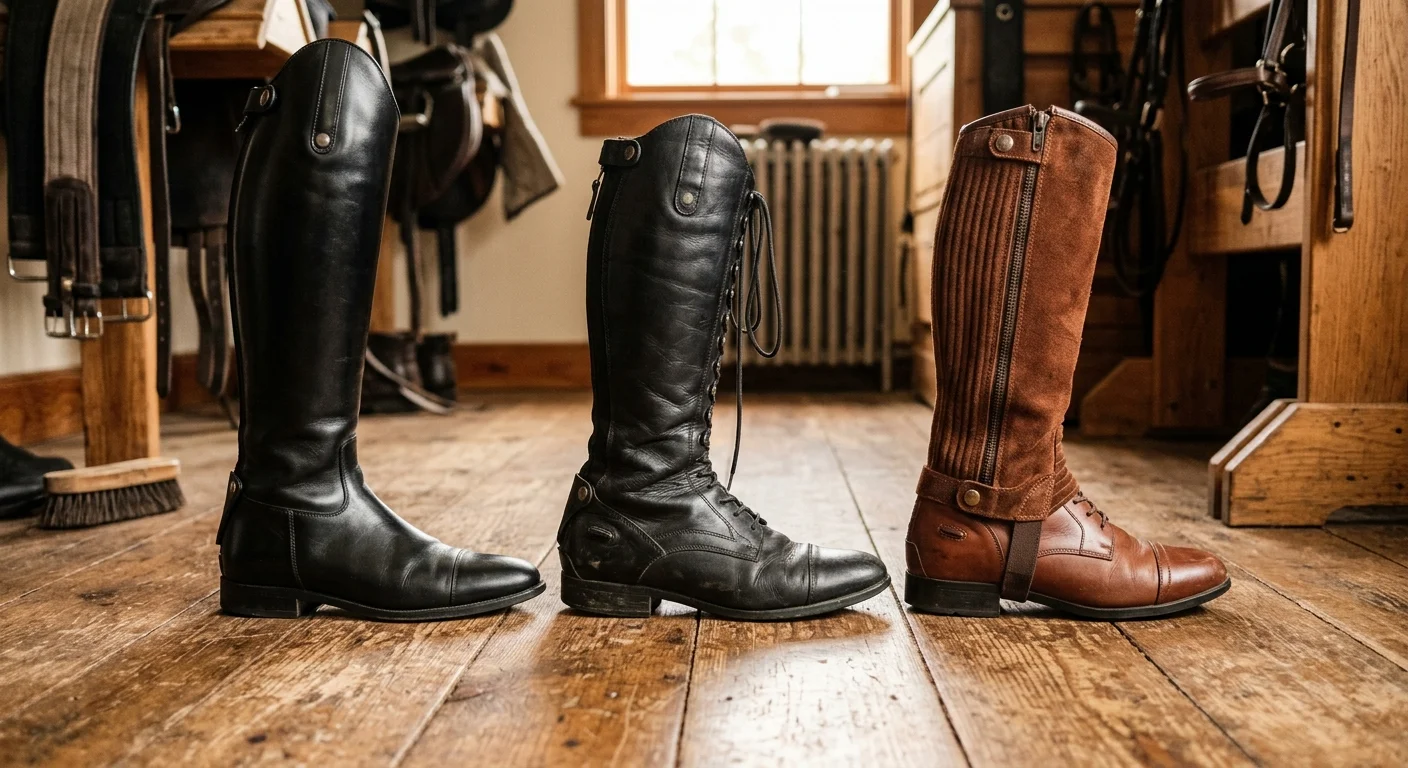
The financial math presented here is beautifully simple to digest. Calculating this precise difference is invariably the very first prudent step smart equestrians take before bravely committing enormous funds merely toward formal tall boots. Sourcing a remarkably durable paddock boot alongside fitted half chaps can remarkably cost as breathtakingly little as $65 total. When compared logically against pristine tall boots—where entry models steeply launch past $170 and rapidly climb toward $400—that financial gap directly funds numerous professional training lessons or effortlessly covers regional seasonal show fees. Top-tier providers dealing in wholesale equestrian clothing aggressively expand these highly economical matching combo lines annually due entirely to overwhelming barn demand.
Combo Tier | Paddock Boot | Half Chaps | Total |
|---|---|---|---|
Budget | $44.99 (Ovation Quantum) | $19.99 | ~$65 |
Mid-range | $60.95 | $47.95 (Ovation EZE Tab) | ~$110 |
High-end | $149 (Kendall) | $179.95 (Ariat Close Contour) | ~$250 |
Even selecting a premium mid-range tactical combo happily means you conservatively spend 45–70% less capital upfront while permanently skipping the inevitable, deeply painful future resole repair costs that tall leather boots invariably inflict annually. Forward-thinking companies famously leveraging expansive OEM/ODM services now manufacture seamlessly integrated chap styles that brilliantly mimic the slick tall-boot silhouette almost perfectly from just twenty feet away. Functionally, this clever matching combo comfortably manages vital inner calf abrasion flawlessly while safely delivering essential saddle grip. However, mechanically It works for: repetitive lesson flats, relaxed trail hacking, and laid-back informal environment tests. Legally, It doesn't work for: strictly judged rated FEI regional events, or literally any sanctioned show inherently specifying formal boots inside their governing text.
Paddock Boots vs Tall Boots: Who Should Buy Which (Quick Decision Guide)
- Train at home and rarely show
- Want easy on/off and minimal break-in
- Need versatile barn-to-trail footwear
- Are on a tighter budget ($50-$200)
- Compete in dressage, eventing, or hunters
- Need full lower-leg coverage and support
- Want the formal polished show ring look
- Are ready to invest $150-$500+
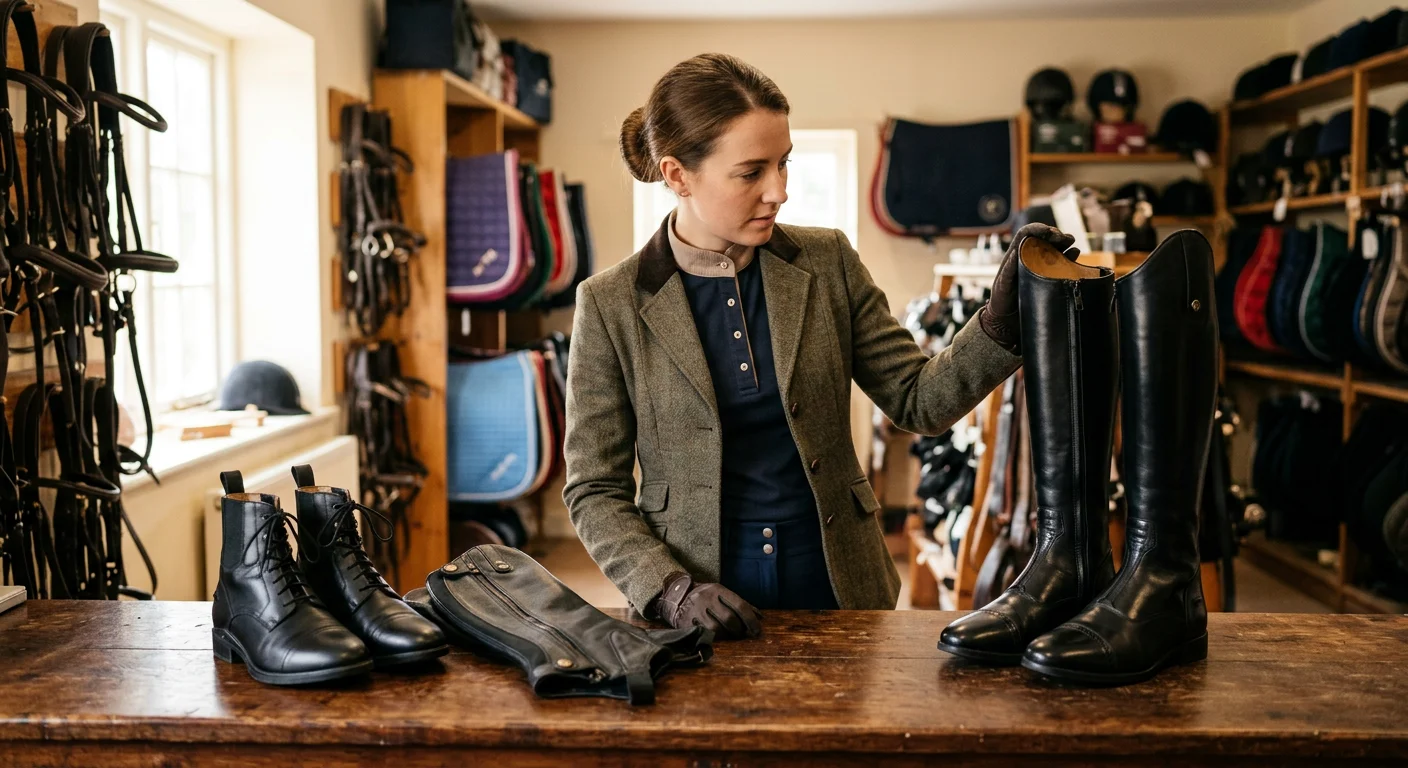
Your definitive shopping choice overwhelmingly boils right down to one radically simple, clarifying question: do you passionately compete frequently, or honestly, do you not? You urgently need to safely purchase striking tall boots if you regularly show deep inside formal dressage, equitation, or hunter rings requiring that sophisticated unbroken line to complement your handsome tailored custom equestrian clothing. Alternatively, you should undeniably buy paddock boots directly if you purely train quietly at home, despise tedious boot shining, and intensely value comfortable flexibility above rigid optics. Perhaps predictably, the absolute smartest long-term holistic move is to purposefully own both. Vigorously wearing easily replaceable Paddock boots throughout brutal weekly grinds actively allows your deeply expensive, beautiful tall boots to peacefully rest warmly inside their padded bags safely until show weekend arrives.
FAQ: Paddock Boots vs Tall Boots — Answers to Common Rider Questions
Curious riders invariably corner trainers demanding fast answers regarding strict dress parameters. The most enduring question centers intensely upon whether practical paddock boots seamlessly function within standard competitions. Happily, during basic introductory lessons and unrated schooling environment shows, employing chaps perfectly bypasses strict scrutiny. Yet, formal rated competitions ruthlessly dictate tall boot usage exclusively without negotiation. Concerning the notoriously agonizing tall leather boot break-in phases, smart equestrians rigorously budget upwards of five to ten sweaty riding sessions before leather appropriately flexes. You must absolutely never attempt debuting stiff, fresh boots aggressively on essential competition days. Regarding color profiles, while rich earthy browns function splendidly inside private schooling barns, absolute midnight black solidly remains the unforgivingly mandatory hue standard dominating high-tier dressage tests. Specialized equestrian outfit manufacturers strictly note that employing these particular English silhouettes atop broad Western saddles proves anatomically tragic due entirely to their highly incompatible calf designs.
Conclusion
Securing the indisputably correct riding boot certainly isn't fundamentally about matching tack room color aesthetics; rather, it's overwhelmingly about deeply analyzing accurately exactly where you physically sit within your ongoing sporting journey today. For novices casually learning diagonals, durable paddock boots absolutely represent the far smarter, highly forgiving asset. However, stepping confidently into imposing judging pens strictly transforms sleek tall boots right from a discretionary vanity purchase heavily into an unavoidable governing constraint. Elite equestrian suppliers and globally trusted equestrian manufacturers passionately design these spectacular items specifically to cohesively unify your professional appearance.
Ultimately, selecting premier matching boots heavily guarantees your custom equestrian apparel naturally maintains maximum visual impact. Whether an individual rider is carefully upgrading their personal closet, or a bustling barn manager seeks dependable equestrian clothing factory bulk orders supporting massive wholesale equestrian clothing team needs, prioritizing proper footwear easily unlocks superior performance. Today, brands aggressively offering top-tier OEM/ODM services and crafting private label equestrian clothing ensure phenomenal fit solutions readily exist across all commercial sizes. Stop worrying excessively, smartly choose the exact boot logically matching your immediate six-month goals, and profoundly elevate your distinguished high-end custom equestrian clothing presence.