Wearing yoga pants and sneakers to your first riding lesson is more than a style mistake — it's a real safety risk. Most beginners don't see it coming.
The right horse riding clothes do far more than make you look the part. They protect you from falls, prevent painful saddle rubs, and stop your foot from slipping through the stirrup. You get the control and confidence to enjoy the ride. Whether you are buying off the rack or sourcing high-end custom equestrian apparel directly from reputable equestrian clothing manufacturers, the fundamental rule remains: gear must be functional first.
Not sure about the difference between riding breeches and jodhpurs? Curious whether a body protector is worth it? Shopping for your first full riding outfit on a budget? This guide covers it all — helmet to boot, for every rider, every style, and every season.
What Clothes Are Best For Horse Riding?
Six essential items stand between a safe, comfortable ride and one you'll regret. Every piece of clothing you wear on horseback has a job — and when something fails, you feel it fast. This guide covers what to wear, from a certified helmet down to heel height. It spans every riding style, season, and skill level. Budgeting for your first lesson? You'll find out what to buy. Already gearing up for the show ring? You'll know what to skip.
The Non-Negotiable Essentials You Must Have
Six items are all that stands between a ride you'll remember and one that ends in the emergency room. Not every piece needs to be expensive or perfect, but some simply cannot be skipped, substituted, or improvised.
Your Riding Helmet is the one thing you never compromise on. It must meet ASTM/SEI or CE VG1 certification standards. Forget your bike or skateboard helmet. You need a purpose-built riding helmet featuring a 3-point harness, a padded chin strap, and the right shape for your discipline. Your head cannot be replaced, but a helmet can.
Equestrian Boots are mandatory because heel height is a non-negotiable safety rule. You need a minimum of 1 to 1.5 inches of heel to stop your foot from sliding forward through the stirrup during a fall. Tall boots work beautifully, and paddock boots paired with half-chaps work too. Always opt for low-tread soles, as heavy grip tread can dangerously catch on stirrups.
Riding Breeches or Jodhpurs prove that saddle grip isn't optional. While ordinary jeans might get you through a short trial ride, riding breeches with knee or full-seat patches actually lock your leg against the saddle. Jodhpurs for horse riding and modern riding tights are phenomenal alternatives, especially for beginners, offering superior stretch and sweat management compared to denim.
To top it off, you need a fitted, tuck-able shirt. Loose fabric near saddle hardware creates a real risk. A polo or a structured button-up wicks moisture and stays out of the way. If you are on a tight budget, prioritize a certified helmet and heeled boots first. You can upgrade to proper breeches later, and eventually add horse riding gloves for better rein control.
Horse Riding Pants Compared: Breeches vs Jodhpurs vs Tights vs Jeans
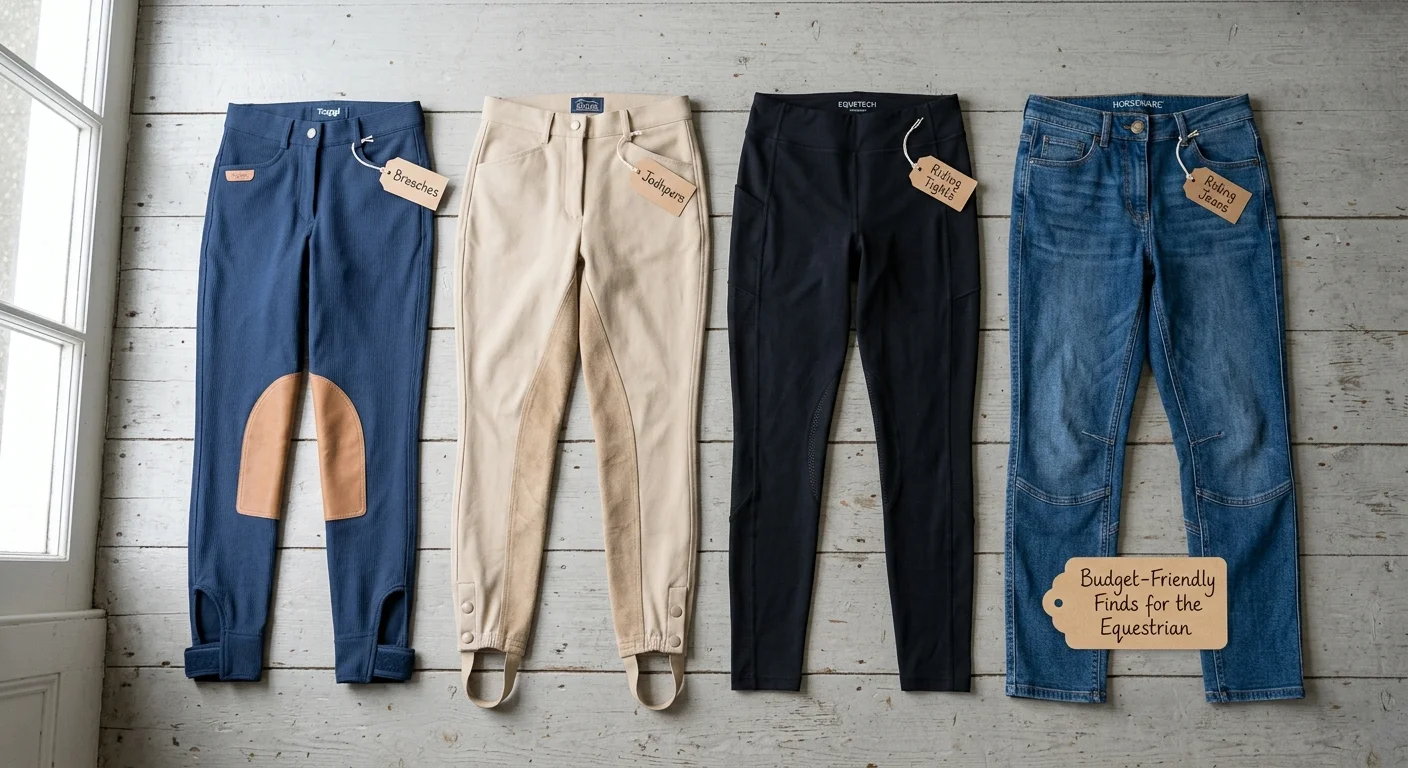
Four primary types of riding pants exist, but only a few were actually built for the saddle you're sitting in. Most beginners underestimate how much this choice matters to their grip, stability, and position control.
Riding breeches are the traditional pick for English disciplines and competitive riders. Fitting close to the leg and stopping just below the knee, they sit neatly inside tall boots. Synthetic or silicone knee and full-seat patches lock your leg in place, offering genuine positional control. Jodhpurs naturally run full-length down to the ankle and are typically paired with short paddock boots rather than tall boots, making them a very forgiving and warm option for younger riders and beginners.
Think of riding tights as equestrian yoga pants designed for the saddle. With no buttons to dig into your skin, they are seamless at the knee and feature highly technical fabrics. Modern English riders wear them heavily for lessons and trail rides. As for jeans, they are strictly a last resort. Denim seams run along the inner thigh, creating painful friction, and their lack of horizontal stretch heavily restricts your leg movement. If you must wear leggings or tights for horseback riding, pick a pair designed specifically for the saddle.
| Type | Best For | Key Advantage |
|---|---|---|
| Breeches | English riding, competition | Saddle grip, precision |
| Jodhpurs | Beginners, children | Full-length, no tall boots needed |
| Riding Tights | Comfort, trail, everyday lessons | Flexibility, technical fabrics |
| Jeans | One-time rides only | Convenience |
The Right Boots and Footwear (And What to Avoid)
Flat sneakers, hiking boots, or trainers simply do not make the cut. Without a 1-inch minimum heel, your foot can pass through the stirrup, get trapped, and result in you being dragged by the horse.
Your two real options are paddock boots (ankle-height) and tall boots (knee-high). Paddock boots offer flexibility for yard work and casual hacking. When you add leather or synthetic half-chaps, you achieve the protection of a tall boot at a fraction of the cost. Tall boots, conversely, belong in the show ring. Dressage and show jumping riders rely on their stiff build for precise leg position. When shopping for horse riding boots, always ensure you have a firm 1-2 inch heel, a thin and smooth sole without chunky treads, sturdy ankle support, and a snug fit with a bit of wiggle room at the toes. Full-grain leather lasts for years with good care, though synthetic options are great for managing heavy moisture.
What to Wear Based on Your Riding Style
Your chosen discipline shapes your wardrobe heavily.
- White breeches (dressage) or tan/beige (jumping)
- Dark fitted coat or hunter jacket
- Stiff tall boots or field boots
- White gloves (dressage)
- Long-sleeve tucked shirt
- Earth-tone western pants
- Tall cowboy boots with distinct heel
- Certified helmet (preferred over hat)
English riding demands precision. Dressage usually requires white breeches, a dark fitted coat, stiff tall boots, and white gloves. Show jumping is slightly more relaxed, favoring tan or beige breeches paired with a dark hunter jacket and flexible tall field boots.
Western riding swaps the highly fitted English look for a looser, functional ranch style. A typical Western outfit involves a long-sleeve tucked shirt, earth-tone western pants, tall cowboy boots with a distinct heel, a belt, and preferably a certified helmet instead of a traditional hat. Since Western saddles hold you differently, your leg doesn't need the exact same sticky contact that English riders rely on.
For trail and recreational riding, the focus shifts to pure comfort and endurance. Fitted riding tights or breeches pull sweat away during long hours, while paddock boots with half-chaps keep your lower legs safe. Remember: no matter your style, fitted clothing is a genuine safety requirement to prevent snagging on branches or tack.
Outfit Guide by Rider: Women, Men, Kids & Beginners
Start simple if you are a beginner. For your first month, closed-toe boots with a heel, long pants without bulky seams, a fitted shirt, and a non-negotiable certified riding helmet are all you need. Once you commit, buying horse riding gloves is the smart next step.
Children and young riders almost exclusively wear jodhpurs. These full-length pants allow instructors to easily monitor leg position. Paired with reliable paddock boots featuring a distinct visible heel, kids are securely prepared for any riding school environment.
Female riders naturally enjoy the widest variety of cuts and styles. For everyday practice, technical riding tights with UV protection and moisture-wicking properties are the overwhelming favorite. Competition wear remains strict, generally requiring white breeches and a fitted dark jacket for dressage. Men also follow strict traditional codes, wearing horse riding jackets tailored for broader shoulders. In the upper levels of competition or during fox hunting events, men often transition to shadbelly coats, stock ties, and tattersall vests. Across every demographic, the rule remains: gear must be fitted, functional, and never excessively loose.
Dressing for the Weather: Seasonal Tips
The weather doesn't care about your riding plans. In intense summer heat, moisture-wicking synthetics are paramount. They evaporate sweat rapidly, cutting chafing risks dramatically compared to traditional cotton. You should also opt for UPF 50+ long sleeves to shield your arms and choose stretch-panelled breeches designed with mesh venting to push airflow through without compromising your grip.
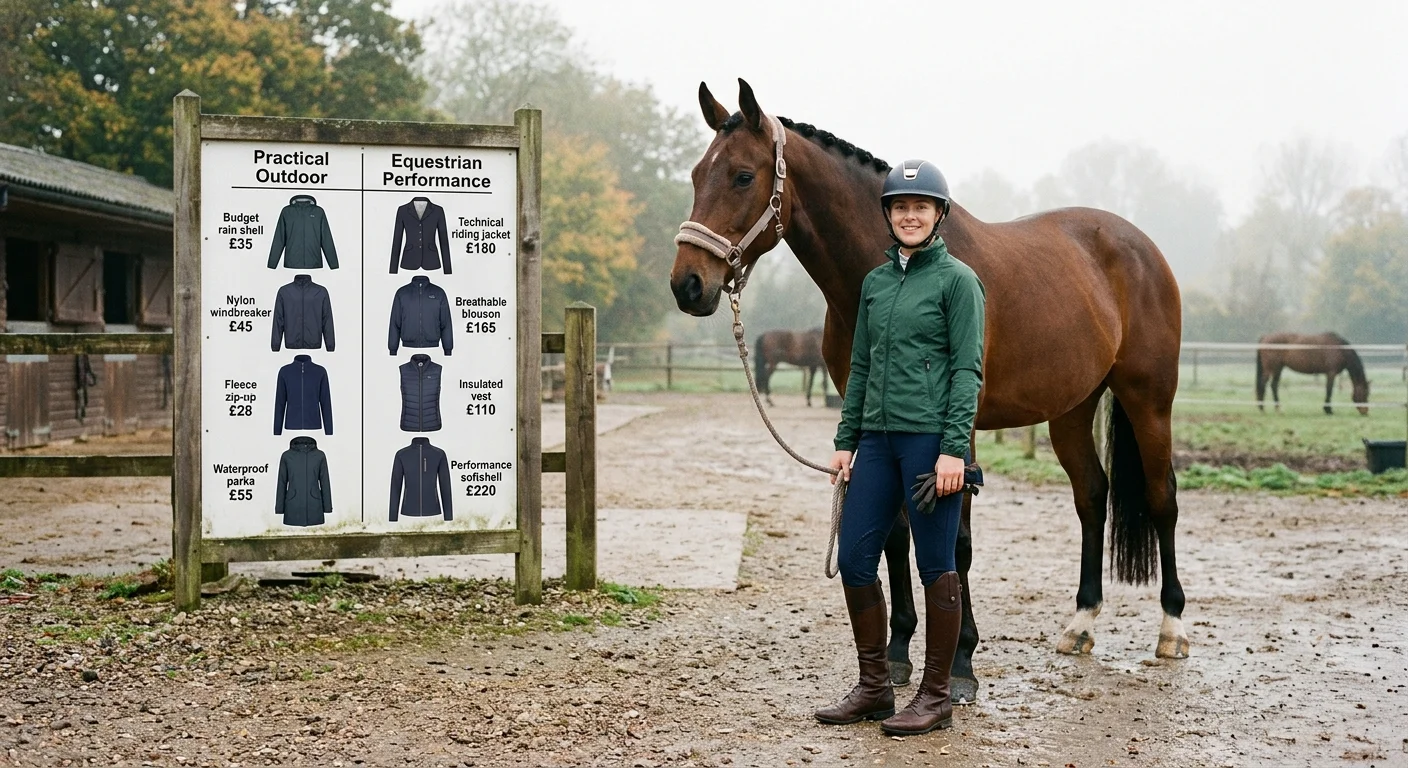
Cold-weather riding functions purely on a smart three-layer system. Begin with a moisture-wicking merino wool or synthetic base layer to stay dry. Add a relatively light fleece mid-layer for active warmth, and finish with a waterproof, breathable outer shell.
Never exceed three layers; adding too much bulk reduces your direct saddle contact by up to 25%, heavily dulling the leg cues your horse relies upon.
5 Common Horse Riding Clothing Mistakes
Even experienced riders stumble here.
Quick Answers: Horse Riding Clothes FAQ
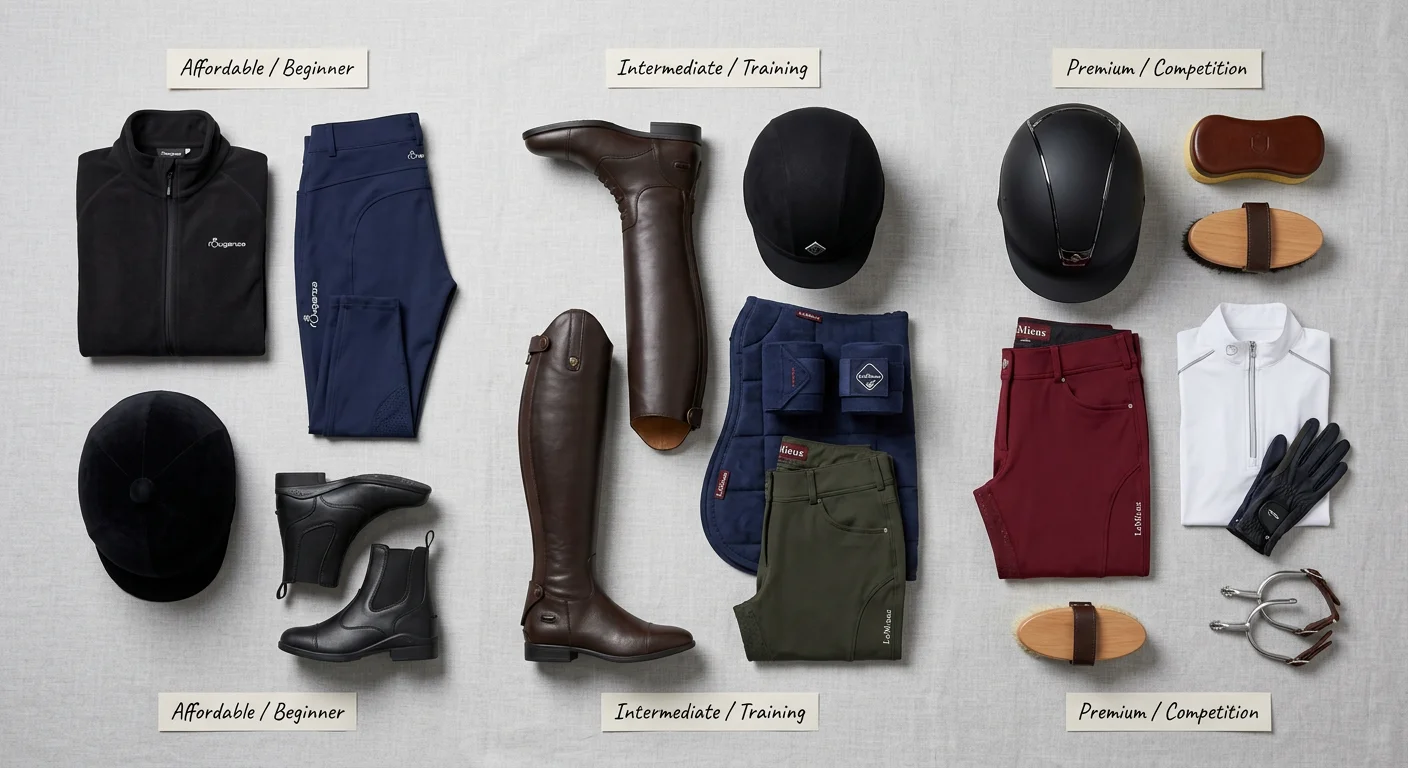
For your very first riding lesson, simply wear full-length pants like seamless jeans or breeches, closed-toe heeled boots, and a tucked-in shirt. Shorts and sandals are completely out of the question. You absolutely can ride in jeans initially, though thick inner seams will cause chafing over longer sessions. A helmet is unequivocally mandatory for every single ride; ensure it has an ASTM/SEI certification and hasn't passed its expiration date. You don't need to buy specialist gear all at once. Start with the safety basics, and once you confirm your passion for the sport, invest in proper breeches, tall boots, and protective vests.
Conclusion
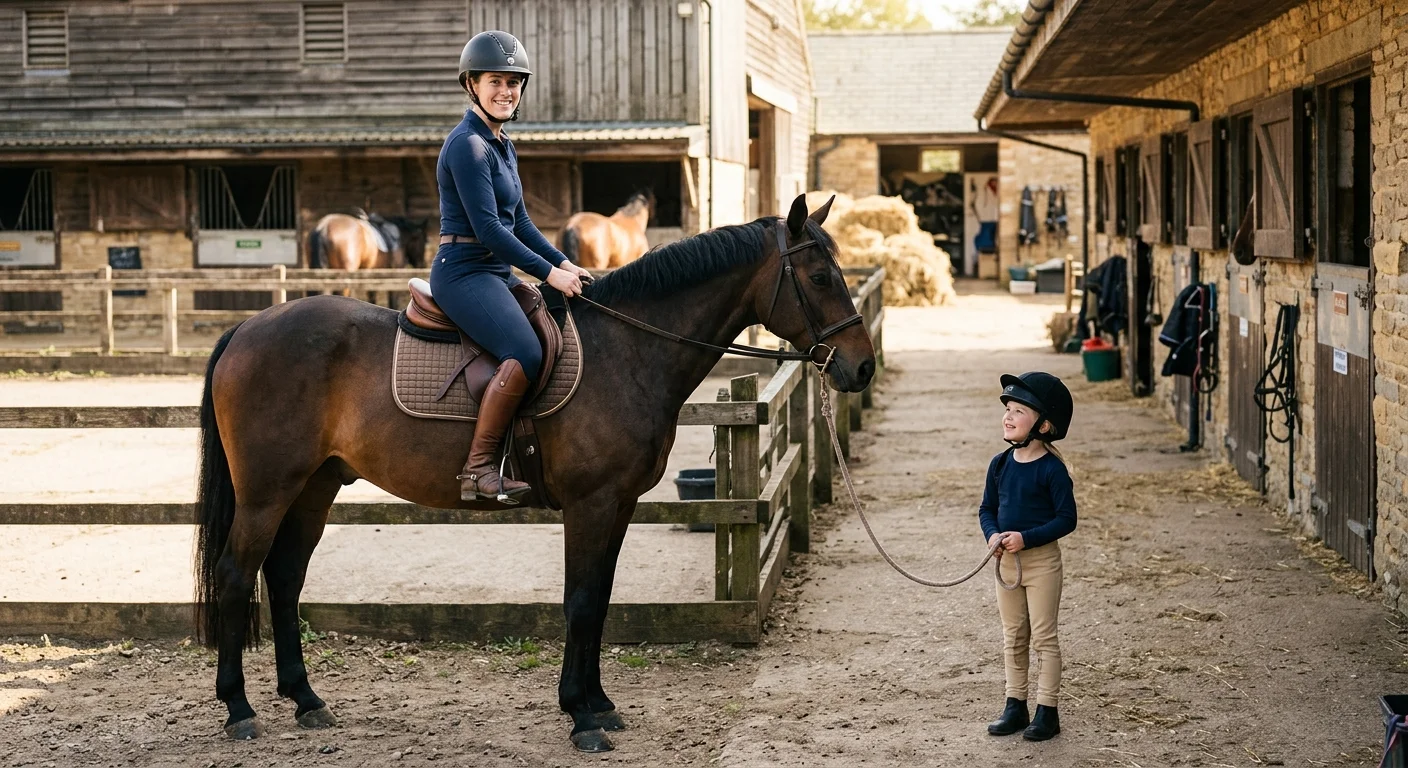
The right riding clothes do infinitely more than make you look the part; they are engineered to keep you safe, secure, and comfortable in the saddle. The non-negotiable basics remain perfectly consistent regardless of your skill level: a tightly certified riding helmet, boots with a distinct safety heel, and flexible riding breeches that move with your body's rhythm.
As the industry evolves, sourcing has never been better. Whether you are an individual rider testing the waters or a boutique brand partnering with elite equestrian clothing manufacturers to develop custom equestrian apparel, the core philosophy remains untouched. You don't need to spend a total fortune to start out, but you must put functionality and safety above all else. Get the fit properly dialed in, feel confident in the protection your gear offers, and watch as your clothes fade entirely into the background. That is the exact moment you stop fussing and truly start riding.