You've just pulled on your new breeches, knee-high socks in hand — and now you're second-guessing everything. Over? Under? Does it even matter? Honestly, I see riders asking this exact question in the tack room all the time, staring down at their legs like they missed some secret memo.
It absolutely does matter. A lot. This is especially true when you step into a show ring, but even on a relaxed schooling day, getting it wrong means dealing with bunching fabric and nasty blisters. The answer really depends on your boot style, your preferred discipline, and the specific functional design that equestrian clothing manufacturers utilized for your breeches. There simply is no single universal rule that magically fits every single rider out there. Whether you are painstakingly lacing up tall riding boots for the very first time, or you are trying to sort out the whole sock situation with your favorite paddock boots and half chaps, getting this seemingly tiny detail right is crucial. It completely separates a pristine, high-level competition-ready aesthetic from a bumpy, awkward wardrobe fumble at the barn.
If you've ever had the chance to peek behind the curtain and speak with specialized equestrian suppliers, you'd quickly learn that the gear is engineered with specific material layering in mind. Having a solid grasp on how factories pattern these garments helps take the guesswork completely out of your morning routine. This comprehensive guide is designed to be clear, direct, and incredibly practical — so you can confidently get your gear right every single time you saddle up.
The Real Answer: It Depends on Three Key Things
Whenever you are trying to solve the great sock debate, you have to realize that breeches closure, boot style, and your own personal comfort are the three main elements that determine everything. Let's start with the bottom of your pants. Breeches thoughtfully designed with Velcro closures work so much better with socks worn over. Think about it. This simple, intuitive layering trick keeps the scratchy hook-and-loop fastening comfortably away from your bare skin, preventing those annoying rubs that plague riders by the end of a two-hour flat session. On the flip side, elastic-bottom breeches pair beautifully with socks worn under. By placing the sock underneath, you get this incredibly clean, gap-free, locked-in line right where the boot meets your lower leg.
Your chosen boot style genuinely matters just as much as your pants. If you are donning tall riding boots, the standard protocol means you should always tuck your socks under. Layering extra fabric over your breeches before you try to pull on highly structured tall boots just adds unnecessary friction. It quickly turns what should be a straightforward task into a sweaty, frustrating struggle before you even see your horse. But if your daily setup involves paddock boots seamlessly paired with half chaps, putting socks under is still heavily favored by traditionalists simply because they sit neatly out of sight beneath the chap leather.
One incredibly practical note that I always like to share with newer riders: socks worn under your breeches actually let you easily reach down and pull the breeches fabric downward after mounting the saddle. It might sound like an incredibly minor detail right now, but it genuinely makes a massive difference in your comfort mid-ride when the knee patches start creeping up your thigh.
The Short Answer: Over vs. Under at a Glance
If you are rushing out the door and just need the absolute simplest version of the truth, here it is: riding socks go under breeches — the vast majority of the time. When we look at tall riding boots, this specific rule is pretty much firm and non-negotiable. Trying to aggressively layer thick socks over breeches just creates chaotic bulk and intense friction inside a snug leather boot shaft. The inevitable result of breaking this rule? A super frustrating pull-on experience, a visibly lumpy profile, and an utterly uneven fit that you'll definitely feel rubbing against your calf with every single posting trot.
When you transition to paddock boots and half chaps, the exact same basic logic generally applies for a polished look. Socks that are carefully worn under simply stay completely hidden from the judge's eye. You get a gorgeously clean, sophisticated, and polished line running all the way from your ankle right up to your knee without any weird bunching or uncomfortable bulky zones.
There is, however, one incredibly important exception you absolutely should know about, and that is Velcro-closure breeches. Here, pulling your knee-high socks squarely over the breeches is undeniably the better, more practical choice. It throws a wonderfully soft, protective fabric layer directly between your sensitive skin and that rough fastening tab. Interestingly, when product developers at top tier custom equestrian apparel workshops draft these designs, they explicitly expect riders to use their socks as an anti-abrasion barrier. You should really think of these guidelines less as rigid, unbreakable laws of the universe, and much more as intelligent starting points that slightly shift depending on the specific kit you pull out of your tack trunk that day.
How Boot Type Determines Sock Placement
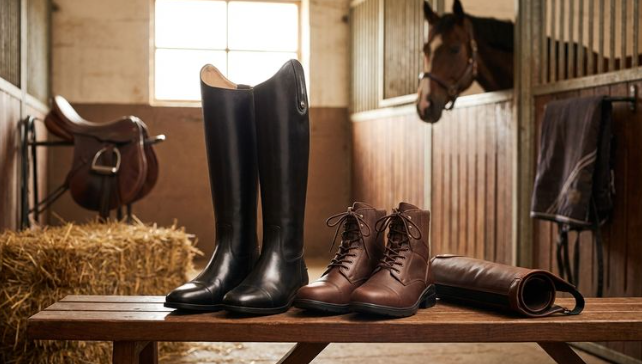
Honestly, boot height pretty much changes the whole game. Your sleek tall boot shaft and your sturdy paddock boot's ankle cut aren't just mere style differences meant for different weather. They actually create two entirely distinct sets of physical needs for your lower leg. Mix up the formulas, and most riders just end up dealing with completely avoidable fit problems.
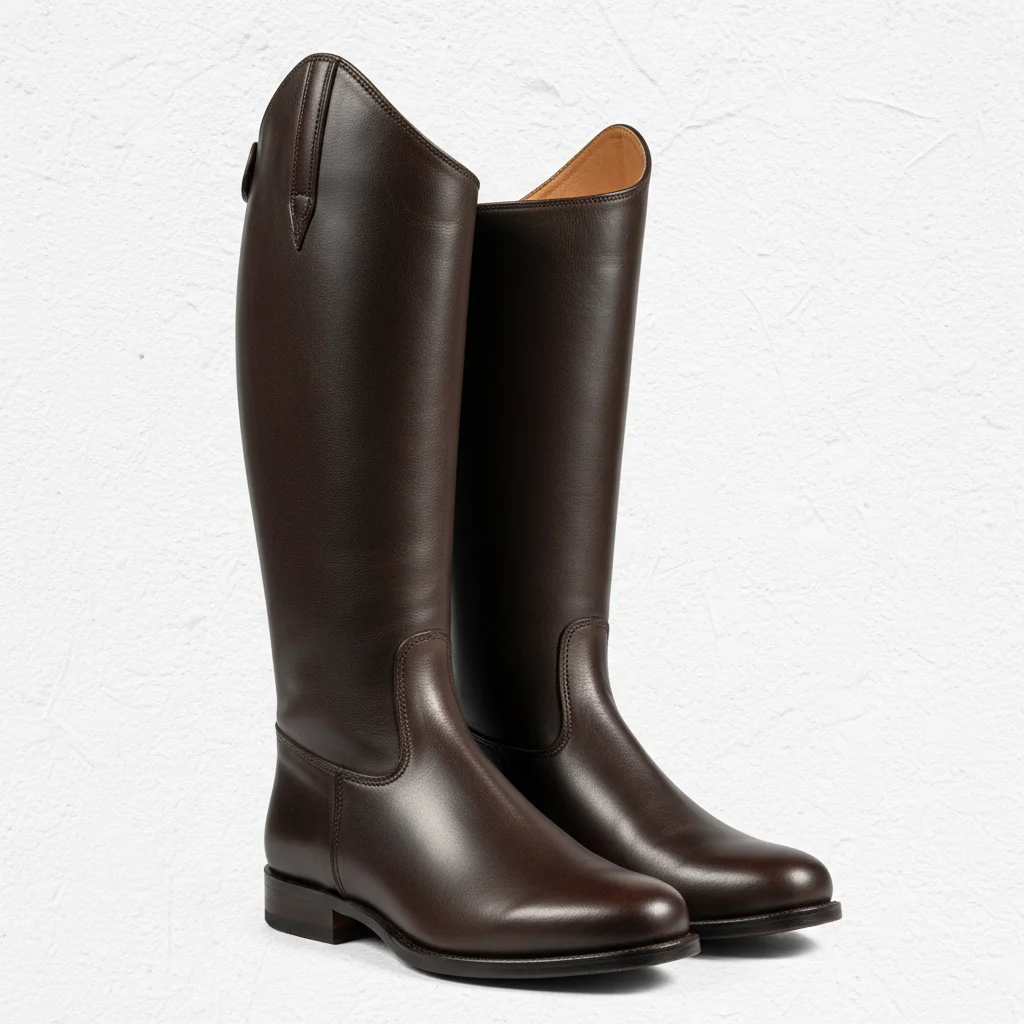
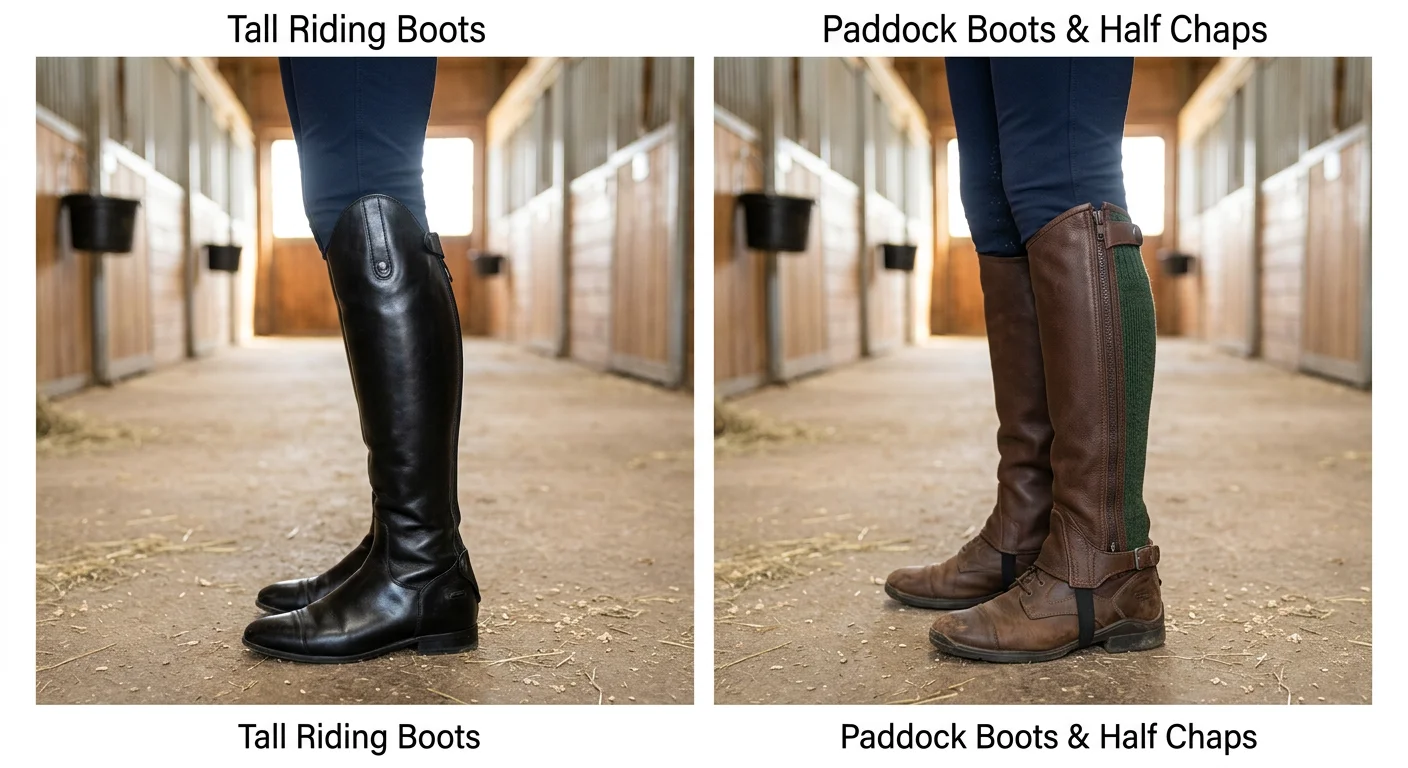
Let's look closely at tall boots. Premium tall riding boots aggressively run about 40 to 50 cm right up the leg. That impressive, commanding shaft height is quite literally the whole point of the footwear. It completely and rigidly wraps your entire lower leg from the ankle joint straight to the knee, meaning every single fabric layer trapped underneath needs to lie totally flat against your skin. Socks purposefully worn under breeches accomplish a few crucial structural tasks here. First off, it greatly reduces friction during movement. Your tailored breeches will effortlessly glide over a smoothly sock-covered leg as your foot awkwardly slides down into the boot, preventing any terrible catching or bunching right at the flex point of the ankle. Secondly, it drastically eases entry on super snug fits. Traditional dress boots and tight pull-on styles usually demand a tight 2 to 4 cm of clearance around the calf, and having smooth sock fabric violently cuts down the drag. Finally, this method totally eliminates those pesky horizontal fabric folds mid-ride. With your breeches nicely tucked inside the shaft, there's nothing left to shift around or painfully press against your saddle contact points. The trick is to go with a remarkably thin riding sock—something around 1 to 2 mm thick. That is exactly the right tool for this job, as anything bulkier instantly destroys the clean, custom fit that tall boots are famously built to deliver.
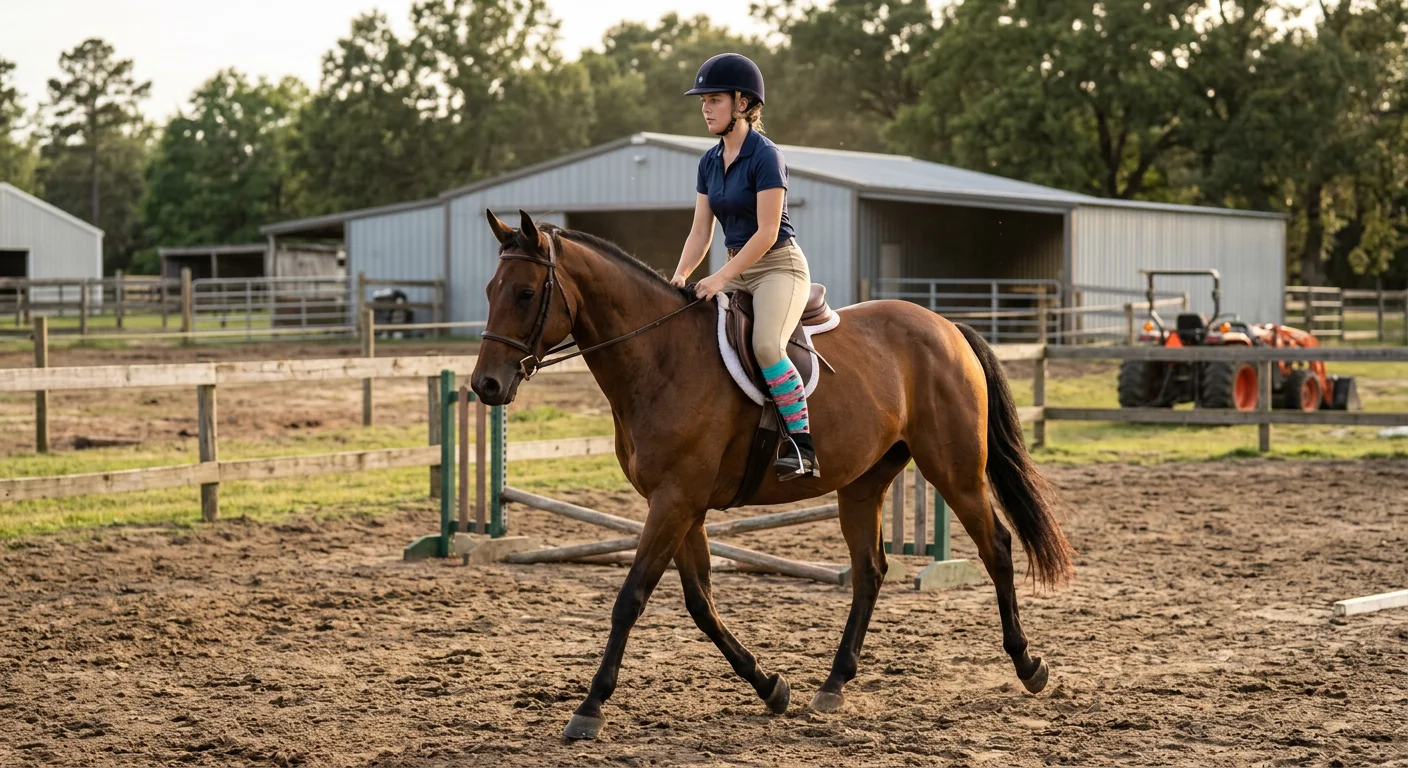
Now, shifting focus over to paddock boots with half chaps. Paddock boots are purposely cut to happily sit directly at ankle height, usually around 15 to 20 cm off the ground. That deliberately shorter cut naturally leaves a bit of an awkward gap between the top of the boot itself and the bottom rim of your half chap. The beloved over-sock technique explicitly exists to effectively fill that very gap. Vigorously pulling colorful knee-high socks over your breeches securely seals that exposed 5 to 10 cm space beautifully. You get a phenomenally clean leg line that perfectly mimics the smooth vertical profile of an expensive tall boot, all while skipping the painful custom calf sizing process. Once your half chaps are strapped in tight over the socks, it actively locks everything flush against the leg. Riders frequently report experiencing far less painful chafing with this specific layering setup. The cozy sock acts as a much-needed protective buffer between the raw breeches edge and the stiff half chap leather, which absolutely matters during those famously long summer schooling sessions.
Navigating Breeches Styles for the Perfect Fit
You know, the ankle closure carefully stitched onto your breeches isn't just a minor decorative finishing detail. It's actually the very first mechanical thing you need to rigorously check before deciding where your socks belong. The biggest names in wholesale equestrian clothing deliberately design these intricate closures with highly specific layering strategies in mind.
There are three main breeches styles heavily circulating out there, and each one demands a slightly different approach. I always tell my students that Velcro ankle closures absolutely scream for your socks to be worn over. That aggressive hook-and-loop fastener is terribly rough against bare, sweaty skin and can even catch uncomfortably on thin sock fabric if it's left totally exposed inside the boot. Simply grab the top of your sock and vigorously pull it right up and completely over that tab to organically create a wondrously smooth protective barrier. It's truly one of the most common beginner missteps I see, yet it is so incredibly easy to fix once you understand the logic.
Discipline-Specific Etiquette and Traditions
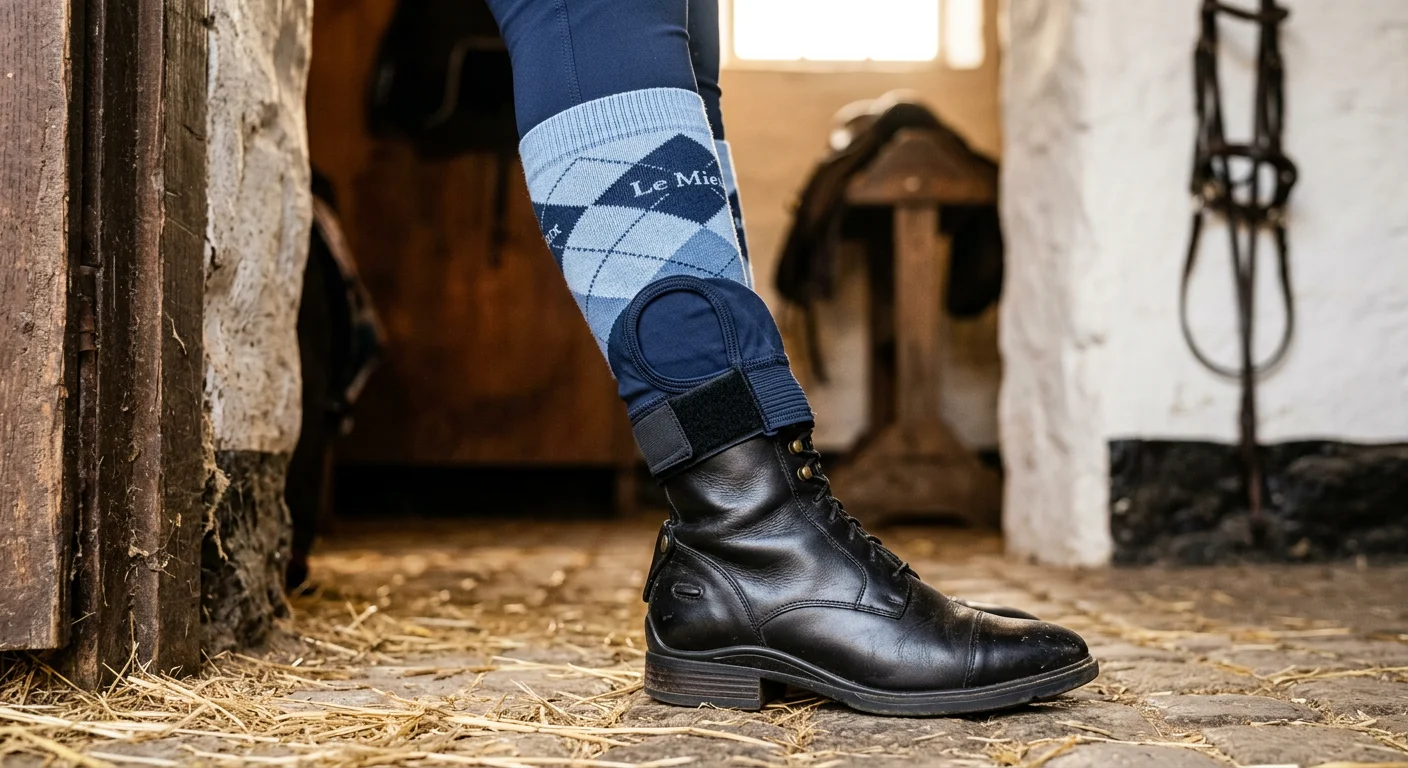
If you've spent any real amount of time around horses, you know that deeply ingrained equestrian tradition definitely carries very strict opinions about literally everything — and your sock placement holds absolutely no exception. Across the vast majority of highly formal riding disciplines, proudly wearing your socks pulled high and over breeches has bizarrely become the casual schooling standard. Now, this isn't just some totally arbitrary fashion rule born out of thin air. The over-the-breeches position brilliantly accomplishes two very important things: it reliably stops slippery socks from annoying sliding down into your boot mid-ride, and it brilliantly keeps your expensive breeches from uncomfortably creeping up your inner thigh as you heavily post or sit deeply in the dress saddle. Pure functional necessity ultimately colored and shaped the etiquette, and definitely not the other way around.
However, you need to understand that this convention violently shifts depending on your exact chosen discipline and exactly how flawlessly formal your riding setting currently feels. When you finally step foot into the high-stakes show ring, the aesthetic rules become notably strict and unforgiving. Show jumping rounds and intense formal hunt seat equitation classes clearly call for an aggressively clean, highly polished look — meaning tall, pristine boots with socks entirely hidden or perfectly managed so everything looks incredibly smooth and agonizingly tidy. The classical world of Dressage understandably holds that exact same painfully formal standard. Visual turnout precision heavily informs the judge's first impression, and any wildly visible, neon sock slippage or weird ankle bunching instantly reads as remarkably sloppy and unprofessional.
But let's be totally real; when you are just hanging out in training or grinding through casual, dusty schooling sessions, you definitely have some real, genuine flexibility. I find that the vast majority of older, far more experienced riders happily put their own grueling comfort purely first. If putting your socks under your breeches honestly feels vastly superior perfectly during a brutal two-hour flat school on a hot summer day, then absolutely go for it. Literally no one at the boarding barn is secretly keeping score of your hidden layers.
Comfort, Practicality, and Real Rider Preferences
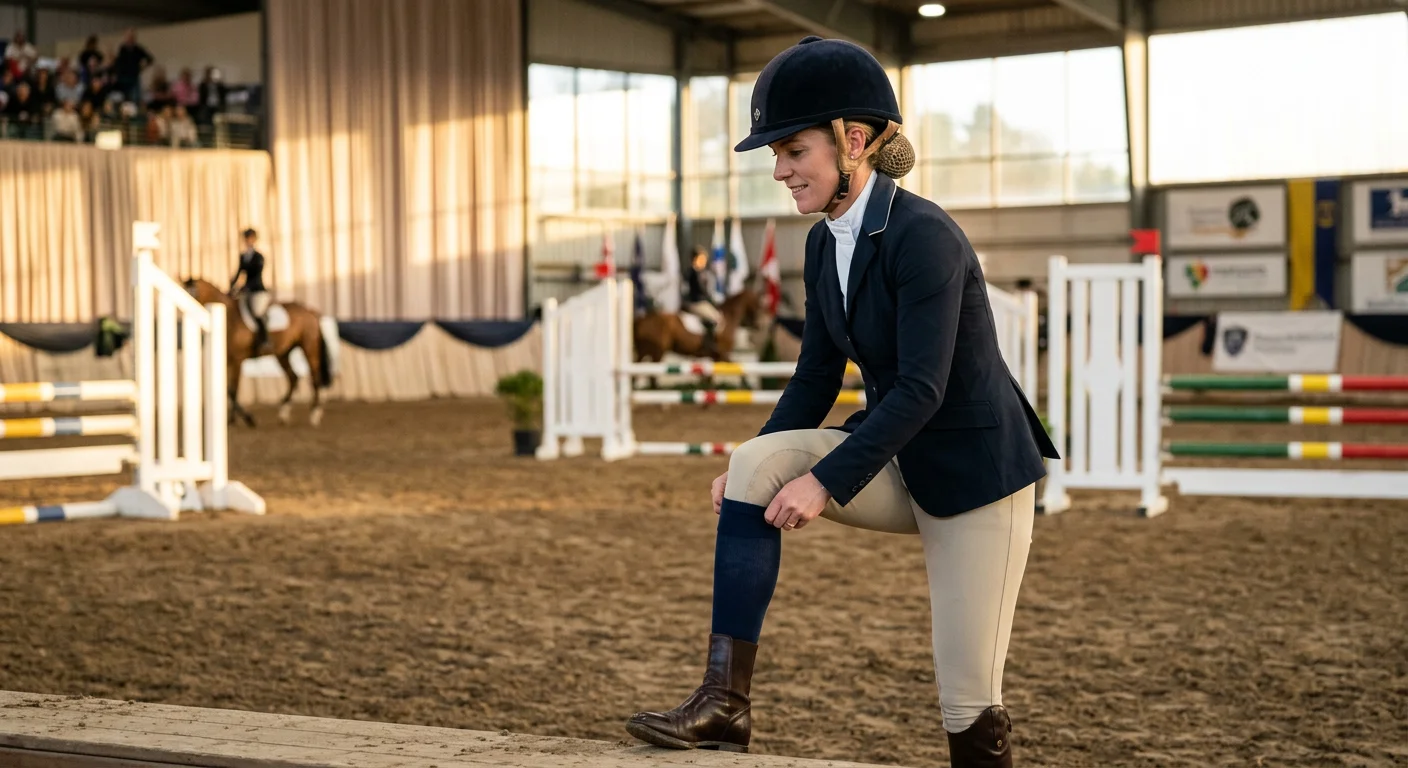
The dense rulebooks and upper-level etiquette explicitly tell you what's currently considered perfectly correct by judges, but your own aching, blistered body will aggressively tell you what actually works in real life. If you pull aside some tough, experienced professional riders and ask them what they genuinely prefer on a physically long, terribly grueling schooling day, the confident answer almost always comes right back to the exact same place: under breeches, safely inside the boot. And it isn't necessarily because some outdated, dusty rulebook explicitly says so — they do it simply because it consistently feels so much better on the legs over the long march of passing time.
Let's unpack why exactly that overwhelming preference makes so much logical sense. High quality socks properly worn underneath breeches tend to just anchor perfectly and stay absolutely put. There is zero weird creeping. There is absolutely no exasperated mid-ride adjustment while you try to balance. There is quite honestly no agonizing fabric bunching violently rubbing against your aching ankle bones. When you are two deep hours into a highly technical flat school, your intense mental focus belongs squarely on your rein contact and your horse's complicated rhythmic gaits. Your sweaty socks should frankly be the absolute last annoying thing on your very busy mind.
Choosing the Right Socks for Your Specific Setup
You probably wouldn't believe me unless you've felt it, but having the frankly perfect pair of specialized socks structurally makes an expensive tall boot miraculously feel like it was painstakingly custom-made just for your exact foot. Conversely, picking the wrong, cheap sock instantly turns every single ride into an agonizing friction problem that you just can't politely ignore. Whether a rider is buying direct or looking at high-end custom equestrian clothing options, getting the base layers perfect is everything.
For those dedicating themselves to under-breeches wear inside tall boots, four highly critical technical qualities matter the absolute most: an ultra-thin overall construction, hardcore moisture-wicking synthetic fabric, a solid, unwavering knee-high length, and a remarkably reliable non-slip compression fit. Heavy bulk crammed underneath a snugly fitted boot shaft painfully creates disastrous pressure points on your delicate leg structure. Furthermore, salty sweat ruthlessly trapped directly against your sensitive foot skin breeds awful, painful blisters incredibly fast. That massive 17-inch anatomical span stretching loudly from your heel all the way up to your knee desperately needs full, entirely comprehensive textile coverage to shield your fragile leg from crushing boot pressure. Products like the Kerrits Dual Zone Tall Boot Sock brilliantly nail this by featuring thicker, plush foot padding paired with an absurdly ultra-thin calf zone, beautifully maintaining a clean shaft space. The PS of Sweden options dive into durable, moisture-regulating wool blends that magically keep you very cool in the raging summer and delightfully warm in the freezing winter without packing on absurd thickness.
If you are instead rocking classic paddock boots nicely paired with half chaps, it structurally creates a wildly specific, somewhat annoying sock problem — but the right, stylish sock fixes it wonderfully. That small, 5 to 10 cm exposed gap left between your stiff boot top and the rough half chap edge honestly translates to an amazing aesthetic opportunity. A lovely, vibrantly colored knee-high sock worn directly over your breeches perfectly bridges that empty space and playfully becomes the most vibrantly visible part of your casual schooling look. I’ve always found the Ovation Zocks, running around an accessible $16.95, to be the absolute ultimate personality pick. You get access to like 19 completely unhinged, wildly colorful novelty printed designs—spanning from Flamingos and Pearls to Llamas. They are unabashedly built for riders who prefer to actively treat schooling days as an open excuse to have outrageous fashion fun with their kit.
On the other hand, you occasionally have something far more refined, similar to Sock Solutions' The Riding Sock, comfortably priced near £18.95. These are beautifully spun from 50% organic cotton, 30% premium merino wool, 10% polyamide, and 10% elastane. When the production heads at a reputable equestrian clothing factory meticulously test sophisticated fabric blends, they are often hunting for this exact level of harmonious dual-season breathing capability. You are effectively getting top-tier padding aggressively targeting the vulnerable foot, ankle, and Achilles zones—the exact painful spots where new paddock boots love to violently rub.
Quick Decision Guide and Final Thoughts
Honestly, spending three fleeting seconds is really all this supposedly controversial decision takes once you clearly grasp the fundamental underlying logic. You merely need to match your specific boot type perfectly to your breeches cut, and the ideal answer predictably follows totally naturally. For instance, putting aggressively tall field boots together with grippy full seat breeches often implies you might experiment depending on closure, but generally, tall dress boots heavily paired with classic knee patch breeches usually demand socks tucked under to violently stop the thick fabric from stubbornly riding upward. If you are somehow throwing on paddock boots with heavily structured jodhpurs, forcefully wearing socks safely under smartly lets you entirely skip the dreadful, suffocating double-layer heat trap completely. For maximum versatility, dropping the terrible habit of utilizing double-layered cotton socks altogether is deeply wise, as single-layer cheap socks unfortunately carry practically three massive times the normal blister risk compared to technically woven double-layered moisture-wicking options.
The core answer beautifully remains remarkably straightforward — tall boots almost always mean your socks go under, while shorter paddock boots generally mean socks go over. Your respected discipline's unwritten dress code easily takes care of whatever lingering details realistically remain. Once you deeply, fully comprehend the functional why solidly standing right behind each seemingly random rule—whether it be targeted skin protection, visual stylistic polish, or raw physical practicality—the stressful daily guessing game abruptly and permanently stops.
For entrepreneurs, brand owners, or tack shops seriously curious about where all this highly specialized, intricate clothing tech actually securely originates, it is always worth noting that collaborating carefully with an elite equestrian clothing factory that proudly offers comprehensively engineered OEM/ODM services robustly guarantees unparalleled quality. Forward-thinking equestrian clothing manufacturers rigorously obsess over these tiny, crucial layering nuances so the active end-user never awkwardly has to. These proven equestrian suppliers deeply understand exactly what is physically required to construct phenomenal, flawless custom equestrian apparel that genuinely stands up to the horrific abuses of real-world riding. Whether you are actively scouring the global market trying to locate impeccably tailored private label equestrian clothing, desperately needing to source incredibly durable wholesale equestrian clothing for your retail shelves, or searching for high-end custom equestrian clothing that precisely matches your exact brand ethos, grasping these vital, ground-level anatomical construction rules guarantees that your gear dramatically improves every single lap around the arena.